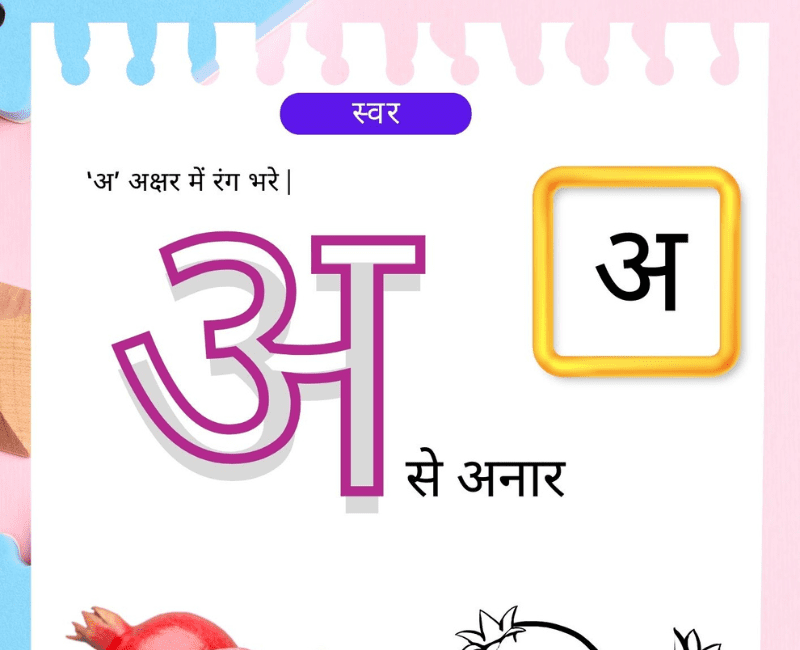
🌈 Hindi Varnamala With Pictures for Nursery
Explore हिंदी वर्णमाला through familiar pictures and playful letter activities. Use the 49-page worksheet resource, then try the picture quiz, ten online games and five practice exercises with a parent or teacher.
अक्षरों की दुनिया में चलें! 🌟
20 quiz questions · 10 different games · 5 practice exercises
👇 Scroll down to play. A grown-up can read the Hindi words aloud.
🧠 Hindi Picture Quiz — चित्र देखकर अक्षर पहचानें
Select one answer per question. You can change your choices. Scores and correct answers appear only after submission, ending the quiz or time running out.
Answered: 0/20
कमल का पहला अक्षर कौन-सा है?
🎮 10 Different Hindi Letter Games
Match, remember, sort, trace and arrange letters. These activities use different play tasks from the MCQ quiz.
1. 🎁 Picture Discovery Album
Open every gift to reveal its picture and starting letter.
Open your first gift.
2. 🔗 Connect Letter and Picture
Select a letter on the left, then its picture on the right.
Connect four pairs.
3. 🧠 Hidden Letter Memory
Turn two cards at a time. Find four pairs of identical letters.
Find the matching letters.
4. 🏠 Swar and Vyanjan Homes
Select a letter tile, then send it to its correct home.
Give each letter a home.
5. 🚂 Build the Letter Train
Attach the carriages in the order shown: अ → आ → इ → ई.
Start with अ.
6. 🔎 Letter Treasure Hunt
Find all five स tiles hidden among other letters.
Find स.
7. 🖍️ Trace and Decorate म
Draw over the large म or practise beside it. This is free practice, not automatic handwriting grading.
Choose a pen and draw.
8. 🧩 Sliding Letter Puzzle
Move a tile beside the empty space to restore अ, आ, इ / ई, उ, ऊ / ए, ऐ, □.
0 moves. Restore the displayed order.
9. 🌷 Letter Position Garden
Place र above the flower, ल below it and व beside it. Select a letter, then a position.
Arrange the letters around the flower.
10. 📖 Arrange a Picture Story
Build this story: बीज → पौधा → फूल. Select the pictures in that order.
Begin with the seed — बीज.
✏️ Five Hindi Practice Exercises
Complete the short tasks with a grown-up. Use a Hindi keyboard or copy the displayed letters where needed.
Exercise 1: Count the Printed Letters
Show Practice Answers
1. 3 · 2. 2 · 3. 4 · 4. 1 · 5. 5
Exercise 2: Copy the Displayed Letter
Show Practice Answers
1. ई · 2. ऊ · 3. ए · 4. ऐ · 5. औ
Exercise 3: Find the Missing Letter
Show Practice Answers
1. र · 2. ल · 3. ब · 4. ग · 5. ज
Exercise 4: Write the Last Letter (No Matra)
Observe the model, then copy the last letter.
Show Practice Answers
1. ल · 2. न · 3. ल · 4. र · 5. ल
Exercise 5: Count the Different Letters
Show Practice Answers
1. 2 · 2. 1 · 3. 3 · 4. 2 · 5. 2
📖 Hindi Varnamala With Pictures Worksheet for Nursery Kids
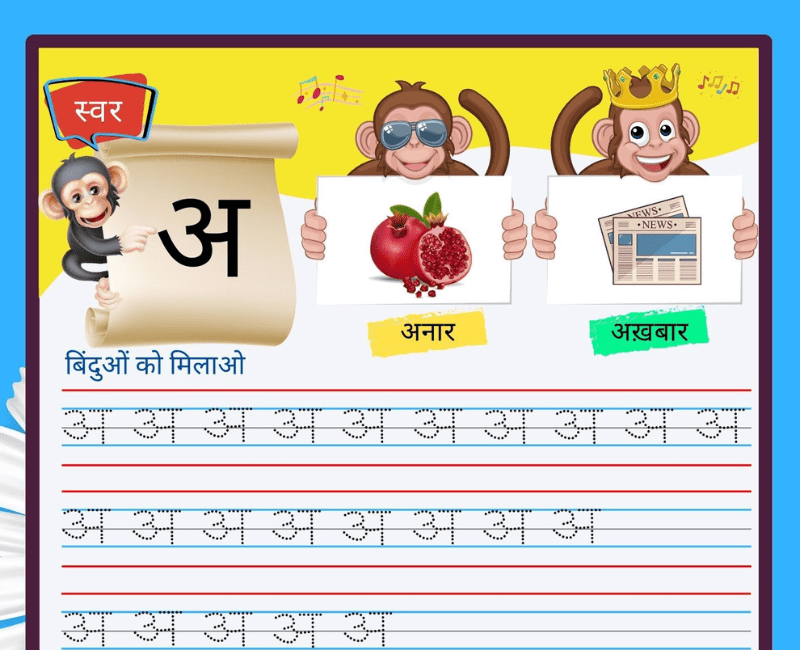
This Hindi varnamala with pictures worksheet for nursery introduces children to printed Hindi letters through familiar objects. The resource is listed as a 49-page worksheet collection. Use the existing download option on this page to access the printable material, and select a few pages that suit your child's current learning.
Learning Hindi letters through pictures
Begin by talking about a picture before showing its letter. Say the Hindi word clearly, point to the printed letter and repeat the word together. Familiar examples such as आम, उल्लू and मछली make a useful starting point. The aim is to connect spoken words, pictures and letter shapes, rather than memorise a long chart in one sitting.
A simple nursery learning routine
Choose two or three letters for a short session. Show a picture, name it together and look for its starting letter. Revisit familiar letters before adding another one. Children can point, match or say a word; independent writing is not required for every activity. Keep the pace comfortable and follow the child's interest.
Introducing स्वर and व्यंजन
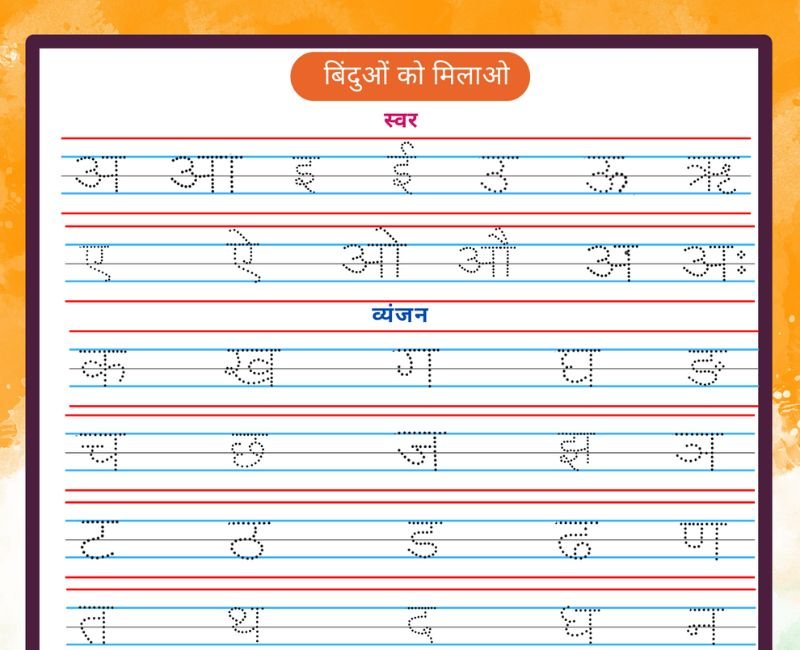
Hindi letters are commonly introduced in groups called स्वर and व्यंजन. Start with a small set of familiar letters and their examples. A parent or teacher can model the sounds aloud. Some alphabet charts include additional signs and conjunct forms, so use the sequence in the child's school material when introducing the full chart.
Picture activities before handwriting
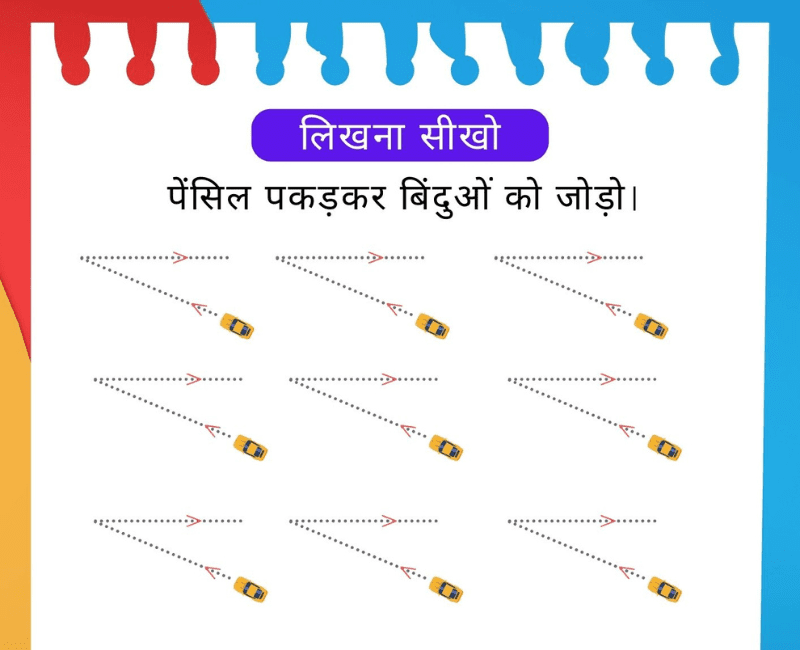
Recognising a letter and forming it by hand are different tasks. Picture matching, memory play and finding letters can be offered alongside drawing and pre-writing movements. When a child is ready, try the Hindi handwriting strokes worksheets or Hindi varnamala tracing worksheets .
Using the online activities
The ten games provide picture discovery, matching pairs, memory cards, letter sorting, a letter train, a letter hunt, free tracing practice, a sliding puzzle, a position garden and a picture story. A grown-up can help read instructions and explain unfamiliar words. The tracing board records drawing marks but does not automatically assess handwriting accuracy.
The picture quiz is separate from the games. It highlights selected options without revealing whether they are correct. After the quiz ends, children can review their choices and correct answers with an adult. Use the result to decide what to revisit; it is not a formal assessment of nursery readiness.
More nursery Hindi practice
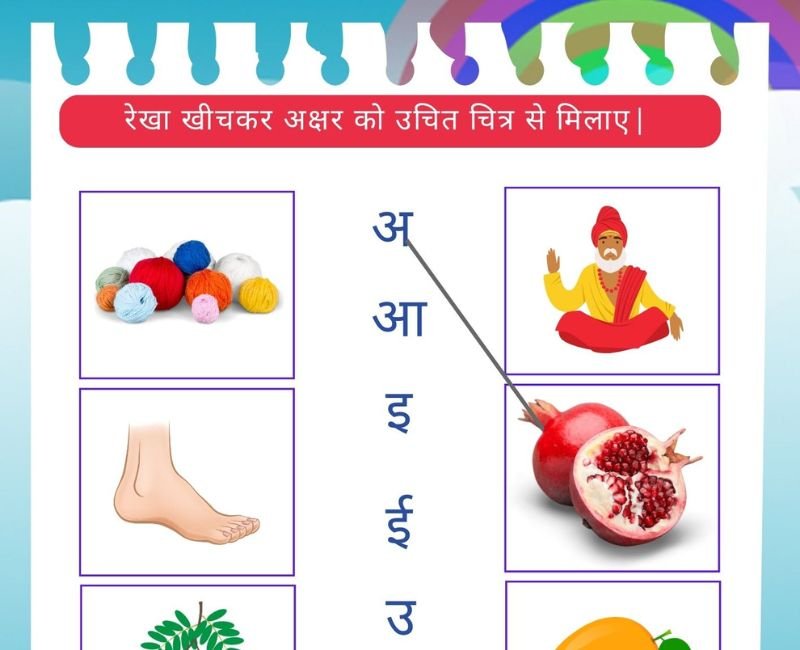
For the next step, explore Hindi letter and picture matching and Hindi flashcards . Find the complete collection in nursery Hindi worksheets . Alternate screen activities with conversations, picture books and paper-based play.
🔗 Related Nursery Hindi Worksheets
❓ Frequently Asked Questions
What is Hindi varnamala?
Hindi varnamala is the organised set of letters used to introduce Hindi reading and writing. Nursery learners can begin by recognising a few letter shapes and connecting them with familiar spoken words and pictures.
How can I teach Hindi varnamala to nursery children?
Start with a few familiar pictures. Say each Hindi word, point to its starting letter and repeat it together. Use matching, picture books and short playful sessions. Add more letters gradually rather than introducing the whole chart at once.
Why use a Hindi alphabet worksheet with pictures?
Pictures give children something familiar to discuss while exploring a new letter. An adult can name the object and point out its starting letter. This creates opportunities to practise vocabulary and letter recognition together.
What is the difference between swar and vyanjan?
स्वर are vowel sounds, and व्यंजन are consonant sounds. For a nursery introduction, use simple examples such as अ and आ for स्वर, and क and म for व्यंजन. Let a teacher or parent model the sounds.
How many letters are there in Hindi varnamala?
The total shown in alphabet charts can vary according to whether additional signs, nukta letters and conjunct forms are included. Follow your child's school chart. The number 49 in this resource title refers to worksheet pages, not a declared total of Hindi letters.
Should nursery children recognise letters before writing them?
Recognition and handwriting can develop alongside each other, but they are different skills. Children can start by pointing to and matching letters while practising drawing and simple hand movements. Introduce letter formation according to readiness.
How do I help a child who confuses similar Hindi letters?
Show a small number of letters at a time. Point out their shapes, pair them with familiar words and return to them in different activities. Keep corrections gentle and avoid rushing the child through a large set.
Can I use these Hindi worksheets at home?
Yes. A parent can choose a few printable pages and guide short picture-and-letter activities. Speak the words aloud, let the child point or match, and stop when attention begins to fade.
Where can I download the nursery Hindi varnamala PDF?
Use the existing download option on this worksheet page. Check the resource preview and select pages suitable for your child. Related tracing, matching and flashcard resources are linked above.
When does the online quiz show correct answers?
Correct answers and the score appear after the student submits or ends the quiz, or when the timer expires. Choosing an option during the quiz only highlights that selection.
Activities are loading. If no controls appear, check that the HTML editor retained the complete script.
 Download