🌈 Hand-Eye Coordination Worksheets for Preschool
20-question visual quiz • 5 hands-on games • Preschool tracing and pencil control
🧠 Online Hand-Eye Coordination Quiz
Look carefully and tap the answer. An adult may read each question aloud. The timer is optional.
Which picture is on the right?
🎮 Interactive Hand-Eye Coordination Games
Use your finger on a touchscreen or your mouse on a computer.
🐝 1. Help the Bee Reach the Flower
Trace the dotted path from the bee to the flower.
Start near the bee.
⭐ 2. Catch the Moving Star
Tap the star five times as it changes position.
Stars caught: 1/5
🧩 3. Match the Pictures
Choose a picture on top, then tap its match below.
⬇️
Choose a top picture.
✏️ 4. Pencil-Control Drawing Board
Practise lines, curves and circles. Choose a colour and draw.
Choose a colour to begin.
🚗 5. Guide the Car Along the Road
Start at the car, trace through the road and reach the flag.
Start near the car.
Hand-Eye Coordination Worksheets for Preschool: Activities and Teaching Guide
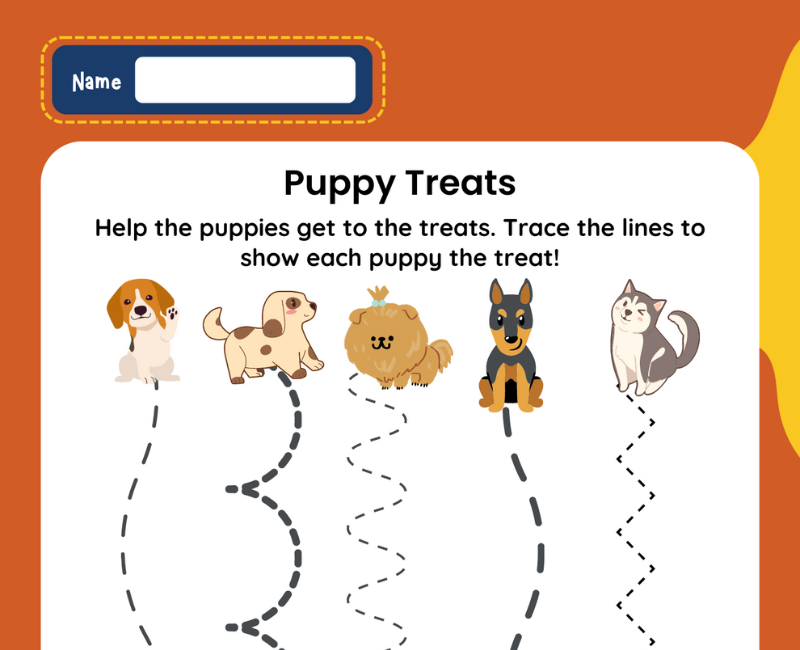
Hand-eye coordination worksheets for preschool help young learners practise using what they see to guide movements of their hands. Children use this ability when they reach for a toy, place a puzzle piece, build with blocks, turn a page or draw a line. The printable worksheet on this page and the interactive games above provide different opportunities to explore these movements.
For preschool and nursery children, the goal is not perfect tracing or quick answers. The activities should feel manageable and playful. Adults can demonstrate each task, read instructions aloud and allow children to repeat an activity when they wish.
What Is Hand-Eye Coordination?
Hand-eye coordination, also called eye-hand coordination, means using visual information to guide hand movements. When a child follows a line from a bee to a flower, their eyes identify the path while their hand moves along it. When the line curves, they adjust the direction of the movement. A similar process occurs when a child taps a moving target or reaches for a block.
Hand-eye coordination often works together with visual attention and fine motor control. Fine motor skills involve movements of the hands and fingers, such as holding a crayon or moving small objects. A matching worksheet can also involve visual discrimination: the child notices which pictures are alike before selecting or connecting them.
Why Practise Hand-Eye Coordination in Preschool?
Early drawing, colouring and tracing provide opportunities for children to coordinate their eyes and hands. These activities are useful preparation for more demanding mark-making and writing tasks. Everyday play is equally important. Building a tower, rolling a soft ball and arranging safe objects in a container all involve looking, reaching and adjusting movements.
Children develop at different rates. Some prefer drawing, while others enjoy tapping, sorting or building. Offer a variety of activities and adjust the difficulty rather than expecting every child to finish in the same way.
Seven Useful Preschool Hand-Eye Coordination Activities
1. Straight-Line Tracing
Begin with a short, wide line connecting two familiar pictures. Ask the child to point to the starting picture and move a finger along the path. When comfortable, the child may try with a crayon. Horizontal lines are a useful starting point; vertical and diagonal lines can follow. For more examples, visit our preschool tracing worksheets.
2. Curved and Zigzag Paths
Curves ask children to change the direction of a movement. Draw a gently winding path from a butterfly to a flower. Zigzag paths introduce corners and changes in direction. Begin with broad turns and avoid narrow tracks that may frustrate beginners. The bee game above offers a finger-tracing version.
3. Visual Tracking and Target Tapping
Watching an object and reaching towards it combines visual attention with hand movement. In the moving-star game, children locate the star and tap its new position. Keep the experience relaxed. There is no need to reward speed; careful participation matters more.
4. Picture Matching
Picture matching asks children to compare shapes or familiar objects. Begin with only two or three pairs. After identifying a match, the child can point, tap or draw a line between the pictures. Avoid overly crowded pages where many crossing lines make the task difficult.
5. Pencil-Control Drawing
Free drawing encourages children to experiment with straight strokes, loops, circles and curves. Offer large paper and crayons that are comfortable to hold. The drawing game above includes colours and an eraser for digital practice. Our nursery scribble games offer related mark-making ideas.
6. Colouring Large Shapes
Colouring a simple circle or square gives a child a visible boundary to work towards. Use large shapes with thick outlines. Some marks may go outside the shape, and that is a normal part of early exploration. You can combine visual recognition with colouring through these nursery shapes colouring worksheets.
7. Road and Maze Tracing
Road tracing asks children to guide a line between two boundaries. A wide road with a car at one end and a flag at the other makes the goal easy to understand. Introduce gentle bends before sharp turns. The road game above gives children immediate feedback after they complete a route.
How Parents Can Use These Worksheets at Home
Choose a comfortable place with enough space to move the arms. Begin with a single short activity and demonstrate it once. Instructions such as “Start at the bee” and “Follow the road to the flag” are easier to follow than lengthy explanations. Let children trace with a finger before offering a pencil if that makes the task easier.
If a child has difficulty staying inside a path, make the road wider or shorten the distance. Encourage effort without repeatedly correcting every mark. Rotate worksheet activities with blocks, puzzles, rolling balls and other hands-on play. Digital activities are supplements, not replacements for physical movement and paper practice.
Teaching Tips for Nursery and Preschool Teachers
Use large pictures and clear starting points. Model one movement at a time and provide short, varied activities. Some children may prefer matching, while others enjoy drawing or tracing. Adjust tasks to individual abilities and allow repetition. When children are ready for early numeral practice, introduce numbers 1 to 10 tracing and colouring to combine number recognition with guided pencil movements.
These activities are educational play, not developmental diagnostic tests. If a parent has concerns about a child's vision or motor development, an appropriate healthcare professional can provide individual advice.
✏️ Five Relevant Worksheet Practice Sets
Set 1: Follow Three Lines
Draw a straight line, a curved line and a zigzag line. Trace each from start to finish.
Show guidance
Follow each visible path. Finger tracing is suitable before crayon tracing.
Set 2: Connect Matching Pictures
Draw a ball, car and flower in one column, and the same pictures in a different order in another column. Connect the pairs.
Show answers
Ball to ball, car to car, flower to flower.
Set 3: Trace the Car Road
Draw a wide road from a car to a house. Follow the road without leaving the boundaries where possible.
Show guidance
Start near the car and trace towards the house. A wide road makes this easier.
Set 4: Join the Dots
Draw four large numbered dots in a simple sequence. Join 1 to 2, 2 to 3 and 3 to 4.
Show answer
Connect the dots in the stated order.
Set 5: Colour a Large Shape
Draw a large circle and square. Colour each shape with gentle crayon strokes.
Show guidance
Encourage purposeful colouring without requiring perfect accuracy.
❓ Frequently Asked Questions
What are hand-eye coordination worksheets for preschool?
They are activities that encourage children to use what they see to guide hand movements, such as tracing, matching, joining dots and colouring.
How can preschool children practise hand-eye coordination?
Offer tracing, blocks, puzzles, soft-ball games, drawing and picture matching, adjusted to the child's abilities and interests.
Are tracing worksheets helpful for hand-eye coordination?
They provide opportunities to look at a path and guide a finger or crayon along it. Start with wide, simple paths.
What is the difference between hand-eye coordination and fine motor skills?
Hand-eye coordination uses visual information to guide hand movement. Fine motor skills involve controlled movements of the hands and fingers; many activities use both.
Can nursery children use these activities?
Yes. Choose large pictures, short paths and simple matching tasks, with adult support when needed.
Should preschool children trace perfectly inside the lines?
No. Encourage participation and gradually more controlled movement rather than perfect results.
How long should tracing practice last?
Keep practice short and flexible, depending on the child's interest and comfort. Breaks and repetition are fine.
Do digital games replace paper worksheets?
No. Digital tracing and tapping are supplementary activities. Paper drawing, blocks and movement games provide different experiences.
🌟 Ready to Try the Picture Quiz Again?
Return to the 20-question visual quiz for more practice with directions, matching and careful tapping.
↑ Play the Free Online Quiz Download