🔤 Free English Alphabet Flashcards for Ages 3+
Learn A to Z with colourful flashcards, pictures, sounds and fun games!
🎯 20-Question Quiz | ⏱️ 20 Minutes | 🧩 4 Interactive Activities | 🖨️ Printable Practice
Preschool • Nursery • Early English Learning
English Alphabet Flashcards for 3-Year-Old Children
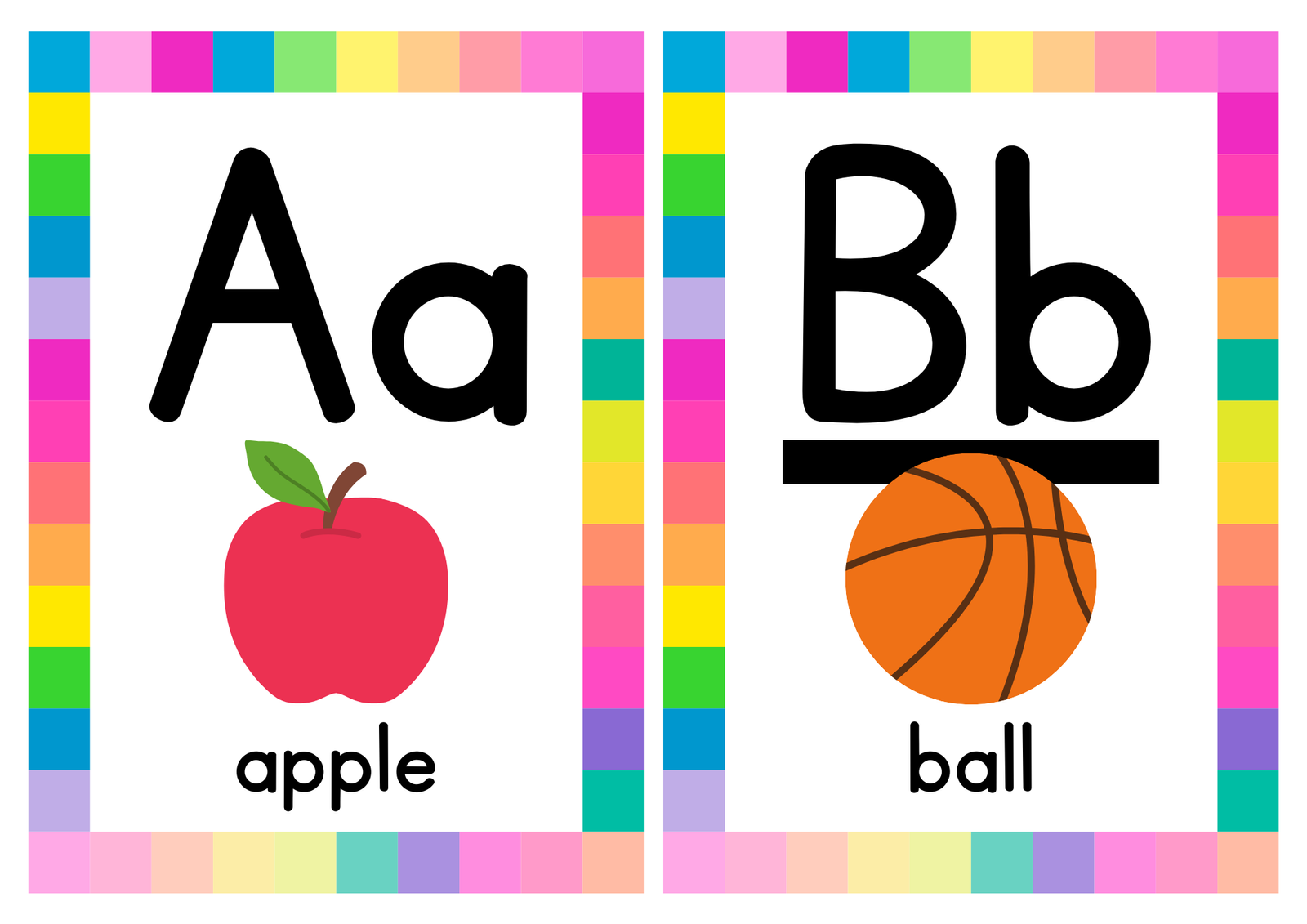
Help your child discover the 26 English letters with these free English alphabet flashcards for ages 3 and above. Each letter is paired with a familiar word and a colourful visual cue. The activities below introduce uppercase and lowercase letters, beginning sounds, matching and simple vocabulary. Children can explore the letters at their own pace, while parents and teachers can use the printable worksheet exercises for revision.
Start with a few letters at a time. Encourage children to say the letter name, look at the picture and repeat the word. These flashcards complement the downloadable learning resource available on this page.
🎯 20-Question Alphabet Online Quiz
Choose the letter that starts each picture word. You have 20 minutes. Use the numbered buttons to move between questions.
Question 1 of 20
🎴 Interactive A–Z Alphabet Flashcards
Tap the arrows to explore each letter. Select Hear Letter & Word for optional spoken practice (requires browser speech support).
A for Apple
Card 1 of 26
All 26 Alphabet Picture Cards
🧩 Interactive Alphabet Learning Games
Game 1: Find the First Letter
Look at the word and choose its first letter.
🍎 Apple
Choose the first letter.
Game 2: Match Uppercase and Lowercase
Choose the lowercase letter that matches the large uppercase letter.
Find the matching lowercase letter.
Game 3: Listen and Find the Letter
Press Listen, then tap the letter you hear. An adult can read the letter aloud if speech is unavailable.
Press Listen, then choose the letter.
Game 4: Put the Letters in Order
Which letter comes next in the alphabet?
R, S, ?
What comes next?
Alphabet Chart: A to Z with Pictures and Words
Use this chart to review all the letters. Say the letter name first, then the word. For beginning-sound practice, emphasize the initial sound naturally rather than adding an extra “uh” sound.
Illustrative emojis may look slightly different across devices. X is shown with xylophone as a familiar vocabulary word; teachers can model its pronunciation separately from the letter name.
Printable Alphabet Worksheet Exercises for Preschool
Exercise 1: Fill in the Missing Letters
- A, B, __, D
- E, __, G, H
- I, J, __, L
- M, __, O, P
- Q, R, __, T
- U, V, __, X
- W, X, __, Z
Show Exercise 1 Answers
1. C; 2. F; 3. K; 4. N; 5. S; 6. W; 7. Y.
Exercise 2: Match the Capital and Small Letters
Match: A, D, M, R, T with r, a, t, d, m.
Show Exercise 2 Answers
A–a; D–d; M–m; R–r; T–t.
Exercise 3: Circle the First Letter
- Apple: A / B / C
- Dog: F / D / G
- Fish: F / H / L
- Sun: S / T / P
- Ball: D / B / M
- Zebra: Z / X / Y
Show Exercise 3 Answers
1. A; 2. D; 3. F; 4. S; 5. B; 6. Z.
Exercise 4: Say and Trace the Letters
Point to each letter, say its name and trace it on paper with a pencil.
Show Exercise 4 Answers
Children should trace A a, B b, C c, D d, E e and F f in the correct order, with adult guidance.
Exercise 5: Name the Picture Word
- 🍎 A for ______
- 🐱 C for ______
- 🐶 D for ______
- 🦁 L for ______
- ☀️ S for ______
- 🦓 Z for ______
Show Exercise 5 Answers
1. Apple; 2. Cat; 3. Dog; 4. Lion; 5. Sun; 6. Zebra.
How to Teach English Alphabet Flashcards to Children Aged 3+
English alphabet flashcards are a simple way to introduce young learners to printed letters. A child can see the shape of a letter, hear its name and connect it with an everyday word. A short, enjoyable routine often works better than asking a preschool child to memorize all 26 letters in one sitting. Begin with three or four familiar letters and revisit them regularly.
Start with familiar names and objects
Children may already recognize the first letter of their own name. Show that letter first and invite them to find it on a card. Add a familiar object such as an apple, ball or cat. Point to the uppercase letter, say its name, and then introduce its lowercase partner. When children are ready, connect the letter with the first sound in a simple word.
Teach uppercase and lowercase together
Both forms matter because children encounter capital and small letters in books, labels and classroom materials. Display A and a side by side rather than presenting them as unrelated symbols. Explain that they are two ways to write the same letter. Some lowercase shapes, such as a and g, may look different in books or fonts; teachers can show examples gradually without expecting immediate mastery.
Introduce sounds gently
Letter names and letter sounds are not identical. For example, the letter B is named “bee,” while its usual beginning sound in ball is a short /b/. Ask the child to listen to the first sound in a word. Use familiar vocabulary and speak clearly. English spelling includes exceptions, so picture-word associations are a starting point rather than a complete phonics lesson.
Use pictures to build vocabulary
Pictures provide meaning and make the letters easier to remember. Show a cat picture and ask, “What animal is this?” After the child answers, say “Cat begins with C.” Encourage pointing, naming and conversation. You can extend the activity by asking children about colours, sizes or where they might see the object. This combines early literacy with oral language practice.
Keep activities short and playful
For many preschoolers, five to ten minutes of focused alphabet play is enough for one session. Turn cards face down, pick one and name the letter. Hide a few cards around the room for a letter hunt. Place two cards on a table and ask the child to find a specific letter. Avoid rushing or treating every mistake as a test; repetition, encouragement and movement help keep learning enjoyable.
Make learning multisensory
Invite children to form letters with play dough, trace a large letter with a finger, or draw it in a tray of sand. They can also build letter shapes with blocks or string. These hands-on activities help children notice straight lines, curves and orientation. Provide age-appropriate materials and adult supervision, particularly when small items are used.
Build confidence with a gradual sequence
Begin with a small group of letters, then add new ones when the child recognizes the earlier set with some confidence. Mix familiar and new flashcards to encourage recall. Use both alphabetical and shuffled order: recognizing A only because it always appears before B is different from identifying A independently. Celebrate progress with a smile, a sticker or a chance to choose the next game.
Connect flashcards with early reading
Alphabet flashcards support letter recognition, but reading also develops through conversation, listening, shared books and sound awareness. Read picture books aloud and point to letters in titles. Notice letters on food packages, signs and toys. Ask open questions such as “Can you find another word that starts like sun?” and allow time for answers. A child who is not ready to name every letter can still enjoy songs, stories and picture talk.
Use the online quiz appropriately
The 20-question online quiz on this page is optional practice, not a formal assessment for three-year-olds. Younger children may need an adult to read the questions and select the answer. The timer is included for older or more confident learners; parents may ignore it and focus on participation. If a child becomes tired or frustrated, stop and return later. The interactive matching games and alphabet cards can be used without completing the quiz.
Printable practice at home and school
Print the alphabet flashcards or use the downloadable worksheet resource on this page if you prefer paper activities. Children can sort uppercase and lowercase pairs, point to letters when named, and match a picture with its beginning letter. Teachers can use the cards in small groups or literacy corners. Parents can display a few cards at eye level and change them during the week. The goal is familiarity and enjoyment rather than speed.
Common learning challenges
Some children confuse visually similar letters such as b and d, or p and q. This is common in early learning. Show one pair at a time, use large clear letter shapes, and provide repeated opportunities to compare them. Children also develop at different rates. If concerns about hearing, vision, language or learning persist, discuss them with an appropriate educator or health professional instead of relying on an online quiz score.
What children can learn
With regular, supportive practice, learners can begin to recognize many uppercase and lowercase letters, connect familiar pictures with their names, notice initial sounds and develop an interest in printed words. They can also strengthen listening, speaking, visual discrimination and fine-motor skills through matching and tracing. The most important outcome is a positive first experience with English letters.
Teaching Tips for Parents and Preschool Teachers
- Introduce three or four flashcards at a time and review them often.
- Use the child's name to make the first letter meaningful.
- Ask children to point, speak, match and trace rather than only watch.
- Mix the order of flashcards to check independent recognition.
- Read a picture book and look for familiar letters together.
- Give positive feedback and keep sessions short.
- Supervise online activities and adjust difficulty to the child.
Related Preschool Worksheets on WitKnowLearn
Explore the preschool worksheet collection for more early learning activities.
Frequently Asked Questions About Alphabet Flashcards
What are English alphabet flashcards?
They are cards showing letters, often with pictures and familiar words, to support early letter recognition.
Are these flashcards suitable for three-year-olds?
Yes. Use a small number of cards at a time and provide adult guidance according to the child's interests and readiness.
Should I teach uppercase or lowercase letters first?
Both can be introduced together in small sets. Connect each uppercase letter with its lowercase partner.
How many letters should a child practise each day?
Start with a few familiar letters. Adjust the number according to attention, enjoyment and progress.
Do alphabet flashcards teach phonics?
They can introduce beginning sounds, but complete phonics learning also needs listening, blending and reading activities.
Can I use these alphabet cards without the quiz?
Yes. The flashcards and interactive games work independently of the optional quiz.
Does the website read letters aloud?
The Listen buttons use browser speech synthesis when supported and enabled. An adult can read aloud otherwise.
How can I help a child who mixes up b and d?
Show the letters separately, compare their shapes, trace them and practise patiently over several sessions.
Are the worksheet exercises printable?
The exercises can be printed from the browser. The page also retains its existing downloadable flashcard resource.
Can teachers use these flashcards in Nursery?
Yes. They are suitable for guided letter recognition, picture vocabulary and simple matching games.
🎯 Learn A to Z with Free English Alphabet Flashcards
Explore colourful alphabet picture cards, practise capital and small letters, play four interactive games and revise with a 20-question quiz. Combine online activities with printable flashcard practice for a fun introduction to English letters.
 Download