Chapter 7 Introduction to Microbiology Solutions
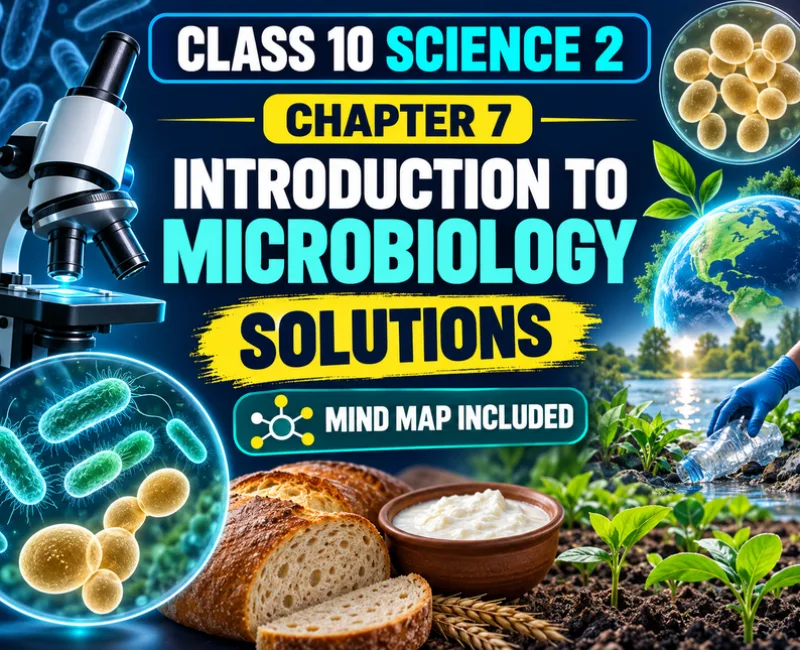
Study Maharashtra Board Class 10 Science and Technology Part 2 Chapter 7 Introduction to Microbiology with complete textbook exercise solutions. Learn how useful microorganisms support food production, medicines, industrial processes, farming, waste management, biofuels and environmental cleanup. A chapter mind map appears on the last page of the PDF.
What Is Included in These Microbiology Solutions?
These Class 10 Science 2 Chapter 7 solutions follow the Maharashtra Board textbook exercise and cover microbial products, industrial microbiology, fermentation, probiotics, fuels, compost, biopesticides, biofertilisers, bioremediation and waste decomposition. The PDF explains correct-option questions, matching pairs, conceptual diagrams, scientific reasons, detailed answers and project guidance.
The chapter shows that microbes are not only disease-causing organisms. Lactobacilli help produce curd and probiotic foods, yeast makes bread rise and supports fermentation, and selected bacteria can help break down pollutants. Industrial microbiology uses carefully selected strains and controlled conditions to obtain useful products consistently and on a large scale.
Class 10 Science 2 Chapter 7: Main Topics
Fermentation
Understand how microbes produce foods, acids, enzymes, fuels and other useful substances.
Microbes in Farming
Learn how microbial inoculants, biofertilisers and biopesticides support sustainable agriculture.
Environmental Uses
Explore composting, sewage treatment, oil-spill cleanup and bioremediation.
Important Microbiology Concepts
Industrial Microbiology
Industrial microbiology grows useful microorganisms under controlled temperature, nutrients, pH and oxygen conditions. Mutant or selected strains may produce a larger quantity of a desired substance. Microbial enzymes can work efficiently under mild conditions and may create fewer unwanted by-products than some chemical processes.
Food and Probiotic Products
Lactic acid produced by Lactobacillus causes milk proteins to coagulate during curd formation. Yeast releases carbon dioxide during fermentation, making bread dough rise and become spongy. Probiotic foods contain beneficial microbes that can help maintain a healthy intestinal microbial balance.
Biofuels
Microbial processes can produce ethanol, methane and other fuels from biomass. Ethanol may be blended with petrol, while biogas rich in methane can be obtained from the anaerobic decomposition of organic waste. These fuels can reduce dependence on limited fossil fuels when produced and used responsibly.
Microbes in Agriculture
Biofertilisers and microbial inoculants improve nutrient availability and reduce excessive dependence on chemical fertilisers. Biopesticides help control pests through biological agents. Because their effects can be more targeted and biodegradable, they are valuable in organic farming when used correctly.
Waste Management and Bioremediation
Decomposer microbes convert biodegradable waste into compost. Sewage treatment uses microorganisms to break down organic matter before water is released. Oil-degrading bacteria can help clean hydrocarbon pollution, while other microbes can transform harmful chemicals into less mobile or less toxic forms.
How to Use the Chapter 7 Solutions
- Link every microbial product with the microorganism or process involved.
- Separate food, industrial, agricultural and environmental applications.
- Explain each benefit with one familiar example, such as curd, bread or compost.
- For scientific reasons, state both the microbial action and its practical result.
- Use the mind map on the final PDF page for complete revision.
Chapter 7 Mind Map for Quick Revision
The final page of the PDF contains a mind map linking industrial microbiology, microbial foods, enzymes, probiotics, biofuels, agriculture, composting and bioremediation. Use it after studying the detailed answers to recall the chapter by application area.
Frequently Asked Questions
Select a question to read a brief explanation with an example.
What is industrial microbiology?
How does bread become soft and spongy?
Why are probiotic products popular?
What are biopesticides?
How do microbes help produce compost?
How can microorganisms help clean an oil spill?
Why are microbial enzymes added to detergents?
Why should plastic bags be restricted?
Where is the Chapter 7 mind map?
 Download