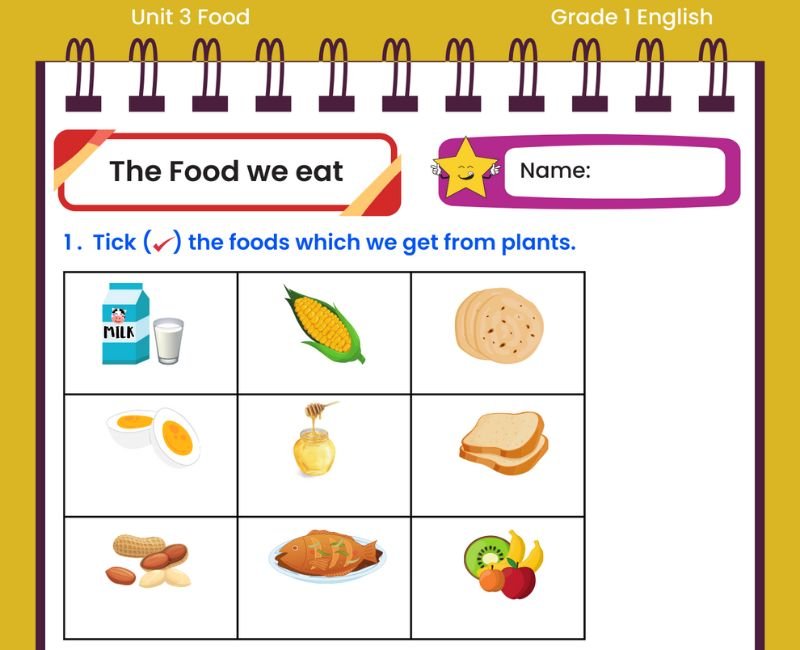
🍱 The Food We Eat Class 1 Worksheet with Online Quiz and Games
Open a pretend lunchbox and discover useful English! The Food We Eat Class 1 worksheet page brings together food words, kind conversations, picture reading and simple sentences.
Explore NCERT Mridang Unit 3 Food with a 20-question online quiz, 10 interactive games and activities, and five short practice tasks. The new lunch pictures below are original practice illustrations.
📝 The Food We Eat Online Quiz for Class 1
Language help changes quiz prompts and explanations. Answer choices remain in English. Games and learning notes are in English.
🎮 The Food We Eat Online Games for Class 1
Serve pretend orders, explore word beats and solve fresh food clues. Choose one game at a time.
🧩 The Food We Eat Online Activities for Class 1
Build a sentence, find hidden words and make a kind lunch conversation.
✏️ The Food We Eat English Practice for Class 1
Try five short tasks with different examples from the quiz.
📖 About The Food We Eat Class 1 Worksheet
Read The Food We Eat worksheet learning guide
The Food We Eat worksheet for Class 1 uses familiar meals to support English learning. Children explore names, actions and everyday expressions through pictures and short conversations. The focus is understanding and communicating, rather than memorising a long list of dishes.
In NCERT Mridang, this lesson belongs to Unit 3 Food. The opening lunch conversation introduces different foods and a moment of kindness towards a child without lunch. Later exercises use picture-supported reading, food shapes, spoken syllables, matching and riddles.
For The Food We Eat Class 1 English practice, introduce words through a clear picture or a familiar example. Ask the child to name one item, identify an action or complete a short phrase. A home-language name can provide a useful starting point before introducing the English expression.
Food offers natural opportunities to practise language such as “I have”, “May I have” and “Thank you”. Pretend conversations help children use these expressions without needing to bring or taste food. Respect different meals, cultural traditions, personal preferences and dietary needs.
Spoken syllables are the beats in a word, not the number of letters. An adult can say a word naturally and then repeat it slowly. Children may tap a screen button, point to a beat card or listen; clapping and speaking aloud are optional ways to take part.
This The Food We Eat online quiz includes new reading and picture questions. The separate games practise constructing, matching, sorting and planning. Creative tasks allow different sensible responses. Use the existing worksheet download option for paper practice and the official NCERT ebook link below to read the lesson.
👨👩👧 Tips for Parent and Teachers
- Explain unfamiliar dish names before asking children to read them.
- Model a short, kind request and reply through pretend play.
- Say words naturally when introducing syllable beats.
- Respect different foods and avoid ranking children’s lunches.
- For real food sharing, follow school rules and check allergies with the responsible adult.
🌟 Tips for Students
- Look at the whole lunch picture first.
- Check the name on each pretend order.
- Listen for the beats in a spoken word.
- Read each word before arranging a sentence.
- Use Undo when you want to change a tile.
- Ask for help with a new food name.
- Use kind words when talking about someone’s meal.
❓ The Food We Eat Class 1 Worksheet FAQs
What is The Food We Eat lesson about?
The Mridang lesson uses a school lunch conversation and food-related activities to develop English vocabulary, reading and speaking.
What do the children do when a classmate has no lunch?
They offer food, and the child responds with thanks.
Which English skills does this worksheet practise?
It supports food vocabulary, picture reading, short sentences, syllable awareness and understanding simple clues.
What is a syllable?
A syllable is a spoken beat in a word. Count what you hear rather than counting written letters.
How can I teach food words to Class 1?
Use a few familiar pictures, name them clearly and practise the words in short phrases or pretend conversations.
Must children bring food for these activities?
No. Every online activity works with pictures and words. Real food is optional and should follow school and family guidance.
Can children describe different foods from home?
Yes. Welcome regional dishes and home-language names, then help children find useful English words to describe them.
How do food riddles help English learning?
Children combine clues, connect words with meanings and explain why an answer fits.
Are the online games repeated quiz questions?
No. They use different examples and involve building, matching, sorting, planning and word finding.
Where can I read the official NCERT Mridang lesson?
Open the official ebook through the resource link above. Use this page’s existing download option for the worksheet.
🌈 Online The Food We Eat Quiz for Class 1
Explore a food word, read a picture and practise a kind sentence!
Try the Online Quiz Download