Every Picture Has a Hindi Letter Friend! 🐄🍌🌈
Scroll down for 20 Hindi quiz questions and 10 clickable games and activities. Deliver picture mail, sort first-letter baskets, connect matching dots and build Hindi picture-word labels!
👇 Scroll down—your picture-matching adventure starts below! 👧👦
📝 Hindi Alphabet Matching Quiz for LKG
20 questions: 5 easy, 7 average and 8 thinking questions. An adult can read every Hindi question, picture name and option aloud. Tap an answer to move automatically. Use Previous, Next or numbered buttons to revisit answers. The 20-minute timer starts with the first answer or question navigation. Correct answers appear after submission.
⏱ Time Left: 20:00
Question 1 of 20 • Easy • Answered: 0/20
केले के चित्र से कौन-सा अक्षर मिलाएँगे?
Question navigation — green means answered.
🎮 Hindi Letter and Picture Matching Online Games
Choose one game at a time. Name each picture in Hindi before matching. An adult can read the words; children can point or tap.
1. 🎁 Picture Card Explorer
Tap each letter to reveal a Hindi picture word. A grown-up can name it aloud. Explore all eight cards.
Choose a letter
Ready to play!
2. 📮 Letter–Picture Mail
Select a picture envelope, then its first-letter mailbox. Deliver all four envelopes.
Select an envelope first.
Ready to play!
3. 🃏 Letter–Picture Memory
Reveal two cards. Match a Hindi letter with a picture word beginning with it. Find four pairs.
Find four letter–picture pairs.
4. 🧺 First-letter Picture Baskets
Select a picture word, then choose its first-letter basket. Put all eight cards into four baskets.
Select a picture word.
Ready to play!
5. 🚂 Build a Picture Train
Follow this letter route: फ → ब → म → ज. Add the matching picture tickets in that order. Use Undo to change your plan.
🚂 Empty train
Ready to play!
🧠 Hindi Alphabet Matching Activities for JR KG
Repair labels, collect word families, connect letter-picture dots, build labels and trace. Each task includes feedback and reset controls.
6. 🔧 Repair Picture Labels
Change the incorrect first-letter labels for all three pictures. Say each Hindi word before choosing.
Ready to play!
7. 🔍 Collect the ग Picture Family
Select every word beginning with ग. Tap a selected card again to remove it, then check the whole collection.
Ready to play!
8. 🧩 Connect Letters to Pictures
Tap a letter dot, then its picture dot—or drag between the dots. Match four pairs. Undo removes the latest correct line.
Ready to play!
9. 🏗️ Build Picture-word Labels
An adult can read the model. Tap its letter tiles in order to make नल, फल and जल.
🚰 नल
Choose letter tiles.
Ready to play!
10. ✍️ Trace a Letter or Picture Word
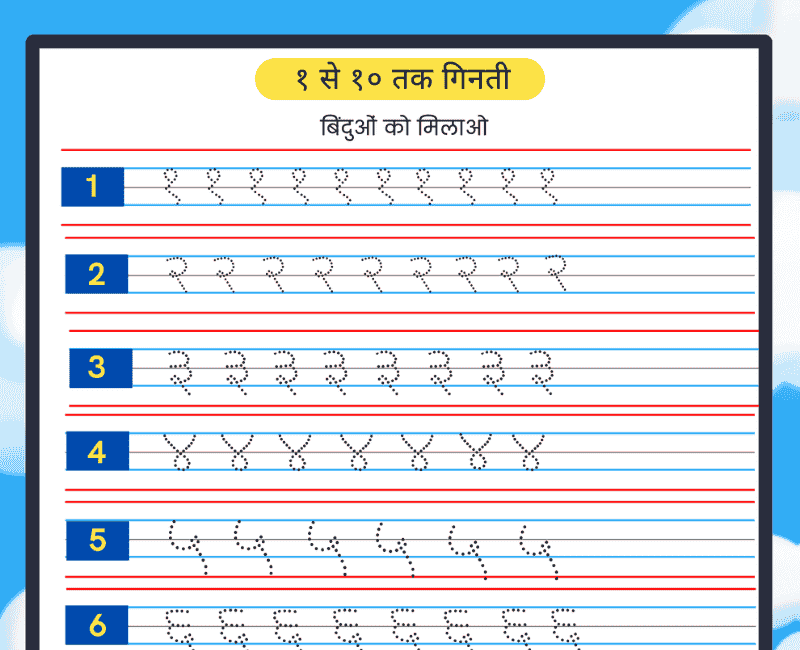
Optional writing practice: choose a letter or short word and use one red pen. An adult can model its formation. The board does not assess handwriting.
Ready to play!
📄 Hindi Alphabet Matching with Pictures Worksheet for LKG
Use the existing download option near the top of this page for the printable resource. This online quiz is separate practice scored out of 20, not a claim that it reproduces the printable worksheet.
📖 Read the Hindi picture-matching learning guide
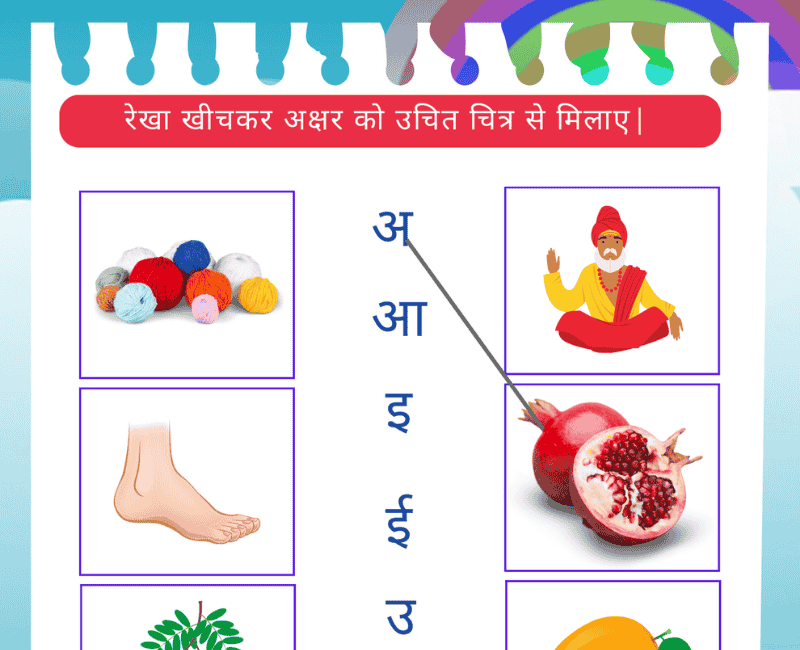
A Hindi alphabet matching worksheet for LKG helps children connect a letter with a familiar picture word. LKG is also called Junior KG or JR KG. Start by naming a picture in Hindi, showing its first letter and asking the child to find the partner. For example, केला begins with क, गाय with ग and घड़ी with घ. Independent reading is not needed when an adult names the pictures and reads the choices.
Keep the Hindi picture name clear. A child may call a picture banana, केला or another familiar name. Acknowledge the response, then say which Hindi word the matching task uses. The starting letter depends on that chosen word. The labels beside pictures help parents and teachers provide a consistent spoken model.
Matching the letter with a picture is different from grouping objects by meaning. केला and सेब are both fruits, but their names begin with different letters. Similarly, गाय and घोड़ा are both animals, yet ग and घ are different written letters and represent different sounds. Ask children to listen to the Hindi word and compare its first letter rather than choose only from the picture category.
Begin with a manageable set of clear letters. Compare related forms such as ब and भ using familiar examples: ब से बकरी and भ से भालू. A small matching set lets children revisit the distinction without a full crowded chart. Add new letters according to what the child has already explored in class.
The Hindi letter-picture quiz includes twenty questions with five easy, seven average and eight thinking prompts. Questions move from familiar picture names to comparing pairs, identifying incorrect labels and finding words with the same first letter. A grown-up can read every question and option. English navigation controls make it easy to start, revisit and submit, while the learning questions remain in Hindi.
The ten online games offer several kinds of matching. Children deliver picture envelopes to letter mailboxes, find letter-picture memory pairs and sort words into first-letter baskets. A picture train adds ordering, a collection task asks for all the matching words, and the line board lets children connect letter dots to picture dots by tapping or dragging between endpoints.
Short model-led word puzzles introduce the labels नल, फल and जल. An adult can read each name while the child arranges its letter tiles. Optional tracing provides letter and word guides with one red pen, Undo, Clear and a blank-board option. The tracing completion button records a practice attempt; an adult can check handwriting using the classroom model.
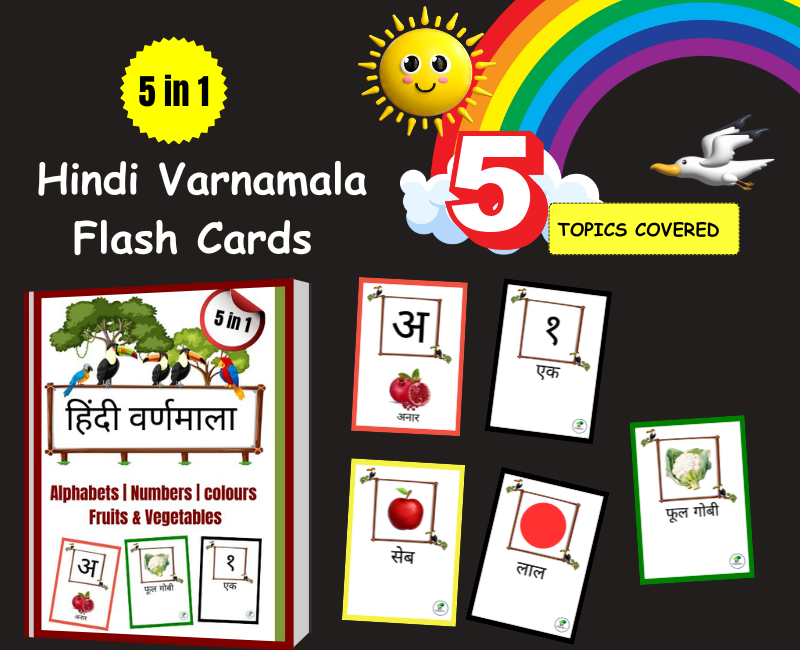
Use the printable resource alongside oral naming and short matching games. For recognition support, explore Hindi varnamala with pictures for LKG. For writing practice, try Hindi varnamala tracing, and use Hindi flashcards for repeated letter-picture conversations. Choose a few tasks that fit the child’s attention and current learning.
💬 Hindi Alphabet Matching Worksheet FAQs
😊 How do I teach Hindi letters through picture matching?
Name the picture in Hindi, show its first letter and demonstrate one match. Then offer a small group of pictures and letters for the child to match by pointing, tapping or drawing a line.
😊 Can a beginner use Hindi matching worksheets?
Yes, with adult support and familiar picture names. Begin with a small set of letters already introduced in class and name every picture before asking for its match.
😊 What do LKG children learn from Hindi matching activities?
They practise recognising written letters, naming familiar pictures and connecting a word’s beginning with its letter. Some tasks also involve sorting, comparing and noticing incorrect pairs.
😊 Must children read Hindi words before matching pictures?
No. An adult can say the Hindi words and read the choices. Children can respond by listening, pointing and tapping.
😊 Should I begin with swar or vyanjan picture matching?
Follow the teacher’s sequence. Many early resources introduce familiar swar first, then small groups of vyanjan. Use picture words the child understands for either group.
😊 How can I help when my child confuses similar letters?
Show the letters side by side, say their picture words and revisit a few clear pairs. For example, compare ब से बकरी with भ से भालू. Encourage another attempt without rushing.
😊 How many Hindi worksheets should an LKG child complete each day?
There is no fixed number required here. Choose a short activity suited to the child’s attention and classroom goals. A few matching cards can be enough before changing activity or taking a break.
😊 Can I print this Hindi alphabet matching resource?
Use the existing download option near the top of this page, then preview the printable file. The online quiz and games are additional practice, not a copy of the PDF.
😊 Does the printable worksheet include an answer key?
The printable file’s answer-key contents have not been verified here. Check the downloaded resource. The separate online quiz shows its answers and explanations after submission.
😊 How can I use picture matching in an LKG classroom?
Name a few pictures together, demonstrate a letter match and let children take turns choosing partners. Use pointing or tapping for participation, and observe which letter-word pairs need revisiting.
 Download