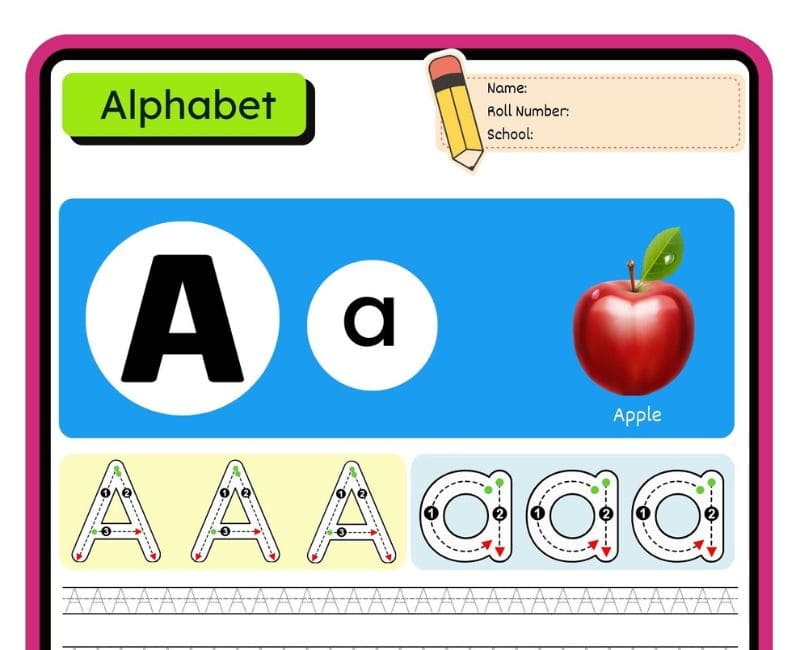
🌈 52 Pages Nursery English Worksheets – A to Z Alphabet Learning
Welcome to a colourful world of letters! These 52 pages of nursery English worksheets introduce children to capital letters A–Z, small letters a–z, alphabet tracing, letter-picture matching, beginning sounds and fun colouring activities.
Children can first try the 20-question alphabet quiz, play six interactive English games and then practise writing and recognising letters with the printable worksheet PDF. Designed for enjoyable, guided early learning at home and in nursery classrooms.
🔤 A–Z Alphabet ✏️ 52 Pages ⏱️ 20-Minute Quiz 🎮 6 Games 🎨 Tracing & Colouring📝 Nursery English Alphabet Quiz – 20 MCQs
Look at the letters and pictures, then choose the correct answer. You have 20 minutes. Parents or teachers can read each question aloud.
Answered: 0/20
Question Navigation
🎮 Six Colourful Nursery English Learning Games
Explore letters, sounds, pictures and alphabet order. Each game provides instant feedback, and children can play again as many times as they like.
1. 🔤 Find the Letter
Look at the capital letter and select its name.
2. 🅰️ Match Capital and Small Letters
Choose the matching lowercase letter.
3. 🍎 Match the Picture with Its Letter
Which letter begins the pictured word?
Apple
4. 🧩 Find the Missing Letter
Complete the alphabet sequence.
5. 🔊 Beginning Sounds Game
Find the picture whose word begins with the given letter.
6. ✏️ Trace Capital and Small Letters
Select a letter and trace the dotted guide using your finger or mouse.
Freehand handwriting practice. Drawings are not automatically graded.
📚 Free 52 Pages Nursery English Worksheets PDF for Kids
Introducing the English alphabet is an important part of early childhood learning. Our nursery English worksheets PDF helps young learners become familiar with the 26 letters of the English alphabet through tracing, writing, identifying letters and matching them with pictures.
This 52-page alphabet learning resource focuses on capital and small letters. The activities give children opportunities to recognise the shapes of letters, practise basic pencil movements and connect familiar pictures with beginning sounds.
🔤 A to Z Alphabet Worksheets for Nursery
Alphabet recognition begins with identifying the letters A to Z. Children can look at each letter, say its name and connect it with familiar words such as A for Apple, B for Ball and C for Cat.
Using pictures, flashcards and printable worksheets provides different ways to practise the same letters. Children can begin with a few familiar letters and gradually work towards recognising the complete alphabet.
For additional practice, explore our A to Z nursery alphabet worksheets and colourful English alphabet flashcards.
🅰️ Capital Letters A to Z Tracing Worksheets
Capital letter tracing introduces children to the visual forms of uppercase letters. Each letter can be practised using dotted outlines before children attempt independent writing.
Teachers can demonstrate the direction of strokes and allow children to trace using a finger before moving to a pencil or crayon. Large letters are often easier for beginners to follow.
Use these activities alongside the missing capital letters worksheet to reinforce letter order.
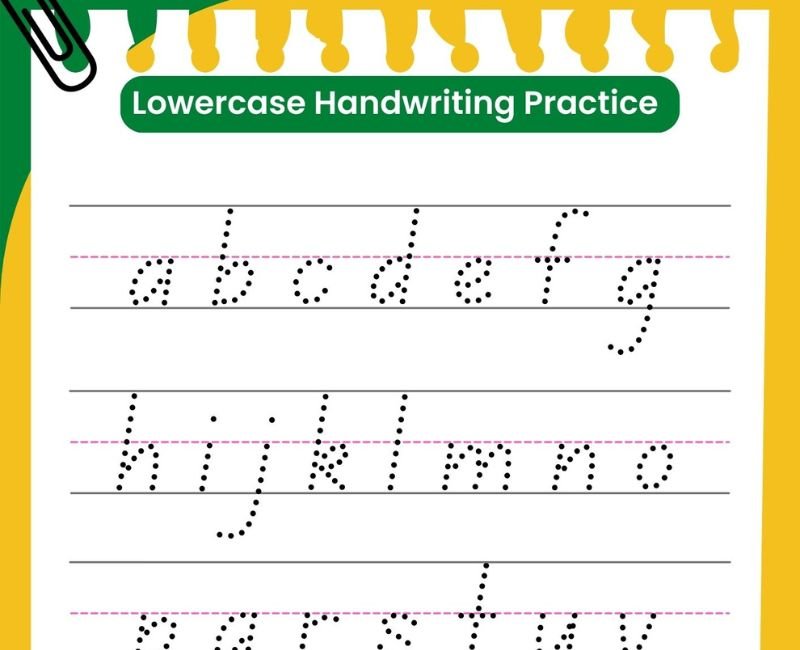
🔡 Small Letters a to z Tracing Worksheets
Lowercase letters appear frequently in printed English words. Learning to recognise and trace small letters helps children become familiar with different letter forms.
Some small letters, such as a, b, d, g and q, may need additional practice because their shapes can appear similar to beginners. Gentle repetition and clear visual examples can help.
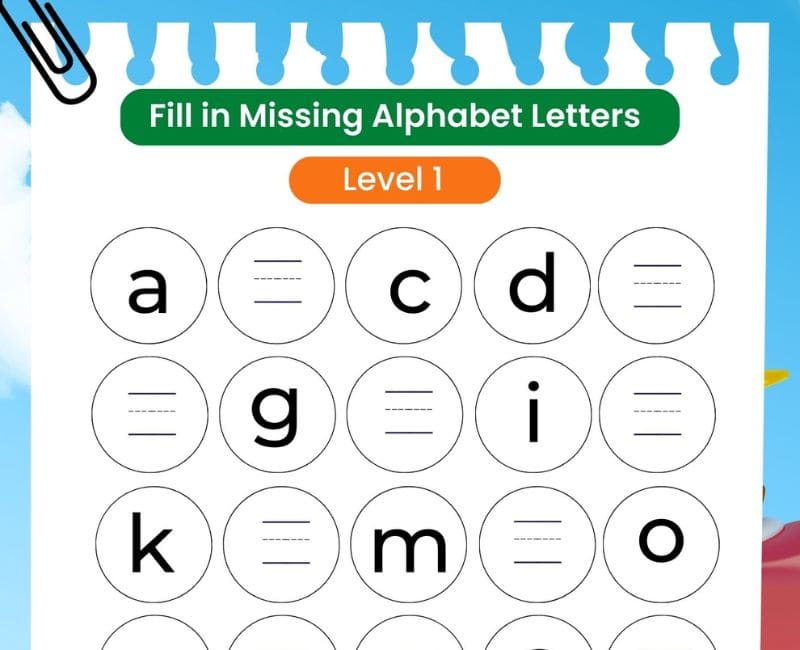
For further revision, try the small letters missing alphabet worksheet.
✏️ Capital and Small Letters Matching Activities
Children learn that uppercase and lowercase letters represent the same alphabet letter. For example, A matches a, B matches b and M matches m.
Matching activities encourage visual discrimination and help children notice the differences between capital and small letter shapes.
Our capital and small alphabet tracing worksheet and alphabet matching worksheets provide additional opportunities to practise these skills.
🍎 Alphabet Matching with Pictures
Letter-picture matching helps children connect written letters with familiar vocabulary. For example, children can match A with an apple, B with a ball and D with a dog.
Picture activities are especially useful for nursery learners who are not yet independent readers. Adults can name the objects aloud and ask children to identify the beginning letter.
Try the A to Z alphabet matching with pictures worksheets for more practice.
🔊 Beginning Sounds and Nursery Phonics
Beginning-sound activities introduce children to the relationship between letters and spoken sounds. For example, the words ball, bat and bag begin with the /b/ sound.
Letter names and letter sounds are not always the same. Teachers can say a familiar word slowly, emphasise its initial sound and then show the corresponding letter.
For example, children can listen to the beginning sound in cat and choose the letter C. As children gain confidence, they can compare words that begin with different sounds.
Explore the nursery phonics flashcards for related sound-recognition activities.
🎨 Alphabet Colouring Worksheets for Nursery
Colouring letters and related pictures offers another way to become familiar with the alphabet. Children can colour a large letter A and then colour a picture of an apple.
These activities provide opportunities to practise pencil control, visual attention and following simple instructions while revising letter names.
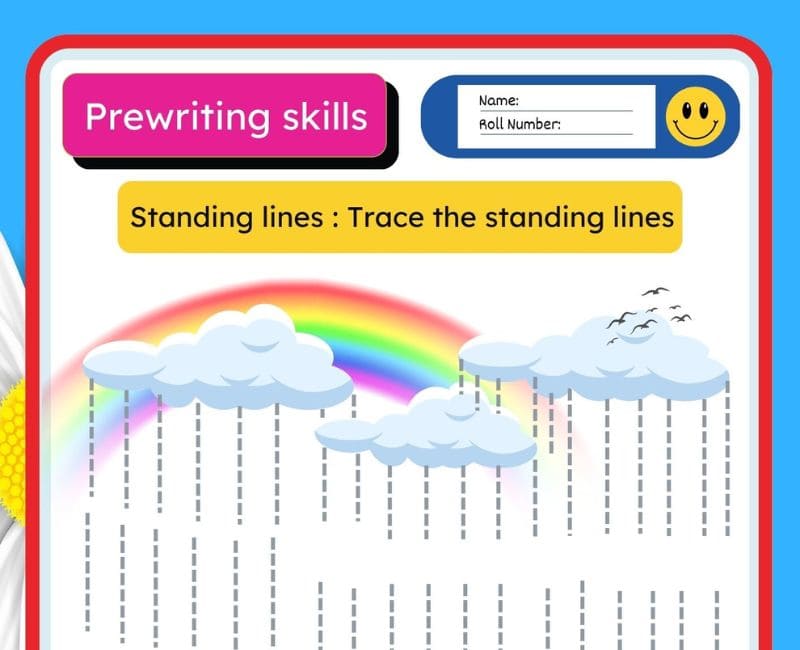
🖍️ Prewriting Skills and Pencil Control
Before children begin writing letters confidently, they benefit from practising simple movements such as straight lines, curves, loops and zigzag strokes.
Prewriting activities help children become familiar with the hand movements used during handwriting. The goal is gradual improvement, not perfectly formed letters from the beginning.
Our 33-page nursery prewriting strokes worksheets provide additional preparation for letter tracing.
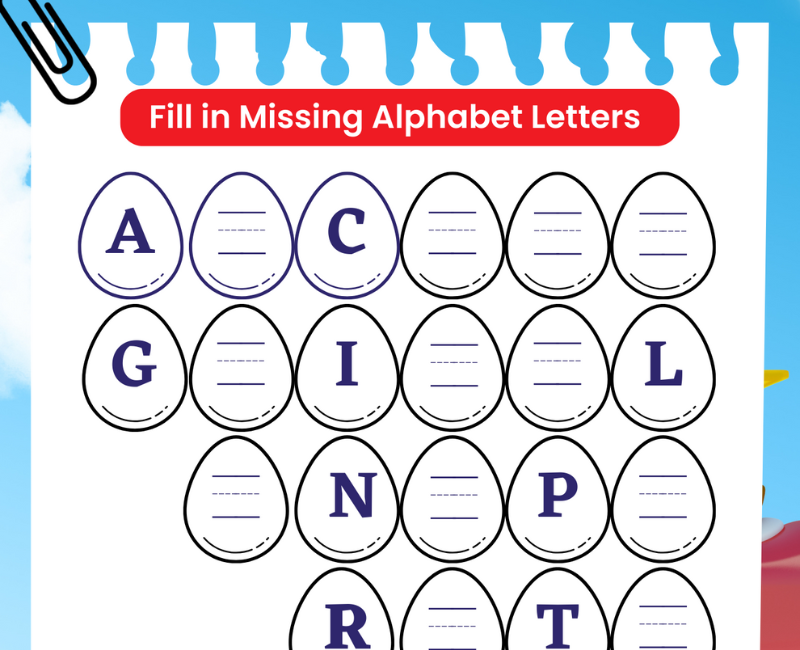
🔠 Missing Alphabet Worksheets
Missing-letter activities encourage children to recognise alphabet order. A simple sequence such as A, B, __, D asks children to identify the missing letter C.
Beginners may benefit from using an alphabet chart. Once they are familiar with the sequence, they can try completing short groups of letters independently.
🧩 Alphabet Identification and Recognition
Letter identification activities ask children to find a particular letter among several choices. For example, a worksheet might show A, M, B and D and ask children to circle B.
These activities encourage careful observation and reinforce familiarity with different letter shapes.
📝 How to Use the 52-Page Nursery English Worksheet PDF
Parents and teachers can select pages according to the child's current learning level. Start with letter identification, demonstrate tracing and then move towards matching pictures and recognising beginning sounds.
Allow children to complete short activities with breaks. Revisit familiar letters regularly and use real objects or picture cards to make the activities meaningful.
The worksheet download option on this WitKnowLearn page provides access to the available printable resource. The interactive quiz and games above offer additional digital practice.
🌟 Benefits of Alphabet Tracing for Nursery Children
Alphabet tracing gives children opportunities to practise letter recognition, visual attention and pencil movement. Matching pictures with letters also introduces vocabulary and sound awareness.
When tracing is combined with songs, conversations, picture books and hands-on activities, children can explore the alphabet through different learning experiences.
🎮 Nursery English Online Quiz and Learning Games
The 20-question quiz on this page covers capital letters, small letters, alphabet order and picture-letter recognition. Children can select answers, review their score and retake the quiz.
The six interactive games provide practice with letter identification, uppercase-lowercase matching, picture matching, missing letters, beginning sounds and freehand tracing.
👩🏫 Teaching Nursery English at Home and School
Introduce a small group of letters at a time. Use picture cards, songs, storybooks and tracing worksheets to practise recognition. Children can point to letters, say familiar words and match capital letters with small letters.
Adults should guide young learners through unfamiliar instructions and encourage them to enjoy exploring letters rather than rushing to complete every worksheet.
📝 Five Nursery English Practice Exercises
Exercise 1: Identify the Beginning Letter
- 🍎 Apple begins with __
- ⚽ Ball begins with __
- 🐱 Cat begins with __
- 🐶 Dog begins with __
- 🐘 Elephant begins with __
Show Answers
1. A; 2. B; 3. C; 4. D; 5. E.
Exercise 2: Match Capital and Small Letters
- A → __
- F → __
- H → __
- M → __
- T → __
Show Answers
1. a; 2. f; 3. h; 4. m; 5. t.
Exercise 3: Complete the Missing Letters
- A, B, __, D
- E, F, __, H
- J, K, __, M
- P, Q, __, S
- W, X, __, Z
Show Answers
1. C; 2. G; 3. L; 4. R; 5. Y.
Exercise 4: Identify the Small Letters
- Write the small letter of B.
- Write the small letter of D.
- Write the small letter of G.
- Write the small letter of N.
- Write the small letter of R.
Show Answers
b, d, g, n, r.
Exercise 5: Alphabet and Picture Matching
- Which letter begins the word Sun?
- Which letter begins the word Fish?
- Which letter begins the word Lion?
- Which letter begins the word Kite?
- Which letter begins the word Zebra?
Show Answers
S, F, L, K, Z.
💡 Teaching Tips for Nursery English
- Introduce three or four letters at a time.
- Use colourful alphabet cards and familiar picture objects.
- Demonstrate the correct letter formation before tracing.
- Let children trace large letters with their fingers first.
- Practise capital and small letters together.
- Say beginning sounds clearly using familiar words.
- Encourage children to identify letters in picture books.
- Combine printable worksheets with the interactive games above.
- Give positive feedback for effort and improvement.
- Use short, enjoyable sessions rather than lengthy writing drills.
🔗 Explore More Nursery English Worksheets
Continue learning with these related WitKnowLearn resources. Each worksheet focuses on a different early English skill.
❓ Frequently Asked Questions
What is included in the 52-page nursery English worksheet?
The resource is described as covering A–Z capital and small letter tracing, letter-picture matching, beginning sounds and colouring activities.
Are these worksheets suitable for nursery children?
Yes. The activities introduce early alphabet recognition and handwriting practice. Adults can guide children according to their learning readiness.
How can I teach A to Z letters to nursery children?
Introduce a few letters at a time using flashcards, pictures, songs, tracing and simple matching activities.
What is the difference between capital and small letters?
Capital letters are uppercase forms such as A, B and C. Small letters are lowercase forms such as a, b and c.
Why are alphabet tracing worksheets useful?
They provide opportunities to practise recognising letter shapes and developing pencil movement and hand control.
How do picture matching worksheets help children?
They connect familiar vocabulary with letters and help children practise identifying beginning sounds.
Can children practise nursery English online?
Yes. This page includes a 20-question alphabet quiz and six interactive letter-learning games.
Where can I find more nursery English worksheets?
Visit the Nursery English collection on WitKnowLearn for alphabet tracing, matching, phonics, flashcards and prewriting resources.
 Download