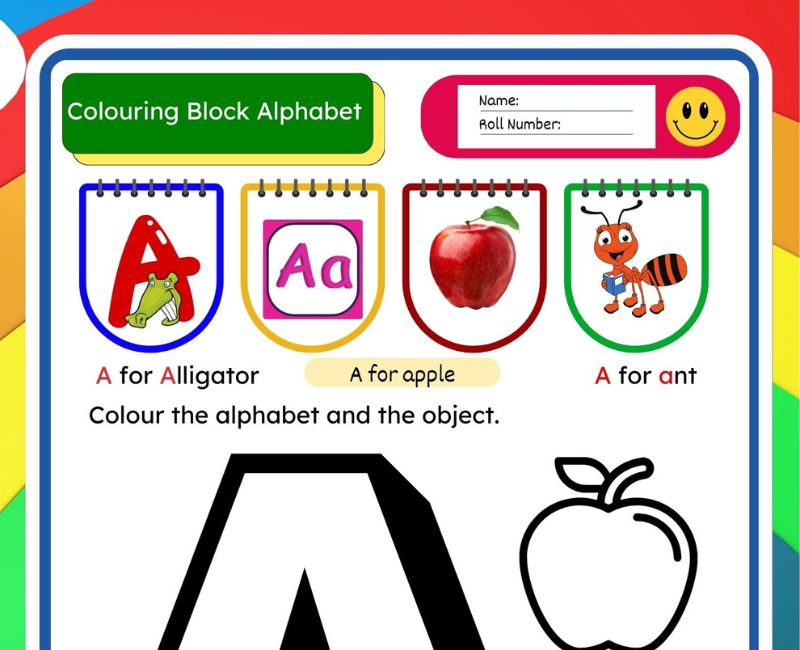
🌈 A to Z Nursery English Alphabet Colouring Worksheets
Learn the English alphabet with our 26 free A to Z nursery English alphabet worksheets! Each printable page introduces a letter through an engaging picture that children can colour while practising letter recognition.
Start with the 20-question alphabet quiz, explore six interactive games and then enjoy the printable alphabet colouring pages. These activities introduce letters A–Z through pictures, matching, beginning sounds and playful early English learning.
🔤 A–Z Alphabet 🎨 26 Colouring Pages 📝 20 MCQs ⏱️ 20 Minutes 🎮 6 Games📝 A to Z Alphabet Online Quiz for Nursery
Look at the letters and pictures and select the correct answer. Children can answer 20 questions within 20 minutes, with adult guidance if needed.
Answered: 0/20
Question Navigation
🎮 Six Colourful A to Z Alphabet Learning Games
These games help children identify letters, match pictures, practise alphabet order and enjoy digital letter colouring.
1. 🔤 Find the Correct Letter
Look at the large letter and select the matching letter.
2. 🍎 Alphabet Picture Matching
Look at the picture and choose its beginning letter.
Jar
3. 🅰️ Match Capital and Small Letters
Choose the lowercase letter that matches the capital letter.
4. 🧩 Missing Alphabet Game
Which letter completes the alphabet sequence?
5. 🔊 Beginning Sound Picture Game
Choose the picture whose name begins with the displayed letter.
6. 🎨 Colour the Alphabet Letter
Choose a letter and a colour. Use your finger or mouse to colour inside the large outlined letter.
Freehand digital colouring practice. The drawing is not automatically graded.
📚 Free A to Z Nursery English Alphabet Worksheets PDF
Learning the English alphabet is one of the first steps in early literacy. Our A to Z nursery English alphabet worksheets introduce all 26 letters through picture-based colouring activities designed for young children.
Each alphabet colouring worksheet focuses on a different letter and a related illustration. Children can recognise the letter, talk about the picture and colour the illustration while becoming familiar with the alphabet.
The printable activities can be used at home, in nursery classrooms or during guided preschool learning sessions. They also pair well with alphabet songs, flashcards and picture books.
🌈 26 Alphabet Colouring Worksheets from A to Z
The worksheet collection provides 26 colouring pages, with one page dedicated to each letter of the English alphabet. Introducing letters through pictures makes alphabet practice more visually engaging for nursery children.
For example, children can explore A for Apple, B for Butterfly and C for Cat. The pictures provide a familiar context for discussing letter names and words.
Children who need more alphabet recognition practice can also explore the 52-page nursery English worksheet collection.
🍎 A for Apple Alphabet Colouring Worksheet
The letter A can be introduced using the familiar picture of an apple. Children can identify the capital letter A, say the word apple and colour the picture.
Adults can also show a real apple and encourage children to connect the object with its picture and beginning letter.
🦋 B for Butterfly Alphabet Colouring Worksheet
The letter B can be introduced through a butterfly picture. Children can look at the letter B, name the butterfly and colour its wings using their favourite colours.
Teachers can extend the activity by introducing other familiar B words such as ball and bag.
🐱 C for Cat Alphabet Colouring Worksheet
The letter C can be introduced using a picture of a cat. Children can say the word cat, identify its beginning letter and colour the illustration.
This activity provides an opportunity to connect the letter C with the /k/ sound heard at the beginning of cat.
🔤 Learning Capital Letters A to Z
Capital letter recognition helps children become familiar with the visual shapes of uppercase letters. Children can point to letters, name them and find the same letters in picture books or alphabet charts.
Colouring large letters and illustrations can make recognition practice enjoyable. For additional alphabet sequence activities, use our A to Z missing capital letters worksheets.
🔡 Learning Small Letters a to z
Small letters are important because they appear frequently in English words. Once children recognise familiar capital letters, they can begin matching them with their lowercase forms.
For example, A matches a, B matches b and C matches c. Matching activities help children understand that different letter forms represent the same alphabet letter.
Continue practising with missing small letters worksheets and capital and small letter tracing worksheets.
✏️ Alphabet Tracing and Handwriting Readiness
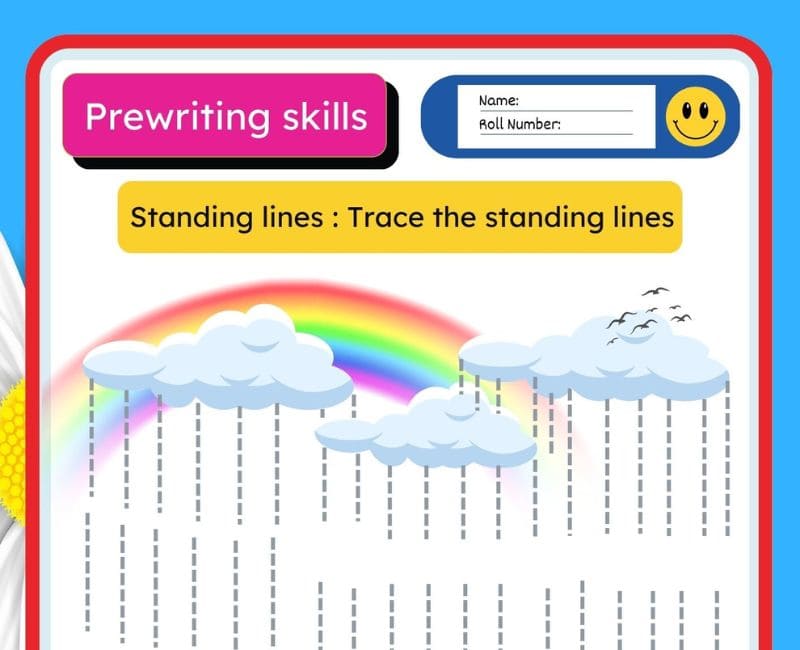
Colouring worksheets can be used alongside alphabet tracing activities. Before independent letter writing, children benefit from practising simple lines, curves and other pencil movements.
Tracing large letters with a finger can help children become familiar with letter shapes. Teachers can then introduce guided pencil tracing when children are ready.
Our 33-page prewriting strokes worksheet offers additional practice with early pencil movements.
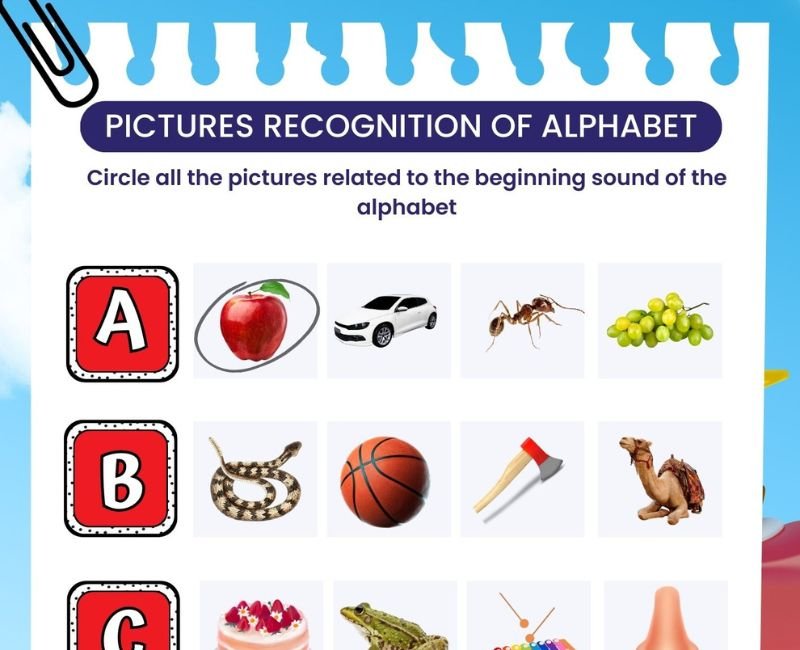
🧩 Alphabet Matching with Pictures
Alphabet picture matching helps children connect letters with familiar objects and animals. A child might match A with apple, B with butterfly or C with cat.
These activities encourage observation and introduce vocabulary through visual learning. Teachers can show a picture and ask children to name it before identifying its first letter.
Explore A to Z matching alphabets with pictures worksheets for additional activities.
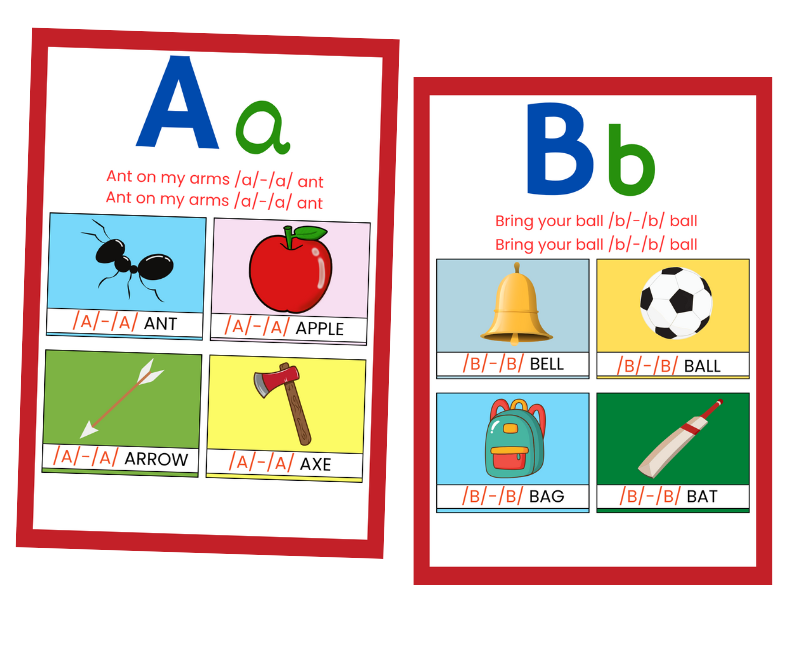
🔊 Alphabet Beginning Sounds for Nursery
Beginning-sound awareness is an important part of early phonics learning. Children can listen to words and notice their initial sounds.
For example, ball and butterfly begin with the /b/ sound, while cat and cup begin with the /k/ sound. Adults should pronounce the words clearly and help children listen for the sound at the beginning.
Not every letter has only one sound, so early phonics activities should use familiar examples and age-appropriate explanations.
Our nursery phonics flashcards provide further sound-recognition practice.
🎨 Benefits of Alphabet Colouring Worksheets
Alphabet colouring activities combine letter recognition with creative expression. Children can identify a letter, discuss the accompanying picture and use crayons or coloured pencils to complete the activity.
Colouring also provides opportunities to practise hand control, visual attention and following simple instructions. These activities can complement, rather than replace, play-based learning and conversation.
🖍️ Alphabet Colouring Activities at Home
Parents can use one alphabet colouring page at a time. Begin by showing the letter and saying its name. Next, ask the child to identify the picture and choose colours for it.
After colouring, revisit the letter through a song or flashcard game. Children can also look for the same letter in books or on familiar objects around the home.
👩🏫 Alphabet Colouring Activities in the Classroom
Teachers can introduce a letter during circle time and then provide a corresponding colouring worksheet. Children can name the letter, talk about the picture and complete the activity individually or in small groups.
Completed alphabet colouring pages may be displayed on a classroom alphabet wall to reinforce recognition through repeated exposure.
🃏 Alphabet Flashcards and Visual Learning
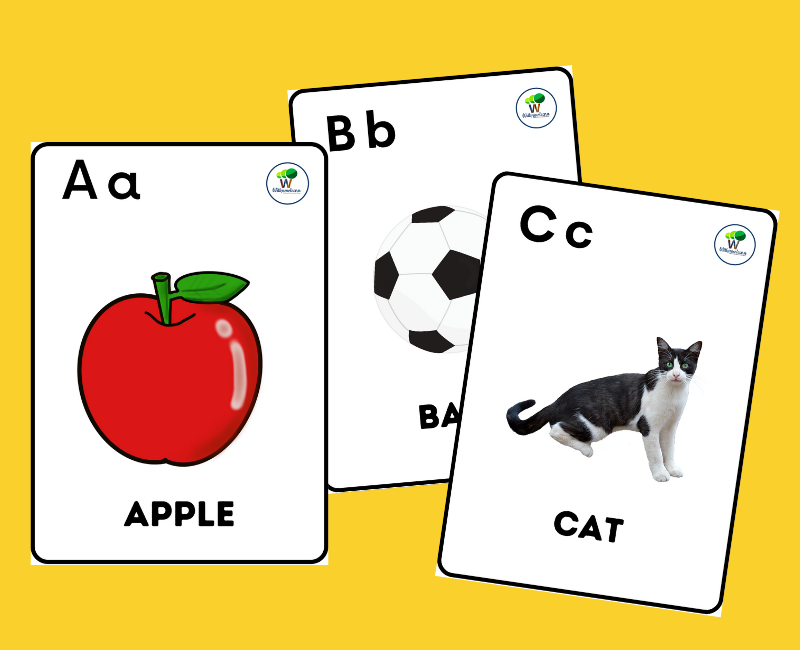
Flashcards can help children practise letter recognition without relying only on worksheets. Show one card at a time, ask the child to identify the letter and connect it with a familiar picture.
For more visual practice, explore our 26 colourful alphabet flashcards with pictures.
🎮 Online Alphabet Quiz and Interactive Games
The 20-question alphabet quiz on this page includes letter identification, capital and small letters, picture recognition and alphabet order. Children can answer the questions, review their score and repeat the quiz.
Six interactive alphabet games provide additional practice with letter matching, picture identification, missing letters, beginning sounds and digital colouring.
These online activities complement the printable colouring pages and provide different ways to revisit familiar letters.
🖨️ Free Printable Alphabet Colouring Worksheets PDF
The printable A to Z alphabet colouring worksheets can be used for guided classroom activities, home practice and early literacy revision. Parents and teachers can print individual letter pages according to the child's learning needs.
Use the existing download option on this WitKnowLearn page to access the available printable PDF. The online games above provide an additional interactive learning experience.
🌟 How to Make Alphabet Learning Enjoyable
Introduce a small number of letters at a time and use familiar pictures to help children remember them. Combine colouring pages with alphabet songs, picture cards, storytelling and simple matching games.
Allow children to explore colours freely and praise their effort. Alphabet learning should remain playful and developmentally appropriate.
📝 Five Alphabet Practice Exercises with Answers
Exercise 1: Identify the Beginning Letter
- 🍎 Apple begins with __
- 🦋 Butterfly begins with __
- 🐱 Cat begins with __
- 🐶 Dog begins with __
- 🐘 Elephant begins with __
Show Answers
1. A; 2. B; 3. C; 4. D; 5. E.
Exercise 2: Match Capital and Small Letters
- A → __
- B → __
- F → __
- M → __
- T → __
Show Answers
1. a; 2. b; 3. f; 4. m; 5. t.
Exercise 3: Fill in the Missing Alphabet
- A, B, __, D
- E, F, __, H
- J, K, __, M
- P, Q, __, S
- W, X, __, Z
Show Answers
1. C; 2. G; 3. L; 4. R; 5. Y.
Exercise 4: Choose the Correct Beginning Letter
- Sun – S or T?
- Fish – F or V?
- Lion – L or M?
- Kite – K or H?
- Zebra – Z or X?
Show Answers
1. S; 2. F; 3. L; 4. K; 5. Z.
Exercise 5: Complete the Alphabet Words
- A for A__le
- B for B__terfly
- C for C__
- D for D__
- E for E__phant
Show Answers
1. Apple; 2. Butterfly; 3. Cat; 4. Dog; 5. Elephant.
👩🏫 Teaching Tips for Nursery Alphabet Colouring
- Introduce one or two new letters at a time.
- Show the letter and its corresponding picture before colouring.
- Encourage children to say the letter name aloud.
- Use real objects and picture cards whenever possible.
- Allow children to choose their own colours.
- Practise familiar letters regularly through songs and games.
- Use uppercase and lowercase matching as an extension activity.
- Combine colouring with simple beginning-sound activities.
- Use child-safe crayons and supervise cutting or craft activities.
- Keep learning sessions short and enjoyable.
🔗 More Nursery English Worksheets and Alphabet Activities
Explore these related WitKnowLearn resources for alphabet tracing, picture matching, phonics, prewriting and more.
❓ Frequently Asked Questions
What are A to Z nursery English alphabet worksheets?
They are early learning activities that introduce letters A–Z through pictures, colouring and letter recognition practice.
How many alphabet colouring worksheets are included?
The resource is described as containing 26 alphabet colouring pages, with one page for each English alphabet letter.
Are these alphabet worksheets suitable for nursery children?
Yes. The activities introduce early letter recognition and colouring, with adult guidance where needed.
How can I teach the English alphabet using pictures?
Show a letter, name the corresponding picture and ask children to identify the beginning letter before colouring or matching.
Do alphabet colouring worksheets help with handwriting?
Colouring offers opportunities to practise pencil control and visual attention. Guided letter tracing can be introduced separately when children are ready.
What is the best way to introduce capital and small letters?
Start with familiar letters and gradually match uppercase forms with lowercase forms, such as A with a and B with b.
Can children play alphabet games online?
Yes. This page includes a 20-question alphabet quiz and six interactive games covering recognition, matching, letter order, beginning sounds and colouring.
Where can I find more nursery English worksheets?
Visit the Nursery English worksheet collection on WitKnowLearn for alphabet tracing, phonics, matching, flashcards and prewriting activities.
 Download