🌈 Alphabet Matching Worksheets for Nursery
Welcome to colourful alphabet learning! These alphabet matching worksheets for nursery help children recognise capital and small letters, match pictures with letters and practise the English alphabet through fun activities.
Enjoy a 20-question online quiz followed by 10 hands-on interactive games. Children can use their fingers to drag letters, connect matching pairs, trace letters, sort cards, flip memory cards and complete puzzles. Five practice exercises with answer checking are also included.
🔤 A to Z Matching 📝 20 MCQs 🎮 10 Games 👆 Touch Friendly ✏️ 5 Exercises📝 Alphabet Matching Online Quiz — 20 Questions
Choose the correct matching letter or picture. The quiz has a 20-minute timer, question navigation, scoring and answer review.
Answered: 0/20
Match this capital letter with its small letter.
🎮 10 Hands-on Interactive Alphabet Games
These games involve touching, drawing, moving and arranging objects. They are separate from the multiple-choice quiz.
1. 🧲 Drag and Match Letters
Drag capital letters onto matching small letters. You can also tap a letter and then its box.
Drag a capital letter or tap it and then its matching box.
2. 🖍️ Connect Matching Letters
Tap a capital letter and then tap its matching small letter. A line will connect them.
Tap a card on the left and its match on the right.
3. ✍️ Finger Letter Tracing
Trace the big letter using your finger, stylus or mouse.
Trace the pale letter with your finger.
4. 🧺 Sort Letters into Baskets
Drag capital letters into the CAPITAL basket and small letters into the small basket. You can also tap a card and then a basket.
✅ Sorted 1/6
5. 🃏 Flip and Match Memory Cards
Flip two cards to find matching capital and small letter pairs.
Flip two cards to find a matching pair.
6. 🧩 Build the Alphabet Puzzle
Move lowercase letter tiles into their correct alphabetical positions.
Arrange the letters in alphabetical order.
7. 👾 Feed the Alphabet Monster
Feed the monster the lowercase letter matching its capital letter.
Feed the monster its matching lowercase letter.
8. 🍎 Connect Pictures to Letters
Connect each picture with the correct beginning capital letter.
Tap a card on the left and its match on the right.
9. 🎈 Pop the Matching Balloon
Tap the balloon containing the small letter that matches the displayed capital letter.
Pop the matching lowercase balloon.
10. 🚂 Build the Alphabet Train
Move letter tiles into the correct order to complete the alphabet train.
Arrange the letters in alphabetical order.
📚 Free Alphabet Matching Worksheets for Nursery Class
Alphabet matching worksheets are useful early learning activities for children who are beginning to recognise English letters. They provide opportunities to identify capital and small letters, recognise familiar pictures and connect letter shapes with their matching forms.
WitKnowLearn offers alphabet matching activities that can be used at home and in the classroom. The online games on this page add finger-based activities to traditional printable worksheet practice.
🔤 What Are Alphabet Matching Worksheets?
Alphabet matching worksheets ask children to connect letters with identical letters, uppercase and lowercase partners or pictures that begin with the same letter. For example, A matches a, B matches b and C matches c.
Children can draw lines between matching pairs, circle matching letters or move letter cards into the correct positions.
🅰️ Capital and Small Letter Matching
The English alphabet has 26 letters. Each letter has an uppercase and a lowercase form. Capital letters include A, B, C and D, while the matching small letters are a, b, c and d.
Some uppercase and lowercase forms look similar, while others look different. For example, C and c have similar shapes, whereas G and g may look noticeably different.
Practising both forms helps children become familiar with written English letters.
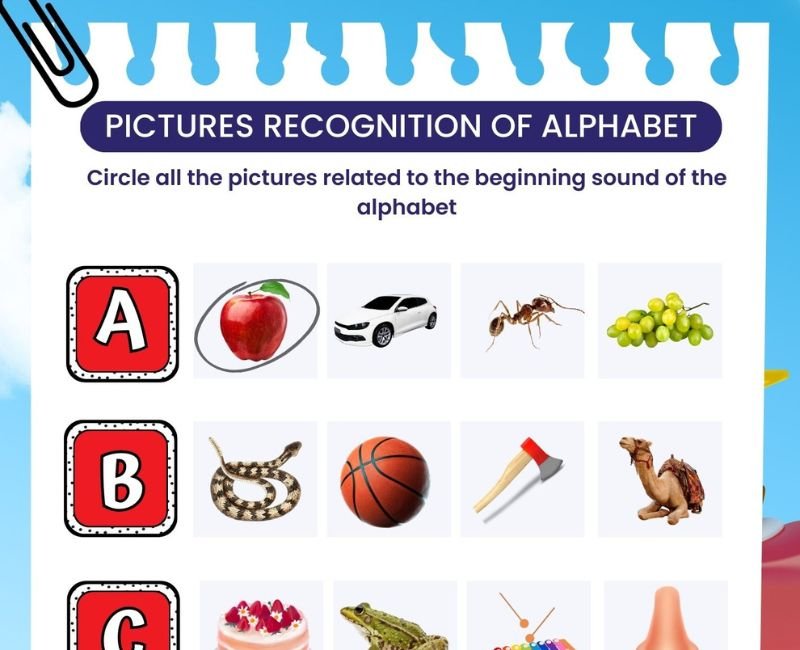
🍎 Alphabet Matching with Pictures
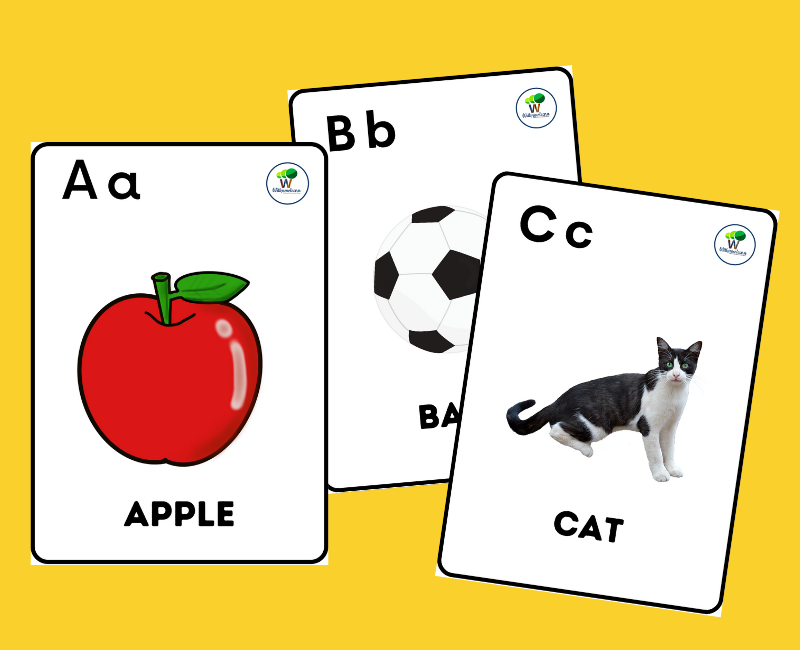
Picture matching combines letter recognition with familiar vocabulary. Children can match A with Apple, B with Ball, C with Cat and D with Dog.
Teachers can show a picture, say its name aloud and ask children to identify the beginning letter.
Explore our alphabet matching with pictures worksheets for additional practice.
👆 Why Hands-on Alphabet Games Are Useful
Young children can practise alphabet recognition in several ways. Dragging cards, tracing letters and connecting matching pairs provide opportunities to interact with letter shapes instead of only choosing answers.
Moving and sorting letter cards can also encourage hand-eye coordination and attention to visual details.
🧲 Drag and Drop Alphabet Activities
In drag-and-drop matching activities, children move a capital letter to its corresponding lowercase letter. For example, a child may drag M onto m.
These activities can be completed using a mouse on a computer or a finger on a touchscreen.
🖍️ Draw Lines to Match Letters
Drawing lines between matching letters is a familiar nursery worksheet activity. Children identify a letter on one side and connect it to its partner on the other side.
The interactive connecting games on this page create colourful lines between correctly matched pairs.
✍️ Alphabet Finger Tracing
Tracing activities provide opportunities to practise the movements involved in writing letters. Children can follow a large letter shape with a finger or stylus.
Our finger tracing game includes uppercase and lowercase letters and a clear button for repeated practice.
For printable writing practice, visit our capital and small alphabet tracing worksheets.
🧺 Sorting Capital and Small Letters
Letter sorting asks children to classify letter cards into groups. In this activity, one basket is labelled CAPITAL and another is labelled small.
Children move uppercase letters into the first basket and lowercase letters into the second. This reinforces the visual differences between the two forms.
🃏 Alphabet Memory Matching Games
Memory matching games use hidden cards. Children turn over two cards at a time and try to find an uppercase and lowercase pair.
For example, A and a form a pair. When the cards do not match, children can remember their positions and try again.
🧩 Alphabet Sequencing Puzzles
Alphabet puzzles encourage children to place letters in their correct order. Start with a short sequence of four or five letters before practising longer sections of the alphabet.
For additional alphabet sequencing practice, explore our missing small letters worksheets.
🎨 Colourful Alphabet Learning
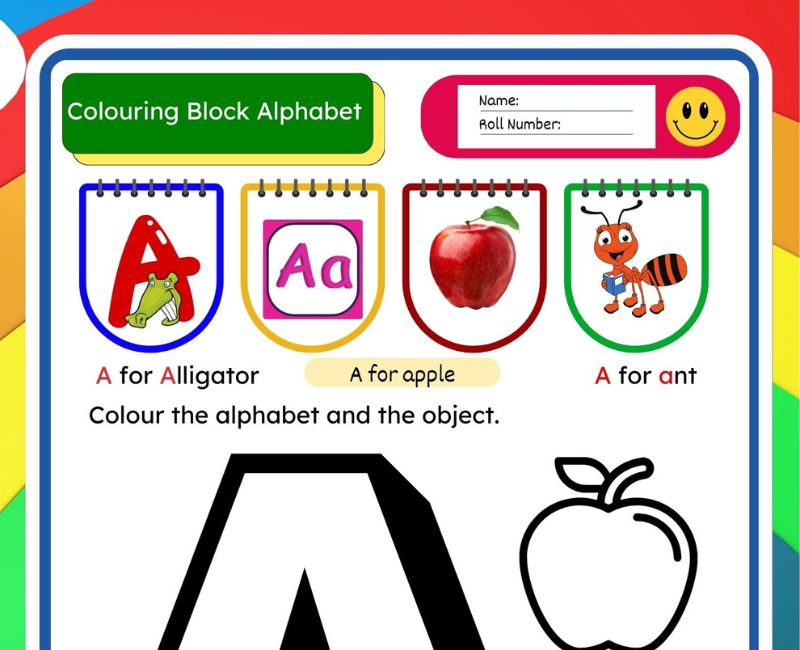
Colourful letters, pictures and interactive activities can make alphabet practice more engaging. Teachers may combine matching worksheets with colouring, tracing and flashcards.
Visit our A to Z nursery alphabet colouring worksheets for more creative activities.
🔊 Matching Letters and Beginning Sounds
Children can also connect letters with the beginning sounds of familiar words. For example, the letter M can be introduced through Mango and the letter S through Sun.
Picture matching and phonics activities can complement uppercase and lowercase letter recognition.
Explore our nursery phonics flashcards for further practice.
📝 Alphabet Matching Online Quiz
The 20-question online quiz provides multiple-choice practice in capital and small letter matching and picture-letter recognition.
Children have 20 minutes to complete the quiz. After submission, they can view their score and review the correct answers.
🎮 Ten Interactive Alphabet Games
The ten games on this page include dragging, connecting, tracing, sorting, memory matching, alphabet puzzles and picture activities.
These games provide different ways to practise alphabet recognition. They can be used for short classroom activities or guided learning at home.
🖨️ Printable Alphabet Matching Worksheets PDF
Printable worksheets can be used for nursery classroom practice, homework and alphabet revision. Children can connect matching letters using pencils or crayons.
Use the existing PDF download option on this WitKnowLearn worksheet page to access the printable alphabet matching resource.
👩🏫 Teaching Alphabet Matching at Home and School
Begin with a few familiar letters, such as A, B and C. Show their lowercase partners and demonstrate how to match them.
Gradually introduce additional letters, picture cards and interactive activities. Encourage children to say each letter aloud and provide guidance when needed.
🌟 Benefits of Alphabet Matching Activities
Alphabet matching activities provide opportunities to practise letter recognition, visual discrimination, alphabet order and familiar vocabulary.
Combining printable worksheets with hands-on games and tracing activities offers a varied approach to early literacy practice.
📚 More Nursery English Learning Resources
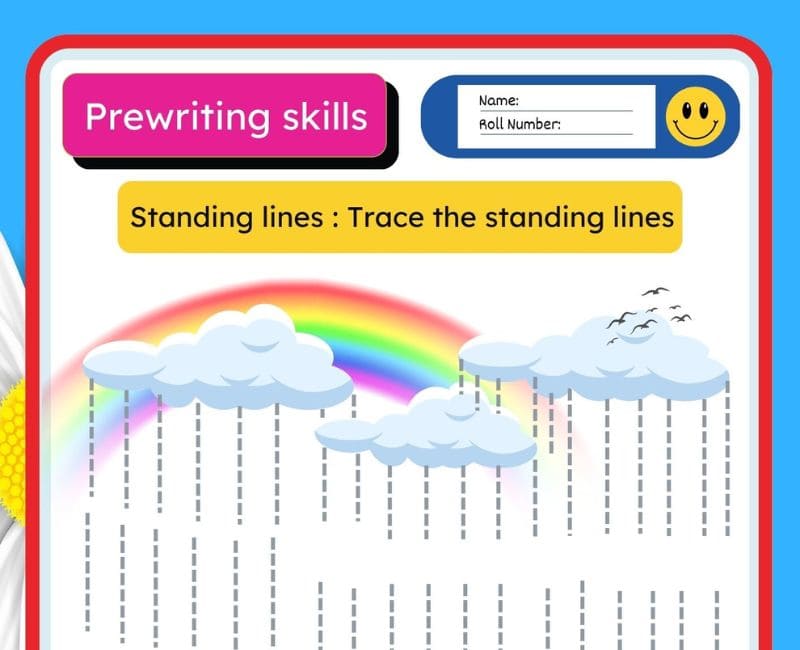
Continue with our 52-page nursery English worksheets, prewriting strokes worksheets and 72-page nursery English activity book.
✏️ Five Interactive Alphabet Matching Exercises
Write the matching letter inside each colourful box. Check your answers and try again.
Exercise 1: Capital to Small Letters
🔑 Show Answers
a, d, g, m, t
Exercise 2: Small to Capital Letters
🔑 Show Answers
B, F, H, P, Y
Exercise 3: Picture Beginning Letters
🔑 Show Answers
A, C, D, F, S
Exercise 4: More Capital and Small Matches
🔑 Show Answers
e, j, n, r, z
Exercise 5: Picture Letter Challenge
🔑 Show Answers
B, E, L, M, U
👩🏫 Teaching Tips
- Start with three familiar letter pairs.
- Use colourful capital and small letter cards.
- Allow children to drag and move letters.
- Encourage finger tracing on touchscreens.
- Practise matching pictures with beginning letters.
- Introduce alphabet puzzles gradually.
- Use memory games for letter recognition.
- Provide adult guidance for nursery learners.
- Repeat activities using different letters.
- Combine online activities with printable worksheets.
🔗 More Nursery English Worksheets
❓ Frequently Asked Questions
What are alphabet matching worksheets?
They are activities where children match letters with identical letters, lowercase partners or pictures.
Are these activities suitable for nursery?
Yes. They introduce alphabet recognition through simple matching activities with adult guidance.
Can children use their fingers to play the games?
Yes. The games support touch interaction on compatible phones and tablets, as well as mouse input on computers.
Does the page include alphabet tracing?
Yes. The tracing canvas lets children practise uppercase and lowercase letters.
Can children drag letters into baskets?
Yes. Children can drag letter cards or tap a card and then its matching basket.
How many interactive games are included?
Ten hands-on alphabet games are included.
Does the quiz provide a score?
Yes. The 20-question quiz provides scoring and answer review.
Where can I find printable worksheets?
Use the existing PDF download option on this WitKnowLearn page.
 Download