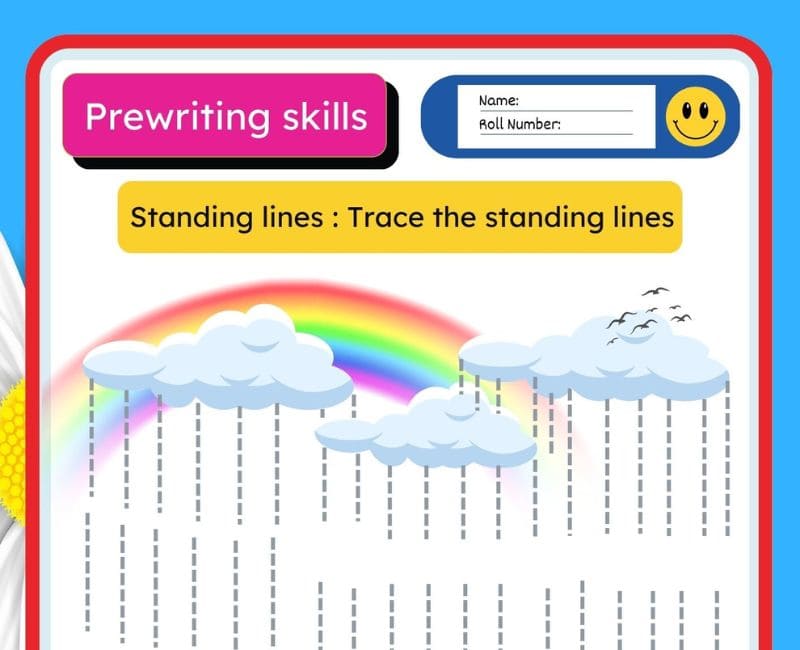
✍️ Prewriting Skills and Strokes Worksheets for Nursery
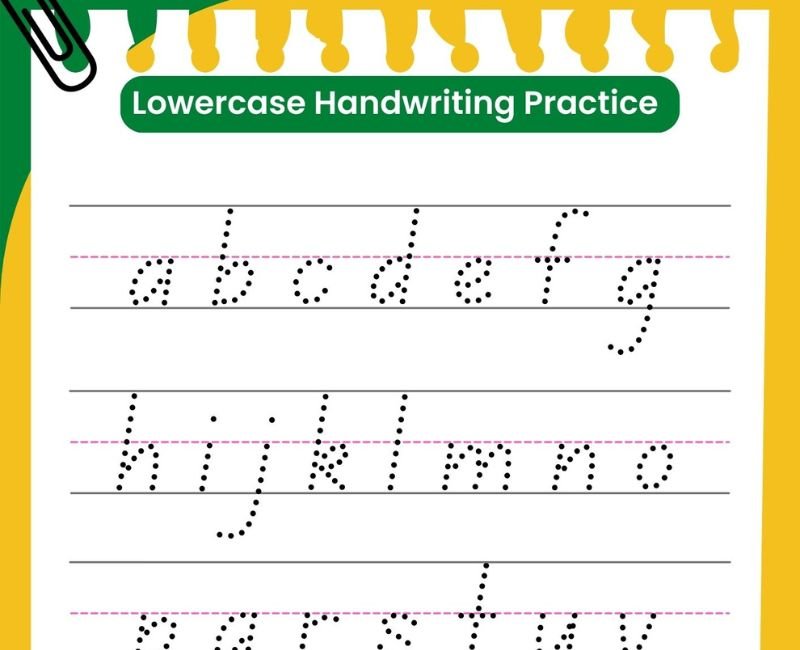
Welcome to a colourful world of prewriting practice! Children can learn standing lines, sleeping lines, slanting lines, curves, waves, loops and zigzag patterns through fun finger-tracing activities.
This nursery learning page includes a 20-question online quiz, 10 hands-on interactive games, five practice exercises and helpful printable worksheet guidance. Children can use a finger, stylus or mouse to draw, trace, connect and complete patterns.
Choose your favourite pen colour, follow the tracing guides and enjoy learning the basic strokes used in early handwriting.
✍️ Prewriting 👆 Finger Tracing 🎮 10 Games 📝 20 Questions 🌈 Colourful Drawing📝 Prewriting Strokes Online Quiz
Identify standing lines, sleeping lines, curves, zigzags and other basic strokes. Complete 20 questions within 20 minutes.
Answered: 0/20
What type of line is this?
🎮 10 Interactive Prewriting and Tracing Games
Children can draw, trace, drag, sort, match and arrange prewriting patterns. These are hands-on activities, not another multiple-choice quiz.
1. 📏 Standing Line Finger Tracing
Trace the standing lines from top to bottom. Choose a colour before drawing.
✍️ Standing Lines
2. ➖ Sleeping Line Finger Tracing
Follow the horizontal sleeping lines from left to right.
✍️ Sleeping Lines
3. 📐 Slanting Line Finger Tracing
Practise left-slanting and right-slanting lines.
✍️ Right Slanting Lines
4. 🌊 Curves and Waves Tracing
Follow the curved and wavy paths using your finger or mouse.
✍️ Wavy Lines
5. ⚡ Zigzag and Loop Tracing
Trace zigzags, loops and repeating patterns.
✍️ Zigzag Pattern
6. 🎨 Rainbow Free Drawing
Choose black, red, blue, green or another colour and draw your own prewriting patterns.
✍️ Free Drawing
7. 🧺 Sort Lines into Baskets
Drag each line into its matching basket. You can also tap a card and then tap a basket.
Drag a line or tap a line and then its basket.
8. 🃏 Flip and Match Line Patterns
Flip two cards and find identical prewriting stroke patterns.
Flip two cards to find identical patterns.
9. 🧩 Complete the Pattern Puzzle
Drag the missing pattern into the empty box. You can also tap the card and then its box.
Drag the cards into the matching positions.
10. 🚂 Build a Prewriting Pattern Train
Arrange the pattern cards in the same order shown in the guide.
Drag the cards into the matching positions.
✏️ Five Interactive Prewriting Practice Exercises
Identify each stroke or complete the pattern. Type the correct answer into the colourful box and check your score.
Exercise 1: Identify Standing and Sleeping Lines
🔑 Show Answers
Standing, Sleeping, Standing, Sleeping, Standing
Exercise 2: Identify Basic Strokes
🔑 Show Answers
Slanting, Circle, Wavy, Curved, Zigzag
Exercise 3: Complete the Pattern
🔑 Show Answers
│, ○, ╱, ━, │
Exercise 4: Match Stroke Names
🔑 Show Answers
│, ━, ╱, ○, ∿
Exercise 5: Mixed Prewriting Practice
🔑 Show Answers
Standing, Sleeping, Slanting, Circle, Wavy
🔗 Related Nursery English Worksheets
📚 Prewriting Skills and Strokes Worksheets for Nursery
Prewriting skills worksheets for nursery help children practise the basic lines, curves and patterns used in early handwriting. Before children begin writing letters and numbers, they can become familiar with standing lines, sleeping lines, slanting lines, zigzags, waves and loops.
These activities provide opportunities to develop hand control, visual attention and coordination. Our interactive prewriting games let children practise drawing movements using a finger, stylus or mouse before continuing with pencil-and-paper worksheets.
What Are Prewriting Skills?
Prewriting skills are the foundational abilities children use before learning to form letters and numbers independently. They include controlling drawing movements, following simple paths, recognising shapes and coordinating hand movements with visual information.
Common nursery prewriting activities include tracing straight lines, curved lines, dotted paths, waves, loops and simple geometric patterns.
Standing Line Worksheets for Nursery
A standing line is a vertical line. Children commonly practise drawing it from top to bottom.
Standing line worksheets provide simple vertical paths for children to trace. Teachers may begin with large lines and gradually introduce smaller patterns as children become more comfortable.
The standing line finger-tracing game above allows children to follow a guide and repeat the movement using different colours.
Sleeping Line Worksheets for Nursery
A sleeping line is a horizontal line. Children can practise drawing it from left to right.
Standing and sleeping lines are among the first strokes introduced in many nursery handwriting programmes.
Practising both directions helps children distinguish vertical and horizontal movements.
Standing Line and Sleeping Line Activities
Teachers can demonstrate the difference between standing and sleeping lines using simple classroom examples.
A standing line moves up and down, while a sleeping line moves from side to side.
Children can identify the lines, trace them and sort matching cards into the correct baskets.
Slanting Line Worksheets
Slanting lines are diagonal lines. They may lean towards the left or towards the right.
These lines are useful for practising changes in drawing direction. They also appear in the shapes of several English letters.
The interactive slanting line activity provides guided diagonal paths that children can follow.
Curved Line Tracing for Nursery
Curved lines help children practise smooth changes in direction.
Examples include C-shaped curves, U-shaped curves, arches and circles.
Teachers can introduce curved patterns through finger movements, air writing and large drawing activities.
Wavy Line Tracing Worksheets
Wavy lines combine repeated curves into a continuous pattern.
Children can follow a wavy path from one side of the page to the other.
Wavy line practice provides an opportunity to develop smoother drawing movements and maintain attention along a path.
Zigzag Line Worksheets for Nursery
Zigzag lines consist of connected slanting lines that change direction.
Tracing zigzags helps children practise moving between different angles while maintaining control of the drawing tool.
The zigzag tracing activity above includes several repeating patterns.
Loop Tracing Activities
Loops are curved movements that form rounded or overlapping shapes.
Loop tracing can introduce children to continuous drawing movements used in some handwriting styles.
Begin with large loops and encourage children to follow the guide slowly.
Finger Tracing Activities for Nursery
Finger tracing is a touchscreen activity in which children follow a visible line or pattern with their finger.
The interactive boards on this page support finger, stylus and mouse input.
Children can choose black, red, blue, green, purple and other colours to make their strokes clearly visible.
These drawing boards are intended for guided practice and do not automatically assess handwriting accuracy.
Rainbow Prewriting Activities
Rainbow tracing encourages children to practise the same pattern using different colours.
For example, a child may trace a standing line in black, repeat it in red and then choose blue for another attempt.
Colour selection can make repeated practice more engaging while keeping attention on the stroke.
Fine Motor Skills and Prewriting
Prewriting activities involve small hand movements and visual coordination.
Children may practise related skills through drawing, colouring, building with blocks and other age-appropriate activities.
Tracing is one useful component of a broader early-learning programme.
Hand-Eye Coordination Activities
Following a visible path requires children to coordinate what they see with the movement of their hand.
Simple line-tracing activities provide repeated opportunities to practise this coordination.
Teachers can adjust the size and complexity of patterns according to each child's readiness.
How to Teach Prewriting Strokes
Begin by demonstrating a single stroke. Explain the direction of movement using simple language.
Allow children to trace the pattern in the air before trying it on a touchscreen or worksheet.
Introduce new strokes gradually and revisit familiar patterns throughout the week.
Prewriting Activities for Parents
Parents can begin with short practice sessions at home.
Show the child how to follow a standing line or sleeping line. Then allow the child to practise independently with encouragement.
Use the clear button to repeat an activity without needing another sheet of paper.
Prewriting Activities for Teachers
Nursery teachers can combine board demonstrations, air writing, finger tracing and printable worksheets.
Interactive sorting games can help children recognise different types of strokes.
Memory and sequencing activities provide additional opportunities to observe and compare patterns.
Printable Prewriting Skills Worksheets PDF
Printable prewriting worksheets can be used for pencil practice after children become familiar with basic drawing movements.
Use the existing download button on this WitKnowLearn page to access the worksheet resource.
The interactive activities complement rather than replace handwriting practice on paper.
Prewriting Skills Before Alphabet Tracing
Standing lines, sleeping lines, slanting lines and curves appear in many alphabet shapes.
Once children are comfortable with these basic movements, they can begin practising individual letter forms.
Continue with our capital and small alphabet tracing worksheets for further handwriting practice.
Why Use Interactive Prewriting Games?
Interactive games provide different ways for children to engage with early writing patterns.
Tracing boards support drawing practice, sorting games support visual recognition, and pattern puzzles encourage children to observe and reproduce sequences.
The separate online quiz checks basic understanding of stroke names and patterns.
More Nursery English Learning Resources
After completing these prewriting activities, children can explore A to Z alphabet worksheets , alphabet matching activities and alphabet flashcards .
❓ Frequently Asked Questions
What are prewriting skills worksheets?
They are activities that help children practise basic lines, curves and drawing movements before learning to write letters.
What is a standing line?
A standing line is a vertical line. It is commonly traced from top to bottom.
What is a sleeping line?
A sleeping line is a horizontal line. It is commonly traced from left to right.
What are slanting lines?
Slanting lines are diagonal lines that lean towards the left or right.
Can nursery children trace with their fingers?
Yes. The tracing boards support touchscreen, stylus and mouse input.
Can children choose different tracing colours?
Yes. Children can choose black, red, blue, green, purple, orange and pink.
How many interactive games are included?
Ten hands-on prewriting games are included on this page.
Can I download printable prewriting worksheets?
Use the existing PDF download option on this WitKnowLearn worksheet page.
 Download