Reading Comprehension Worksheets for Class 1 with Answers
📖 Read short passages, discover interesting stories and answer simple questions to become a confident reader!
3 Sample Passages | 20 Quiz Questions | 20 Minutes
Suitable for CBSE Class 1 English reading practice.
Read These Three Stories Before Starting the Quiz
The online quiz asks questions about the following passages. Read each story carefully. You can return to the stories while answering.
Bruno is a small brown dog. He lives with Riya. Bruno likes to play with a red ball. Every morning, Riya takes Bruno to the park. Bruno runs on the green grass. After playing, he drinks water and rests under a tree. Riya loves Bruno very much.
Meena has a beautiful garden. There are red roses and yellow sunflowers in her garden. Every morning, she waters the plants. A little butterfly visits the flowers. Meena sees a small bird sitting on a tree. She is happy because she loves nature.
Aman goes to school by bus. He carries a blue school bag. His best friend is Kabir. Their teacher tells them a story about a lion. During lunch, Aman eats a sandwich and an apple. After lunch, the children play in the playground. Aman enjoys going to school.
Question 1 of 20
Based on Passage 1 – Bruno the Happy Dog
Reading Comprehension Worksheets for Class 1 with Answers PDF
Reading becomes more meaningful when children understand what the words and sentences are telling them. Reading comprehension worksheets for Class 1 help young learners practise reading short passages, remembering important details and answering questions using information from the text.
At this stage, children are learning to read familiar words, connect sentences and understand simple stories. Short passages about animals, family, school, nature and everyday activities give them opportunities to practise these skills in an enjoyable way.
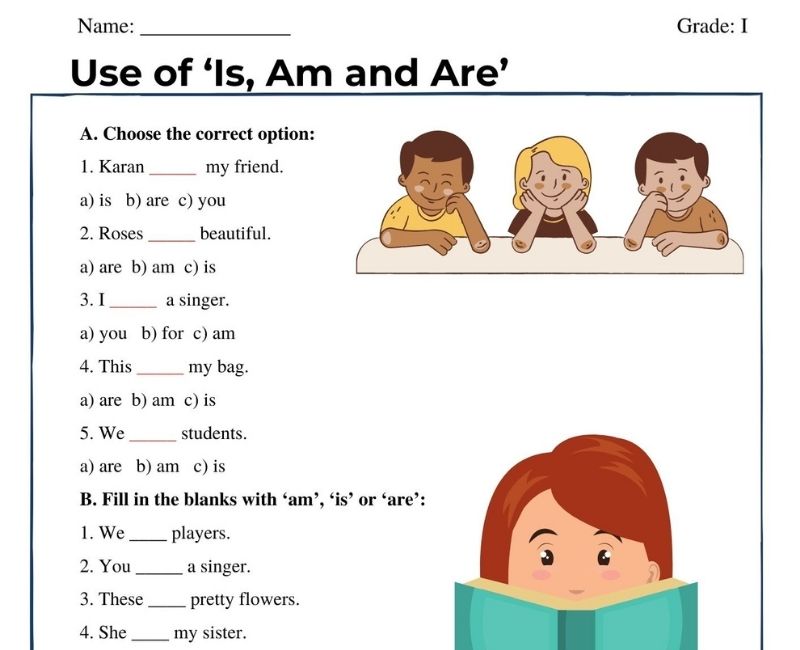
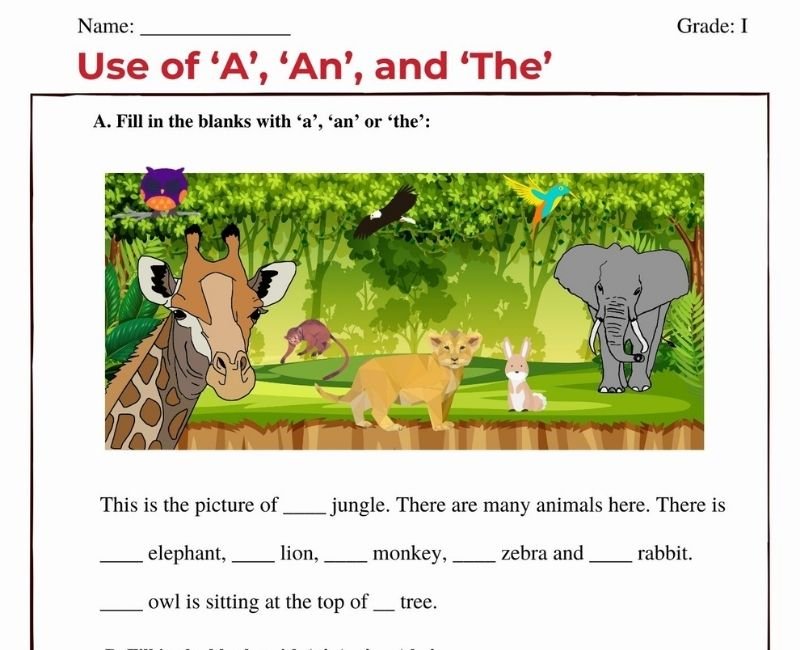
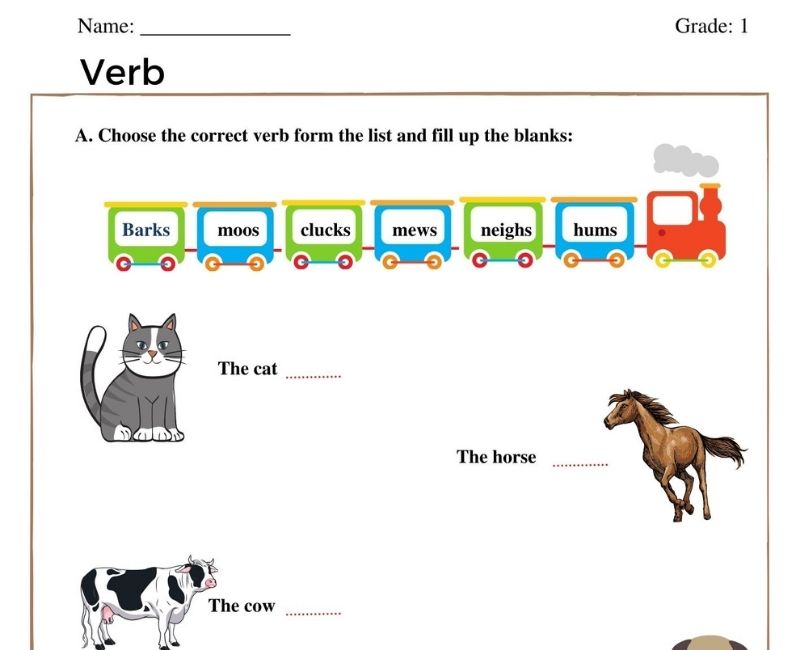
The WitKnowLearn downloadable resource presents a collection of 10 reading comprehension worksheets designed for Class 1 learners. Each worksheet features a short passage followed by questions. These activities can support independent reading, guided classroom lessons and home revision.
This page also provides three additional sample passages with questions and answers, a 20-question interactive reading quiz, vocabulary practice, teaching suggestions and frequently asked questions. These extra activities are intended to complement the downloadable worksheets.
Students can read the passages aloud, identify characters, recall events and answer simple who, what, where and when questions. Parents and teachers can encourage children to return to the text whenever they are unsure of an answer.
What Is Reading Comprehension for Class 1?
Reading comprehension means understanding what we read. It is not enough to say the words correctly. A good reader also understands what happens in a passage, who is involved and where the events take place.
Find the person or animal in the story.
Identify the place where something happens.
Find an action, object or important detail.
Find the time or part of the day mentioned.
Example: Tara has a yellow kite. She flies it in the park.
Question: What colour is Tara's kite?
Answer: Yellow.
Question: Where does Tara fly her kite?
Answer: In the park.
Reading Comprehension Passage 1 – Bruno the Happy Dog
Read Passage 1 above and answer these questions.
- What is the name of the dog?
- What colour is Bruno?
- Who takes Bruno to the park?
- What does Bruno like to play with?
- Where does Bruno rest after playing?
- What does Bruno drink after playing?
Show Passage 1 Answers
- Bruno.
- Brown.
- Riya.
- A red ball.
- Under a tree.
- Water.
Reading Comprehension Passage 2 – Meena's Garden
Read Passage 2 above and complete the following questions.
- Who has a beautiful garden?
- What colour are the roses?
- What colour are the sunflowers?
- When does Meena water the plants?
- Which insect visits the flowers?
- Where is the little bird sitting?
Show Passage 2 Answers
- Meena.
- Red.
- Yellow.
- Every morning.
- A butterfly.
- On a tree.
Reading Comprehension Passage 3 – A Day at School
Read Passage 3 above and write the answers.
- How does Aman go to school?
- What colour is his school bag?
- Who is Aman's best friend?
- What animal is in the teacher's story?
- What does Aman eat for lunch?
- Where do the children play after lunch?
Show Passage 3 Answers
- By bus.
- Blue.
- Kabir.
- A lion.
- A sandwich and an apple.
- In the playground.
Types of Reading Comprehension Questions for Class 1
1. Who Questions
These questions ask about a person or character. For example, "Who takes Bruno to the park?"
2. What Questions
These ask children to identify an object, action or important detail. For example, "What does Aman eat for lunch?"
3. Where Questions
These help students find the place mentioned in a passage. For example, "Where does Bruno rest?"
4. When Questions
These ask about time. For example, "When does Meena water the plants?"
5. True or False
Children decide whether a statement matches the information given in a passage.
6. Multiple-Choice Questions
Students read a question and choose the correct answer from the available options.
How to Solve a Reading Comprehension Worksheet
Step 1: Read the Title
The title gives a clue about what the passage may be about. For example, "Meena's Garden" suggests that the story will describe a garden.
Step 2: Read the Passage Slowly
Read every sentence carefully. Do not rush or skip unfamiliar words.
Step 3: Understand the Story
Think about the characters, place and important events. Children can explain the story aloud in their own words.
Step 4: Read the Questions
Look for question words such as who, what, where and when. These words help identify the information needed.
Step 5: Find the Answer in the Passage
Go back to the relevant sentence. For example, if a question asks the colour of a bag, find the sentence that describes the bag.
Step 6: Write a Clear Answer
Use a word, phrase or short sentence depending on the question. Encourage correct spelling and neat handwriting.
Step 7: Check the Answers
Read the passage again to confirm that the answers match the text.
Extra Reading Comprehension Practice for Class 1
Exercise 1: True or False
Use the three sample passages to decide whether each statement is true or false.
- Bruno is a brown dog.
- Bruno plays with a blue ball.
- Meena grows yellow sunflowers.
- Meena waters the plants every night.
- Aman goes to school by bus.
- Aman's best friend is Riya.
- The teacher tells a story about a lion.
- The children play after lunch.
Show True or False Answers
1. True; 2. False; 3. True; 4. False; 5. True; 6. False; 7. True; 8. True.
Exercise 2: Fill in the Blanks
- Bruno plays with a ______ ball.
- Bruno runs on the green ______.
- Meena has red ______ in her garden.
- A ______ visits Meena's flowers.
- Aman carries a ______ school bag.
- Aman eats a sandwich and an ______.
Show Fill in the Blanks Answers
1. red; 2. grass; 3. roses; 4. butterfly; 5. blue; 6. apple.
Exercise 3: Choose the Correct Answer
- Bruno is a (dog / cat).
- Riya takes Bruno to the (market / park).
- Meena sees a (bird / fish) on a tree.
- Meena waters the plants in the (morning / evening).
- Aman's friend is (Kabir / Bruno).
- Aman plays in the (playground / garden) after lunch.
Show Exercise 3 Answers
1. dog; 2. park; 3. bird; 4. morning; 5. Kabir; 6. playground.
Vocabulary Words from the Reading Passages
Learning the meanings of new words helps children understand what they read.
A place where people can walk and play.
To stop working or playing and relax.
A place where flowers and other plants grow.
An insect with colourful wings.
An area where children can play.
Plants, animals and other things in the natural world.
Fun Reading Activities for Class 1 Students
Read and Draw
Give children a short passage about an animal or garden. Ask them to draw a picture showing what they understood.
Story Retelling
After reading a passage, encourage children to explain the story in two or three simple sentences.
Find the Word
Ask students to find and underline familiar words such as dog, ball, tree, school and apple.
Question Card Game
Prepare cards labelled Who, What, Where and When. Children select a card and answer a question about the story.
Picture and Sentence Matching
Show pictures and short sentences. Students match each sentence to the correct picture.
Partner Reading
Allow children to read a short passage with a partner. They can take turns reading sentences and answering questions.
Benefits of Reading Comprehension Worksheets for Class 1
Reading comprehension is an important foundation for language learning. It helps children understand the meaning of sentences, follow simple stories and remember information. Worksheets give students structured opportunities to develop these abilities at a comfortable pace.
Short passages are particularly suitable for Class 1 because they introduce familiar vocabulary and straightforward sentence patterns. Stories about pets, school, family and nature make reading relatable and encourage children to connect written words with everyday experiences.
Answering comprehension questions also develops attention and memory. Students learn to identify important details rather than guessing. When they return to a passage to find evidence, they practise a useful reading habit that can support learning in other subjects.
Vocabulary improves naturally through repeated exposure to words in meaningful sentences. For example, a passage about a garden may introduce words such as butterfly, sunflower, plant and tree. Children can practise reading, spelling and using these words in their own sentences.
Reading aloud helps learners become more confident with pronunciation and sentence flow. Teachers and parents can support understanding by asking simple questions and encouraging children to explain what they have read.
Regular reading practice also supports writing skills. When children observe complete sentences in stories, they become familiar with capital letters, full stops and sentence structure. Writing short answers gives them opportunities to apply these skills.
Comprehension worksheets can be used for independent practice, guided reading, homework and informal assessment. An interactive quiz adds another way for children to check their understanding, receive explanations and revisit the story when needed.
Tips for Parents and Teachers
Choose short passages with familiar words and simple sentences. Allow children to read slowly and give them time to think about the meaning of each sentence.
Before reading, discuss the title and any pictures. Ask children what they think the story may be about. This helps prepare them for the topic.
After reading, begin with direct questions such as "Who is in the story?" and "Where did the children go?" Introduce more challenging questions only when students are ready.
Encourage children to find answers in the passage rather than memorising them. If they make a mistake, help them locate the correct sentence.
For children who need additional support, read the passage aloud together before asking them to attempt the questions independently.
Keep practice sessions short and positive. A few minutes of daily reading can be more effective than a long session that leaves a young learner tired.
Common Reading Comprehension Mistakes
Answering Without Reading
Some children choose answers based on guesses. Encourage them to read the full passage before attempting the questions.
Missing Important Details
Students may confuse colours, names or places. Ask them to underline the relevant sentence before writing an answer.
Confusing Characters
When a passage contains several names, children may mix up who did what. Discuss each character's actions after reading.
Writing Answers That Do Not Match the Text
Remind students that comprehension answers should be based on information from the passage.
Rushing Through Questions
Reading questions carefully helps children understand whether they need to identify a person, place, object or time.
Related Class 1 English Worksheets
Frequently Asked Questions About Reading Comprehension for Class 1
What is reading comprehension for Class 1?
Reading comprehension means understanding a short passage and answering questions about the information it contains.
How can I improve my child's reading comprehension?
Encourage daily reading, discuss simple stories, ask who and what questions, and help your child find answers in the text.
What types of passages are suitable for Class 1?
Short passages about animals, family, school, friends, nature and familiar daily activities are suitable for beginning readers.
How many sentences should a Class 1 passage contain?
Many beginners benefit from passages of about four to eight short sentences, although the ideal length depends on reading ability.
What questions are asked in Class 1 comprehension?
Common questions ask who, what, where and when. Worksheets may also include true or false, fill-in-the-blanks and multiple-choice questions.
Should children read the passage aloud?
Reading aloud can support word recognition and fluency. Children should also be encouraged to explain what the passage means.
How do I teach comprehension to a beginner?
Start with a familiar topic, read a short passage together, discuss the story and ask simple questions about the details.
Are these worksheets useful for CBSE Class 1?
Yes. Short reading passages and simple comprehension questions can support CBSE Class 1 English reading practice.
Can children practise reading comprehension online?
Yes. The interactive quiz on this page contains 20 questions based on the three sample passages.
How often should Class 1 students practise reading?
Short, regular reading sessions are useful. Adjust the length and difficulty to the child's interest and reading level.
Build Strong Reading Skills with Class 1 Comprehension Practice
Give young learners opportunities to read, think and respond with these Reading Comprehension Worksheets for Class 1 with Answers. The downloadable worksheet collection and additional practice on this page can help children improve word recognition, vocabulary, sentence understanding and confidence in reading. Complete the passages, review the answer keys and try the online quiz to strengthen comprehension skills.
 Download