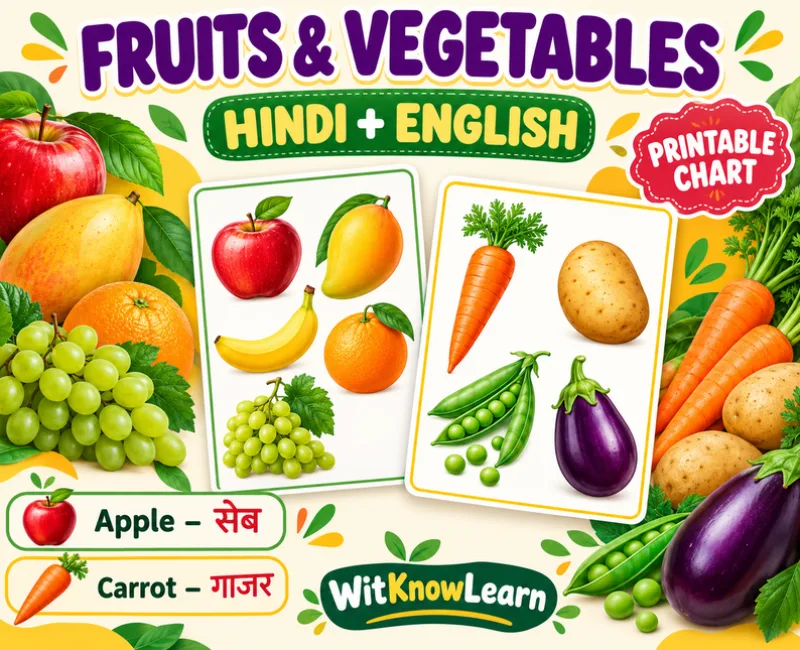
Fruits and Vegetables Names in Hindi and English – Printable Chart
Help children connect familiar foods with words in two languages using WitKnowLearn's fruits and vegetables names in Hindi and English chart. This printable learning resource provides a starting point for picture recognition, naming practice and everyday conversation. Parents and teachers can use it when introducing food vocabulary at home or in the classroom.
Begin with foods the child already knows. Say the English name, introduce the Hindi word and invite the child to point, repeat or name the item independently. A child who says “सेब” can practise “apple,” while a child familiar with “carrot” can learn “गाजर.” Use the chart as a reference alongside real fruits and vegetables whenever possible.
Learn Fruit Names in Hindi and English
Fruit vocabulary offers an accessible introduction to bilingual naming. Children may recognise a banana in their lunchbox, mango at home or grapes at a shop. Connect the object or picture with its name before asking children to remember a long list. The examples below provide a short vocabulary guide for practice.
| English fruit name | Hindi name |
|---|---|
| Apple | सेब |
| Banana | केला |
| Mango | आम |
| Grapes | अंगूर |
| Orange | संतरा |
| Pomegranate | अनार |
| Papaya | पपीता |
| Guava | अमरूद |
| Watermelon | तरबूज |
| Muskmelon | खरबूजा |
Learn Vegetable Names in Hindi and English
Introduce vegetable vocabulary through foods children see during meals, shopping or cooking. Start with a few familiar examples, such as potato, carrot and peas. Say each word clearly and allow time for the child to respond. These English–Hindi names can also support simple oral questions and picture-to-word activities prepared by an adult.
| English vegetable name | Hindi name |
|---|---|
| Potato | आलू |
| Onion | प्याज |
| Carrot | गाजर |
| Peas | मटर |
| Brinjal / Eggplant | बैंगन |
| Cauliflower | फूलगोभी |
| Cabbage | पत्तागोभी |
| Spinach | पालक |
| Lady's Finger / Okra | भिंडी |
| Bottle Gourd | लौकी |
Children may hear different regional names at home. Acknowledge the familiar word and introduce the name used in the lesson. English alternatives can also be useful: brinjal and eggplant refer to the same food, while lady's finger and okra are two names for भिंडी.
How to Use the Printable Food Chart
Use the page's download option to access the resource and choose a print setting that keeps the labels readable. Display the chart where children can refer to it during an activity. Introduce a small selection of names at a time, then revisit those words in conversation. Pointing and naming are suitable starting responses; independent reading can follow when the child is ready.
For nursery and kindergarten learners, focus on recognising pictures and saying familiar words. For Class 1 learners, add supported reading, copying selected names or making a simple sentence. For example, a child can say “I like mango” or “मुझे आम पसंद है।” Adapt the task to language familiarity rather than expecting every child to respond in the same way.
Simple Learning Activities with the Chart
- Point and name: Say “Find the apple” or “सेब दिखाओ” and invite the child to locate it.
- Say it in another language: Give a familiar Hindi word and ask for the English name, offering help when needed.
- Match a real object: Place a fruit or vegetable beside its picture and say both names together.
- Make a shopping list: Choose three familiar foods and prepare a short bilingual list with adult support.
- Describe what you notice: Talk about colour, shape or size using the picture or a real example.
- Choose a favourite: Ask children to name a fruit they enjoy and share a short sentence about it.
These are suggested activities to use alongside the chart. For separate colouring and identification exercises, explore the related worksheets linked below.
Connecting Vocabulary with Everyday Experiences
A food chart becomes more useful when its words appear in real conversations. During shopping, ask a child to recognise a familiar item. During meal preparation, name the vegetables being used. At school, invite children to describe a pictured food without requiring tasting. Repetition across different settings gives children more opportunities to use the vocabulary.
When sorting foods, explain that classroom groups often follow everyday cooking usage. Some foods served as vegetables are botanically fruits. Keep the explanation appropriate to the lesson and avoid teaching that every fruit must taste sweet. The purpose of this chart activity is to develop vocabulary and observation.
Related Fruits and Vegetables Worksheets
Frequently Asked Questions
What is apple called in Hindi?
Apple is called सेब in Hindi.
What is carrot called in Hindi?
Carrot is called गाजर in Hindi.
What is the difference between तरबूज and खरबूजा?
तरबूज means watermelon, while खरबूजा means muskmelon.
Are brinjal and eggplant the same?
Yes. Brinjal and eggplant are English names for बैंगन.
What are the English names for भिंडी?
भिंडी is called lady's finger or okra in English.
Can nursery children use this Hindi–English chart?
Yes. Adults can guide picture recognition and naming. Introduce a few familiar foods at a time and accept pointing or spoken responses.
How can I use the chart for Class 1?
Use it for supported reading, English–Hindi vocabulary practice, copying selected names and making simple sentences.
Where can I find related practice worksheets?
Use the related-resource links above for separate identification, colouring and fruits-and-vegetables worksheet activities.
 Download