CLASS 10 SCIENCE • THE INTERACTIVE OPTICS LAB
Light Reflection and Refraction Worksheet
with Online Quiz and Activities
Move the object, trace the rays and predict the image. Explore mirrors, lenses, refraction and lens power through interactive diagrams and clear numerical working.
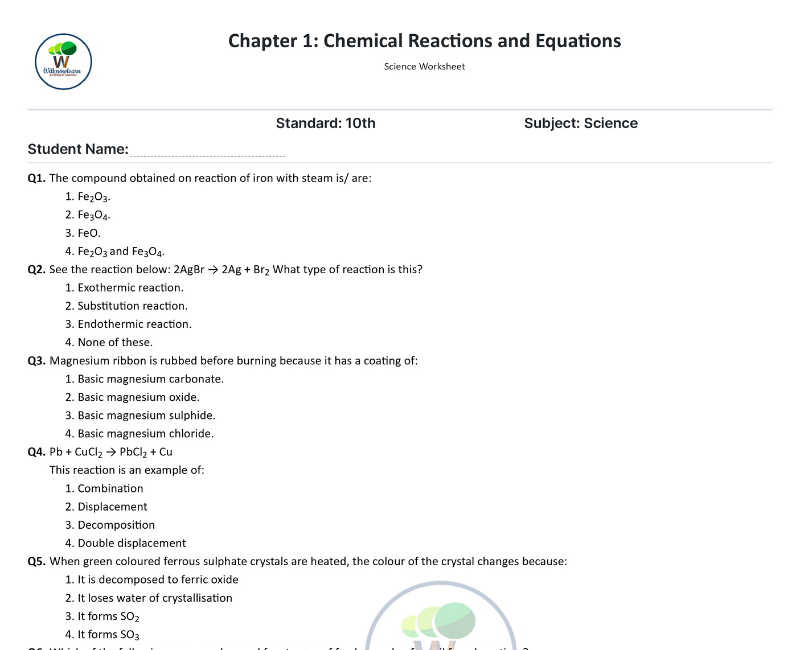
Move and Discover
Change object position and inspect image formation.
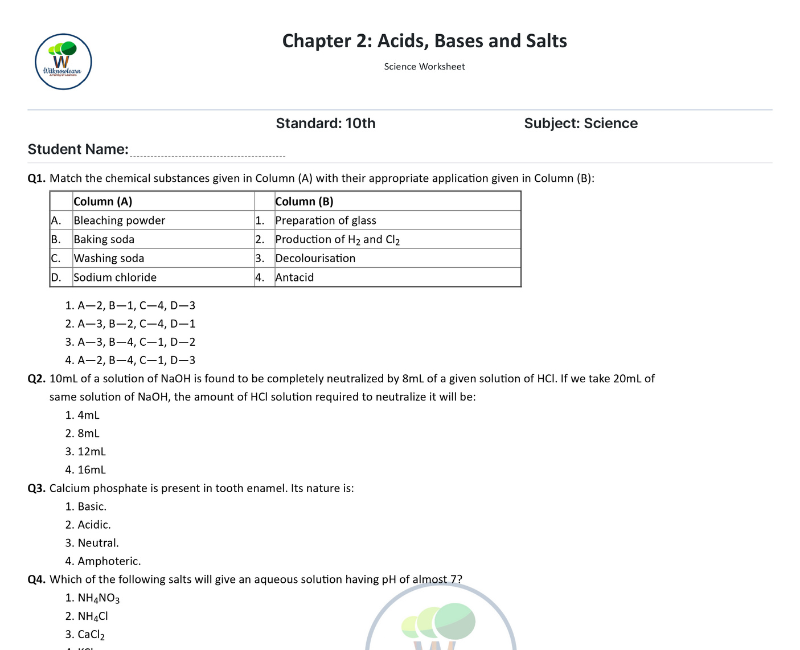
nTrace the Light
Explore reflection, refraction and a parallel glass slab.
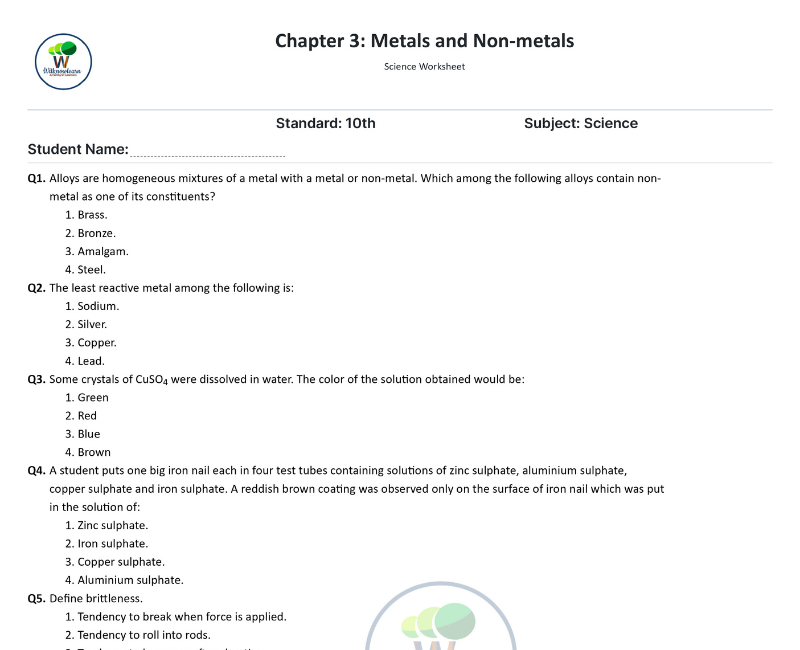
±Calculate with Confidence
Connect signs, formulas, units and image properties.
Light Reflection and Refraction Class 10 Online Quiz
Question 1 of 20 • Easy • Answered 0/20
How are incidence and reflection angles related?
Quiz instructions
Attempt 10 easy, five average and five HOTS questions in 20 minutes. The timer starts with your first answer or navigation. Answers advance to the next question except at the end. Review using Previous or the numbered buttons. One mark per correct answer, no negative marking. Submission or timeout reveals all solutions.
Interactive Mirror Lens and Refraction Games
Image Formation Optical Bench
Choose an optical device and move the object. The focal-length magnitude is 10 cm. Light initially travels left to right.
Use a concave mirror to form a real diminished image.
Paraxial or thin-lens construction. Horizontal and vertical scales differ; ray intersections follow the signed equations.
Ray Diagram and Numerical Activities
How to use the optics activities
Tap a raised selector to choose a topic. The question, ray diagram and controls share one card. Games and learning activities share one active workspace; extra practice is independent. Entries remain while this page stays open. Solid coloured lines show actual rays. Dashed lines are normals, construction guides or virtual extensions, as labelled. Axis scales differ so the constructions remain readable.
Light Class 10 Extra Questions and Numericals
Repair the Sign Convention
Select every correct statement. Initial incident light travels left to right and the real object is on the left.
Object and focal lengths.
Select every correct statement. More than one can be correct.
Explore 15 sets with five tasks each. Reset a question or complete set using Reset options.
Eight Revision Tips for Students
- Draw a normal before measuring reflection or refraction angles.
- Identify the optical device before choosing a formula.
- Write signed values of u and f before calculating.
- Keep mirror magnification −v/u separate from lens magnification v/u.
- Use the sign of m for orientation and its magnitude for size.
- Convert focal length to metres before calculating power in dioptres.
- Distinguish actual rays from backward extensions.
- Check numerical answers against the expected ray diagram.
Five Teaching Tips for Parents and Teachers
- Ask students to predict the image before moving the object slider.
- Compare object positions just inside and outside the focus.
- Use the reflection lab to distinguish angles from the normal and surface.
- Let students explain why a screen cannot catch a virtual image at its apparent position.
- Discuss model assumptions, alignment and measurement uncertainty.
Light Reflection and Refraction Class 10 Notes Important Questions and Solutions
This Light Reflection and Refraction Class 10 worksheet page combines written practice, a timed online quiz and interactive ray-diagram activities. Revise spherical mirrors, thin lenses, refractive index, glass slabs, sign conventions and lens power. Use the existing worksheet download for written answers, then compare your reasoning with the models above.
Light Reflection and Refraction Important Questions
Practise principal-ray constructions, image-position tables, real and virtual images, mirror and lens numericals, magnification, Snell's law, refractive index, slab displacement and power conversions. The explanations below support extra questions with answers, case-based problems and assertion–reason practice.
Laws of Reflection and the Normal
The angle of reflection equals the angle of incidence. Both angles are measured from the normal at the point where the ray meets the surface. The incident ray, reflected ray and normal lie in one plane. A rough surface can scatter rays in many directions while each small surface region obeys the reflection law.
Concave and Convex Mirror Ray Diagrams
A concave mirror converges paraxial parallel rays toward a real focus. A convex mirror makes reflected rays diverge as though they came from a virtual focus behind the mirror. A ray directed through a spherical mirror's centre of curvature follows the local normal and retraces its path.
| Concave-mirror object position | Image for a real object |
|---|---|
| Beyond C | Between C and F, real, inverted, diminished |
| At C | At C, real, inverted, equal size |
| Between C and F | Beyond C, real, inverted, magnified |
| At F | At infinity in the ideal model |
| Between F and P | Behind the mirror, virtual, upright, magnified |
A convex mirror gives a virtual, upright and diminished image for a finite real object in front. Its broad field of view makes it useful as a vehicle rear-view mirror.
Convex and Concave Lens Image Formation
| Convex-lens object position | Image for a real object |
|---|---|
| Beyond 2F₁ | Between F₂ and 2F₂, real, inverted, diminished |
| At 2F₁ | At 2F₂, real, inverted, equal size |
| Between F₁ and 2F₁ | Beyond 2F₂, real, inverted, magnified |
| At F₁ | At infinity in the ideal model |
| Between F₁ and O | On the object side, virtual, upright, magnified |
An ordinary concave lens in air gives a virtual, upright and diminished image for a real object. A thin-lens ray through the optical centre is approximately undeviated. The optical bench uses paraxial mirror and thin-lens models rather than exact large-aperture ray tracing.
New Cartesian Sign Convention Class 10
In these diagrams the initial incident light travels left to right. Distances are measured from the mirror pole P or lens optical centre O. Rightward distances are positive and leftward distances negative. A real object on the left has u < 0. Heights above the axis are positive and below it negative.
| Device | Focal-length sign in this setup |
|---|---|
| Concave mirror | Negative |
| Convex mirror | Positive |
| Convex lens in air | Positive |
| Concave lens in air | Negative |
Light Class 10 Formula Sheet
| Quantity | Formula |
|---|---|
| Mirror formula | 1/f = 1/v + 1/u |
| Mirror magnification | m = h′/h = −v/u |
| Thin-lens formula | 1/f = 1/v − 1/u |
| Lens magnification | m = h′/h = v/u |
| Paraxial spherical mirror | f = R/2 |
| Lens power | P = 1/f with f in metres |
| Absolute refractive index | n = c/v, where v here means light speed |
| Snell's law | n₁ sin i = n₂ sin r |
The letter v denotes image distance in mirror and lens equations but light speed in the index formula. Its meaning and units come from the context.
Mirror Formula Numerical with Solution
A concave mirror has f = −15 cm and u = −30 cm.
1/v = 1/f − 1/u.
1/v = −1/15 + 1/30.
1/v = −1/30.
v = −30 cm.
m = −v/u.
m = −1.
The image is real, inverted and equal in size.
Lens Formula Numerical with Solution
A convex lens has f = +10 cm and u = −15 cm.
1/v = 1/f + 1/u.
1/v = 1/10 − 1/15.
1/v = 1/30.
v = +30 cm.
m = v/u.
m = −2.
The image is real, inverted and twice the object size.
Power of Lens Questions with Solutions
A convex lens has f = +25 cm.
f = +0.25 m.
P = 1/0.25.
P = +4 D.
A concave lens has f = −50 cm.
f = −0.50 m.
P = 1/(−0.50).
P = −2 D.
Dioptre is the inverse metre. Power is not measured in watts, and a negative sign does not mean a physically negative lens thickness.
Refraction Snell's Law and Refractive Index
For transmitted light at a stationary boundary, frequency remains unchanged while speed and wavelength can change. At oblique incidence, moving into a higher-index medium bends the ray toward the normal; moving into a lower-index medium below the critical angle bends it away. At normal incidence, direction stays unchanged. Optical density should not be confused with mass density.
Let c = 3 × 10⁸ m/s.
Let the medium speed be 2 × 10⁸ m/s.
n = c/v.
n = 3/2.
n = 1.5.
The refraction explorer treats refractive indices as fixed teaching values. If a higher-to-lower-index setting exceeds the critical angle, it displays total internal reflection rather than inventing a refracted angle. That behaviour is an extension beyond the main Class 10 tasks.
Glass Slab Ray Diagram and Lateral Displacement
For parallel faces with the same surrounding medium on both sides, the emergent ray is parallel to the incident ray. An oblique path is generally shifted sideways. At normal incidence the lateral displacement is zero. Increasing thickness at fixed incidence and indices increases the displacement. A parallel emergent ray does not mean that no refraction happened inside the slab.
Light Reflection and Refraction Extra Questions with Answers
- Can a virtual image be caught directly on a screen at its apparent location? No. Actual rays do not converge there.
- Does negative magnification mean a smaller image? No. It means inversion in these cases; use |m| to compare size.
- Why is a convex mirror useful for rear viewing? It provides a broad field of view with upright diminished images.
- What happens at the focus of a convex lens? The ideal output rays are parallel and the image distance is not finite.
- Why might a ray sketch and calculation disagree? Recheck the device, focal position, signs, units and actual versus extended rays.
Current Syllabus and Sample Paper Update
The CBSE Science syllabus for 2026–27 lists image formation, mirror and lens formulas, magnification, refraction, refractive index and lens power; formula derivations are not required in that listing. The official sample paper includes focal-length estimation, Snell's law, relative refractive index and a lens numerical using magnification. These are verified practice themes rather than predictions or repeated-board-question claims.
Reference NCERT Light Reflection and Refraction. Reviewed on 22 October 2026. Interactive questions here are original practice material.
Related Class 10 Science Resources
Frequently Asked Questions
What is the difference between reflection and refraction?
Reflection returns light into the incident medium. Refraction concerns transmission across a boundary with a change in speed; the direction can change at oblique incidence.
What are the laws of reflection?
The incident and reflected angles are equal when measured from the normal. The incident ray, normal and reflected ray lie in one plane.
How do concave and convex mirrors differ?
A concave mirror can converge paraxial parallel rays and can form real or virtual images depending on object position. A convex mirror gives an upright diminished virtual image for a real object.
What is the mirror formula?
Using signed Cartesian quantities, 1/f = 1/v + 1/u. Mirror magnification is m = −v/u.
What is the lens formula?
For the thin-lens model, 1/f = 1/v − 1/u. Lens magnification is m = v/u.
Why is the real object distance negative here?
Initial incident light travels left to right, and the real object is to the left of the pole or optical centre. Leftward distances are negative in this setup.
What does negative magnification mean?
It indicates inversion in the stated real-object mirror and lens cases. Relative size comes from the magnitude of m rather than its sign.
What is refractive index?
Absolute refractive index is the ratio of light speed in vacuum to its speed in the medium. Relative index n₂/n₁ equals sin i/sin r when Snell’s law applies.
Why does a glass slab shift a ray without changing its final direction?
For parallel faces and the same external medium, the two refractions restore the original direction while an oblique path can be laterally displaced.
How do I calculate the power of a lens?
Use P = 1/f with focal length in metres to get dioptres. A converging lens in air has positive power and a diverging lens negative power.
Can a convex lens form a virtual image?
Yes. For a real object between the optical centre and near focus, the image is virtual, upright and magnified on the object side.
Which important Light questions should I practise?
Practise ray diagrams, image tables, signs, mirror and lens numericals, magnification, refractive index, Snell’s law, slab paths and power conversion. Use actual official papers for genuine previous-year questions.
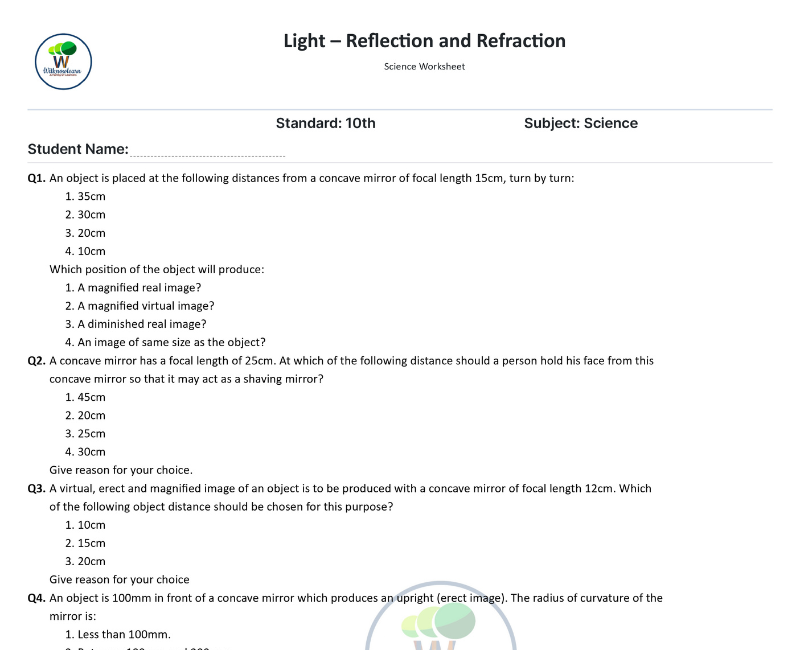
 Download