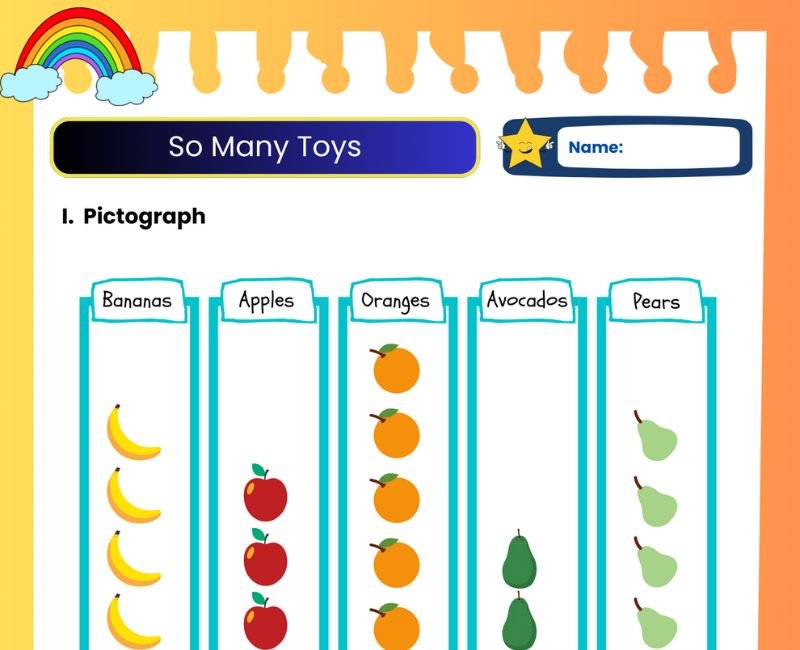
🧸 So Many Toys Class 1 Worksheet – NCERT Maths Chapter 13
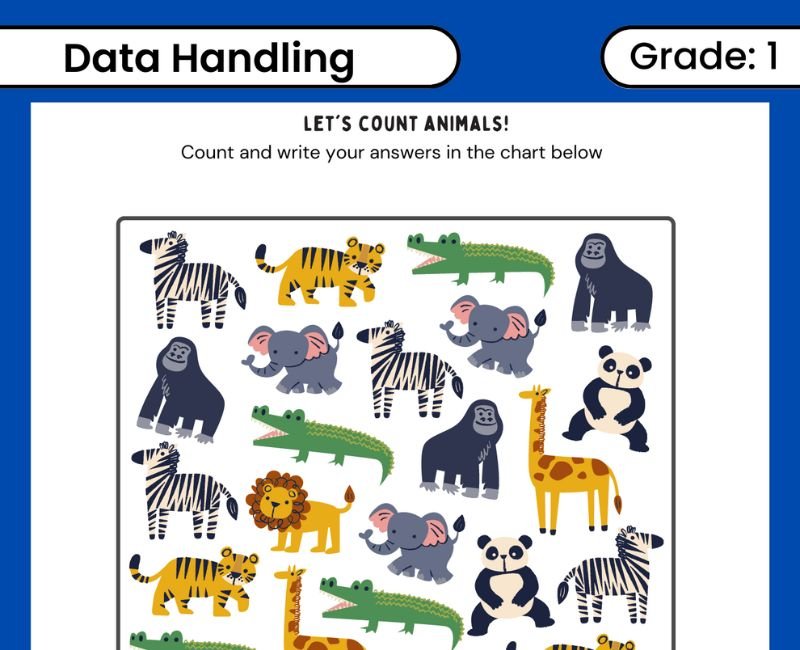
Turn a collection of toys into an opportunity to count, sort and compare. This So Many Toys Class 1 worksheet supports practice alongside NCERT Class 1 Maths Chapter 13, So Many Toys, from the Joyful Mathematics textbook. The chapter introduces data handling through familiar objects and simple questions.
Children learn to organise objects into groups, count each group and use the information to explain what they notice. The original activities below provide extra practice alongside the downloadable worksheet, with toy pictures, a simple record table and clickable answers.
🔎 What Does So Many Toys Teach?
Introductory data handling begins with looking carefully at a collection. Children identify categories, put similar objects together and find how many objects belong to each group. They then compare the counts using more than, fewer than and equal to.
Encourage children to explain their answers using the numbers they counted. For example, “There are more cars because there are six cars and four teddy bears.” This connects their observation with evidence rather than relying on the size of the pictures or the space they occupy.
🚗 Count the Toys
Count each toy picture once and write the total for its group. These rows are additional practice created for this page.
Toy cars
🚗 🚗 🚗 🚗 🚗 🚗
Number of cars: ______
Teddy bears
🧸 🧸 🧸 🧸
Number of teddy bears: ______
Balls
⚽ ⚽ ⚽ ⚽
Number of balls: ______
Counting tip: Point to one picture each time you say a number. The last number tells you how many toys are in that group.
⚖️ Compare the Toy Groups
Use the pictures above to answer these questions. Say each comparison aloud before writing your answer.
- The number of cars is ______ the number of teddy bears. Choose “more than,” “less than” or “equal to.”
- The number of teddy bears is ______ the number of cars.
- The number of balls is ______ the number of teddy bears.
- Which group has the most toys?
- Which groups share the fewest toys?
- How many more cars are there than balls?
✅ Click to View Counts and Answers
Counts: 6 cars, 4 teddy bears and 4 balls.
- More than.
- Less than.
- Equal to.
- Cars.
- Teddy bears and balls, with four in each group.
- Two more cars.
To check the last answer, match each ball with one car. Two cars remain unmatched, showing that there are two more cars than balls.
📋 Sort, Count and Record
Place a small collection of toys or classroom objects on a table. Agree on one sorting rule, such as toy type or colour. Ask your child to sort the collection, count each group and record its total.
| Group | Number of Objects |
|---|---|
| Cars | ______ |
| Teddy bears | ______ |
| Balls | ______ |
Use one rule at a time. When sorting by colour, a red car and a red ball belong together. When sorting by toy type, cars belong together even when their colours differ. Discuss the rule before starting.
🙋 A Favourite-Toy Classroom Activity
Give children three choices, such as a car, a ball or a teddy bear. Ask each child to choose one favourite and place a picture card in the matching group. Count the cards to find how many children chose each option.
Compare the groups and discuss which choice received the most selections, which received the fewest and whether any counts are equal. Check that the total number of cards matches the number of children who participated.
Record one choice per child. Explain that the activity describes this group’s preferences; it does not mean that one toy is better than another.
💡 Helping Children Count and Compare Accurately
Read worksheet instructions aloud when needed, while allowing children to do the counting. If they lose track, encourage them to point to each picture once or move real objects into a separate counted group.
Avoid judging quantity by picture size or spacing. Four large toy pictures are still fewer than six small pictures. Count or match the objects to check the comparison.
Rearrange a group without adding or removing objects and ask whether the total has changed. Let children recount to confirm that changing the arrangement does not change the quantity.
📚 Explore More Class 1 Maths Worksheets
🥭 Chapter 3: Mango TreatPractise counting and numbers from 1 to 9. 🔢 Chapter 4: Making 10
Explore groups of ten and numbers from 10 to 20. ✏️ Chapter 8: Fun with Numbers
Continue developing number understanding with numbers from 21 to 99. 🎨 Chapter 9: Utsav
Recognise and extend patterns. 📋 Class 1 Data Handling Worksheet
Explore an additional general resource for organising and comparing information. 📚 Browse All Class 1 Maths Worksheets
Find general topic activities and separately labelled NCERT chapter resources.
❓ Frequently Asked Questions
Which chapter is So Many Toys in NCERT Class 1 Maths?
So Many Toys is Chapter 13 of the NCERT Joyful Mathematics Class 1 textbook. It introduces data handling through familiar objects and counting activities.
What is data handling for Class 1?
It involves collecting simple information, organising objects into groups, counting them and comparing the recorded quantities.
How do I explain more than and fewer than?
Count both groups or match their objects in pairs. The group with unmatched objects has more, while the other group has fewer.
What does equal to mean when comparing toys?
It means the groups contain the same number of toys. Four teddy bears and four balls are equal in number even though the objects are different.
What is the difference between more and most?
“More” compares one quantity with another. “Most” identifies the greatest quantity among the groups being considered. Groups with the same greatest count share the most.
Can two groups both have the fewest objects?
Yes. If two groups have the same lowest count, they share the fewest. In the practice above, teddy bears and balls each have four objects.
Can we practise without using toys?
Yes. Use familiar objects such as blocks, crayons or picture cards. Choose a clear sorting rule, count the groups and compare their totals.
Where can I check the practice answers?
Open “Click to View Counts and Answers” below the toy-comparison questions. These answers apply to the original activities on this page.
 Download