Mango Treat Class 1 Worksheet
Make early counting meaningful with this Mango Treat Class 1 worksheet. Use it alongside NCERT Class 1 Maths Chapter 3 - Mango Treat (Numbers 1 to 9) in the Joyful Mathematics textbook.
Children explore numbers by counting objects, matching quantities with numerals and arranging numbers in order. The original practice activities below offer extra examples with answers for parents and teachers to use alongside the downloadable worksheet. Begin with objects a child can touch, then connect the counted quantity to its written numeral.
Counting Means Matching One Number to One Object
Ask the child to move one counter at a time into a small group while saying 1, 2, 3 and so on. Each object receives one number word. The last number spoken tells how many objects are in the group.
Start with small collections and gradually work up to nine. If a child skips or counts an object twice, arrange the objects in a row or separate counted objects from uncounted ones. Counting slowly and accurately is more useful than reciting the number sequence quickly.
Rearrange the same objects and ask whether the quantity has changed. Count again to check: spreading five counters apart does not turn them into six.
Connect Numerals with Quantities
A numeral is a written symbol for a number. Show a card with 4 and ask the child to place four blocks beside it. Reverse the task by showing a group of objects and asking for its matching number card.
Make cards from 1 to 9. Choose a card, read the number and build a matching group. For card 7, place seven counters. Count the group again to confirm the match.
For number-writing practice, model the numeral clearly and give children space to try. Keep quantity recognition and handwriting practice connected, but do not mistake a reversed numeral for a counting error without checking the child's understanding.
Explore One More and One Less
Place five counters on a table. Add one counter and ask how many there are now. The new group has six, so one more than 5 is 6. Remove one from a group of eight to show that one less than 8 is 7.
Let children predict, make the change and count to check. Adding one moves to the next counting number; removing one moves to the previous number. Keep the examples within familiar quantities while children are learning numbers from 1 to 9.
More, Fewer and Equal Groups
Compare two collections by counting them or matching their objects one-to-one. A group of six blocks has more objects than a group of four blocks. Four blocks are fewer than six. Two groups containing five objects each are equal in number.
Use equal-sized objects initially so the comparison is clear. Later, show that three large objects are still fewer than five small ones. Quantity depends on the count, not the space occupied by the group.
Ask the child to explain: "This group has more because two objects are left after matching."
Put Numbers from 1 to 9 in Order
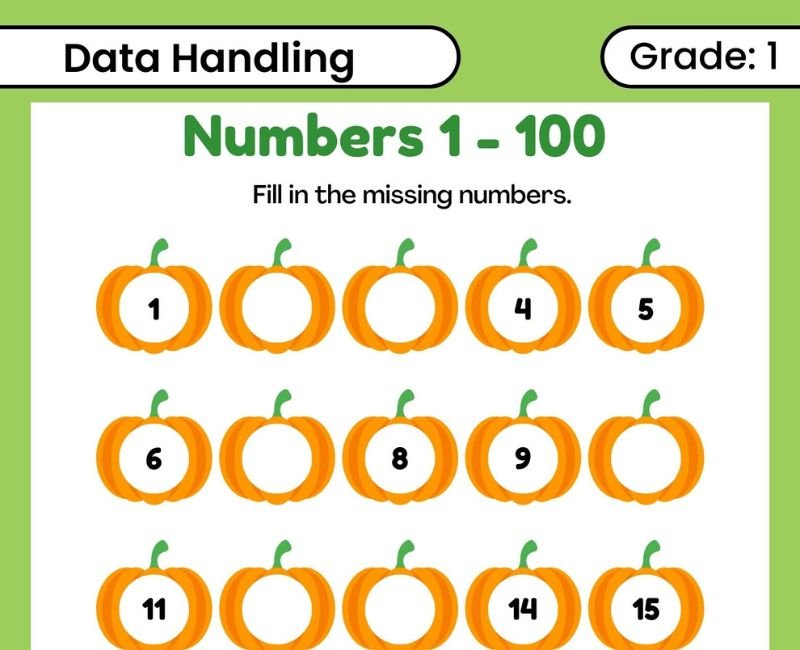
Arrange number cards in the sequence 1, 2, 3, 4, 5, 6, 7, 8, 9. Remove one card and ask which number is missing. Then shuffle a few cards and invite the child to arrange them from smallest to largest.
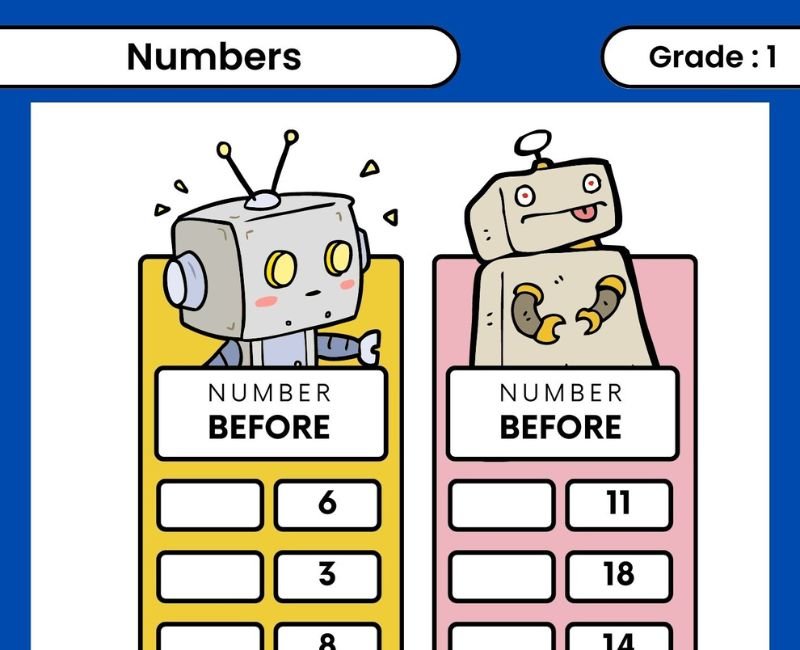
Use short sequences before a complete set of nine cards. For example, 3, 4, blank, 6 needs 5. Ask children to read the completed sequence aloud and explain which number comes before or after the missing position.
Original Mango Treat Practice with Answers
Try these questions orally or write the responses in a notebook. These are additional examples created for this page.
- Place four blocks on a table. Write their number: ______
- One more than 6 is ______.
- One less than 9 is ______.
- Complete the sequence: 2, 3, ______, 5.
- Which number is greater: 7 or 5?
- Arrange 3, 1 and 2 from smallest to largest.
- Two groups each contain eight counters. Are they equal in number?
- One group has three counters and another has two. How many are there together?
Show Practice Answers
1. 4
2. 7
3. 8
4. 4
5. 7
6. 1, 2, 3
7. Yes
8. 5
How to Use the NCERT Class 1 Chapter 3 Worksheet
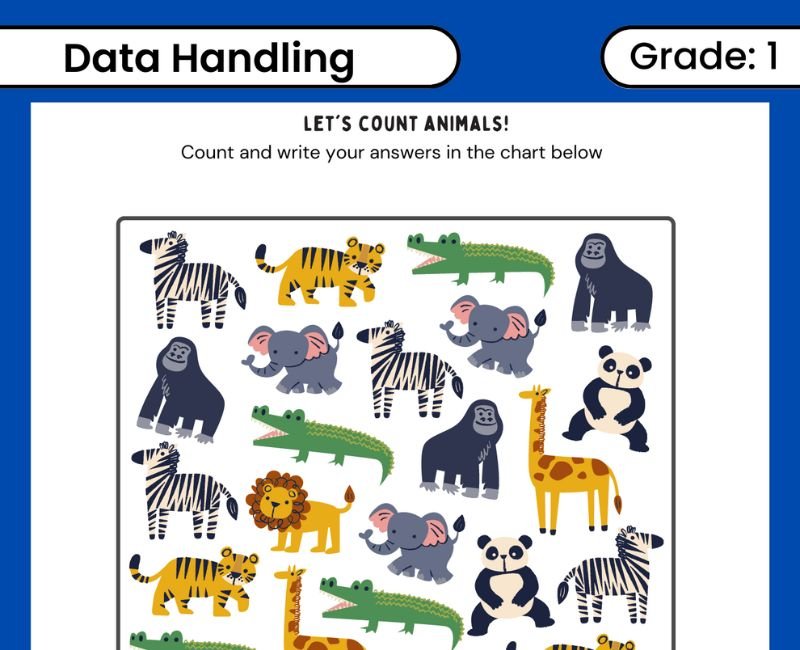
Use the worksheet download option on this page alongside the Joyful Mathematics textbook. Discuss the pictures, read the instructions aloud if needed and let the child attempt the counting independently.
Practise a little at a time. Include oral counting, making groups and recognising numerals rather than relying only on written answers. Ask children to check their own work by recounting or matching objects.
Teachers can organise a number-card station, while parents can use blocks or crayons at home. Avoid rushing children into larger numbers before they can connect familiar numerals with quantities. The examples on this page are supplementary practice; answers to picture-based worksheet tasks depend on the actual pictures shown.
More NCERT Joyful Mathematics Worksheets
Continue learning with these chapter-based Class 1 Maths worksheets.
Chapter 1: Finding the Furry CatPractise positional words and pre-number concepts. Chapter 2: What Is Long? What Is Round?
Explore shapes, rolling and sliding. Chapter 4: Making 10
Continue with groups of ten and numbers from 10 to 20. Chapter 13: So Many Toys
Count and compare groups of objects.
Related General Grade 1 Maths Practice
These topic-based resources provide additional practice alongside the NCERT chapter worksheets.
Numbers 1 to 9 Worksheet for Class 1Additional topic-based practice for early counting. Comparing Numbers Worksheets for Class 1
Continue comparing quantities and numbers. Browse All Class 1 Maths Worksheets
Find general topic resources and NCERT chapter worksheets.
Mango Treat Class 1 FAQs
Which chapter is Mango Treat in Class 1 Maths?
Mango Treat is Chapter 3 of the NCERT Joyful Mathematics Class 1 textbook. Its main number focus is 1 to 9.
What counting skills should children practise in Mango Treat?
Practise counting each object once, stating the total, matching a quantity with its numeral and arranging numbers in order.
How can I help a child who knows number names but cannot count objects?
Use a small collection and ask the child to touch or move one object for each number word. The last number said gives the total.
How do I teach one more and one less?
Add one object to a group or remove one, then count the new quantity. For example, adding one to six gives seven.
Does spreading objects out change their number?
No. Moving the same objects changes their arrangement, not their quantity. Recount or match the objects to verify this.
How can I practise missing numbers from 1 to 9?
Arrange number cards in order, remove one and ask which card is missing. Begin with short sequences before using all nine numbers.
Can children show the same number with fingers in different ways?
Yes. For example, five can be shown on one hand or as three fingers on one hand and two on the other. Count the raised fingers to check.
Are answers available for the practice questions on this page?
Yes. Open "Show Practice Answers" below the original practice questions. Those answers apply to the examples displayed here.
 Download