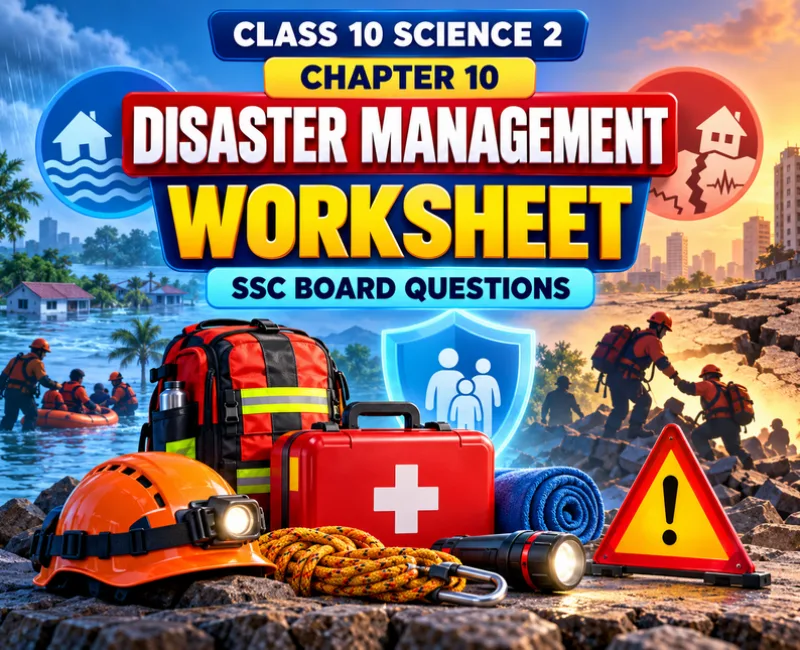
Class 10 Science 2 Chapter 10 Disaster Management Worksheet
Maharashtra SSC Board important questions, hazards, preparedness, first aid, emergency response and mock drills
Class 10 Disaster Management Worksheet
This worksheet follows the Maharashtra State Board Science 2 syllabus. It contains MCQs, matching pairs, definitions, scientific reasons, short notes, classifications and situation-based questions. Selected previous SSC Board questions are included with their examination-year labels.
Students revise natural and human-induced disasters, risk reduction, preparedness, emergency response, first aid, mock drills, communication and recovery.
Board Questions
Definitions, reasons, classifications and situations.
Safety Applications
Emergency kits, evacuation and first response.
Answer Key
Check safe, practical and organised responses.
What Is Included?
- MCQs, matching pairs and fill in the blanks
- Hazard, vulnerability, risk and disaster definitions
- Natural and human-induced disaster classifications
- Preparedness and emergency-response situations
- First-aid and evacuation questions
- Mock-drill and communication activities
- Maharashtra SSC important questions
- Selected previous questions with year labels
Hazard, Risk and Disaster
A hazard is a potentially damaging event or condition. Vulnerability refers to conditions that make people, property or systems more likely to suffer harm. Disaster risk depends on the hazard, exposure, vulnerability and available capacity.
A hazard becomes a disaster when it seriously disrupts a community and causes losses beyond the affected community’s immediate ability to cope.
Types of Disasters
Natural Hazards
- Earthquakes and landslides
- Floods and cyclones
- Droughts and heat waves
- Lightning and forest fires
- Disease outbreaks
Human-Induced Hazards
- Industrial and chemical accidents
- Fires caused by unsafe practices
- Transport accidents
- Structural collapse
- Environmental damage and pollution incidents
Disaster-Management Cycle
Prevention and mitigation: Reduce the probability or effects of a disaster through safe construction, land-use planning and protective systems.
Preparedness: Prepare emergency plans, warnings, resources, training and mock drills before an event occurs.
Response: Rescue, first aid, evacuation, emergency shelter and essential services during and immediately after an event.
Recovery: Restore services, rebuild safely and support rehabilitation after immediate danger has passed.
Emergency Preparedness
- Know local hazards, exits and safe assembly points
- Keep emergency contact information available
- Prepare water, basic food, torch, radio, medicines and first-aid supplies
- Secure important documents in a protected form
- Participate seriously in school mock drills
- Follow authorised warnings and evacuation instructions
- Support children, older adults and persons requiring assistance
First Aid and Communication
First aid is immediate care provided until professional medical help becomes available. The responder must first check whether the location is safe. Emergency services should be contacted as early as possible.
A student should not attempt procedures beyond their training. Moving an injured person unnecessarily may worsen certain injuries. Serious bleeding, breathing difficulty, unconsciousness or suspected major injury needs urgent professional help.
During emergencies, information should come from authorised agencies. Unverified messages can create panic, send people towards danger or interfere with rescue operations.
Importance of Mock Drills
A mock drill rehearses emergency actions before a real disaster. It helps people recognise alarms, practise evacuation routes, test communication systems and identify weaknesses in the emergency plan.
Common Mistakes
- Using hazard and disaster as identical terms
- Writing only response measures and ignoring preparedness
- Suggesting untrained rescue in dangerous locations
- Moving every injured person immediately
- Spreading unverified emergency information
- Treating mock drills as unimportant activities
- Forgetting recovery and rehabilitation
Check the Complete Disaster Management Solutions
Revise hazards, risk reduction, preparedness, first aid, response, recovery and mock drills.
View Chapter 10 SolutionsFrequently Asked Questions
What is the difference between a hazard and a disaster?
A hazard is a potentially damaging event. It becomes a disaster when it causes severe disruption and losses beyond the affected community’s ability to cope.
Why are mock drills important?
They help people practise alarms, evacuation routes and responsibilities and reveal weaknesses in the emergency plan.
What should be kept in an emergency kit?
Water, basic food, torch, radio, essential medicines, first-aid supplies, contact details and copies of important documents.
Why should rumours be avoided during a disaster?
False information can create panic, direct people towards danger and interfere with emergency operations.
Does this worksheet contain Board questions?
Yes. It includes Maharashtra SSC important and selected previous board exam questions with year labels.
 Download