Class 4 Science
Adaptation in Plants Class 4 Science Worksheet with Quiz and Activities
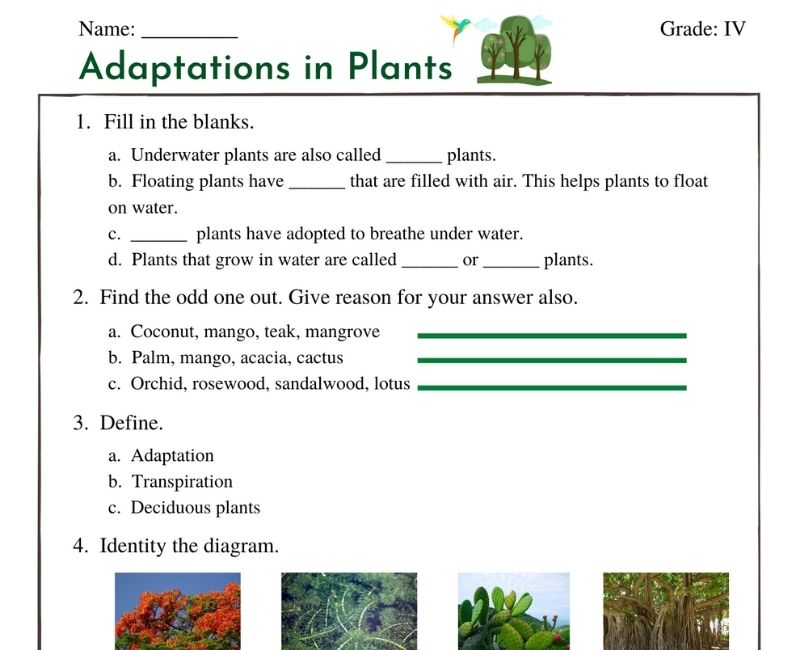
How does a cactus survive in the hot desert? Why is a pine tree shaped like a cone? How does a lotus leaf stay dry? Explore with this Adaptation in Plants worksheet for Class 4: take the Adaptation in Plants Class 4 online quiz, test real plant adaptations in the labs and play the Adaptation in Plants Class 4 activities and interactive games online.
Flip the cards and try the Plant Survival Lab, then tap the Games, Labs or Challenges island.
Adaptation in Plants Class 4 Online Quiz
20 questions · tap an answer to move on · full review at the end
Flip the cards, try the Plant Survival Lab, then play the games, do the labs and take the challenges. Earn up to 3 stars in every activity.
Fact cards: tap a card to flip it
Plant Survival Lab
Run three survival tests. In each habitat, drag the adaptation you think will help onto the plant and watch the result. A wrong choice shows what goes wrong, so you can try again.
Challenge marks: 0 / 15 (0 of 5 challenges done)
Finish all 5 challenges to see your comment.
Practice sheet
Adaptation in Plants Class 4 Activities
Test leaves, stems and roots in real-looking experiments. Earn up to 3 stars in every activity.
What is adaptation in plants?
Every plant lives in a natural home called its habitat. Some habitats are hot and dry, some are cold and snowy and some are full of water. Over a very long time, plants develop special features in their leaves, stems and roots that help them live in their habitat. These special features are called adaptations.
Plants that grow on land are called terrestrial plants, and plants that grow in water are called aquatic plants. A few plants are special: some catch insects, some climb or creep, and some take food from other plants.
Types of habitats and their plants
| Habitat | Example plant | One adaptation |
|---|---|---|
| 🏜️ desert | date palm | deep roots |
| 🏔️ mountain | deodar | narrow, waxy leaves |
| 🌳 plains | peepal | broad leaves |
| 🌊 coast | coconut | bendy trunk |
| 💧 pond | duckweed | small and light, floats |
How to spot an adaptation
- Find out what the habitat is like: hot, cold, dry or wet.
- Look at the leaves: big, small, needle-like, waxy or spiny.
- Look at the stem: thick, fleshy, spongy, weak or bendy.
- Look at the roots: long, short, few or breathing roots.
More examples
This Adaptation in Plants worksheet for Class 4 turns plant science into an island adventure with online activities and interactive games. Flip the cards, run the tests in the Plant Survival Lab, then play the games, do the science labs and try the challenges.
Science Adaptation in Plants Class 4
Adaptation in Plants is an important Class 4 Science topic. It explains how plants living in very different homes, such as hot deserts, snowy mountains, green plains, salty coasts, marshes and ponds, have special body features that help them survive there. It also covers unusual plants that catch insects, plants with weak stems that climb or creep, and plants that take food from other plants. This guide explains each idea in simple language for Class 4 students, parents and teachers. It goes with the Adaptation in Plants worksheet for Class 4 on WitKnowLearn, which also gives an online quiz, online activities and interactive games on the same page.
What is adaptation in plants?
The place where a plant naturally lives is called its habitat. Every habitat has its own weather, soil and amount of water. Plants cannot walk away from heat, cold or floods, so over a very long time they develop special features that suit their home. These special features are called adaptations.
What is there in this topic
- Terrestrial (land) plants and aquatic (water) plants
- Plants of deserts, mountains, plains, coasts and marshy areas
- Deciduous and evergreen trees
- Floating, fixed and underwater plants
- Insect-eating (insectivorous) plants
- Climbers, creepers and parasitic plants
Learning objectives
- Explain what a habitat and an adaptation are.
- Name the main habitats of plants and give examples of plants from each.
- Describe how the leaves, stems and roots of plants suit their habitat.
- Tell why some plants catch insects, climb, creep or take food from other plants.
Learning outcomes
After this page a child can:
- Sort plants into land plants and water plants.
- Match plants such as the cactus, pine, mangrove and lotus to their homes.
- Explain how a waxy coat, spongy stalk or fleshy stem helps a plant.
- Give reasons why a plant from one habitat may not survive in another.
Adaptation in Plants Class 4 resources on this page
| Resource | What it does |
|---|---|
| Adaptation in Plants Class 4 online quiz | 20 questions in three levels with a full answer review |
| Flip cards | Six cards on desert, mountain, plains, coast and marsh, water and special plants |
| Plant Survival Lab | Test three adaptations in a hot desert, on a snowy mountain and in a fast stream |
| 5 interactive games | Land or water plant, insect eater bubbles, special feature memory, plant the right home, climber or creeper |
| 5 science labs | Waxy leaf, float or sink, squeeze test, rising tide and insect trap experiments |
| 5 challenges | Marked out of 3 each with a total out of 15 |
| Practice sheet | 16 questions with answer boxes and a live score |
Plants and their homes
| Habitat | What it is like | Example plants | Adaptations |
|---|---|---|---|
| Desert | Very hot, very little rain | Cactus, date palm, acacia | Spines or tiny leaves, fleshy stem that stores water, long roots, waxy skin |
| Mountains | Cold, with snow in winter | Pine, fir, deodar | Cone shape and sloping branches, needle-like waxy leaves, seeds in cones |
| Plains | Enough rain and sunlight | Neem, mango, peepal, teak | Broad leaves, many branches; some shed leaves in the dry season |
| Coast | Salty, sandy, windy | Coconut | Tall bendy trunk, fruit with fibre that floats |
| Marsh | Wet, muddy, little air in the soil | Mangrove | Breathing roots that grow up out of the mud |
| Ponds and lakes | Water all around | Lotus, water hyacinth, hydrilla | Waxy floating leaves, spongy air-filled stalks, ribbon-like underwater leaves |
Water plants
- Floating plants such as water hyacinth, duckweed and water lettuce are light and have spongy parts filled with air.
- Fixed plants such as lotus and water lily have roots in the mud, long hollow stalks and broad waxy leaves that float on top.
- Underwater plants such as hydrilla and tape grass have thin, ribbon-like leaves that bend with the water. They take in gases through their whole body.
Special plants
- Insect-eating plants such as the pitcher plant, Venus flytrap, sundew and bladderwort make their own food, but catch insects to get nutrients missing from their soil.
- Climbers such as the money plant, grapevine and pea have weak stems and climb up a support towards sunlight.
- Creepers such as pumpkin, watermelon and strawberry have weak stems that spread along the ground.
- Parasites such as cuscuta (amarbel) have no green leaves and take their food from another plant.
Types of questions
- Match the plant to its habitat
- Name the adaptation
- Give a reason (why questions)
- Sort land and water plants
- Floating, fixed or underwater
- Hands-on experiments with leaves, stems and roots
Solved examples
Common mistakes
| Mistake | Correct |
|---|---|
| Thinking insect-eating plants cannot make food | They are green and make food; insects only give extra nutrients. |
| Calling every water plant a floating plant | Some are fixed in the mud and some live fully under water. |
| Thinking a cactus has no leaves at all | Its leaves have become spines. |
| Mixing up climbers and creepers | Climbers go up a support; creepers spread on the ground. |
Daily life
We see adaptations all around us: aloe vera and cacti in our homes need little water, lotus leaves in ponds stay dry in the rain, and money plants climb up walls. Knowing about adaptations helps us choose the right plants for our gardens and protect plants in their natural homes.
Tips for parents and teachers
- Drop water on a lotus or colocasia leaf and on a paper towel and compare.
- Grow a cactus and a money plant at home and compare how often they need water.
- Visit a pond and count floating, fixed and underwater plants.
- Collect leaves from different plants and talk about their shapes.
- Let the child retry the challenges to earn 3 stars.
Related Class 4 Science Worksheets
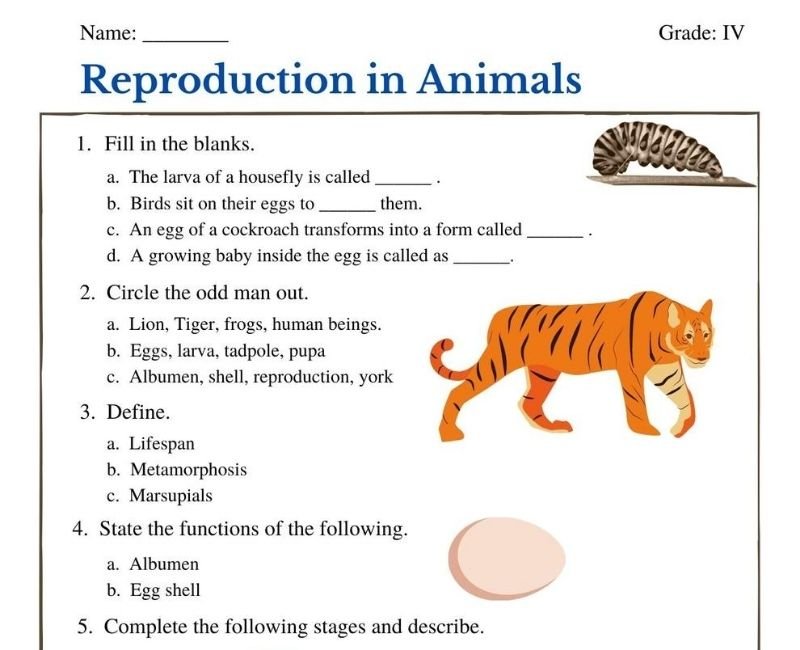
- Reproduction in Animals Worksheet Class 4
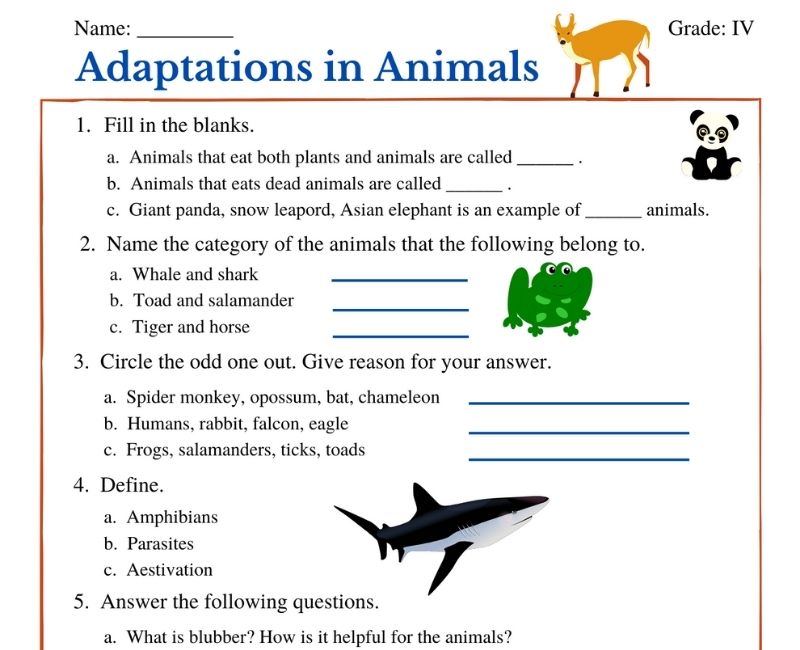
- Adaptation in Animals Worksheet Class 4
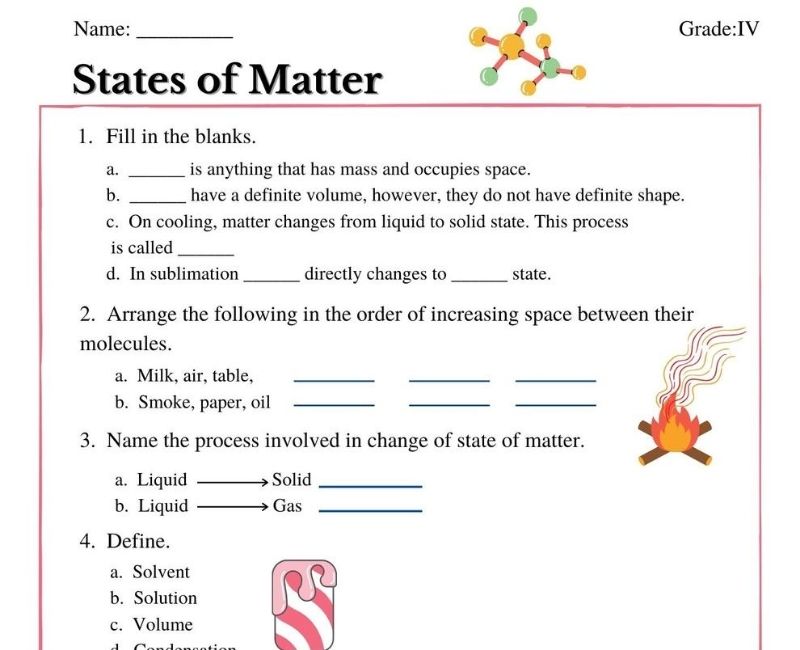
- States of Matter Worksheet Class 4
- Teeth and Microbes Worksheet Class 4
- Food and Nutrition Worksheet Class 4
- Force Work and Energy Worksheet Class 4
- Air Water and Weather Worksheet Class 4
- Leaves and the Food Factory of Plants Worksheet Class 4
- Safety and First Aid Worksheet Class 4
- Our Universe Worksheet Class 4
- Clothes We Wear Worksheet Class 4
- Our Environment Worksheet Class 4
Frequently Asked Questions
 Download