Class 4 Science
Our Environment Class 4 Science Worksheet with Quiz and Activities
Why do we need trees, where does our waste go and how can we keep the air and rivers clean? Find out with this Our Environment worksheet for Class 4: take the Our Environment Class 4 online quiz, make compost in the Virtual Lab and play the Our Environment Class 4 activities and interactive games online.
Flip the cards and try the Environment Rescue Lab, then tap the Games, Labs, Challenges or Virtual Lab island.
Our Environment Class 4 Online Quiz
20 questions · tap an answer to move on · full review at the end
Flip the cards, try the Environment Rescue Lab, then play the games, do the labs and take the challenges. Earn up to 3 stars in every activity.
Fact cards: tap a card to flip it
Environment Rescue Lab
Heal three places that are in trouble. In each one, drag the action you think will help onto the picture and watch what happens. A wrong choice shows what goes wrong, so you can try again.
Challenge marks: 0 / 15 (0 of 5 challenges done)
Finish all 5 challenges to see your comment.
Virtual Lab: do real experiments step by step
Practice sheet
Our Environment Class 4 Activities
Heal a river, build a food chain, catch dust from the air and make compost in the Virtual Lab. Earn up to 3 stars in every activity.
What is our environment?
Look around you right now. The air you breathe, the water you drink, the soil under your feet, the trees outside the window, the birds, insects and people, and even the roads and buildings all make up your environment. Our environment is everything around us, both living and non-living. Every plant and animal, including us, depends on it for food, water, air and shelter.
Living and non-living parts
The environment has two main parts. The living part includes plants, animals, people and tiny living things such as bacteria and fungi. Living things grow, breathe, need food and produce young ones. The non-living part includes air, water, soil, rocks, sunlight and heat. Living things cannot survive without the non-living parts: plants need sunlight, water and soil; animals need air and water. Places can also be natural, like forests, rivers and mountains, or man-made, like houses, bridges, farms and cities.
Habitats: homes in nature
The natural home of a plant or animal is called its habitat. A camel lives in the hot desert, a fish in a pond, a yak in the cold mountains and a monkey in a forest. Each habitat gives its living things the food, water, shelter and climate they need. When a habitat is destroyed, the plants and animals living there lose their homes.
Food chains and food webs
Living things are linked to one another through food. Green plants make their own food using sunlight, so they are called producers. Animals cannot make food, so they are consumers. Herbivores such as cows and deer eat plants, carnivores such as lions and eagles eat other animals, and omnivores such as bears and humans eat both. A food chain shows who eats whom, for example grass is eaten by a goat, and the goat is eaten by a tiger. Many food chains join together to make a food web. Decomposers such as mushrooms, bacteria and earthworms break down dead plants and animals and return goodness to the soil.
Balance in nature
Every living thing has a job. Bees carry pollen so plants can make fruits and seeds. Frogs and birds eat insects that would otherwise damage crops. Vultures clean up dead animals. If one kind of living thing disappears, others are affected, and the balance of nature is upset. That is why it is important to protect all plants and animals, big and small.
Pollution: when the environment gets sick
Pollution means making the air, water or land dirty and harmful. Air pollution comes from vehicle smoke, factories and burning garbage, and it can make people cough and fall ill. Water pollution happens when sewage, chemicals and garbage are thrown into rivers, lakes and seas, killing fish and spreading diseases. Land pollution comes from litter, plastic and chemicals in the soil. Loud sounds from horns, loudspeakers and machines cause noise pollution, which leads to headaches and stress.
Waste: biodegradable and non-biodegradable
Waste that breaks down naturally in the soil, such as peels, leaves, paper and cotton, is biodegradable. It can be turned into compost that makes soil rich. Waste such as plastic, glass and metal does not break down easily and is non-biodegradable. We should keep wet and dry waste in separate bins so each kind can be handled properly.
Saving our environment
We can all help by following the three Rs: Reduce (use less, such as carrying a cloth bag), Reuse (use things again, such as using a jar as a pen stand) and Recycle (make old things into new ones, such as turning old paper into new paper). Planting trees, saving water and electricity, walking or cycling short distances and not wasting food all help. Protecting forests and wildlife is called conservation. India has many national parks and wildlife sanctuaries, and in the famous Chipko movement, villagers hugged trees to stop them from being cut. Every year on 5 June, people around the world celebrate World Environment Day.
This Our Environment worksheet for Class 4 turns these ideas into a green adventure on WitKnowLearn with an online quiz, online activities and interactive games. Flip the cards, heal three places in the Environment Rescue Lab, play the games, do the nature labs, take the challenges and then make compost and catch dust from the air in the Virtual Lab.
Science Our Environment Class 4
Our Environment is an important Class 4 Science topic. It explains what the environment is, its living and non-living parts, natural and man-made surroundings, habitats, food chains, the balance of nature, kinds of pollution, types of waste and how we can protect the environment. This guide explains each idea in simple language for Class 4 students, parents and teachers. It goes with the Our Environment worksheet for Class 4 on WitKnowLearn, which also gives an online quiz, online activities, interactive games and a Virtual Lab on the same page.
What is there in this topic
- Living and non-living parts of the environment
- Natural and man-made environment
- Habitats
- Producers, consumers and decomposers; food chains
- Air, water, land and noise pollution
- Biodegradable and non-biodegradable waste
- Reduce, reuse, recycle and conservation
Learning objectives
- Describe the environment and its living and non-living parts.
- Build simple food chains and explain how living things depend on each other.
- Name kinds of pollution and their causes.
- Suggest ways to reduce waste and protect nature.
Learning outcomes
After this page a child can:
- Sort waste into biodegradable and non-biodegradable.
- Show how plant roots protect soil.
- Make compost and explain why plastic does not rot.
- Compare how clean the air is in different places.
Our Environment Class 4 resources on this page
| Resource | What it does |
|---|---|
| Our Environment Class 4 online quiz | 20 questions in three levels with a full answer review |
| Flip cards | Six cards on surroundings, living and non-living, food chains, pollution, the three Rs and wildlife |
| Environment Rescue Lab | Heal a dirty river, a noisy hospital road and a city with no birds |
| 5 interactive games | Will it rot, living bubbles, nature’s helpers memory, reduce reuse or recycle, helps or harms |
| 5 science labs | Food chain builder, rain on the hillside, oil spill, recycled paper and cool shade experiments |
| 5 challenges | Marked out of 3 each with a total out of 15 |
| Virtual Lab | Two full experiments on making compost and catching dust from the air, with aim, objectives, procedure, observation table, conclusion and outcomes |
| Practice sheet | 16 questions with answer boxes and a live score |
Environment words
| Word | Meaning |
|---|---|
| Producer | A living thing that makes its own food, like a plant |
| Consumer | A living thing that eats plants or animals |
| Decomposer | A living thing that breaks down dead matter |
| Omnivore | An animal that eats both plants and animals |
| Compost | Rich soil made from rotted plant waste |
| Deforestation | Cutting down forests on a large scale |
Types of questions
- Living or non-living
- Natural or man-made
- Food chains and kinds of eaters
- Causes of pollution
- Sorting waste
- The three Rs
- Experiments with soil, waste and air
Solved examples
Common mistakes
| Mistake | Correct |
|---|---|
| Thinking only plants and animals are the environment | Air, water, soil and buildings are part of it too. |
| Starting a food chain with an animal | Food chains always start with a plant. |
| Thinking clear-looking air is always clean | Air can carry tiny dust and gases we cannot see. |
| Thinking recycling is the only R | Reducing and reusing come first and save even more. |
Daily life
We meet our environment every day: we sort waste at home, see birds on trees, smell smoke from traffic and hear horns on the road. Carrying a water bottle, saying no to plastic bags, planting a sapling and switching off fans are small habits that keep our surroundings healthy.
Tips for parents and teachers
- Keep wet and dry waste bins at home and let the child sort.
- Go on a nature walk and list living and non-living things.
- Plant a sapling and record its growth every week.
- Make a poster for World Environment Day on 5 June.
- Let the child retry the challenges to earn 3 stars.
Related Class 4 Science Worksheets
- Adaptation in Plants Worksheet Class 4
- Reproduction in Animals Worksheet Class 4
- Adaptation in Animals Worksheet Class 4
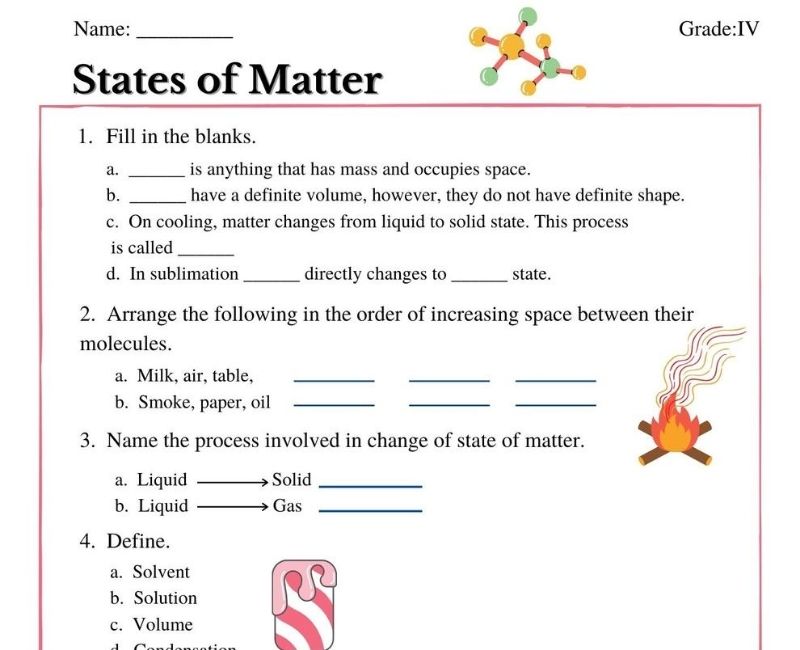
- States of Matter Worksheet Class 4
- Teeth and Microbes Worksheet Class 4
- Food and Nutrition Worksheet Class 4
- Force Work and Energy Worksheet Class 4
- Air Water and Weather Worksheet Class 4
- Leaves and the Food Factory of Plants Worksheet Class 4
- Safety and First Aid Worksheet Class 4
- Clothes We Wear Worksheet Class 4
- Our Universe Worksheet Class 4
Frequently Asked Questions
 Download