Class 4 Science
Reproduction in Animals Class 4 Science Worksheet with Quiz and Activities
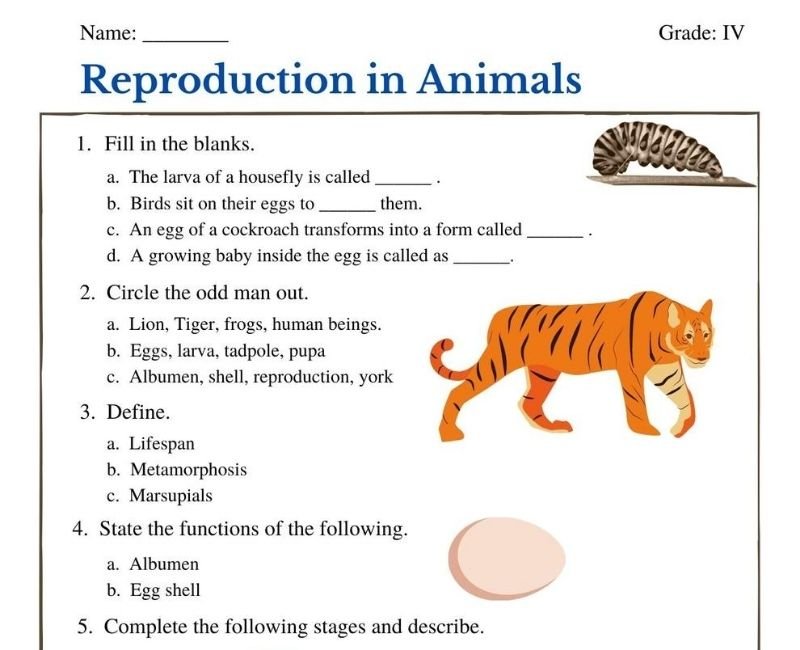
Which animals hatch from eggs and which are born from their mothers? How does a caterpillar become a butterfly? Explore with this Reproduction in Animals worksheet for Class 4: take the Reproduction in Animals Class 4 online quiz, complete real life cycles in the labs and play the Reproduction in Animals Class 4 activities and interactive games online.
Flip the cards and try the Life Cycle Lab, then tap the Games, Labs or Challenges island.
Reproduction in Animals Class 4 Online Quiz
20 questions · tap an answer to move on · full review at the end
Flip the cards, try the Life Cycle Lab, then play the games, do the labs and take the challenges. Earn up to 3 stars in every activity.
Fact cards: tap a card to flip it
Life Cycle Lab
Complete three life cycles. In each one a stage is missing: drag the stage you think fits into the gap and watch the result. A wrong choice shows why it cannot happen, so you can try again.
Challenge marks: 0 / 15 (0 of 5 challenges done)
Finish all 5 challenges to see your comment.
Practice sheet
Reproduction in Animals Class 4 Activities
Hatch eggs, feed babies and complete life cycles in real-looking experiments. Earn up to 3 stars in every activity.
What is reproduction in animals?
Every animal grows old one day, so animals produce young ones of their own kind. A hen has chicks, a cat has kittens and a fish has baby fish. This is called reproduction. It keeps every kind of animal alive on Earth.
Animals start life in two main ways. Some come out of eggs, and some grow inside their mother and are born. As they grow, all animals pass through stages called a life cycle. Many parents also take great care of their babies until they can look after themselves.
Two ways to start life
| How life starts | Name | Examples |
|---|---|---|
| 🥚 From an egg | egg-laying (oviparous) | parrot, snail, tortoise, honeybee |
| 🍼 Born from the mother | giving birth (viviparous) | tiger, horse, panda, human |
Life cycles
- Some young ones look like small copies of their parents, such as a puppy or a calf. They just grow bigger.
- Some young ones look very different and change their whole body shape as they grow. This is called metamorphosis.
- A silkworm moth passes through egg, larva, pupa (cocoon) and adult.
- A cockroach passes through egg, nymph and adult.
Caring for young ones
This Reproduction in Animals worksheet for Class 4 turns animal science into an island adventure with online activities and interactive games. Flip the cards, complete the cycles in the Life Cycle Lab, then play the games, do the science labs and try the challenges.
Science Reproduction in Animals Class 4
Reproduction in Animals is an important Class 4 Science topic. It explains how animals produce young ones of their own kind, the difference between animals that lay eggs and animals that give birth, the stages animals pass through as they grow, and the many ways parents look after their babies. This guide explains each idea in simple language for Class 4 students, parents and teachers. It goes with the Reproduction in Animals worksheet for Class 4 on WitKnowLearn, which also gives an online quiz, online activities and interactive games on the same page.
What is reproduction in animals?
No animal lives for ever. To make sure their kind does not disappear, animals produce young ones that look like them or grow up to look like them. This process is called reproduction. A young one grows up, becomes an adult and later has young ones of its own.
What is there in this topic
- Animals that lay eggs (oviparous animals)
- Animals that give birth to young ones (viviparous animals)
- Names of young animals
- Life cycles of the butterfly, frog and hen
- Metamorphosis
- How parents care for their young ones
Learning objectives
- Explain what reproduction means.
- Tell the difference between egg-laying animals and animals that give birth.
- Describe the stages in the life cycles of some animals.
- Describe how animal parents care for their young ones.
Learning outcomes
After this page a child can:
- Sort animals into egg-laying animals and animals that give birth.
- Put the stages of a butterfly, frog and hen life cycle in order.
- Name the young ones of common animals.
- Give reasons why some animals lay many eggs and why babies need care.
Reproduction in Animals Class 4 resources on this page
| Resource | What it does |
|---|---|
| Reproduction in Animals Class 4 online quiz | 20 questions in three levels with a full answer review |
| Flip cards | Six cards on new life, eggs, birth, butterfly, frog and caring for young ones |
| Life Cycle Lab | Complete the life cycles of a butterfly, a frog and a hen by finding the missing stage |
| 5 interactive games | Egg or birth, baby name bubbles, parent and baby memory, where are the eggs, mammal spotter |
| 5 science labs | Turtle nest, hundreds of eggs, hungry caterpillar, feeding time and egg torch experiments |
| 5 challenges | Marked out of 3 each with a total out of 15 |
| Practice sheet | 16 questions with answer boxes and a live score |
Eggs or birth?
| Group | How babies start life | Examples | Babies are fed on |
|---|---|---|---|
| Birds | Hatch from hard-shelled eggs | Parrot, peacock, ostrich | Seeds, worms and insects brought by parents |
| Reptiles | Mostly hatch from eggs laid on land | Tortoise, lizard, most snakes | Find their own food |
| Frogs and toads | Hatch from soft eggs in water | Frog, toad | Find their own food |
| Fish | Mostly hatch from eggs in water | Rohu, goldfish | Find their own food |
| Insects | Hatch from tiny eggs | Honeybee, housefly, ant | Mostly find their own food |
| Mammals | Born from the mother | Tiger, horse, panda, human | Their mother's milk |
Life cycles
- Butterfly: egg → caterpillar (larva) → pupa → adult butterfly.
- Frog: eggs in jelly → tadpole → froglet → adult frog.
- Hen: egg → chick → young hen → adult hen.
- Mammals such as a puppy or a calf look like small copies of their parents and just grow bigger.
Caring for young ones
- Birds build nests and sit on their eggs to keep them warm.
- Mammals feed their babies on milk and keep them close.
- Some animals, such as most fish and turtles, do not look after their eggs. They lay many eggs so that some babies survive.
Types of questions
- Egg-laying or giving birth
- Name the young one
- Put the life cycle in order
- Find the missing stage
- Give a reason (why questions)
- How parents care for babies
Solved examples
Common mistakes
| Mistake | Correct |
|---|---|
| Thinking every flying animal lays eggs | A bat flies but gives birth and feeds its babies milk. |
| Thinking every sea animal lays eggs | Whales and dolphins give birth. |
| Mixing up the larva and the pupa | The larva eats and grows; the pupa rests inside a case. |
| Thinking a tadpole is a fish | A tadpole is a young frog. |
Daily life
We see reproduction all around us: sparrows build nests on balconies, cats have kittens, and caterpillars munch on garden leaves before they turn into butterflies. Stopping water from collecting in pots and tyres prevents mosquitoes from breeding, and leaving nests undisturbed helps baby birds grow safely.
Tips for parents and teachers
- Watch birds building nests and talk about why they do it.
- Look for caterpillars on plants and check them every few days.
- Make a chart of animals and the names of their young ones.
- Draw the life cycle of a butterfly or a frog as a circle.
- Let the child retry the challenges to earn 3 stars.
Related Class 4 Science Worksheets
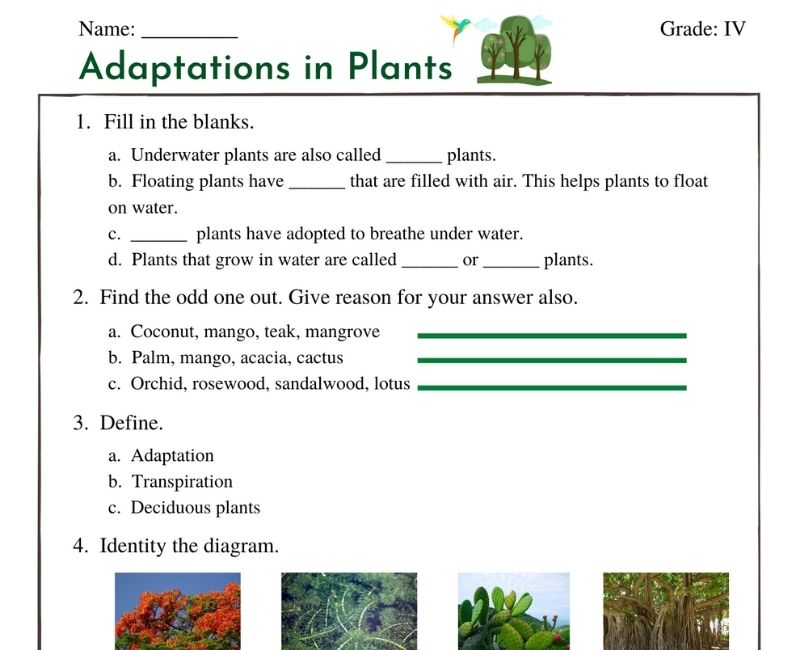
- Adaptation in Plants Worksheet Class 4
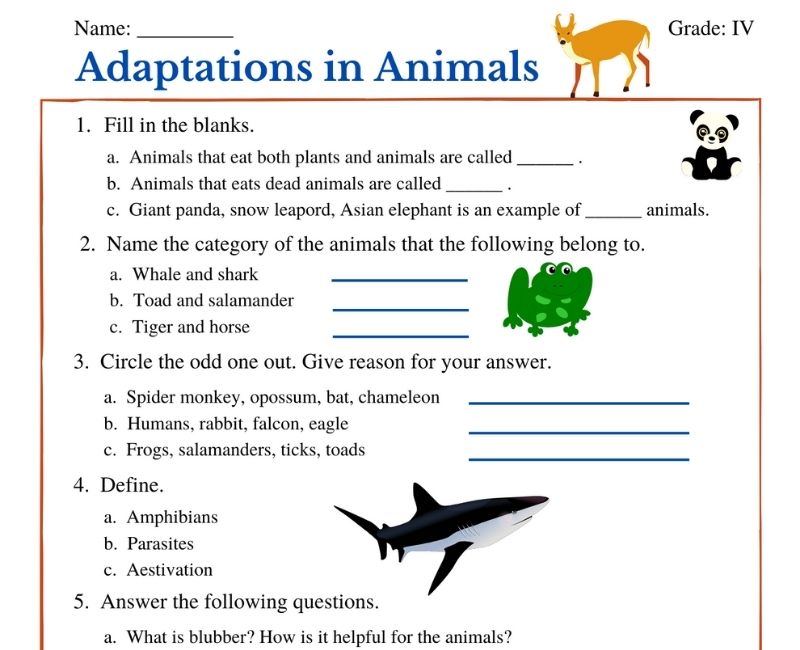
- Adaptation in Animals Worksheet Class 4
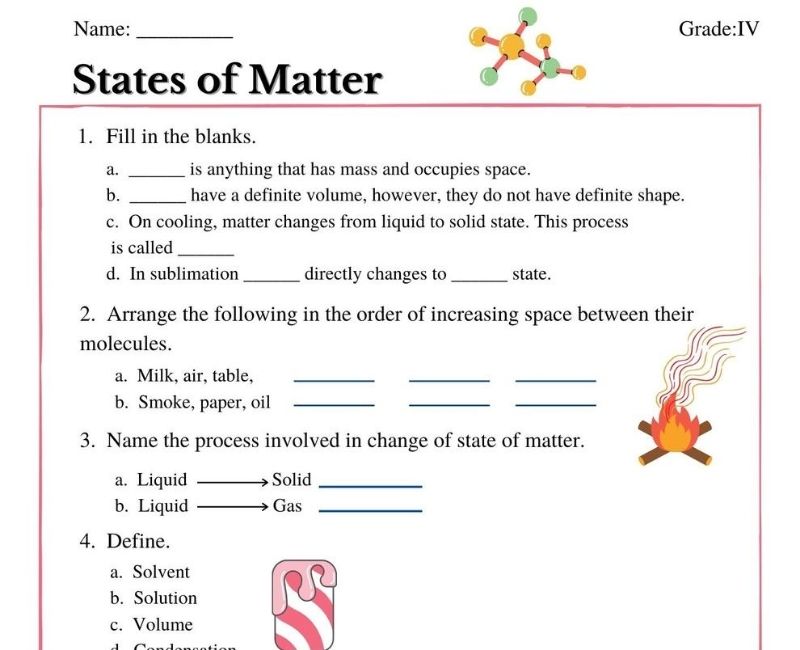
- States of Matter Worksheet Class 4
- Teeth and Microbes Worksheet Class 4
- Food and Nutrition Worksheet Class 4
- Force Work and Energy Worksheet Class 4
- Air Water and Weather Worksheet Class 4
- Leaves and the Food Factory of Plants Worksheet Class 4
- Safety and First Aid Worksheet Class 4
- Our Universe Worksheet Class 4
- Clothes We Wear Worksheet Class 4
- Our Environment Worksheet Class 4
Frequently Asked Questions
 Download