Class 4 Science
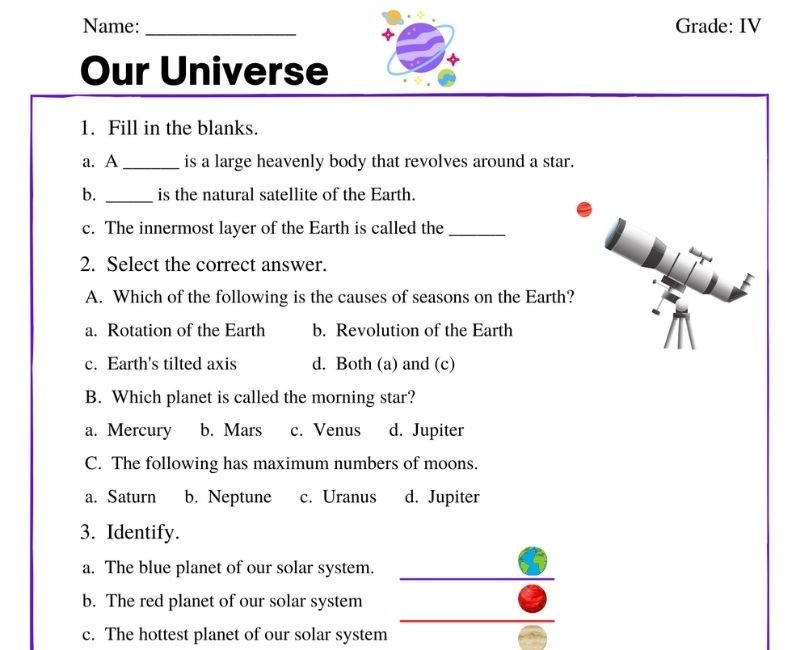
Our Universe Class 4 Science Worksheet with Quiz and Activities
What lies beyond the sky, why do we have day and night and why does the Moon change shape? Explore with this Our Universe worksheet for Class 4: take the Our Universe Class 4 online quiz, build a constellation viewer in the Virtual Lab and play the Our Universe Class 4 activities and interactive games online.
Flip the cards and try the Earth and Moon Lab, then tap the Games, Labs, Challenges or Virtual Lab island.
Our Universe Class 4 Online Quiz
20 questions · tap an answer to move on · full review at the end
Flip the cards, try the Earth and Moon Lab, then play the games, do the labs and take the challenges. Earn up to 3 stars in every activity.
Fact cards: tap a card to flip it
Earth and Moon Lab
Test three space models. In each one, drag the move you think is right onto the picture and watch what happens. A wrong choice shows what goes wrong, so you can try again.
Challenge marks: 0 / 15 (0 of 5 challenges done)
Finish all 5 challenges to see your comment.
Virtual Lab: do real experiments step by step
Practice sheet
Our Universe Class 4 Activities
Spin the Earth, line up the planets, launch a balloon rocket and build a constellation viewer in the Virtual Lab. Earn up to 3 stars in every activity.
What is the universe?
On a clear night, look up at the sky. You may see the Moon, thousands of twinkling stars and perhaps a bright planet. All of these, and everything else that exists, from the tiniest speck of dust to the biggest star, make up the universe. The universe is so huge that light, the fastest thing we know, takes billions of years to cross it.
Galaxies and stars
Stars are not scattered evenly. They gather in enormous families called galaxies. Our galaxy is the Milky Way, with billions of stars, and on a very dark night it looks like a faint, milky band across the sky. A star is a giant ball of hot, glowing gases that makes its own light and heat. Stars look tiny only because they are unimaginably far away. People long ago joined bright stars into patterns called constellations, such as Saptarishi (the Great Bear) and Orion.
Our Sun and the solar system
The Sun is our very own star. It is a medium-sized star, but it is so close to us compared with other stars that it looks big and bright. The Sun and everything that travels around it make up the solar system. This includes eight planets, their moons, dwarf planets like Pluto, and countless asteroids and comets.
| Order from the Sun | Planet | Fun fact |
|---|---|---|
| 1 | Mercury | Smallest planet, with no air |
| 2 | Venus | Hottest planet, wrapped in thick clouds |
| 3 | Earth | The only planet known to have life |
| 4 | Mars | The Red Planet with giant volcanoes |
| 5 | Jupiter | Biggest planet, with a giant storm |
| 6 | Saturn | Famous for its shining rings |
| 7 | Uranus | Spins lying on its side |
| 8 | Neptune | Coldest and windiest planet |
Our home, the Earth
The Earth does two things at the same time. It spins on an imaginary line called its axis once every 24 hours. This is called rotation, and it gives us day and night: the side facing the Sun has day, while the other side has night. The Earth also travels around the Sun in a path called an orbit, taking about 365 days, or one year. This is called revolution, and together with the Earth's tilt, it gives us seasons.
The Moon
The Moon is the Earth's natural satellite. It has no light of its own; it shines because it reflects sunlight. As the Moon goes round the Earth about once a month, we see different amounts of its sunlit side, so it seems to change shape from a thin crescent to a full Moon and back. These shapes are called the phases of the Moon. The Moon has no air or water, and its surface is covered with craters made by falling space rocks.
Other space travellers
Besides planets and moons, the solar system has smaller wanderers. Rocky asteroids circle the Sun, mostly between Mars and Jupiter. Icy comets grow long glowing tails when they come near the Sun. Tiny space rocks that burn up in our air make bright streaks we call shooting stars.
Exploring space
Scientists study space with telescopes, send rockets and satellites into space, and train astronauts to live there. India's space agency, ISRO, has sent Chandrayaan missions to the Moon, Mangalyaan to Mars and Aditya-L1 to study the Sun. In 1984, Rakesh Sharma became the first Indian to travel to space. Satellites around the Earth help us forecast weather, watch TV, use phones and find our way with maps.
This Our Universe worksheet for Class 4 turns these ideas into a space adventure on WitKnowLearn with an online quiz, online activities and interactive games. Flip the cards, test models in the Earth and Moon Lab, play the games, do the space labs, take the challenges and then build a constellation viewer in the Virtual Lab.
Science Our Universe Class 4
Our Universe is an important Class 4 Science topic. It explains what the universe is, galaxies and stars, the Sun and the solar system, the eight planets, how the Earth's rotation and revolution give us day, night and years, the Moon and its phases, and how people explore space. This guide explains each idea in simple language for Class 4 students, parents and teachers. It goes with the Our Universe worksheet for Class 4 on WitKnowLearn, which also gives an online quiz, online activities, interactive games and a Virtual Lab on the same page.
What is there in this topic
- The universe, galaxies and stars
- The Sun and the solar system
- The eight planets and dwarf planets
- Rotation and revolution of the Earth
- The Moon and its phases
- Comets, asteroids and meteors
- Space exploration and India's missions
Learning objectives
- Describe the universe, galaxies and stars.
- Name the planets in order from the Sun.
- Explain how day, night and years happen.
- Describe the Moon and why its shape seems to change.
Learning outcomes
After this page a child can:
- Line up the eight planets in order.
- Show day and night with a model.
- Recognise the Saptarishi constellation.
- Name India's space missions and their targets.
Our Universe Class 4 resources on this page
| Resource | What it does |
|---|---|
| Our Universe Class 4 online quiz | 20 questions in three levels with a full answer review |
| Flip cards | Six cards on the universe, the Sun, the solar system, the Earth, the Moon and space exploration |
| Earth and Moon Lab | Make day in India, show one year and find the full Moon position |
| 5 interactive games | Rocky or giant, starlight bubbles, space words memory, India in space, bigger or smaller |
| 5 space labs | Planet line-up, crater maker, stars by day, balloon rocket and shadow clock activities |
| 5 challenges | Marked out of 3 each with a total out of 15 |
| Virtual Lab | Two full experiments on a constellation viewer and distance and heat, with aim, objectives, procedure, observation table, conclusion and outcomes |
| Practice sheet | 16 questions with answer boxes and a live score |
Rotation and revolution
| Rotation | Revolution | |
|---|---|---|
| What it is | The Earth spinning on its axis | The Earth travelling round the Sun |
| Time taken | About 24 hours | About 365 days |
| What it causes | Day and night | A year, and with the tilt, seasons |
Types of questions
- Stars, planets and satellites
- Order and features of planets
- Rotation and revolution
- The Moon and its phases
- Space objects and space words
- Space exploration
Solved examples
Common mistakes
| Mistake | Correct |
|---|---|
| Thinking the Sun moves round the Earth | The Earth goes round the Sun; the Sun only seems to move. |
| Thinking the Moon makes its own light | It reflects sunlight. |
| Calling shooting stars real stars | They are space rocks burning in our air. |
| Mixing up rotation and revolution | Rotation is spinning; revolution is going round. |
Daily life
Space touches our lives every day: the Sun gives us light and warmth, the Moon pulls on the oceans to make tides, and satellites help with weather reports, TV, phones and maps. Watching the night sky with family is a wonderful way to start exploring the universe.
Tips for parents and teachers
- Use a torch and a ball to show day and night.
- Watch the Moon every night for a month and draw its shape.
- Find Saptarishi in the northern sky on a clear night.
- Make a planet model with clay balls of different sizes.
- Let the child retry the challenges to earn 3 stars.
Related Class 4 Science Worksheets
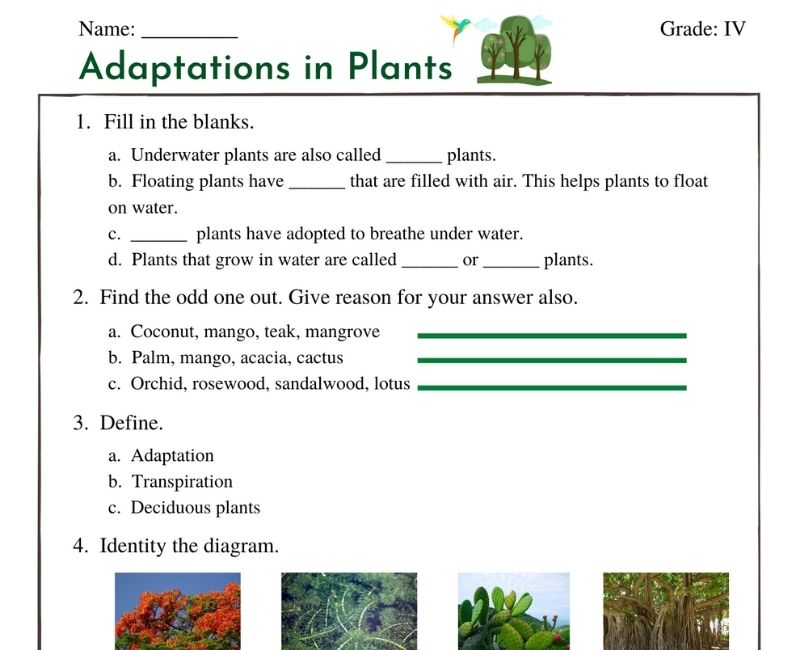
- Adaptation in Plants Worksheet Class 4
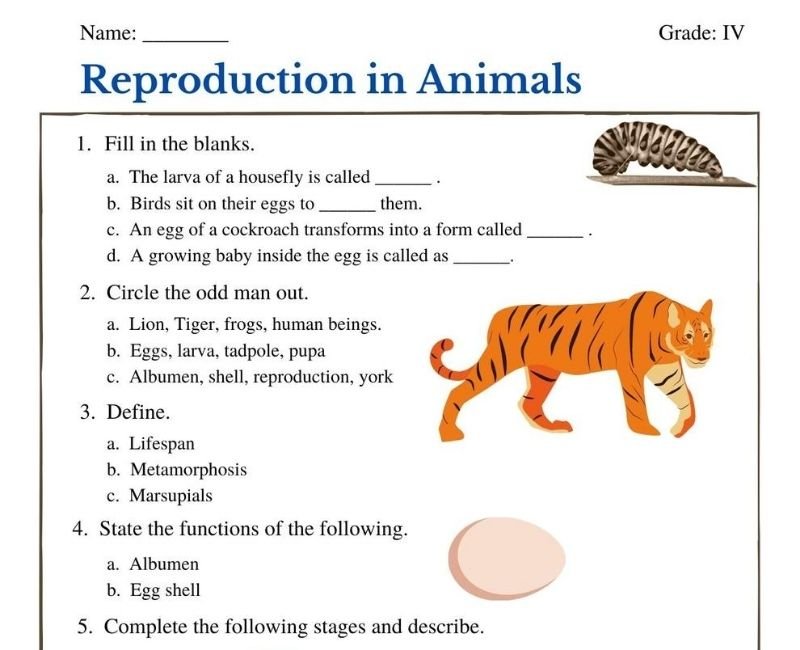
- Reproduction in Animals Worksheet Class 4
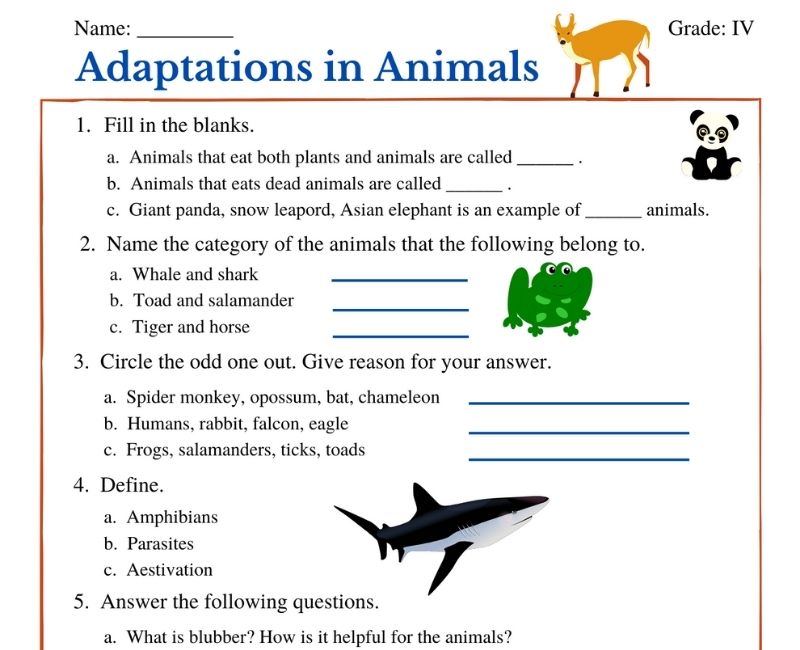
- Adaptation in Animals Worksheet Class 4
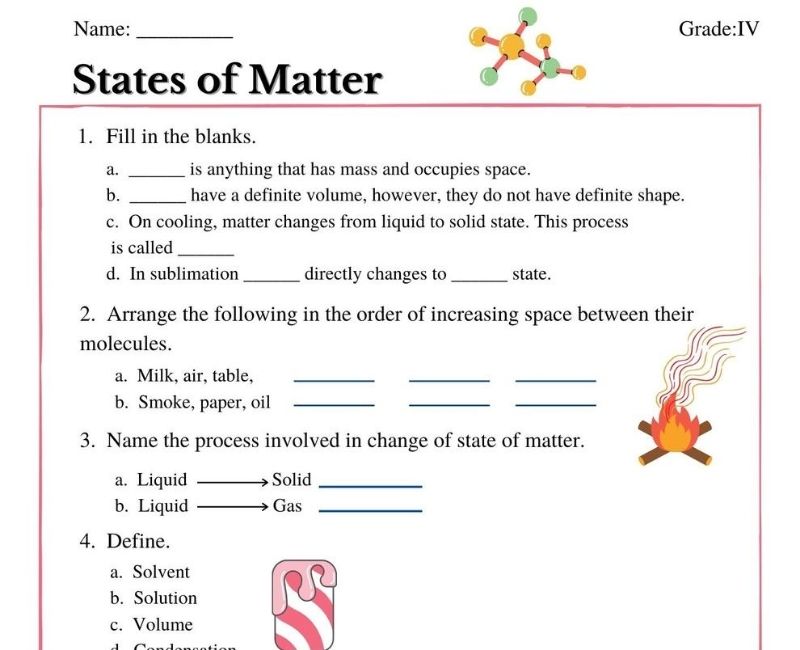
- States of Matter Worksheet Class 4
- Teeth and Microbes Worksheet Class 4
- Food and Nutrition Worksheet Class 4
- Force Work and Energy Worksheet Class 4
- Air Water and Weather Worksheet Class 4
- Leaves and the Food Factory of Plants Worksheet Class 4
- Safety and First Aid Worksheet Class 4
- Clothes We Wear Worksheet Class 4
- Our Environment Worksheet Class 4
Frequently Asked Questions
 Download