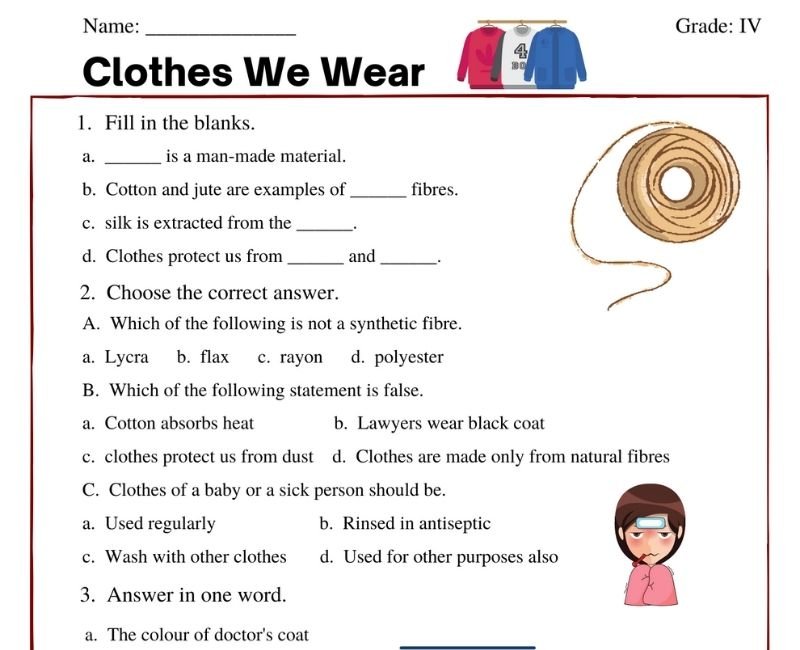
Class 4 Science
Clothes We Wear Class 4 Science Worksheet with Quiz and Activities
Where does cotton come from, why does wool keep us warm and how is cloth made? Find out with this Clothes We Wear worksheet for Class 4: take the Clothes We Wear Class 4 online quiz, weave a paper mat in the Virtual Lab and play the Clothes We Wear Class 4 activities and interactive games online.
Flip the cards and try the Clothes Lab, then tap the Games, Labs, Challenges or Virtual Lab island.
Clothes We Wear Class 4 Online Quiz
20 questions · tap an answer to move on · full review at the end
Flip the cards, try the Clothes Lab, then play the games, do the labs and take the challenges. Earn up to 3 stars in every activity.
Fact cards: tap a card to flip it
Clothes Lab
Help Riya dress for three different situations. In each one, drag the outfit you think is right onto the picture and watch what happens. A wrong choice shows what goes wrong, so you can try again.
Challenge marks: 0 / 15 (0 of 5 challenges done)
Finish all 5 challenges to see your comment.
Virtual Lab: do real experiments step by step
Practice sheet
Clothes We Wear Class 4 Activities
Dress Riya for the weather, follow cotton from field to cloth, test fabrics with water and weave a paper mat in the Virtual Lab. Earn up to 3 stars in every activity.
Why do we wear clothes?
Every morning we pick something to wear, but have you ever wondered why? Clothes protect our body from heat, cold, rain, wind, dust, germs and insect bites. They keep us comfortable and clean, and they also show who we are: our culture, our festivals and even our jobs. A doctor’s white coat, a soldier’s uniform and a bride’s bright saree all tell us something about the person wearing them.
Fibres: where cloth begins
All cloth, also called fabric, is made from very thin threads called fibres. Fibres that come from plants and animals are natural fibres.
- Cotton grows in the fluffy bolls of the cotton plant. It is soft, cool and soaks up sweat.
- Jute comes from the stem of the jute plant. It is rough and strong, and is used for sacks, bags and ropes.
- Wool comes from the hair of sheep, goats, yaks and camels. It is thick and warm.
- Silk is spun by the silkworm when it makes its cocoon. It is smooth, shiny and costly.
Fibres made in factories from chemicals are synthetic fibres. Nylon, polyester, rayon and acrylic are synthetic. They are strong, cheap and dry quickly, but they do not absorb sweat well and can melt near fire.
From fibre to fabric
Turning fluffy fibres into a shirt takes several steps. First the fibres are cleaned. Then they are twisted together into long threads called yarn; this is called spinning. Mahatma Gandhi spun yarn on a charkha and encouraged everyone to wear hand-made khadi. Next, yarn is turned into cloth. In weaving, two sets of threads cross over and under each other on a loom. In knitting, a single yarn is looped together with needles or machines, which is why sweaters and socks stretch. Finally the cloth may be dyed and printed, and a tailor cuts and stitches it into clothes.
Clothes for different seasons
In summer we wear loose, light-coloured cotton clothes. Cotton lets air pass and absorbs sweat, and light colours reflect sunlight. In winter we wear woollen sweaters, shawls, caps and socks. Wool traps air between its fibres, and this still air keeps our body heat in. In the rainy season we use raincoats, umbrellas and gumboots made of waterproof materials so that rainwater runs off.
Clothes for work and safety
Many people wear special clothes at work. Uniforms help us recognise police officers, nurses and pilots. Some clothes protect: firefighters wear fire-resistant suits, construction workers wear helmets, doctors wear gloves and masks against germs, and astronauts wear space suits with their own air supply. Schoolchildren wear uniforms so that everyone looks neat and equal.
Traditional dresses of India
India has a rich variety of clothing. Women wear sarees in many styles, salwar kameez, ghagra choli in Rajasthan and the mekhela chador in Assam. Men wear dhoti, kurta-pyjama, the mundu in Kerala and turbans in Punjab and Rajasthan. Famous fabrics include Banarasi silk, Kanchipuram silk, Kashmiri pashmina and the colourful phulkari of Punjab.
Taking care of clothes
Clothes last longer when we look after them. We should wash them regularly with soap, dry cotton clothes in the sun and woollens flat in the shade, and iron them to remove creases. Clothes must be completely dry before we fold and store them, or they may get mould. Woollens and silks are stored with neem leaves or naphthalene balls to keep insects away. Torn clothes can be mended, and clothes we have outgrown can be given to people who need them.
This Clothes We Wear worksheet for Class 4 brings all of this to life on WitKnowLearn with an online quiz, online activities and interactive games. Flip the cards, dress Riya in the Clothes Lab, play the games, do the fabric labs, take the challenges and then test fabrics and weave a mat in the Virtual Lab.
Science Clothes We Wear Class 4
Clothes We Wear is an important Class 4 Science topic. It explains why we wear clothes, natural and synthetic fibres, how fibres become fabric, clothes for different seasons and jobs, traditional dresses of India and how to take care of clothes. This guide explains each idea in simple language for Class 4 students, parents and teachers. It goes with the Clothes We Wear worksheet for Class 4 on WitKnowLearn, which also gives an online quiz, online activities, interactive games and a Virtual Lab on the same page.
What is there in this topic
- Why we wear clothes
- Natural fibres from plants and animals
- Synthetic fibres
- Spinning, weaving and knitting
- Clothes for seasons, work and safety
- Traditional dresses of India
- Washing, drying, ironing and storing clothes
Learning objectives
- Give reasons why we wear clothes.
- Name natural and synthetic fibres and their sources.
- Describe how fibres are made into fabric.
- Choose suitable clothes for different seasons and jobs.
Learning outcomes
After this page a child can:
- Sort fibres into natural and synthetic.
- Compare how fabrics absorb water and keep warmth.
- Weave a simple paper mat.
- Explain how to care for clothes.
Clothes We Wear Class 4 resources on this page
| Resource | What it does |
|---|---|
| Clothes We Wear Class 4 online quiz | 20 questions in three levels with a full answer review |
| Flip cards | Six cards on why we wear clothes, natural and synthetic fibres, fibre to fabric, clothes for weather and clothes care |
| Clothes Lab | Dress Riya for a hot day, a rainy day and cooking near a stove |
| 5 interactive games | Natural or synthetic, plant fibre bubbles, work clothes memory, wash dry or store, summer or winter |
| 5 science labs | Fabric magnifier, stretch test, drying race, cotton to cloth and keep it warm experiments |
| 5 challenges | Marked out of 3 each with a total out of 15 |
| Virtual Lab | Two full experiments on how fabrics absorb water and weaving a paper mat, with aim, objectives, procedure, observation table, conclusion and outcomes |
| Practice sheet | 16 questions with answer boxes and a live score |
Fibres at a glance
| Fibre | Source | Used for |
|---|---|---|
| Cotton | Cotton plant | Shirts, bedsheets, towels |
| Jute | Jute plant | Sacks, bags, ropes |
| Wool | Sheep, goat, yak | Sweaters, shawls, blankets |
| Silk | Silkworm | Sarees, ties |
| Polyester | Factory | Sportswear, curtains |
Types of questions
- Reasons for wearing clothes
- Sources of fibres
- Natural or synthetic
- Spinning, weaving and knitting
- Clothes for seasons and jobs
- Traditional dresses
- Caring for clothes
Solved examples
Common mistakes
| Mistake | Correct |
|---|---|
| Thinking silk comes from a plant | Silk is made by the silkworm. |
| Mixing up weaving and knitting | Weaving uses two sets of threads; knitting loops one yarn. |
| Thinking wool makes heat | Wool traps air and stops our body heat from escaping. |
| Storing clothes while damp | Clothes must be fully dry before storing. |
Daily life
We choose clothes every day without thinking: cotton for a hot school day, a sweater on a winter morning, a raincoat in the monsoon and new clothes for festivals. Looking after clothes and sharing old ones saves money, water and energy.
Tips for parents and teachers
- Collect small cloth samples and let the child feel and compare them.
- Pull a thread from a cotton cloth and look at it with a magnifying glass.
- Let the child help fold and sort the laundry.
- Show a sweater and a handkerchief and compare knitting and weaving.
- Let the child retry the challenges to earn 3 stars.
Related Class 4 Science Worksheets
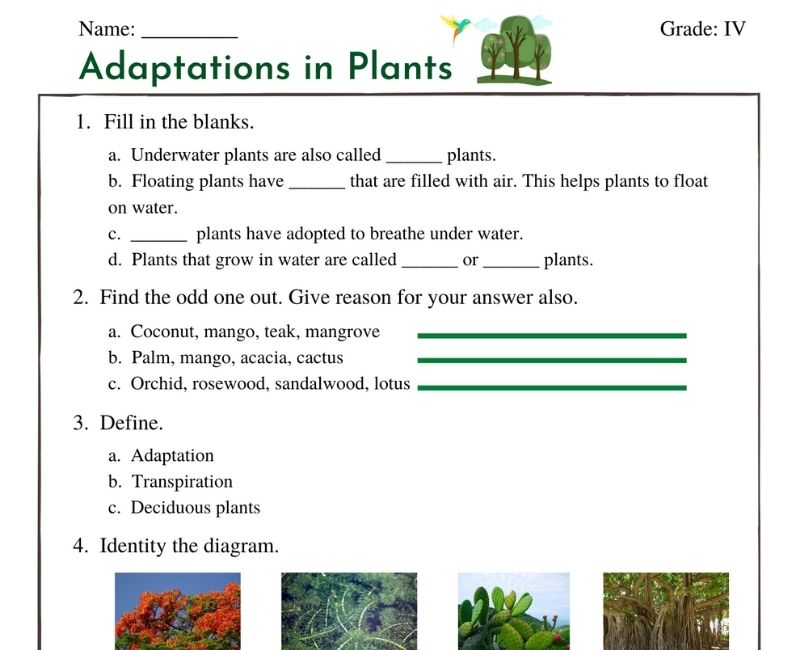
- Adaptation in Plants Worksheet Class 4
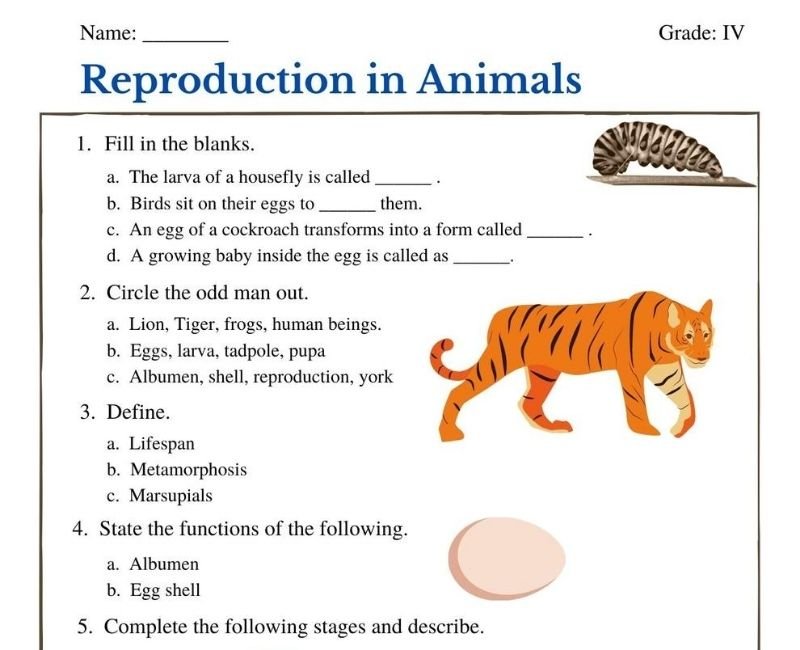
- Reproduction in Animals Worksheet Class 4
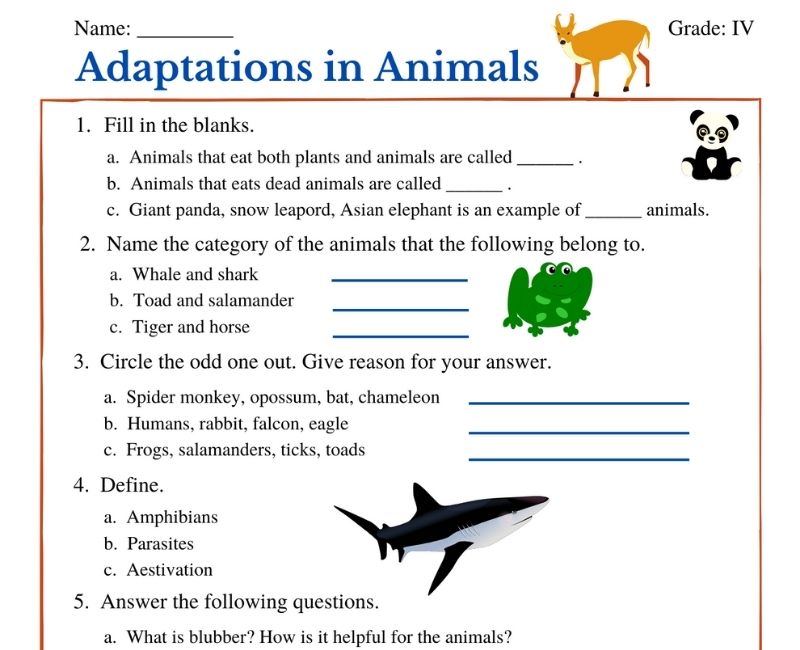
- Adaptation in Animals Worksheet Class 4
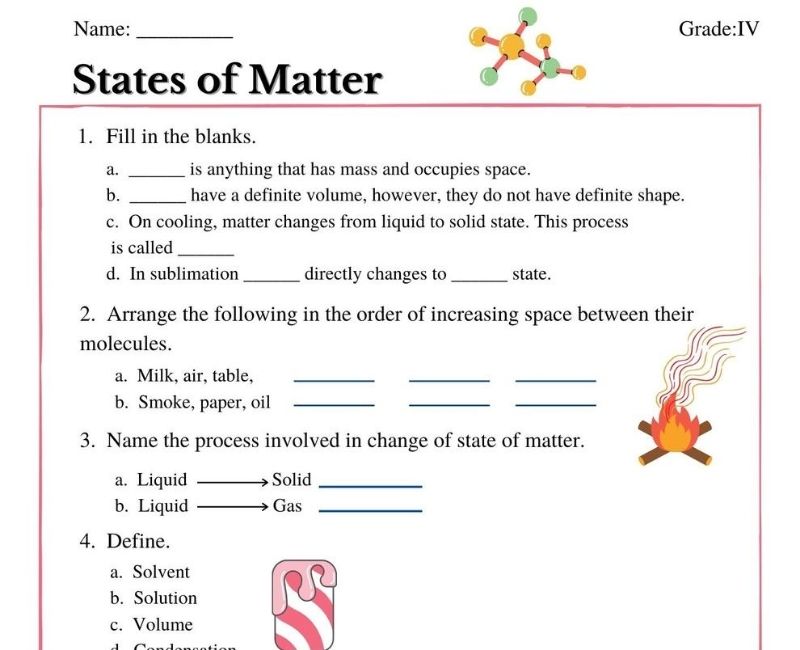
- States of Matter Worksheet Class 4
- Teeth and Microbes Worksheet Class 4
- Food and Nutrition Worksheet Class 4
- Force Work and Energy Worksheet Class 4
- Air Water and Weather Worksheet Class 4
- Leaves and the Food Factory of Plants Worksheet Class 4
- Safety and First Aid Worksheet Class 4
- Our Environment Worksheet Class 4
- Our Universe Worksheet Class 4
Frequently Asked Questions
 Download