Class 3 Science · CBSE / NCERT
Soil Class 3 Science Worksheet NCERT with Quiz and Activities
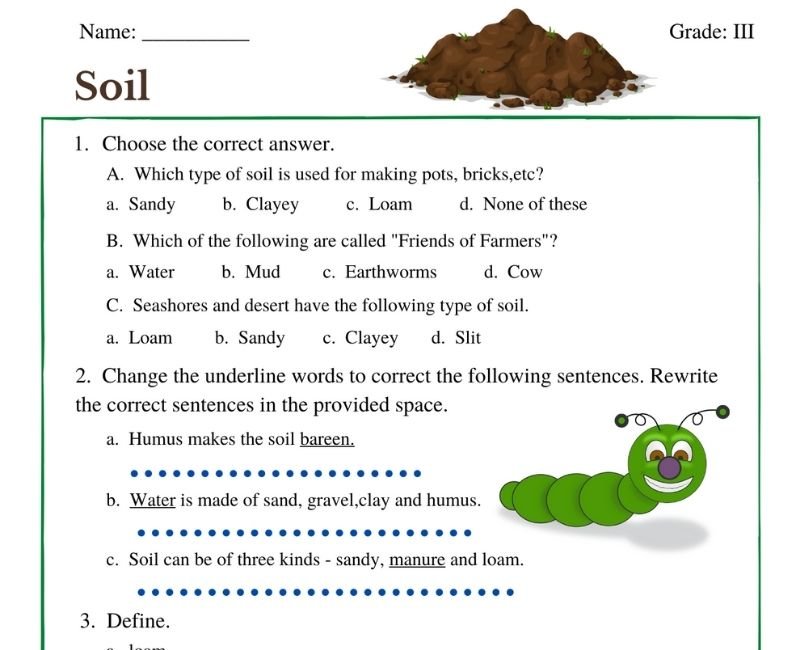
Where does soil come from, why is it in layers and which soil do plants love most? Get your hands dirty with this Soil worksheet for Class 3: take the Soil Class 3 quiz, test soils in the lab and play the Soil Class 3 activities online, in line with CBSE and the NCERT book Our Wondrous World.
Flip the cards and try the Soil Lab, then tap the Games, Labs or Challenges island.
Soil Class 3 Online Quiz
20 questions · tap an answer to move on · full review at the end
Which animal is called the farmer's friend because it makes soil better?
Soil Class 3 Activities
Dig, pour, shake and sort. Earn up to 3 stars in every activity.
This Soil worksheet for Class 3 lets children explore soil like young scientists. Flip the soil fact cards, test three soils in the Soil Lab, then play the games, do the labs and try the challenges.
Soil facts: tap a card to flip it
Soil Lab
Pick a soil. Drag the hand, the watering can and the seed onto it (or tap them) to test it. Finish all three tests to see what the soil is good for.
- ✋Step 1: Feel it
Drag the hand onto the soil. - 💧Step 2: Pour water
- 🌱Step 3: Plant a seed
- ⬜Step 4: What is it good for?
Finish all 3 tests to unlock.
Challenge marks: 0 / 15 (0 of 5 challenges done)
Finish all 5 challenges to see your comment.
Practice sheet
Type your answers in the boxes. For word answers write in small letters. Press Check when you finish.
ASandy, clayey or loamy? Write the soil
BComplete the sentence with one word
CCount and write the number
DWrite one word or yes / no
Soil Class 3 Complete Guide
Soil is the thin layer of earth that covers the land. Plants grow in it, many animals live in it and we use it to make pots and bricks. This guide explains soil in simple words for Class 3 students, parents and teachers. It goes with the Soil worksheet for Class 3 on this page and covers how soil forms, the layers of soil, humus, sandy, clayey and loamy soil, the earthworm, soil erosion and how to keep soil healthy.
Introduction to NCERT Class 3 Science Soil
Book: Our Wondrous World (The World Around Us), the NCERT textbook for Grade 3. Topic: Soil. Board: CBSE and other schools that follow NCERT. The new NCERT book links soil with how plants grow and how we take care of nature. This page is built around the learning goals schools test for the topic; it is not a copy of a single chapter.
What is there in this topic
- What soil is and how it forms from rocks
- Humus and why it makes soil rich
- The three layers: topsoil, subsoil and bedrock
- Sandy, clayey and loamy soil: how they feel, hold water and are used
- Living things in soil, especially the earthworm
- Uses of soil
- Soil erosion and ways to save soil
Learning objectives
These objectives are written for this page from the topic's goals; they are not copied from the NCERT book.
- Explain in simple steps how rocks break down to form soil.
- Name and order the three layers of soil.
- Tell sandy, clayey and loamy soil apart by feel and by how they hold water.
- Explain why humus and earthworms are good for soil.
- Suggest ways to stop soil erosion and keep soil healthy.
Learning outcomes
After this page a child can:
- Draw and label the three layers of soil.
- Say which soil is best for pots, for gardens and for a cactus.
- Predict which soil will let water through fastest.
- Sort waste into things that rot into humus and things that never rot.
- Give two ways to save soil from being washed away.
Soil Class 3 resources on this page
| Resource | What it does |
|---|---|
| Soil Class 3 quiz | 20 questions in three levels with a full answer review |
| Soil fact flip cards | Six cards on how soil forms, humus, soil types and the earthworm |
| Soil Lab | Feel, water and seed tests on three soils with a 4-step result |
| 5 games | Soil layers, earthworm tunnel, memory match, rots or not, save the hill |
| 5 science labs | Water test, feel test, seed growth, shake the jar, compost bin |
| 5 challenges | Marked out of 3 each with a total out of 15 |
| Practice sheet | 16 questions with pictures, a word bank and a live score |
How soil forms
Big rocks are heated by the sun and cooled at night, beaten by rain and rubbed by wind. Over hundreds of years they crack into stones, then into tiny grains. Dead leaves, plants and animals rot and mix with these grains. The rotting part is called humus. Rock grains, humus, water, air and tiny living things together make soil.
Layers of soil
| Layer | What it is like |
|---|---|
| Topsoil | Dark, soft and full of humus. Most plant roots and small animals live here. |
| Subsoil | Lighter in colour, harder, with clay and small stones. Long roots reach here. |
| Bedrock | Hard solid rock at the bottom. Roots cannot go through it. |
Types of soil
| Soil | Feel | Water | Good for |
|---|---|---|---|
| Sandy | Rough and gritty, big grains | Runs through fast, holds little | Cactus, glass and cement |
| Clayey | Smooth and sticky when wet, tiny grains | Holds a lot, drains slowly | Rice, pots, bricks and toys |
| Loamy | Soft, dark and crumbly | Holds just enough, lets air in | Farms, gardens and most crops |
The farmer's friend
Earthworms eat dead leaves and soil. Their tunnels let air and water reach plant roots, and their waste makes the soil rich. That is why the earthworm is called the farmer's friend. Ants, beetles and tiny germs also help break down dead things into humus.
Soil erosion and saving soil
When strong wind or heavy rain carries away the topsoil, it is called soil erosion. Bare land loses soil fastest.
- Plant trees and grass: their roots hold the soil.
- Make steps called terraces on hills.
- Do not throw plastic on soil; it never rots.
- Add compost and manure to keep soil rich.
Types of questions
- Label the layers of soil
- Sandy, clayey or loamy?
- Fill in the blanks: humus, erosion, earthworm
- Water test results and simple subtraction
- Rots or never rots
- Reason questions: why is loamy soil best for plants?
Solved examples
Common mistakes
| Mistake | Correct idea |
|---|---|
| Soil is just dirt with nothing in it | Soil has rock bits, humus, air, water and living things |
| Sandy soil holds the most water | Clayey soil holds the most; sandy holds the least |
| Bedrock is the top layer | Bedrock is at the bottom; topsoil is on top |
| Humus is a kind of rock | Humus comes from rotting plants and animals |
| Plastic rots in soil | Plastic does not rot and harms soil |
| Earthworms harm plants | Earthworms help plants by making soil loose and rich |
| Soil forms in a few days | Soil takes hundreds of years to form |
| Cutting trees helps soil | Cutting trees causes soil erosion |
Daily life
The vegetables and grains we eat grow in soil. Clay pots keep water cool, bricks build our homes and gardens need rich soil. Making compost from kitchen waste at home is a simple way to give back to the soil.
What your child learns from the Soil worksheet
- To observe soil by feel, colour and how it holds water
- To do simple experiments and compare results
- To understand that soil is alive and precious
- To care for soil by planting trees and not littering
Tips for parents and teachers
- Collect three soil samples and try the water test with cups and a strainer.
- Shake soil in a jar of water and let it settle overnight to see the layers.
- Dig gently in a garden to find earthworms, then put them back.
- Start a small compost pot with vegetable peels.
- Let the child retry the challenges to earn 3 stars.
Related Science Worksheets
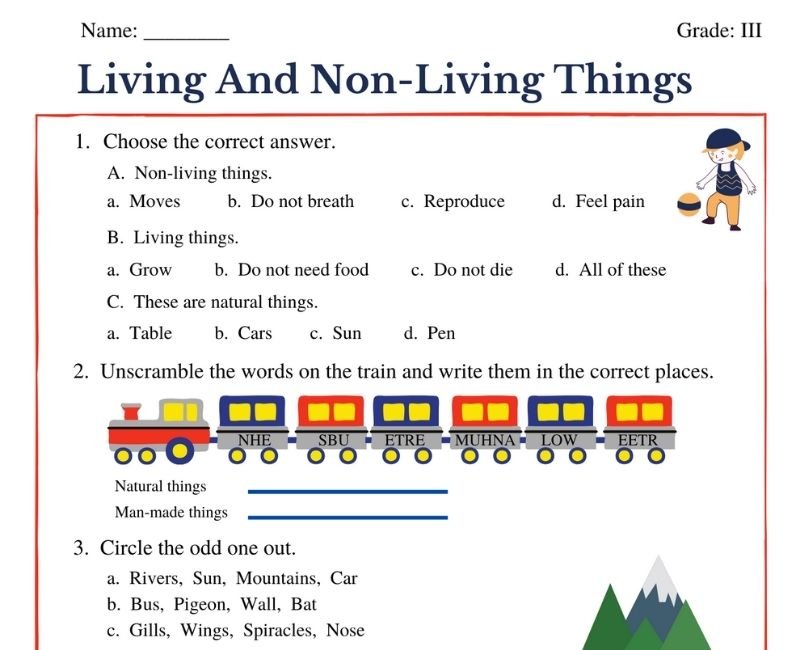
- Living and Non-Living Things Worksheet Class 3
- Eating Habits of Animals Worksheet Class 3
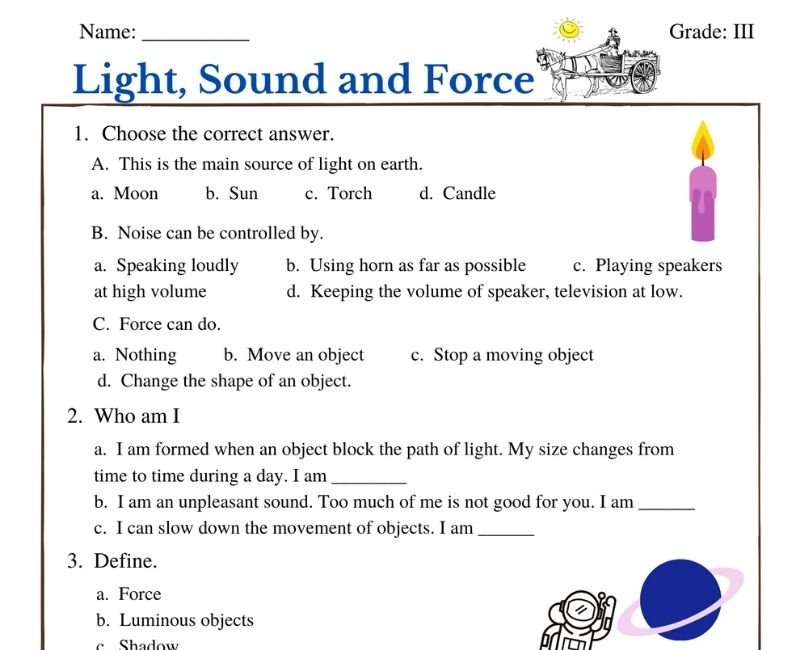
- Light Sound and Force Worksheet Class 3
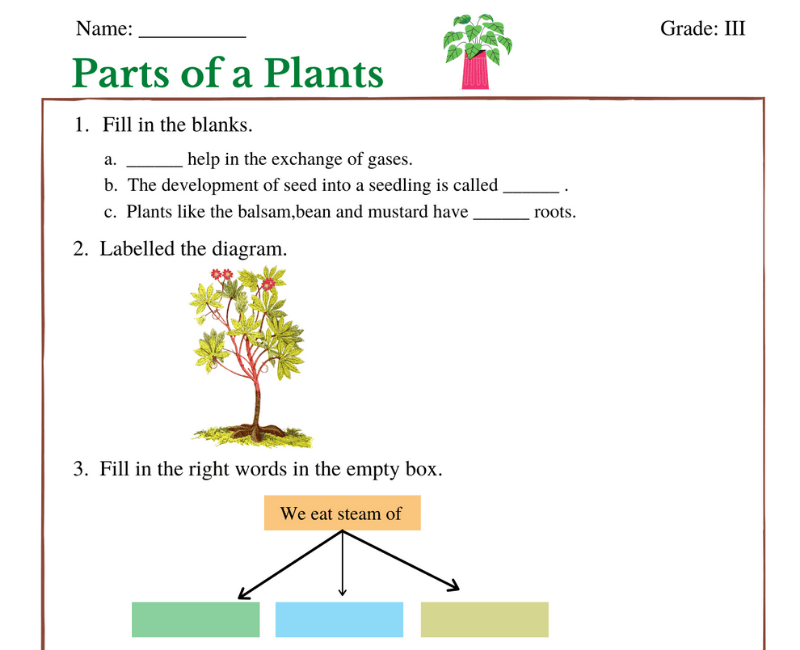
- Parts of a Plant Worksheet Class 3
- Air Water and Weather Worksheet Class 3
- Our Earth and its Neighbours Worksheet Class 3
- Nesting Habits of Birds Worksheet Class 3
- Human Body Worksheet Class 3
- Safety and First Aid Worksheet Class 3
- Science Measurement Worksheet Class 3
- States of Matter Worksheet Class 3
- Food and Feeding Habits of Animals Worksheet Class 3
Frequently Asked Questions
What is soil for Class 3?
Soil is the top layer of the earth made of tiny pieces of broken rock, humus, water, air and small living things. Plants grow in it.
How is soil formed?
Sun, wind and water slowly break big rocks into small stones and then tiny grains. These mix with humus from rotting plants and animals to make soil. It takes hundreds of years.
What are the layers of soil?
Soil has three layers: topsoil (dark, with humus), subsoil (lighter, with clay and stones) and bedrock (hard rock at the bottom).
What is humus?
Humus is the dark part of soil formed when dead leaves, plants and animals rot. It makes soil rich for plants.
What are the types of soil?
Sandy soil is gritty and holds little water. Clayey soil is sticky and holds a lot of water. Loamy soil is a soft mix with humus and is best for plants.
Why is the earthworm called the farmer's friend?
Earthworms dig tunnels that let air and water reach roots, and their waste adds food to the soil.
What is soil erosion?
Soil erosion is when wind or rain carries away the topsoil. Planting trees and grass stops it because roots hold the soil.
Does this page have Soil Class 3 questions and answers?
Yes. The 20-question Soil Class 3 quiz shows the correct answer and a reason for every question at the end, and the practice sheet has a Show answers button for all 16 questions.
Is this Soil worksheet based on CBSE and NCERT?
Yes. It follows the CBSE Class 3 Science syllabus and the NCERT approach used in the Grade 3 book Our Wondrous World.
What experiments can children do on this page?
They can pour water on three soils, feel soil grains under a magnifier, grow seeds in different soils, shake a soil jar to see its layers and make compost, all by dragging on the screen.
Can my child use these activities on a phone?
Yes. All drag activities work with a finger on phones and tablets and with a mouse on computers. Tapping also works.
What is included on this page?
A 20-question quiz with review, soil fact flip cards, the Soil Lab, 5 games, 5 science labs, 5 marked challenges, a 16-question practice sheet, a complete guide, 12 related Class 3 Science worksheets and these FAQs.
 Download