Class 3 Science · CBSE / NCERT
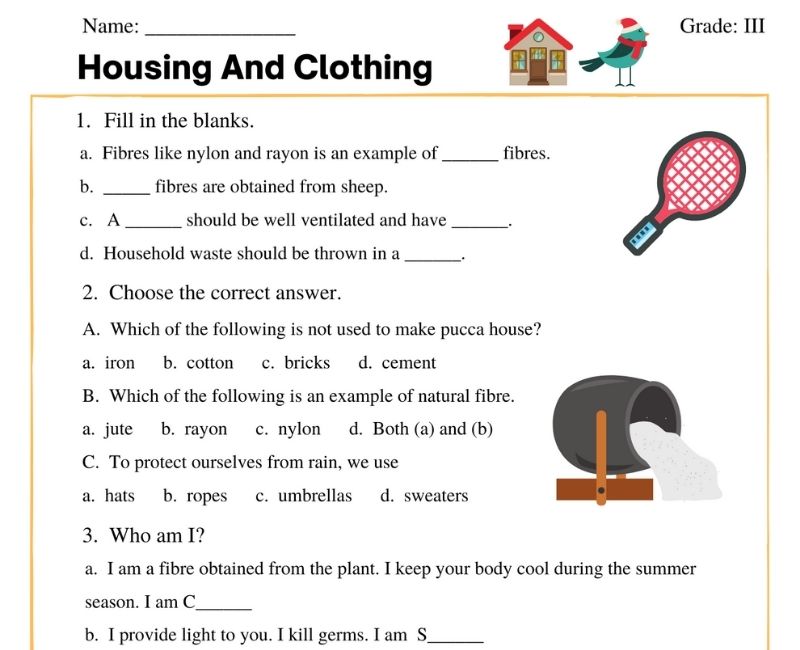
Housing and Clothing Class 3 Science Worksheet NCERT with Quiz and Activities
Why does an igloo suit the snow and a houseboat suit a lake? Why do we wear wool in winter and cotton in summer? Find out with this Housing and Clothing worksheet for Class 3: take the Housing and Clothing Class 3 quiz, match houses to the weather in the labs and play the Housing and Clothing Class 3 activities online, in line with CBSE and the NCERT book Our Wondrous World.
Flip the cards and try the House for the Weather Lab, then tap the Games, Labs or Challenges island.
Housing and Clothing Class 3 Online Quiz
20 questions · tap an answer to move on · full review at the end
Which house is made of blocks of ice?
Housing and Clothing Class 3 Activities
Build, dress, test and sort. Earn up to 3 stars in every activity.
This Housing and Clothing worksheet for Class 3 lets children explore like young builders and designers. Flip the fact cards, match houses to the weather in the House for the Weather Lab, then play the games, do the labs and try the challenges.
Fact cards: tap a card to flip it
House for the Weather Lab
Drag each house to the place whose weather suits it (or tap a house). Find homes for all five.
🗺️ Find each house a home: drag every house to the place where its weather suits it best.
- ❄️Step 1: Icy polar land
Which house suits this place? - 🌊Step 2: Rainy flood land
Which house suits this place? - 🏞️Step 3: A lake in Kashmir
Which house suits this place? - 🏔️Step 4: Snowy hills
Which house suits this place? - 🏜️Step 5: Hot desert
Which house suits this place? - ⬜Step 6: What did we find?
Finish steps 1 to 5 to unlock.
Challenge marks: 0 / 15 (0 of 5 challenges done)
Finish all 5 challenges to see your comment.
Practice sheet
Type your answers in the boxes. For word answers write in small letters. Press Check when you finish.
AWrite kutcha or pucca
BComplete the sentence with one word
CCount and write the number
DWrite the season: summer, winter or rainy
Housing and Clothing Class 3 Complete Guide
Food, clothes and a home are three things everyone needs. This guide explains housing and clothing in simple words for Class 3 students, parents and teachers. It goes with the Housing and Clothing worksheet for Class 3 on this page and covers why we need houses, kutcha and pucca houses, houses for different weather, clothes for different seasons, where fibres come from, the people who make our houses and clothes, and uniforms.
Introduction to NCERT Class 3 Science Housing and Clothing
Book: Our Wondrous World (The World Around Us), the NCERT textbook for Grade 3. Topic: Housing and Clothing. Board: CBSE and other schools that follow NCERT. The new NCERT book builds this topic through looking at homes and clothes in our own families and neighbourhood. This page is built around the learning goals schools test for the topic; it is not a copy of a single chapter.
What is there in this topic
- Why we need a house
- Kutcha and pucca houses
- Houses for different weather and places
- Clothes for summer, winter and the rainy season
- Natural and man-made fibres
- How cotton becomes cloth
- People who build houses and make clothes
- Uniforms and special clothes
Learning objectives
These objectives are written for this page from the topic's goals; they are not copied from the NCERT book.
- Explain why people need shelter and clothes.
- Tell kutcha houses from pucca houses.
- Link the shape and material of a house to the weather.
- Choose clothes for each season.
- Name the sources of cotton, wool and silk.
Learning outcomes
After this page a child can:
- Sort houses into kutcha and pucca.
- Say why igloos, stilt houses and houseboats are built where they are.
- Explain why sloping roofs suit snowy and rainy places.
- Pick cotton, woollen and waterproof clothes for the right weather.
- Put the steps from cotton plant to shirt in order.
Housing and Clothing Class 3 resources on this page
| Resource | What it does |
|---|---|
| Housing and Clothing Class 3 quiz | 20 questions in three levels with a full answer review |
| Flip cards | Six cards: why houses, kutcha and pucca, houses for weather, clothes for seasons, fibres and cloth makers |
| House for the Weather Lab | Drag five houses to the places that suit them |
| 5 games | Kutcha or pucca, winter clothes bubbles, fibre memory, uniform match, dress for the weather |
| 5 science labs | Cotton to shirt, keep it warm, rainy day fabric test, roof rain lab, build a house |
| 5 challenges | Marked out of 3 each with a total out of 15 |
| Practice sheet | 16 questions with pictures, word banks and a live score |
Kutcha and pucca houses
| Type | Made of | Examples |
|---|---|---|
| Kutcha house | Mud, straw, bamboo, leaves, cloth or ice. Not very strong; needs repair often. | Hut, tent, mud house, igloo |
| Pucca house | Bricks, cement, stone, iron and wood. Strong and lasts many years. | Flat, bungalow, brick house |
Houses for different weather
| House | Where | Why it suits the place |
|---|---|---|
| Igloo | Icy polar lands | Ice blocks keep out freezing wind |
| Stilt house | Places with heavy rain and floods (Assam) | Tall pillars keep the house above water |
| Houseboat | Dal Lake in Kashmir, backwaters of Kerala | Floats on water |
| Sloping-roof house | Snowy hills and rainy places | Snow and rain slide off |
| Thick mud-wall house | Hot deserts (Rajasthan) | Thick walls and small windows keep it cool |
| Tent | Camps, wandering people | Can be folded and carried |
Clothes for every season
| Season | Clothes | Why |
|---|---|---|
| Summer | Light cotton clothes, cap, sunglasses | Cotton soaks up sweat and keeps us cool |
| Winter | Woollen sweater, shawl, cap, gloves | Wool traps warm air |
| Rainy | Raincoat, umbrella, gumboots | Waterproof materials keep us dry |
Where fibres come from
Natural fibres: cotton and jute come from plants; wool comes from sheep (and goats); silk comes from silkworms. Man-made fibres: nylon and polyester are made in factories. Cotton becomes a shirt in steps: cotton plant → cotton balls → thread (spinning) → cloth (weaving) → shirt (stitching by a tailor). Masons, carpenters, plumbers, electricians and painters build our houses.
Types of questions
- Kutcha or pucca
- Match the house to the place
- Clothes for the season
- Fibre and its source
- Order the steps
- Reason questions about roofs, walls and fabrics
Solved examples
Common mistakes
| Mistake | Correct idea |
|---|---|
| Silk comes from sheep | Silk comes from silkworms; wool comes from sheep |
| An igloo is a pucca house | An igloo is a kutcha house made of ice |
| Cotton is made in factories | Cotton grows on plants; nylon is made in factories |
| Tailors make cloth | Weavers make cloth; tailors stitch it into clothes |
| Wool makes heat | Wool traps the body's own warmth |
| Flat roofs are best everywhere | Sloping roofs suit rainy and snowy places |
Daily life
Look at the houses on your street: which are kutcha and which are pucca? Check the labels on your clothes to find cotton, wool or polyester. Notice how we change clothes when the season changes.
What your child learns from the Housing and Clothing worksheet
- To observe homes and clothes around them
- To link materials to weather
- To respect the people who build houses and make clothes
- To choose the right clothes for the day
Tips for parents and teachers
- Take a walk and spot kutcha and pucca houses.
- Pour a drop of water on a cotton cloth and a plastic sheet and compare.
- Sort the family's clothes into summer, winter and rainy groups.
- Show a ball of wool and a cotton ball and let the child feel them.
- Let the child retry the challenges to earn 3 stars.
Related Science Worksheets
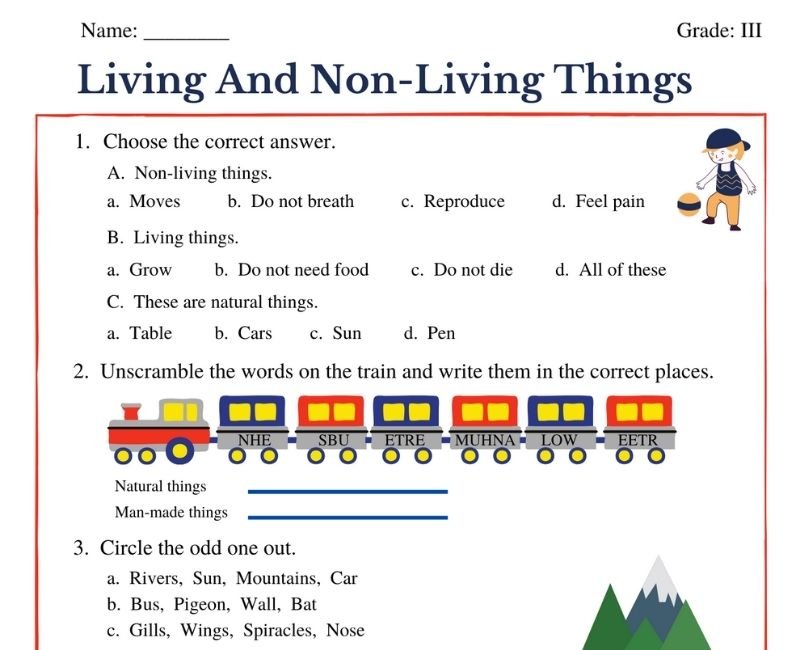
- Living and Non-Living Things Worksheet Class 3
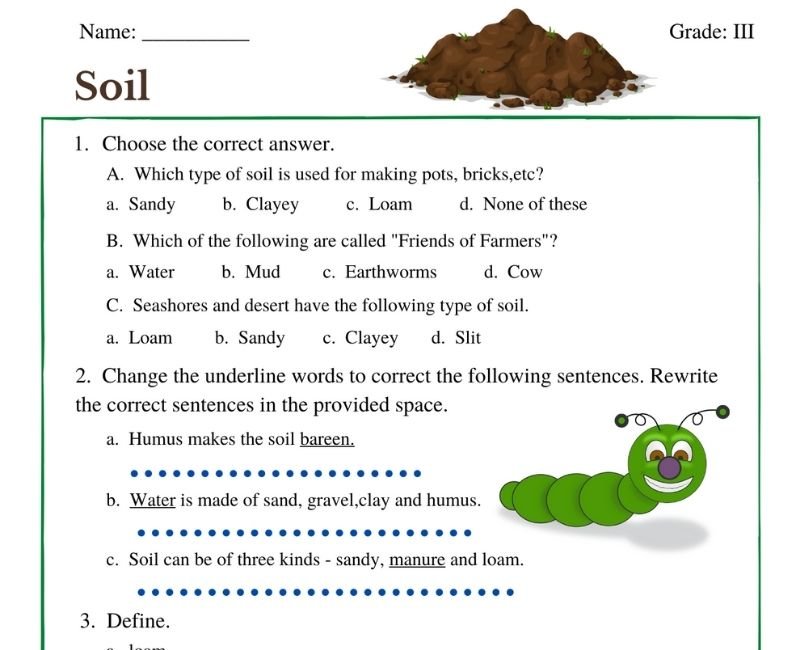
- Soil Worksheet Class 3
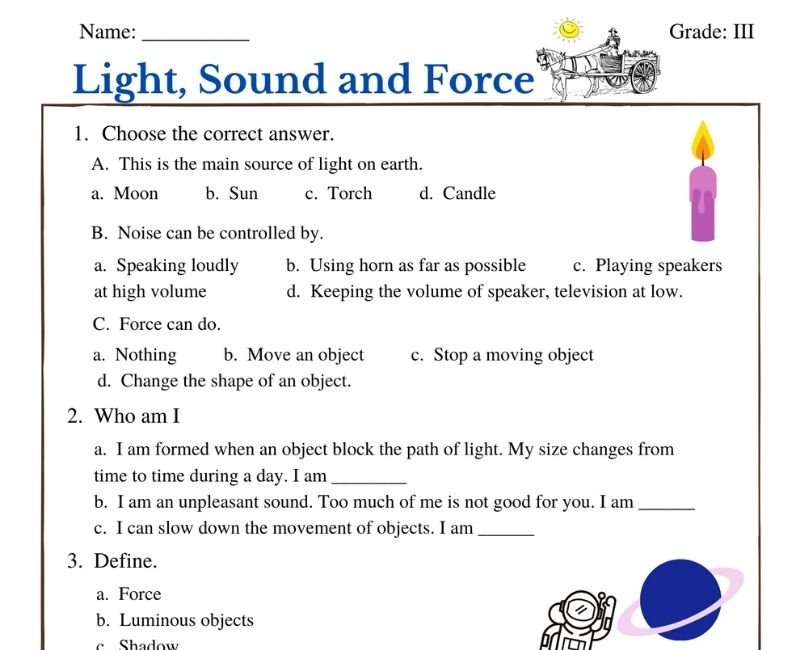
- Light Sound and Force Worksheet Class 3
- Parts of a Plant Worksheet Class 3
- Air Water and Weather Worksheet Class 3
- Sun Moon and Stars Worksheet Class 3
- Birds Beaks and Claws Worksheet Class 3
- Parts of the Body Worksheet Class 3
- Safety and First Aid Worksheet Class 3
- Science Measurement Worksheet Class 3
- States of Matter Worksheet Class 3
- Food and Feeding Habits of Animals Worksheet Class 3
Frequently Asked Questions
Why do we need a house?
A house protects us from heat, cold, rain, wind and wild animals. It is a safe place to eat, sleep and live with our family.
What are kutcha and pucca houses?
Kutcha houses are made of mud, straw, bamboo, cloth or ice, like huts, tents and igloos. Pucca houses are made of bricks, cement and iron, like flats and bungalows.
Why are houses different in different places?
People build houses to suit the weather and the materials found nearby: igloos in icy lands, stilt houses in flood areas, houseboats on lakes and thick mud houses in deserts.
Why do houses in hills have sloping roofs?
Sloping roofs let snow and rain slide off, so the roof does not break or leak.
What clothes do we wear in different seasons?
Light cotton clothes in summer, woollen clothes in winter and raincoats, umbrellas and gumboots in the rainy season.
Where do cotton, wool and silk come from?
Cotton comes from the cotton plant, wool comes from sheep and silk comes from silkworms. Nylon and polyester are made in factories.
How is cloth made from cotton?
Cotton is picked from plants and cleaned, spun into thread, woven into cloth by weavers and stitched into clothes by tailors.
Does this page have Housing and Clothing Class 3 questions and answers?
Yes. The 20-question Housing and Clothing Class 3 quiz shows the correct answer and a reason for every question at the end, and the practice sheet has a Show answers button for all 16 questions.
Is this worksheet based on CBSE and NCERT?
Yes. It follows the CBSE Class 3 Science syllabus and the NCERT approach used in the Grade 3 book Our Wondrous World.
What activities can children do on this page?
They can match houses to the weather, sort kutcha and pucca houses, dress a child for each season, test which cloth keeps warm, test raincoat materials, compare roofs in the rain and build a house step by step, all on the screen.
Can my child use these activities on a phone?
Yes. All drag activities work with a finger on phones and tablets and with a mouse on computers. Tapping also works.
What is included on this page?
A 20-question quiz with review, flip cards, the House for the Weather Lab, 5 games, 5 science labs, 5 marked challenges, a 16-question practice sheet, a complete guide, 12 related Class 3 Science worksheets and these FAQs.
 Download