Class 3 Science · CBSE / NCERT
Parts of the Body Class 3 Science Worksheet NCERT with Quiz and Activities
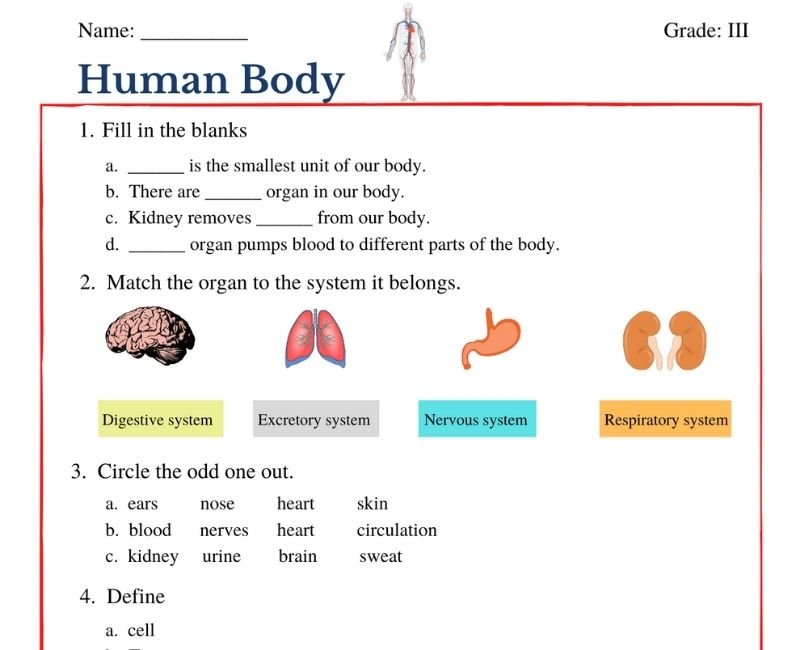
What does the heart do, why do we breathe faster when we run and which organ tastes our food? Find out with this Parts of the Body worksheet for Class 3: take the Parts of the Body Class 3 quiz, try the body science labs and play the Parts of the Body Class 3 activities online, in line with CBSE and the NCERT book Our Wondrous World.
Flip the cards and try the Organ Lab, then tap the Games, Labs or Challenges island.
Parts of the Body Class 3 Online Quiz
20 questions · tap an answer to move on · full review at the end
Which sense organ do we use to see?
Parts of the Body Class 3 Activities
Place, pump, breathe and bend. Earn up to 3 stars in every activity.
This Parts of the Body worksheet for Class 3 lets children explore like young doctors. Flip the fact cards, place the organs in the Organ Lab, then play the games, do the labs and try the challenges.
Fact cards: tap a card to flip it
Organ Lab
Drag the brain, lungs, heart and stomach into their places in the body (or tap them). Then make the body run and watch the heart and lungs.
🧍 Put the organs in their places: brain in the head, lungs and heart in the chest, stomach in the belly.
🏃 Activity: Resting
- 🧠Step 1: Put the brain in the head
Drag the brain into the head. - ❤️Step 2: Lungs and heart in the chest
Drag the lungs and then the heart into the chest. - 🍽️Step 3: Stomach in the belly
Drag the stomach into the belly. - 🏃Step 4: Make the body run
Drag the slider from rest to run and watch the heart and lungs. - ⬜Step 5: What did we find?
Finish steps 1 to 4 to unlock.
Five Senses Sort
Game 1 of 5Goal: Sort the things by the sense we use for them.
How to play: Drag each picture into the box for the sense organ we use most.
Rainbow: see. Bell: hear. Rose: smell. Lemon: taste. Cactus: touch.
Inside Organ Bubbles
Game 2 of 5Goal: Pop every bubble with an organ that is INSIDE the body.
How to play: Tap a bubble to pop it. Leave the outside parts floating.
We cannot see the brain, heart, lungs and stomach from outside.
Organ Jobs Memory
Game 3 of 5Goal: Match each organ with its job.
How to play: Flip two cards. An organ and its job stay open when they match.
The heart pumps. The lungs breathe. The brain thinks.
Label the Body
Game 4 of 5Goal: Label the outside parts of the body.
How to play: Drag each word label onto the box that points to that part.
The neck joins the head to the body. The foot is at the bottom of the leg.
Healthy Habits Catch
Game 5 of 5Goal: Catch 8 healthy things in your basket. Dodge the unhealthy ones!
How to play: Press Start, then drag the basket left and right (mouse or finger).
Healthy things caught: 0 / 8
Fruit, water, milk and a toothbrush are healthy. Too many sweets, junk food and a phone late at night are not.
Heartbeat Lab
Workshop 1 of 5Goal: See how the heart and breathing change with activity.
How to play: Drag the activity slider from sleeping to running. Stop at all four and watch the heart and the breaths.
Activity: 😴 Sleeping
Tried: 1 / 4
The harder we work, the faster the heart beats.
Balloon Lungs Lab
Workshop 2 of 5Goal: See how we breathe in and out.
How to play: This bottle model has two balloons for lungs and a rubber sheet at the bottom. Drag the sheet DOWN to breathe in, then push it UP to breathe out. Take 3 full breaths.
Breaths: 0 / 3
Pull down: the balloons fill. Push up: they empty.
Build a Skeleton
Workshop 3 of 5Goal: Put the bones in their places.
How to play: Drag each bone onto the right part of the body.
The skull is in the head. The ribs are in the chest. The backbone runs down the back.
Mystery Box Senses
Workshop 4 of 5Goal: Use the right sense organ to find out about each mystery box.
How to play: Read the question on each box. Drag the sense organ that can answer it onto the box.
Colours: eyes. Sounds: ears. Smells: nose. Tastes: tongue. Soft or rough: skin.
Joint Bending Lab
Workshop 5 of 5Goal: See how a joint lets bones bend.
How to play: Two bones are joined at a joint (like your elbow or knee). Drag the round end of the lower bone to bend the joint. Finish the three tasks.
Task 1 of 3: Bend it to a right angle, like your knee when you sit on a chair.
Drag the yellow circle up or down around the joint.
Body Detective
Challenge 1 of 5Goal: Get 3 marks.
How to play: For each question, tap the right picture, then press Submit.
1. Which organ pumps blood?
2. Which sense organ helps us smell?
3. Which organ helps us breathe?
Heart pumps, nose smells, lungs breathe.
Swipe: True or False?
Challenge 2 of 5Goal: Get 3 marks.
How to play: Drag each card to ⬅ False or True ➡. You can also tap the card, then tap a side.
Does the heart ever rest? What do bones do?
Count the Body Parts
Challenge 3 of 5Goal: Get 3 marks.
How to play: Look at the picture and type the numbers.
Each face has 2 eyes and 2 ears. Each hand has 5 fingers.
Food’s Journey
Challenge 4 of 5Goal: Get 3 marks.
How to play: Drag the three parts into the boxes in the order food travels through them. Each part can be placed once.
Food goes in at the mouth and goes down.
Tap the Body
Challenge 5 of 5Goal: Get 3 marks.
How to play: Read the question and tap the right place on the body. Your first tap counts.
Question 1 of 3: Tap the part where we think.
The brain is in the head. The heart is in the chest.
Challenge marks: 0 / 15 (0 of 5 challenges done)
Finish all 5 challenges to see your comment.
Practice sheet
Type your answers in the boxes. For word answers write in small letters. Press Check when you finish.
AWhich sense organ do we use? Write it
BComplete the sentence with one word
CCount and write the number
DWrite inside or outside
Parts of the Body Class 3 Complete Guide
Our body is an amazing machine made of many parts that work together. This guide explains it in simple words for Class 3 students, parents and teachers. It goes with the Parts of the Body worksheet for Class 3 on this page and covers outside body parts, the five sense organs, important organs inside the body, bones, joints and muscles, and habits that keep the body healthy.
Introduction to NCERT Class 3 Science Parts of the Body
Book: Our Wondrous World (The World Around Us), the NCERT textbook for Grade 3. Topic: Parts of the Body (Our Body and Health). Board: CBSE and other schools that follow NCERT. The new NCERT book builds awareness of one's own body through play, movement and observation. This page is built around the learning goals schools test for the topic; it is not a copy of a single chapter.
What is there in this topic
- External body parts and what they do
- The five sense organs and five senses
- Internal organs: brain, heart, lungs and stomach
- Bones, the skeleton, joints and muscles
- How body parts work together
- Caring for the body
Learning objectives
These objectives are written for this page from the topic's goals; they are not copied from the NCERT book.
- Name the main external body parts and their uses.
- Match each sense organ to its sense.
- Say what the brain, heart, lungs and stomach do.
- Explain how bones, joints and muscles help us move.
- List habits that keep the body healthy.
Learning outcomes
After this page a child can:
- Label the head, neck, arms, hands, legs and feet.
- Tell internal organs from external parts.
- Explain why the heart beats faster after running.
- Name the bones that protect the brain, heart and lungs.
- Choose healthy habits over unhealthy ones.
Parts of the Body Class 3 resources on this page
| Resource | What it does |
|---|---|
| Parts of the Body Class 3 quiz | 20 questions in three levels with a full answer review |
| Flip cards | Six cards: senses, brain, heart, lungs, stomach, bones and muscles |
| Organ Lab | Place the brain, lungs, heart and stomach in the body, then make it run |
| 5 games | Five senses sort, inside organ bubbles, organ jobs memory, label the body, healthy habits catch |
| 5 science labs | Heartbeat, balloon lungs, build a skeleton, mystery box senses, joint bending |
| 5 challenges | Marked out of 3 each with a total out of 15 |
| Practice sheet | 16 questions with pictures, word banks and a live score |
Sense organs
| Sense organ | Sense | Helps us |
|---|---|---|
| Eyes | Sight | See colours, shapes and size |
| Ears | Hearing | Hear sounds, loud and soft |
| Nose | Smell | Smell good and bad smells; breathe |
| Tongue | Taste | Taste sweet, salty, sour and bitter |
| Skin | Touch | Feel hot, cold, soft, rough and pain |
Organs inside the body
| Organ | Where | Job |
|---|---|---|
| Brain | Head, inside the skull | Thinks, remembers and controls the whole body |
| Heart | Chest | Pumps blood all the time |
| Lungs | Chest, inside the rib cage | Help us breathe |
| Stomach | Belly | Breaks down food (digestion) |
Keeping the body healthy
Eat fruits, vegetables and healthy food; drink clean water; exercise and play outdoors; sleep on time; brush teeth twice a day; bathe daily; wash hands before eating; and never put sharp things in the eyes, ears or nose.
Types of questions
- Label the body
- Match the sense organ to the sense
- Inside or outside
- Name the organ from its job
- True or false
- Reason questions about heartbeat, breathing and taste
Solved examples
Common mistakes
| Mistake | Correct idea |
|---|---|
| The heart rests when we sleep | The heart beats all the time |
| The heart is on the right side | The heart is in the middle of the chest, tilted to the left |
| Lungs only store air | Lungs take in fresh air and send out used air |
| Bones are not alive | Bones are living and grow as we grow |
| The nose is only for smelling | We also breathe through the nose |
| Food stays in the stomach forever | Food is broken down and used by the body |
Daily life
We use all our body parts every day: eyes to read, ears to listen, legs to play, hands to write. We visit the doctor for check-ups, wear helmets when cycling and eat healthy food to stay strong.
What your child learns from the Parts of the Body worksheet
- To know and name their own body parts
- To understand how organs work together
- To build healthy daily habits
- To keep their body safe
Tips for parents and teachers
- Count your heartbeat at rest and after skipping for one minute.
- Play a blindfold game to guess objects by touch and smell.
- Feel your ribs, knees and elbows and talk about bones and joints.
- Make a healthy habits chart for the week.
- Let the child retry the challenges to earn 3 stars.
Related Science Worksheets
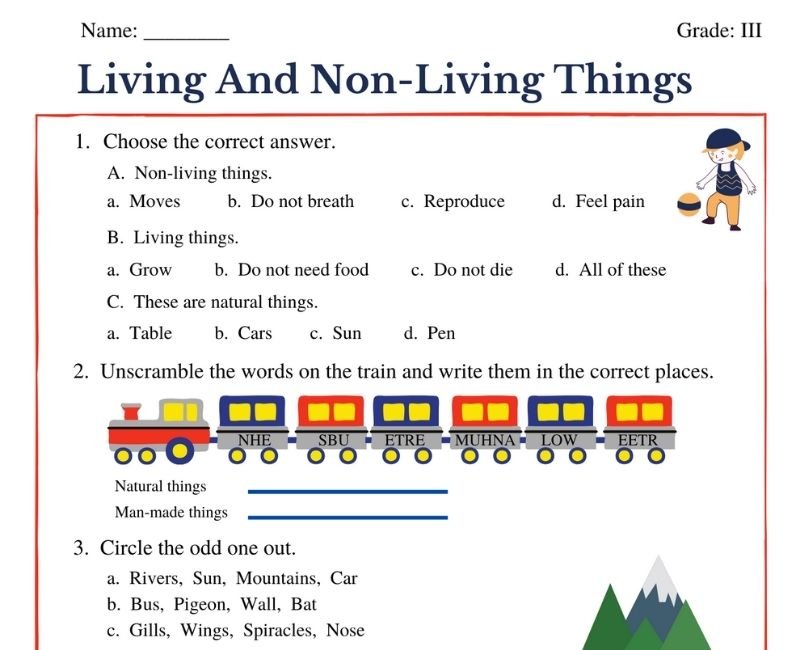
- Living and Non-Living Things Worksheet Class 3
- Eating Habits of Animals Worksheet Class 3
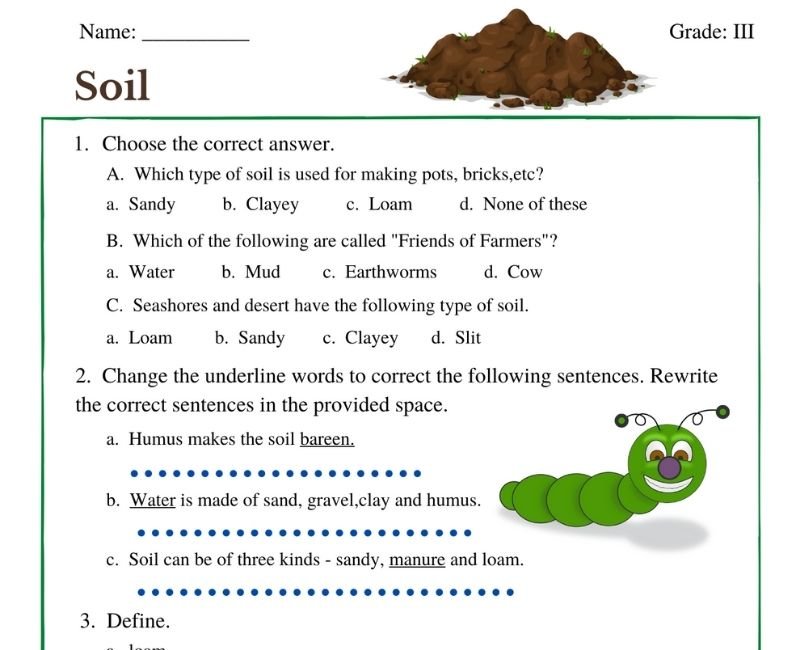
- Soil Worksheet Class 3
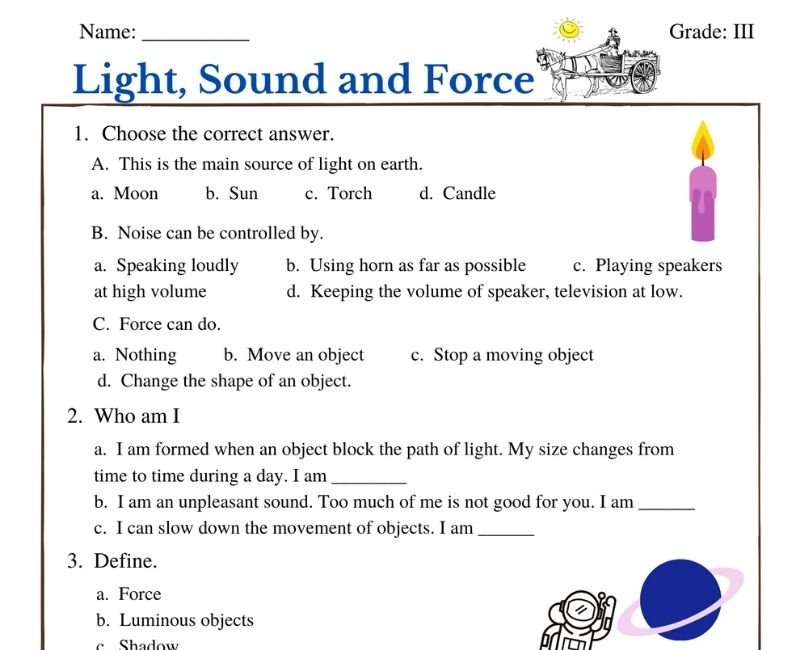
- Light Sound and Force Worksheet Class 3
- Parts of a Plant Worksheet Class 3
- Air Water and Weather Worksheet Class 3
- Sun Moon and Stars Worksheet Class 3
- Birds Beaks and Claws Worksheet Class 3
- Safety and First Aid Worksheet Class 3
- Science Measurement Worksheet Class 3
- States of Matter Worksheet Class 3
- Food and Feeding Habits of Animals Worksheet Class 3
Frequently Asked Questions
What are the main parts of the body for Class 3?
The outside parts are the head, neck, trunk, arms, hands, legs and feet. Inside are organs like the brain, heart, lungs and stomach.
What are the five sense organs?
The eyes (sight), ears (hearing), nose (smell), tongue (taste) and skin (touch).
What does the heart do?
The heart is a strong muscle in the chest that pumps blood to all parts of the body, day and night.
What do the lungs do?
The lungs help us breathe. They take in fresh air and send out used air.
What is the job of the brain?
The brain thinks, remembers and controls every part of the body. It is protected by the skull.
What do bones and joints do?
Bones give the body its shape and protect organs. Joints, like the elbow and knee, are places where bones meet so we can bend.
How can we keep our body healthy?
Eat healthy food, drink clean water, exercise, sleep on time, brush teeth twice a day and keep clean.
Does this page have Parts of the Body Class 3 questions and answers?
Yes. The 20-question Parts of the Body Class 3 quiz shows the correct answer and a reason for every question at the end, and the practice sheet has a Show answers button for all 16 questions.
Is this worksheet based on CBSE and NCERT?
Yes. It follows the CBSE Class 3 Science syllabus and the NCERT approach used in the Grade 3 book Our Wondrous World.
What experiments can children do on this page?
They can place organs in the body, change the heartbeat with activity, breathe with a balloon lung model, build a skeleton, use their senses on mystery boxes and bend a joint, all on the screen.
Can my child use these activities on a phone?
Yes. All drag activities work with a finger on phones and tablets and with a mouse on computers. Tapping also works.
What is included on this page?
A 20-question quiz with review, flip cards, the Organ Lab, 5 games, 5 science labs, 5 marked challenges, a 16-question practice sheet, a complete guide, 12 related Class 3 Science worksheets and these FAQs.
 Download