Hear the Sounds and Build the Word! 🔤🤖🌈
20 quiz questions and 10 interactive phonics activities. Explore first and last sounds, build words, change letters and match rhyming pairs!
📝 Phonics Practice Quiz for UKG
⏱ Time Left: 20:00
Question 1 of 20 • Answered: 0/20
Which letter represents the first sound in rat?
Question navigation — green means answered.
🎮 Phonics Games for UKG
1. 🔎 Explore First Middle and Last
Choose a word and a position. An adult says the word and models the sound represented by that letter.
rag → First letter: r
Ready to play!
2. 🧺 Sort Beginning Sounds
An adult reads each word. Choose a word, then the letter representing its first sound.
Ready to play!
3. 🃏 Robot Word Memory
Match each word with its separated sound-spelling sequence. An adult can model the sounds.
Find four word pairs.
4. 🔠 Build Five Phonics Words
Build each word from shuffled letter tiles. Cob means an ear of corn. Ask an adult to help with vocabulary.
Build rag.
—
Ready to play!
5. 📮 Deliver Ending Sounds
Choose each word, then the letter representing its LAST sound.
Ready to play!
🧠 Sound and Word Activities for SR KG
6. 🪜 Climb a Sound-change Ladder
Choose a letter position, then a replacement. Make the requested new word by changing one letter.
Change rag into tag.
Ready to play!
7. 🔊 Count the Sounds
An adult segments the word. Add one counter for each phoneme. Flip is a beginning-blend extension.
nod → n • o • d
No counters yet • 0
Ready to play!
8. 🔧 Repair First Middle and Last
An adult reads the target word. Supply its missing letter.
Target: rag • Missing first letter.
□ a g
Ready to play!
9. 🤝 Join Rhyming Word Pairs
An adult says the words. Tap two cards with the same spoken ending.
Ready to play!
10. 📖 Build and Read a Sentence
Build: A big dog can dig. Read the sentence with an adult. Notice big and dig.
Ready to play!
📄 Phonics Activities Worksheets for UKG and SR KG
Use the existing download option on this page for the printable worksheet resource. These online games offer additional phonics practice.
📖 Read the UKG phonics learning guide
Phonics activities worksheets for UKG help children connect spoken sounds with the letters used to represent them. UKG is also called Senior KG or SR KG. These phonics games combine letter-sound recognition, blending, segmenting and word building, using short examples that an adult can model and explain.
Begin with the sounds and spellings already taught in class. A child who recognises individual letters may still need help joining their sounds into a word. Model each sound clearly, point to its letter and blend the sounds in order. Choose familiar vocabulary so that recognising the object does not become an extra guessing task.
Blending and segmenting work in opposite directions. When blending, children join separate sounds to read a word. When segmenting, they listen to a whole spoken word and separate its sounds for spelling. In map, the letters m, a and p represent three phonemes. Movable tiles make the connection between listening, reading and spelling visible.
Practise beginning, middle and ending sounds without treating them as interchangeable. Rat and ram have the same beginning, but different endings. Bag and bat share the first two letters and differ at the end. Ask children to inspect the requested position and then read the whole word again after making a change.
CVC word activities for kindergarten use a consonant-vowel-consonant pattern in simple examples such as rag, pet, lid and hug. Many such words have one sound for each letter, but this is not a rule for every English word. Use sound boxes for phonemes, rather than assuming that the number of letters always equals the number of sounds.
A short word chain encourages careful reading. Change rag to tag by replacing the first letter. Change tag to tap by replacing the last letter, then change tap to tip by replacing the middle vowel. Each step asks the child to notice what stays the same and what changes instead of guessing an entirely new word.
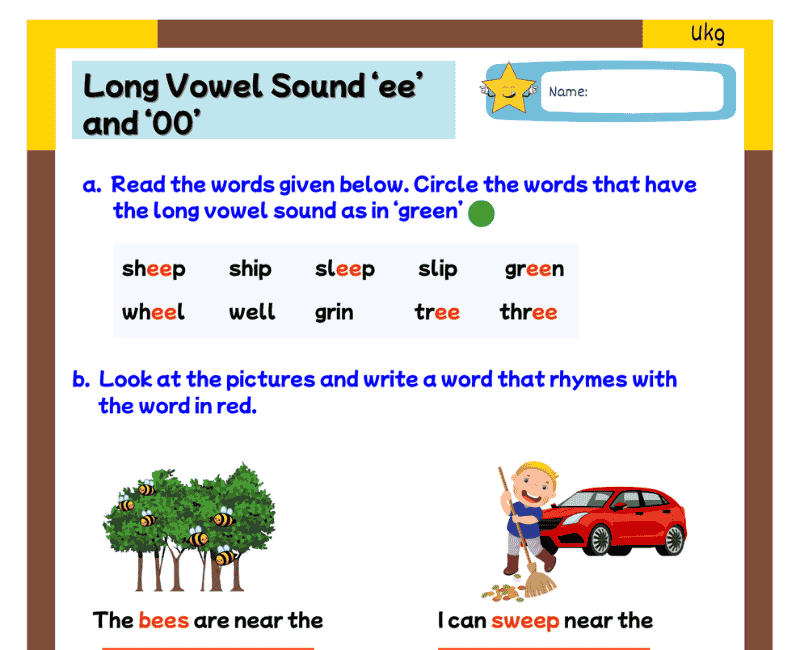
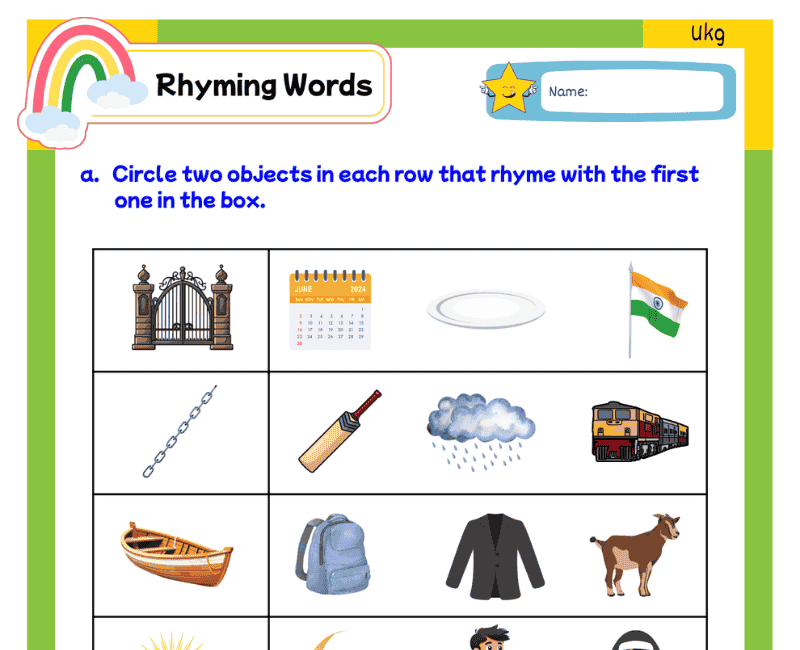
Rhyming activities add listening practice. Ham and jam share the spoken ending, while ham and hat begin alike but do not rhyme. An adult can say both words naturally and ask the child to listen to their endings. Rhyming is a sound activity; matching words only because their first letters look the same does not check rhyme.
The twenty-question phonics quiz and ten interactive activities complement the printable phonics worksheets for SR KG. Children sort sound cards, build words, count phonemes, repair letters and read a short sentence. Spoken answers and pronunciation need adult checking; the page checks the selected letters and cards. Keep practice brief, follow the classroom phonics sequence and revisit familiar examples before adding more complex spellings.
💬 UKG Phonics Activities FAQs
😊 What is phonics?
Phonics connects the sounds in spoken words with letters and letter patterns in writing. Children use these connections to read and spell.
😊 How can I practise phonics with a UKG child?
Use sounds already taught in class, model a short word and let the child blend it or build it with letter tiles.
😊 What is the difference between blending and segmenting?
Blending joins sounds to make a word. Segmenting separates a spoken word into its sounds for spelling.
😊 What are CVC words?
CVC means consonant, vowel, consonant. Simple examples used here include rag, pet, lid and hug.
😊 Should children say letter names or sounds when blending?
Use the relevant letter sounds to blend the word. Letter names are useful for naming letters, but they are different from the sounds used to read the word.
😊 How can I help a child who guesses words?
Point to each spelling, model its sound and blend through the whole word. Use known vocabulary and manageable examples.
😊 How do I teach first and last sounds?
Say a familiar word, segment its sounds and focus on the requested position. Connect the sound with the appropriate letter.
😊 Do letters and sounds always have the same count?
No. For example, sh in ship uses two letters for one sound. Sound boxes represent phonemes, not simply individual written letters.
😊 How do rhyming activities support sound awareness?
They help children attend to spoken word endings. Say pairs such as ham and jam aloud and compare the sounds.
😊 How do I download the phonics activities worksheets for UKG?
Use the existing download option on this page for the printable resource. The quiz and games offer additional practice.
 Download