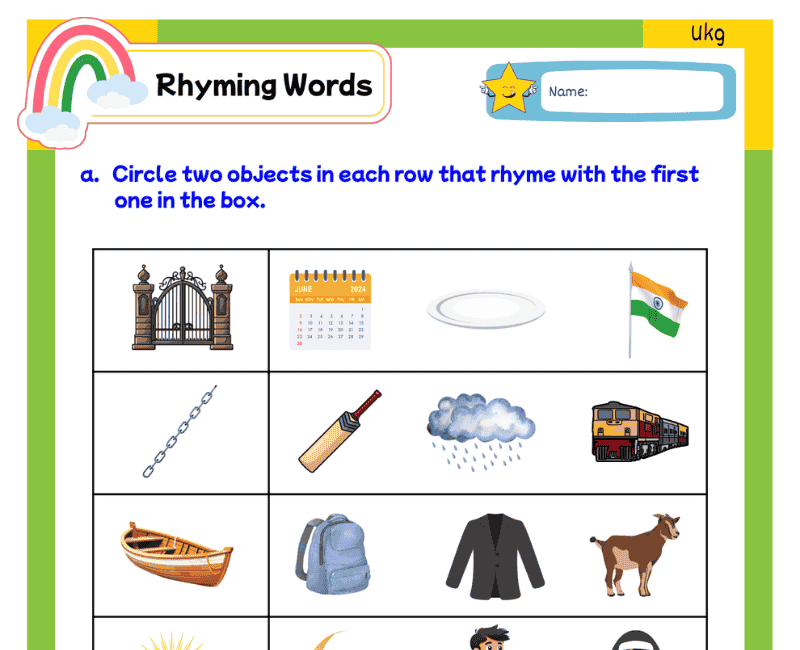
Hear the Ending and Find a Rhyme! 🐱🎩🌈
20 quiz questions and 10 interactive rhyme activities. Join word pairs, pack rhyme baskets, build word families and make a rhyming train!
📝 Rhyming Words Quiz for UKG
⏱ Time Left: 20:00
Question 1 of 20 • Answered: 0/20
Which word rhymes with fan?
Question navigation — green means answered.
🎮 Rhyming Games for UKG
1. 🔎 Explore Rhyme Families
Choose a family. An adult reads all three words so you can hear the shared ending.
pen ↔ hen ↔ ten
Ready to play!
2. 🤝 Join Rhyming Pairs
An adult says each word. Tap two cards with matching spoken endings.
Ready to play!
3. 🃏 Rhyme Pair Memory
Find four hidden pairs of rhyming words.
Find four rhyme pairs.
4. 🧺 Pack Rhyme Baskets
Choose a word, then its rhyming basket. An adult can read the words.
Ready to play!
5. 🧩 Build the -ap Family
Keep ap. Choose a beginning to build each requested word, then say the rhyme.
Build cap.
□ + ap = —
Ready to play!
🧠 Rhyming Word Activities for SR KG
6. 🔧 Repair Rhyme Labels
Each pair starts wrong. Change the second word to make a rhyme.
Ready to play!
7. 🚂 Build a Cake Rhyme Train
Load the four words that rhyme with cake. Any order is fine. Leave kite off the train.
🚂 Empty train
Ready to play!
8. 👂 Beginning or Rhyming Ending?
Choose a pair. Sort by the shared part: beginning sound or rhyming ending.
Ready to play!
9. 🔍 Collect Rhymes for Blue
An adult says each word. Select all words that rhyme with blue. Matching spelling is not required.
Ready to play!
10. 📖 Build a Cat-and-Mat Sentence
Build: A cat sat on a mat. Read cat, sat and mat with an adult and listen to their shared ending.
Ready to play!
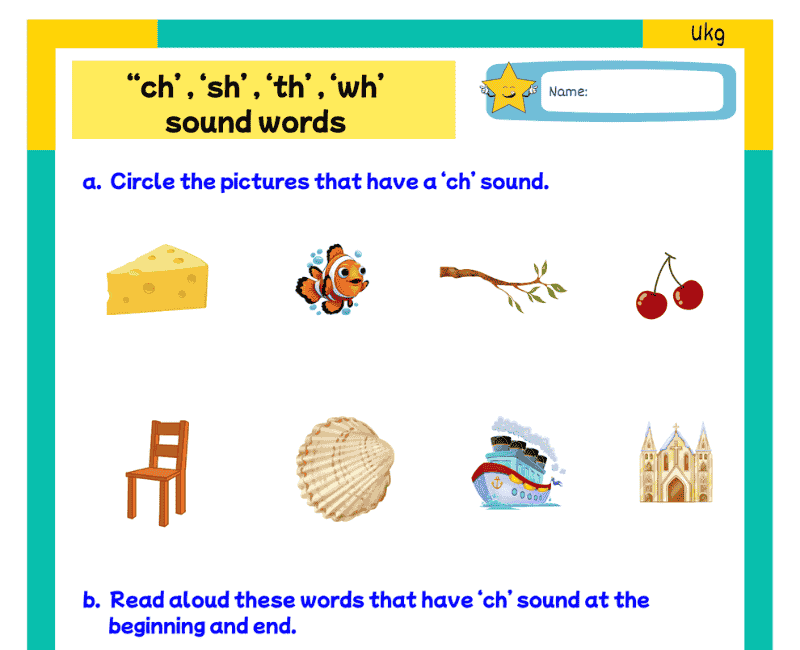
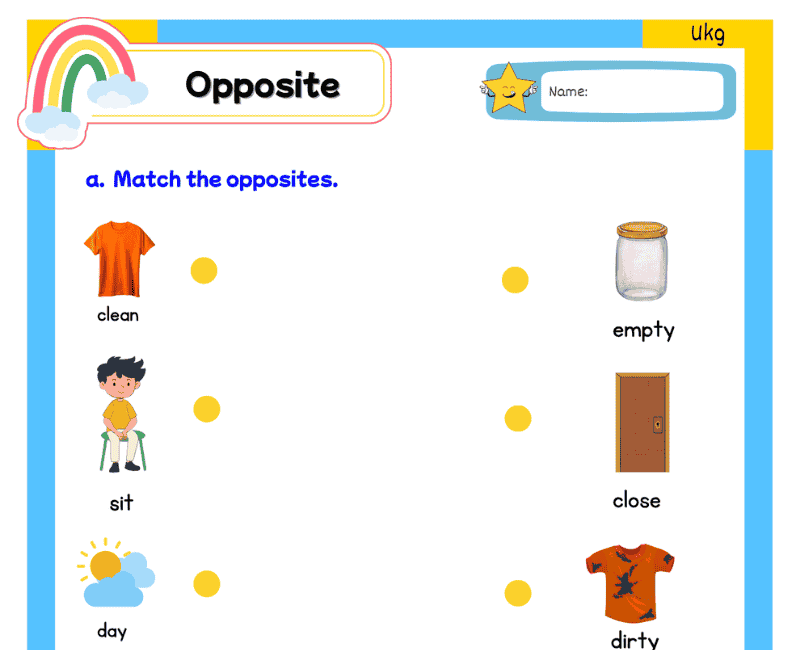
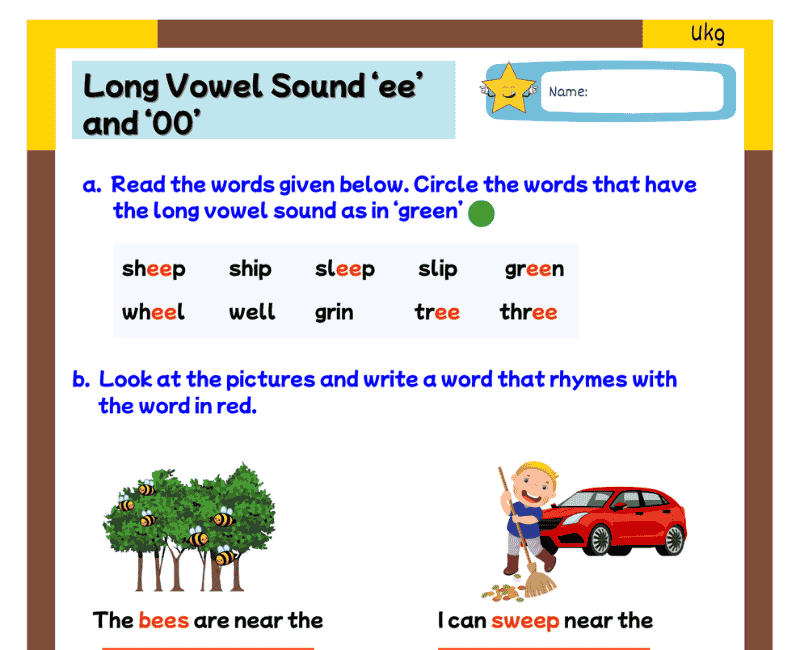
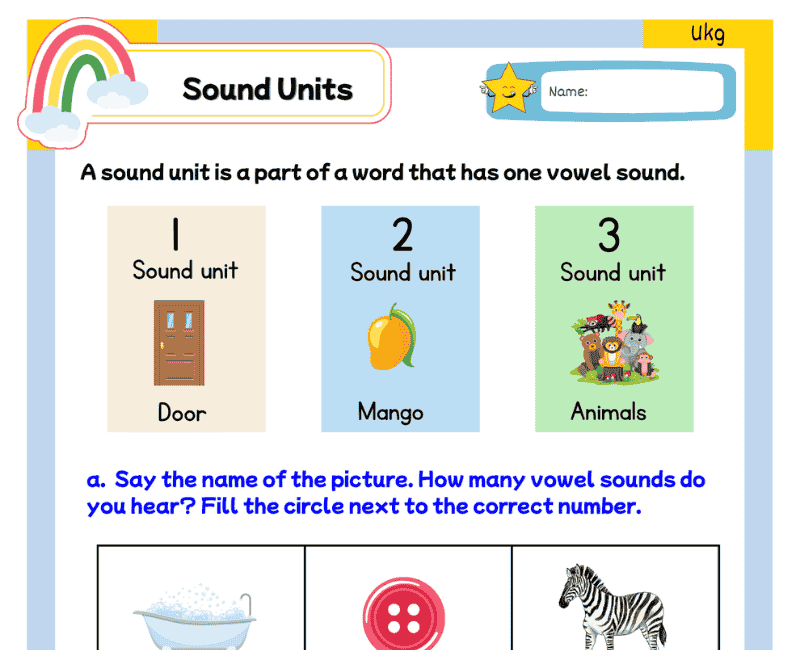
📄 Rhyming Words Activity Worksheet for UKG
Use the existing download option on this page for the printable worksheet. These online tasks provide additional rhyming-word practice for UKG and SR KG.
📖 Read the rhyming words learning guide
A rhyming words activity worksheet for UKG helps children listen to spoken word endings and recognise words that rhyme. UKG is also called Senior KG or SR KG. These activities combine familiar word pairs, word-family building and listening tasks, with adult support for instructions and unfamiliar vocabulary.
Begin by saying two words naturally, such as fan and van. Help the child hear the shared ending while noticing that the beginnings differ. In these one-syllable examples, the vowel sound and the sounds following it match. Matching only the final consonant is not enough: cap and cup end with p but do not rhyme.
Keep rhyme distinct from matching beginning sounds. Bed and bus begin with b, but they do not rhyme. Bed and red have different beginnings and the same spoken ending. Ask children which part they are listening for before mixing tasks about first sounds and rhyming endings.
Pictures support vocabulary, but a picture may have more than one possible name. A child might say rabbit while the task expects bunny, changing the rhyming possibilities. Name the pictures together before asking for a rhyme. The online tasks show word labels so an adult can use a consistent spoken model.
Word families make useful early examples. Pen, hen and ten share the en spelling and spoken ending. Top, mop and hop share op. Changing a beginning tile while keeping a familiar ending lets children build several real words and read them aloud. The spelling pattern supports the listening task rather than replacing it.
Rhyming words do not always share the same spelling. Blue and shoe rhyme in common pronunciations even though their endings look different. This is an extension beyond simple word families. Ask an adult to model both words and focus on what is heard, rather than requiring children to infer a pronunciation from an unfamiliar spelling.
Recognition and production are different tasks. Choosing a rhyme from a small set may be easier than inventing a rhyming word without choices. Start with matching and sorting before asking for a new rhyme. An adult can accept a spoken suggestion during play and explain whether it is a real word or a playful made-up word.
The twenty-question online rhyming quiz and ten interactive activities complement the printable rhyme worksheet for SR KG. Children join pairs, play memory, sort word families, repair labels and build a rhyme train. Spoken responses need adult review. Use a consistent classroom pronunciation, read words aloud when necessary and encourage children to explain the shared ending rather than guessing from the first letter.
💬 UKG Rhyming Words Worksheet FAQs
😊 What are rhyming words?
They share a spoken ending. In simple one-syllable examples such as fan and van, the vowel sound and following sounds match.
😊 How do I teach rhyming words to a UKG child?
Say familiar pairs aloud, model the shared ending and let the child match or sort a small set of words.
😊 Do rhyming words need the same first letter?
No. Fan and van rhyme with different first letters. Bed and bus begin alike but do not rhyme.
😊 Is the same final letter enough for a rhyme?
No. Cap and cup both end with p, but their vowel sounds differ, so they do not rhyme.
😊 Do rhyming words always have the same spelling?
No. Blue and shoe rhyme in common pronunciations even though their spellings differ. Listen to the sounds.
😊 What are simple rhyming word families?
Try pen, hen, ten; top, mop, hop; and bug, rug, mug. An adult can model the words.
😊 Why should we name pictures before a rhyme task?
Children may use different names for the same picture. Agree on the target word so they know which spoken ending to compare.
😊 What if a child cannot think of a rhyme?
Offer two or three spoken choices and model a pair. Matching a rhyme can be easier than producing a new one without support.
😊 Can children practise rhyming without reading?
Yes. An adult can say the words while the child points, matches cards or supplies a spoken answer.
😊 How do I download the UKG rhyming worksheet?
Use the existing download option on this page for the printable worksheet. The quiz and games provide additional practice.
 Download