Count to Ten: Match, Make and Explore! 🔢🎈🌈
20 questions and 10 interactive counting games. Count balloons, paint ten-frames, build a number train and make equal groups!
📝 1 to 10 Counting Quiz for UKG
⏱ Time Left: 20:00
Question 1 of 20 • Answered: 0/20
Count the balloons.
Question navigation
🎮 1 to 10 Counting Games for UKG
1. 🔢 Explore 1 to 10
Choose a number. Count its dots and say its name.
1 — One
●
1 dots altogether.
2. 🎈 Touch-count Balloons
Tap every balloon once, then check your count.
Count this balloon group.
Ready to play!
3. 🃏 Number and Dot Memory
Match a numeral to its dot group. Find four pairs.
Find four pairs.
4. 🚂 Build the 1–10 Train
Tap all ten tickets in counting order. Undo changes the last ticket.
🚂 Empty train
Ready to play!
5. 📮 Deliver Counting Mail
Select a number envelope, then its matching dot mailbox.
Ready to play!
🧠 Counting Activities for Senior KG
6. 🎨 Paint a Ten-frame
Tap spaces to add or remove counters. Make the target quantity.
Show 6 counters.
Ready to play!
7. ⚖️ Make Two Equal Groups
Change group A until it matches group B. Count both groups.
A: ● ● ● ●
B: ● ● ● ● ● ● ●
Ready to play!
8. 🐸 Hop to Ten
Help the frog move from 6 to 10. Tap the next counting number.
🐸 6
Ready to play!
9. 🔧 Repair Number Strips
Fill the three gaps. Check the numbers on both sides.
3 → ? → 5
6 → ? → 8
8 → ? → 10
Ready to play!
10. ✍️ Trace Numbers 1–10
Choose a number, then trace with the red pen. Undo removes the latest stroke. Clear keeps the guide.
Ready to play!
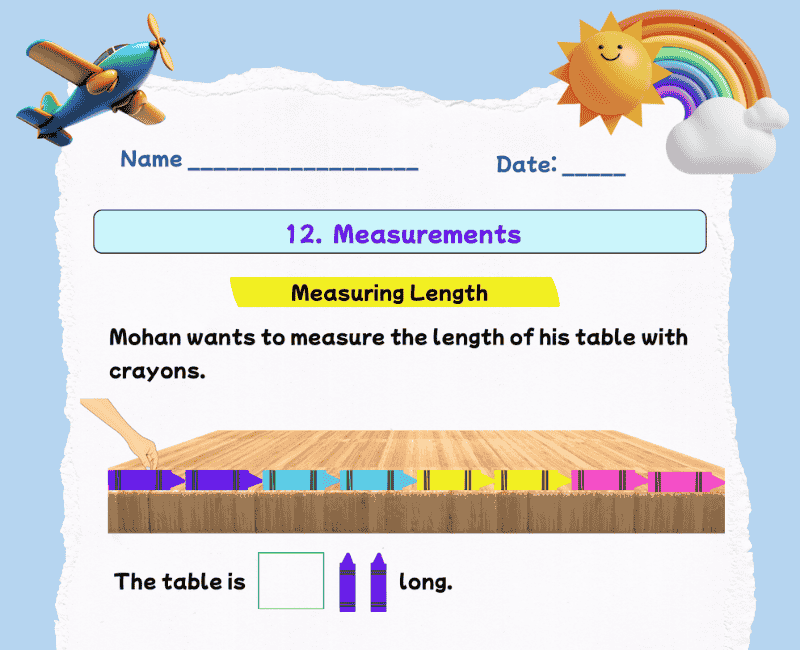
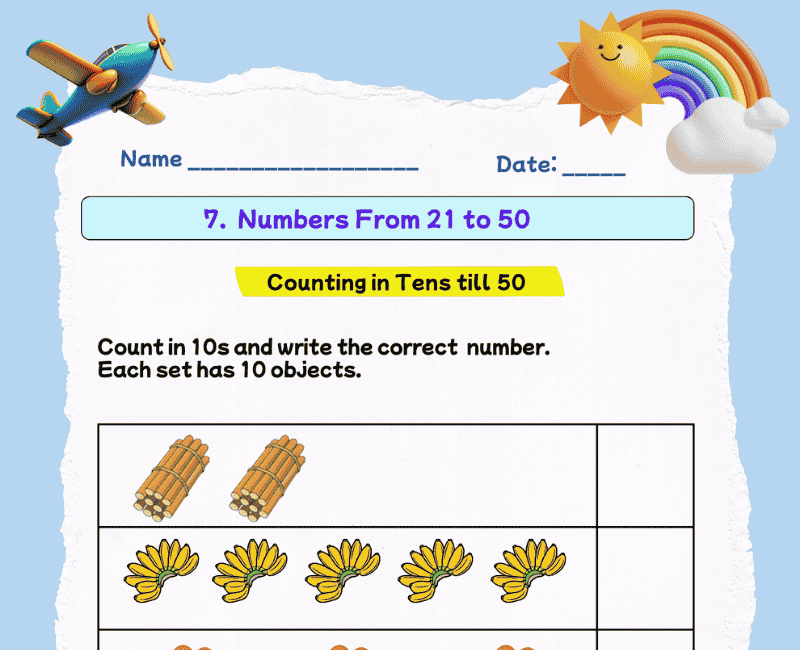
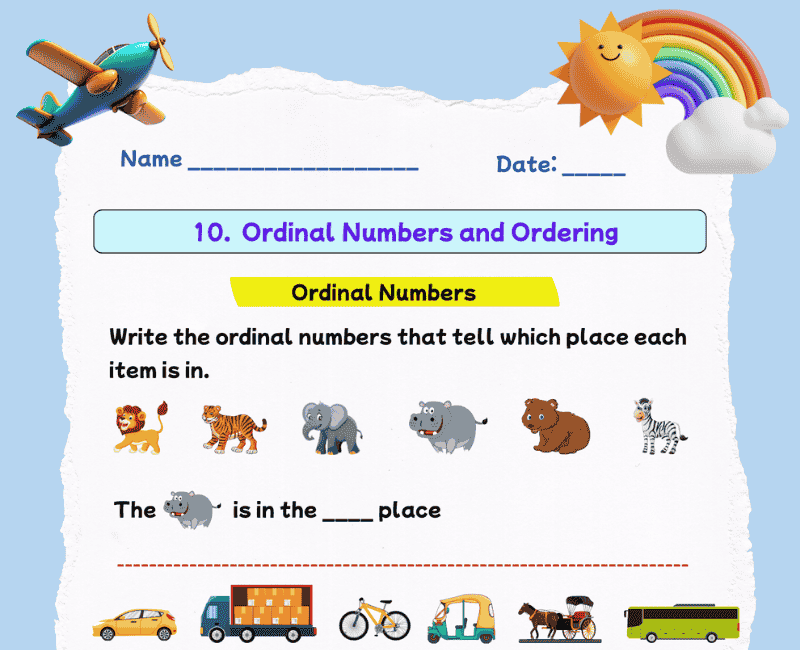
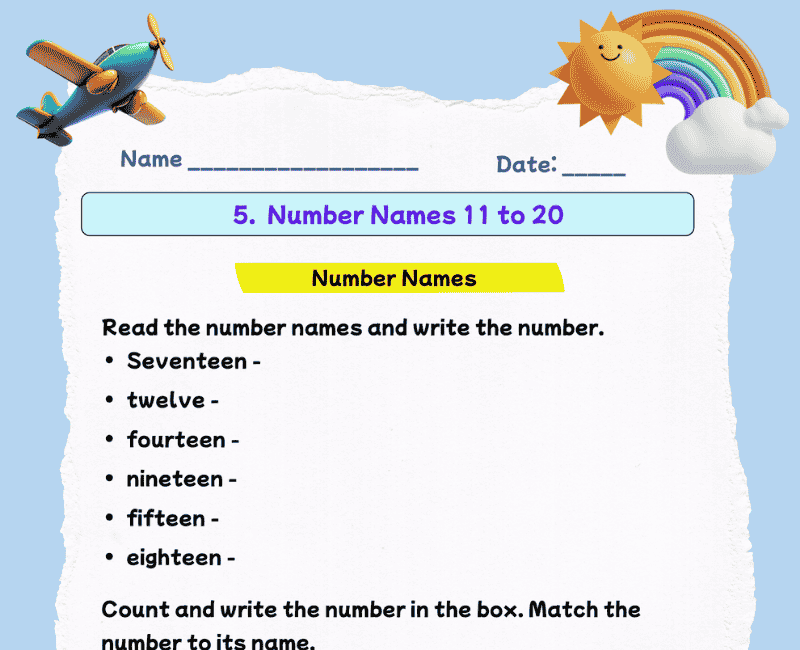
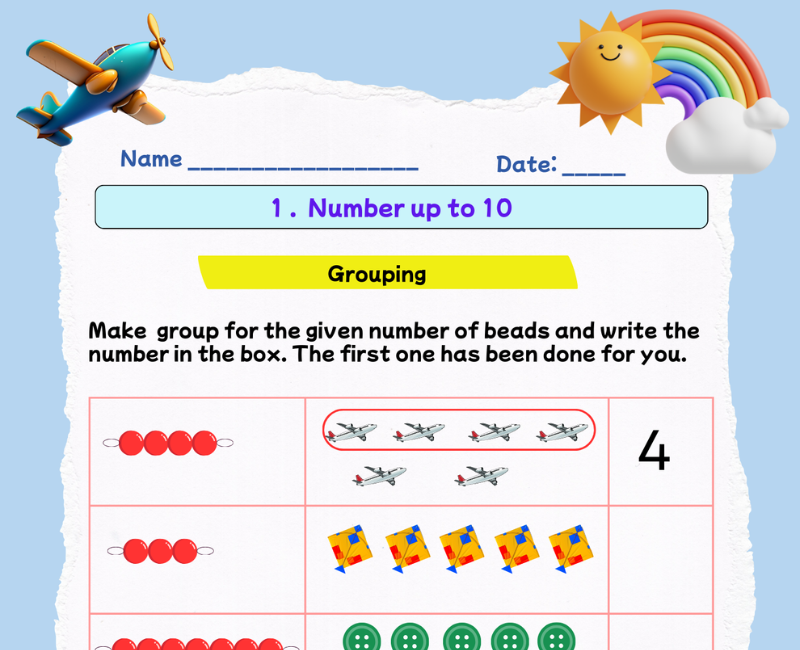
📄 16 Pages 1 to 10 Counting Numbers Worksheet for UKG
Use the existing download option on this page for the printable worksheet. Combine paper practice with the online quiz and counting games above.
📖 Read the UKG counting 1 to 10 learning guide
A counting numbers 1 to 10 worksheet for UKG connects written numerals with spoken number words and quantities. UKG is also called Senior KG or SR KG. Children revisit familiar numbers through counting objects, matching, ordering and guided writing. The aim is to understand what a number represents, as well as recognise its shape.
Begin with a small group of counters or classroom objects. Invite the child to touch or move each object while saying one number word. This one-to-one correspondence helps prevent skipping an object or counting it twice. After the count, ask how many there are altogether. The last number said describes the total group.
Number recognition and object counting are related but different skills. A child may identify 8 without accurately counting eight objects, or count a group correctly while needing support to find its numeral. Combine picture groups, number cards and practical objects so these connections become clearer.
A ten-frame organises counters in two rows of five. Children can notice that seven is five and two more, and that a frame with seven counters has three empty spaces. Let the child place counters in different spaces and check that the total stays the same. The online frame activity allows each space to be filled or emptied with a tap.
Practise number order with movable cards from 1 to 10. Build a train, remove a card and use both neighbours to find the missing number. Counting forward helps with one more, while looking at the previous card helps with one less. The frog activity revisits the short sequence from six to ten.
Compare groups by counting or pairing their objects. If one group has four counters and another has six, two additional counters will make the totals equal. A longer-looking row is not necessarily a larger group: spreading out the same objects does not change their total. Ask children to explain their comparison and check it.
The quiz includes recognition, quantity, sequence and thinking tasks within ten. Answers and explanations appear after submission. The ten interactive games add memory, matching, collecting tickets, making quantities and changing groups. An adult can read number names and prompts while children focus on the mathematical task.
Optional tracing covers each numeral from 1 to 10 with one red pen, Undo and Clear. Use the handwriting model taught in class for paper practice. Keep activities brief and meaningful, and revisit a few numbers that need support. Everyday counting, such as giving one pencil to each person, provides another opportunity to connect numbers with quantities.
💬 UKG Counting Numbers Worksheet FAQs
😊 How do I teach counting 1 to 10 to a UKG child?
Use familiar objects. Touch one object for each number word, ask how many altogether and match the total with a numeral card.
😊 What is one-to-one correspondence?
It means matching one number word to one object. Moving or touching objects one at a time helps children keep track.
😊 Why can my child say numbers but not count objects correctly?
Reciting number words and tracking a group are different skills. Slow down, use a smaller group and count each object once.
😊 What is a ten-frame used for?
A ten-frame has two rows of five spaces. It helps children build quantities, compare groups and see how many more counters would make ten.
😊 What does the last number in a count tell us?
It tells how many objects are in the whole group. After counting, ask the child to say the total without restarting the count.
😊 How can I teach missing numbers from 1 to 10?
Arrange number cards, remove one and use the cards before and after the gap as clues. Say the short sequence together.
😊 Does spreading out counters change their total?
No. The total stays the same if no counters are added or removed. Count before and after moving the objects to check.
😊 How do I teach more, fewer and equal groups?
Compare familiar objects by pairing or counting. Change one group until both have the same number and explain what changed.
😊 Should number tracing replace counting games?
Use both for different purposes. Tracing supports writing practice, while counting and matching connect numerals with quantities.
😊 How do I download the 16-page counting worksheet?
Use the existing download option on this page. The quiz and games provide separate online practice alongside the printable worksheet.
 Download