Spot the Rule and Build the Pattern! 🧩🌈
20 quiz questions and 10 interactive activities. Build repeating trains, repair patterns, sort cards and solve picture clues!
📝 Patterns and Thinking Skills Quiz for UKG
⏱ Time Left: 20:00
Question 1 of 20 • Answered: 0/20
Continue the repeating pattern.
Question navigation — green means answered.
🎮 Pattern Games for UKG
1. 🚂 Build an AB Train
Build six tickets: circle, triangle, repeated three times.
Your row appears here
Ready to play!
2. 🔧 Repair the Pattern
The rule is circle, triangle. Tap a tile to change it. Repair the six-item row.
Ready to play!
3. 🧺 Sort Pattern Rules
Choose a row, then its rule basket.
Ready to play!
4. 🃏 Pattern Rule Memory
Match a picture row with its rule label.
Match four rules.
5. 🔍 Mark the Repeating Unit
Row: circle, triangle, square repeated twice. Select only the first smallest unit.
Ready to play!
🧠 Thinking Skills Activities for SR KG
6. 🍎 Change Shapes into Fruit
Copy the AAB rule as fruit: apple, apple, banana. Build two complete units.
Your row appears here
Ready to play!
7. 🤖 Follow the AB Route
Start at the top-left circle. Follow circle, triangle, circle, triangle, circle, triangle using neighbouring squares.
Ready to play!
8. 🌱 Grow a Dot Pattern
Build groups of 1, 2, 3 and 4 dots. Each group has one more than the previous group.
Ready to play!
9. 🕵️ Use Both Clues
Select every card that is BOTH a fruit AND yellow. The labels name the intended colour.
Ready to play!
10. 🎨 Invent a Repeating Pattern
Build a unit of two to four shapes using at least two different shapes. Repeat it three times.
Your unit: —
Ready to play!
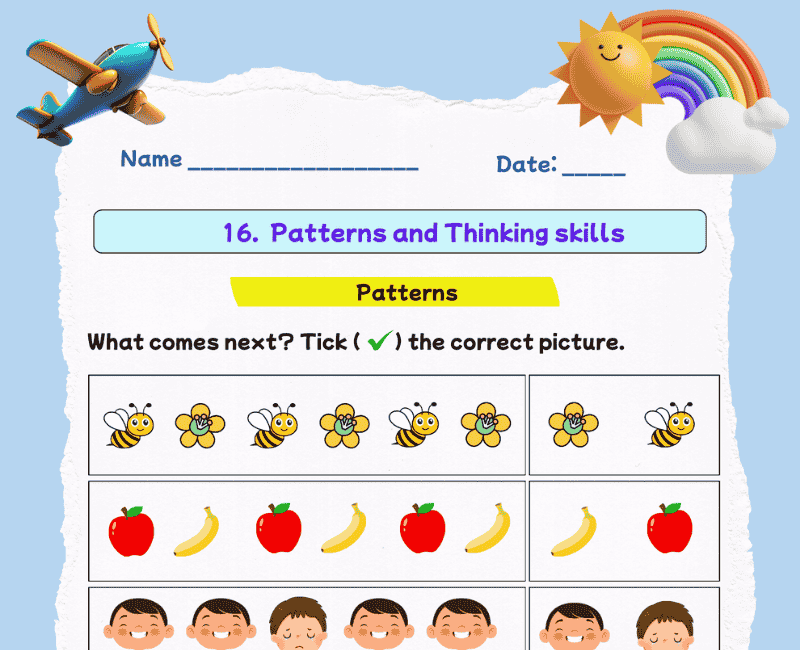
📄 Thinking Skills and Patterns Worksheet for UKG
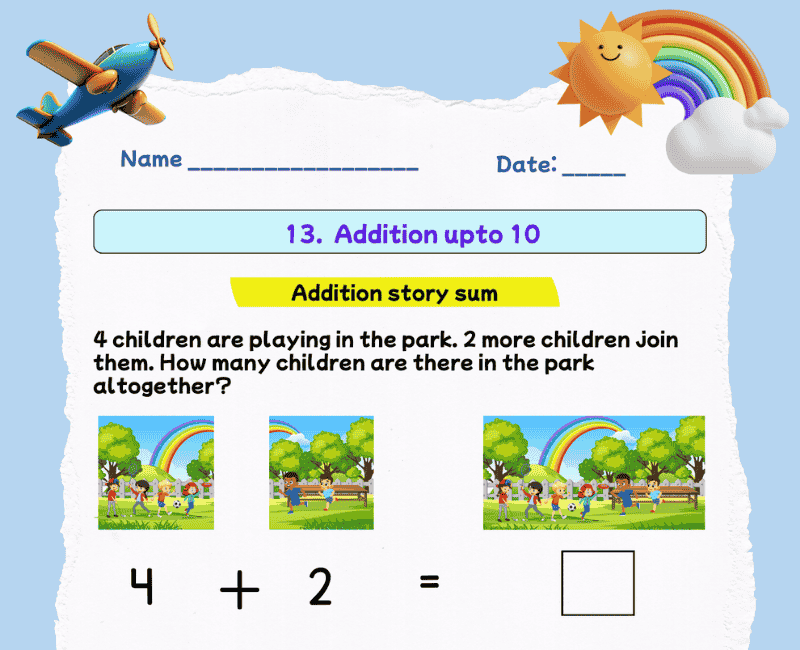
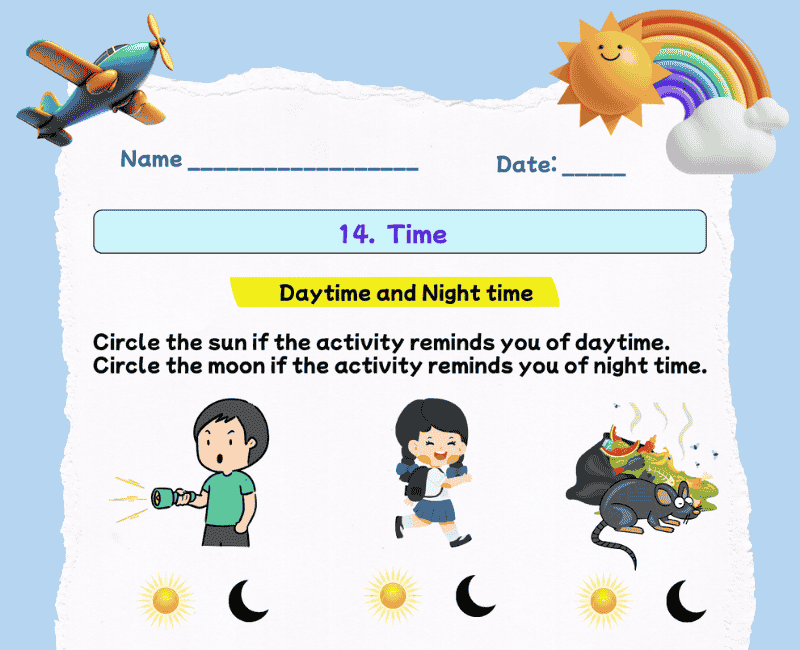
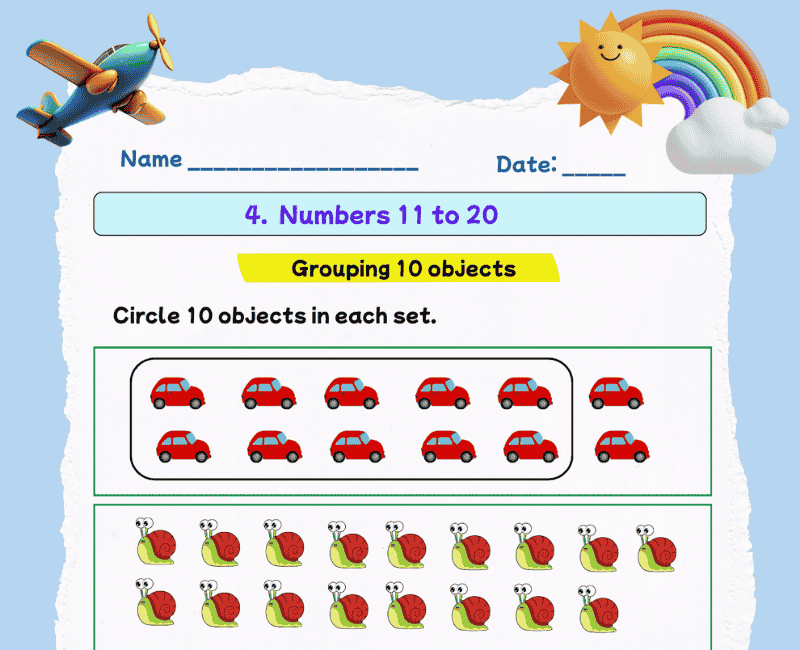
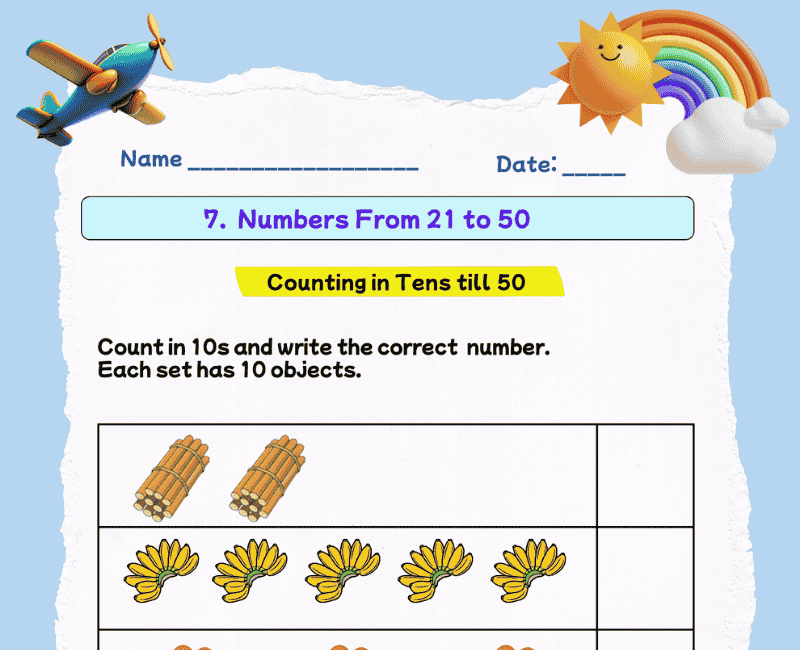
Use the existing download option on this page for the printable worksheet. Explore additional pattern practice with the online quiz and games.
📖 Read the UKG patterns learning guide
A thinking skills and patterns worksheet for UKG helps children notice similarities, describe rules and predict what comes next. UKG is also called Senior KG or SR KG. Pattern worksheets for kindergarten provide practice with observation and reasoning through familiar objects, shapes and simple sequences.
Begin with a repeating pattern made from two different objects. Arrange a spoon, a block, a spoon and a block. Ask the child to copy the arrangement and continue it. Say the object names aloud while pointing, then ask which small group keeps appearing. Here, spoon and block form the repeating unit.
Letters such as AB describe the structure rather than the objects themselves. A circle followed by a triangle can have the same AB rule as a clap followed by a tap. This connection helps children recognise a pattern when the materials change. Avoid relying only on colour; objects, shapes and actions offer other clear differences.
Once a child understands AB, introduce AAB, ABB and ABC patterns with support. In AAB, two copies of the first item are followed by one of the second. In ABB, the second item appears twice. Build several complete units so children can check the rule across the whole row, rather than guessing from its last object.
Complete-the-pattern worksheets for UKG can include a gap in the middle as well as an empty space at the end. Ask children to examine both sides of a missing item. When repairing a pattern, compare each group with the original unit. Encourage an explanation such as this should be a triangle because every circle is followed by a triangle.
Distinguish repeating patterns from growing patterns. A repeating pattern uses the same unit again and again. A growing dot pattern may have one dot, then two, then three, adding one each time. State the intended rule during early practice so children know what to look for. A short sequence can sometimes be continued in more than one way.
Thinking skills activities for SR KG also include sorting and using two clues together. A child might sort shape rows by their pattern rule or select an object that is both round and red. Read the condition aloud and encourage the child to check every part before choosing. These tasks develop careful observation without requiring independent reading.
The twenty-question online quiz and ten interactive pattern games complement the printable worksheet. Children build trains, change incorrect tiles, match rules, follow a route and create their own repeating unit. Use short sessions and invite children to explain their choices. When they make a mistake, return to the unit and rebuild the row together before recording answers on paper.
💬 UKG Patterns and Thinking Skills FAQs
😊 How do I teach patterns to a UKG child?
Start with two different objects arranged in an AB pattern. Ask the child to copy it, continue it and point to the group that repeats.
😊 What is an AB pattern?
An AB pattern repeats two different items in order, such as circle, triangle, circle, triangle.
😊 What is the repeating unit of a pattern?
It is the smallest complete group that repeats. In circle, triangle, circle, triangle, the unit is circle, triangle.
😊 What is the difference between AAB and ABB patterns?
AAB repeats two of the first item and one of the second. ABB repeats one of the first and two of the second.
😊 How do I help a child complete a missing pattern?
Read the whole row aloud and identify the repeating unit. Check the objects before and after the gap.
😊 Why does my child keep alternating in every pattern?
The child may be applying a familiar AB rule. Group the items into units and show how a different unit, such as AAB, repeats.
😊 Can children learn patterns without using colours?
Yes. Use different shapes, objects, sounds or actions. For example, clap, tap, clap, tap is an action pattern.
😊 What is a growing pattern?
A growing pattern changes according to a rule. A dot pattern with one, two and three dots can grow by adding one dot at each step.
😊 How do thinking skills activities help in kindergarten?
They give children practice in observing, sorting, comparing and explaining choices. Use clear instructions and let children check their reasoning with objects.
😊 How do I download the UKG patterns worksheet?
Use the existing download option on this page. The quiz and games provide additional online practice.
 Download