Class 3 Science · CBSE / NCERT
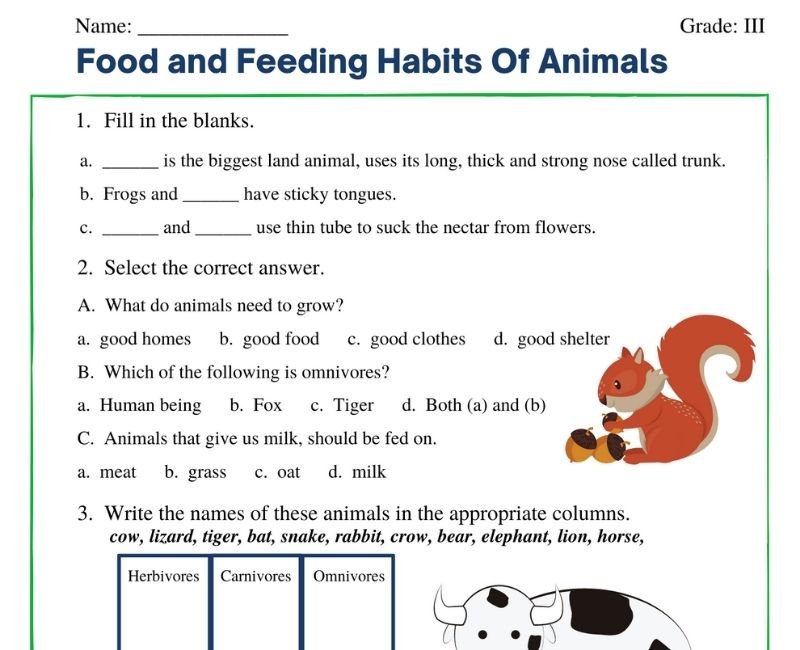
Food and Feeding Habits of Animals Class 3 Science Worksheet NCERT with Quiz and Activities
Who eats grass, who hunts, who eats both and who cleans up the forest? Find out with this Food and Feeding Habits of Animals worksheet for Class 3: take the Food and Feeding Habits of Animals Class 3 quiz, build food chains in the labs and play the Food and Feeding Habits of Animals Class 3 activities online, in line with CBSE and the NCERT book Our Wondrous World.
Flip the cards and try the Food Chain Lab, then tap the Games, Labs or Challenges island.
Food and Feeding Habits of Animals Class 3 Online Quiz
20 questions · tap an answer to move on · full review at the end
Which animal eats only plants?
Food and Feeding Habits of Animals Class 3 Activities
Chain, chew, catch and sort. Earn up to 3 stars in every activity.
This Food and Feeding Habits of Animals worksheet for Class 3 lets children explore like young wildlife scientists. Flip the fact cards, build food chains in the Food Chain Lab, then play the games, do the labs and try the challenges.
Fact cards: tap a card to flip it
Food Chain Lab
Drag the plants and animals into the boxes in the right order (or tap them) to build three food chains.
🔗 Build food chains: drag the living things into the boxes. Start with the plant, then who eats it, then who eats that.
The arrow ➜ means is eaten by.
- 👉Step 1: Food chain 1
Put 3 living things in order. - ⬜Step 2: Food chain 2
Put 3 living things in order. - ⬜Step 3: Food chain 3
Put 4 living things in order. - ⬜Step 4: What did we find?
Finish steps 1 to 3 to unlock.
Challenge marks: 0 / 15 (0 of 5 challenges done)
Finish all 5 challenges to see your comment.
Practice sheet
Type your answers in the boxes. For word answers write in small letters. Press Check when you finish.
AWrite herbivore, carnivore, omnivore or scavenger
BComplete the sentence with one word
CCount and write the number
DWrite yes or no
Food and Feeding Habits of Animals Class 3 Complete Guide
Every animal needs food, but different animals eat different things in different ways. This guide explains it in simple words for Class 3 students, parents and teachers. It goes with the Food and Feeding Habits of Animals worksheet for Class 3 on this page and covers herbivores, carnivores, omnivores and scavengers, teeth, how animals eat, how baby animals are fed, food storage and food chains.
Introduction to NCERT Class 3 Science Food and Feeding Habits of Animals
Book: Our Wondrous World (The World Around Us), the NCERT textbook for Grade 3. Topic: Food and Feeding Habits of Animals. Board: CBSE and other schools that follow NCERT. The new NCERT book builds this topic through observing animals around us and what they eat. This page is built around the learning goals schools test for the topic; it is not a copy of a single chapter.
What is there in this topic
- Herbivores, carnivores, omnivores and scavengers
- Insect-eating animals
- Teeth and what they tell us about food
- Ways of eating: chewing the cud, swallowing, sucking, gnawing, lapping
- How baby animals get food
- Animals that store food
- Food chains
Learning objectives
These objectives are written for this page from the topic's goals; they are not copied from the NCERT book.
- Group animals by what they eat.
- Link teeth shape to food.
- Describe different ways animals eat.
- Explain how young mammals and baby birds are fed.
- Build and read a simple food chain.
Learning outcomes
After this page a child can:
- Name two herbivores, carnivores, omnivores and scavengers.
- Explain what chewing the cud means.
- Say what an animal eats by looking at its teeth.
- Draw a food chain that starts with a plant.
- Explain what happens if one link of a food chain disappears.
Food and Feeding Habits of Animals Class 3 resources on this page
| Resource | What it does |
|---|---|
| Food and Feeding Habits Class 3 quiz | 20 questions in three levels with a full answer review |
| Flip cards | Six cards: herbivores, carnivores, omnivores, scavengers, food chains and baby animals |
| Food Chain Lab | Build three food chains from plant to meat-eater |
| 5 games | Diet sort, insect-eater bubbles, how do they eat, feeding the babies, squirrel's store |
| 5 science labs | Chewing the cud, sticky tongue, teeth lab, food store, diet detective |
| 5 challenges | Marked out of 3 each with a total out of 15 |
| Practice sheet | 16 questions with pictures, word banks and a live score |
Animals by what they eat
| Group | Food | Teeth | Examples |
|---|---|---|---|
| Herbivores | Only plants | Sharp front teeth to cut, flat back teeth to grind | Cow, goat, deer, rabbit, elephant, giraffe |
| Carnivores | Other animals | Long pointed teeth to tear | Lion, tiger, eagle, snake |
| Omnivores | Plants and animals | Both sharp and flat teeth | Bear, crow, monkey, hen, humans |
| Scavengers | Dead animals | Strong beaks or jaws | Vulture, hyena, crow |
Some animals eat mainly insects: frogs, lizards, woodpeckers and bats.
Ways of eating
| Way | Animals |
|---|---|
| Chew the cud | Cow, goat, buffalo, camel |
| Swallow whole | Snake, frog |
| Suck | Butterfly, bee (nectar), mosquito |
| Gnaw | Squirrel, rat, rabbit |
| Lap | Cat, dog |
| Catch with tongue | Frog, lizard, chameleon |
Baby animals and storing food
Young mammals like calves, puppies and kittens drink their mother's milk. Bird parents bring worms, insects and seeds to their chicks. Some animals store food: squirrels hide nuts, bees store honey, ants carry grains into their nests and camels store fat in their humps.
Types of questions
- Herbivore, carnivore, omnivore or scavenger
- Match animal to way of eating
- Complete the food chain
- Yes or no questions
- Teeth and food
- Reason questions about food chains and storing food
Solved examples
Common mistakes
| Mistake | Correct idea |
|---|---|
| All big animals are meat-eaters | Elephants and giraffes are huge herbivores |
| A food chain can start with an animal | Every food chain starts with a plant |
| The arrow means "eats" | The arrow means "is eaten by" |
| Scavengers are bad animals | They keep nature clean |
| A camel's hump is full of water | It stores fat |
| Snakes chew their food | Snakes swallow food whole |
Daily life
We see cows chewing the cud, crows eating leftovers, cats lapping milk and sparrows feeding their chicks. Feeding pets the right food and not throwing waste carelessly helps animals around us.
What your child learns from the Food and Feeding Habits of Animals worksheet
- To observe what animals eat and how
- To group and compare animals
- To understand how living things depend on each other
- To care for animals around them
Tips for parents and teachers
- Watch a cow or goat chew the cud and count its chews.
- Look at your own teeth in a mirror: find sharp and flat ones.
- Draw a food chain from your garden.
- Put out a bowl of water for birds and watch who comes.
- Let the child retry the challenges to earn 3 stars.
Related Science Worksheets
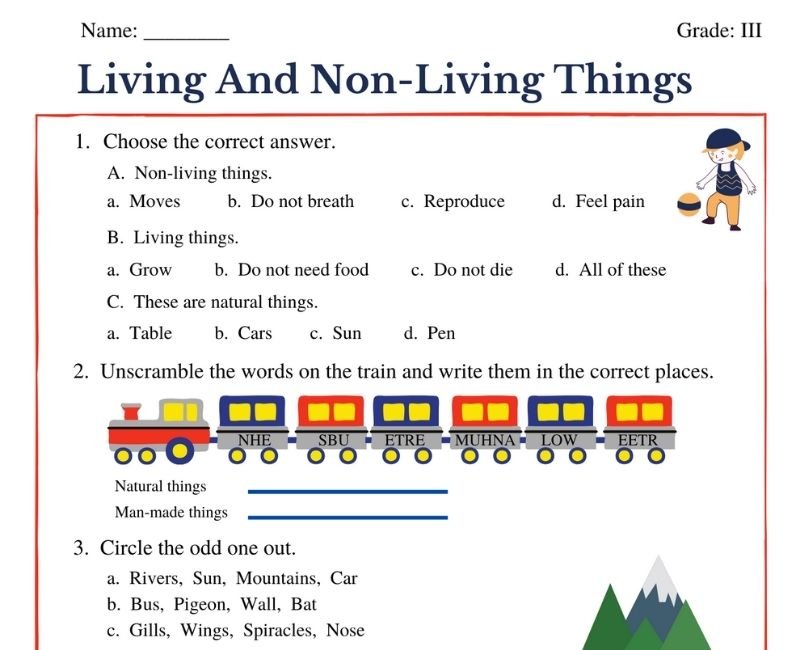
- Living and Non-Living Things Worksheet Class 3
- Eating Habits of Animals Worksheet Class 3
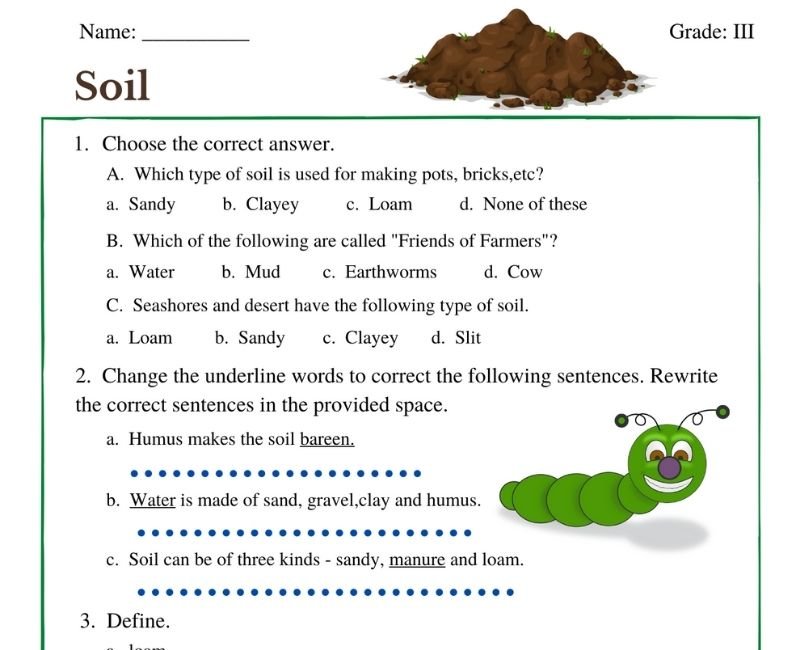
- Soil Worksheet Class 3
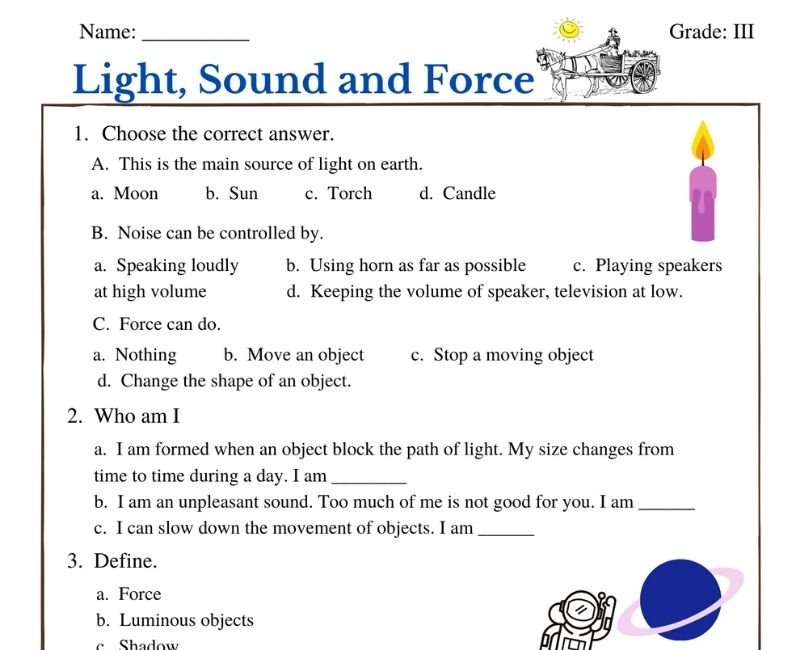
- Light Sound and Force Worksheet Class 3
- Parts of a Plant Worksheet Class 3
- Air Water and Weather Worksheet Class 3
- Sun Moon and Stars Worksheet Class 3
- Birds Beaks and Claws Worksheet Class 3
- Parts of the Body Worksheet Class 3
- Safety and First Aid Worksheet Class 3
- Science Measurement Worksheet Class 3
- States of Matter Worksheet Class 3
Frequently Asked Questions
What are the feeding habits of animals for Class 3?
Feeding habits tell us what an animal eats and how it eats. Some eat plants, some eat other animals, some eat both and some eat dead animals.
What are herbivores, carnivores and omnivores?
Herbivores eat only plants (cow, deer). Carnivores eat other animals (lion, tiger). Omnivores eat both plants and animals (bear, crow, humans).
What are scavengers?
Scavengers eat dead animals. Vultures and hyenas are scavengers, and they help keep nature clean.
What is chewing the cud?
Animals like cows and goats swallow food quickly, then bring it back to the mouth and chew it slowly again. This is called chewing the cud.
How do teeth tell us what an animal eats?
Flat back teeth grind plants, long pointed teeth tear meat, and a mix of both means the animal eats plants and animals.
What is a food chain?
A food chain shows who eats whom, for example grass → goat → lion. Every food chain starts with a plant.
How do baby animals get food?
Young mammals drink their mother's milk. Bird parents bring food like worms and seeds to their chicks.
Does this page have Food and Feeding Habits of Animals Class 3 questions and answers?
Yes. The 20-question Food and Feeding Habits of Animals Class 3 quiz shows the correct answer and a reason for every question at the end, and the practice sheet has a Show answers button for all 16 questions.
Is this worksheet based on CBSE and NCERT?
Yes. It follows the CBSE Class 3 Science syllabus and the NCERT approach used in the Grade 3 book Our Wondrous World.
What activities can children do on this page?
They can build food chains, follow a cow chewing the cud, catch flies with a frog's tongue, open animals' mouths to see their teeth, match animals to their food stores and solve diet mysteries, all on the screen.
Can my child use these activities on a phone?
Yes. All drag activities work with a finger on phones and tablets and with a mouse on computers. Tapping also works.
What is included on this page?
A 20-question quiz with review, flip cards, the Food Chain Lab, 5 games, 5 science labs, 5 marked challenges, a 16-question practice sheet, a complete guide, 12 related Class 3 Science worksheets and these FAQs.
 Download