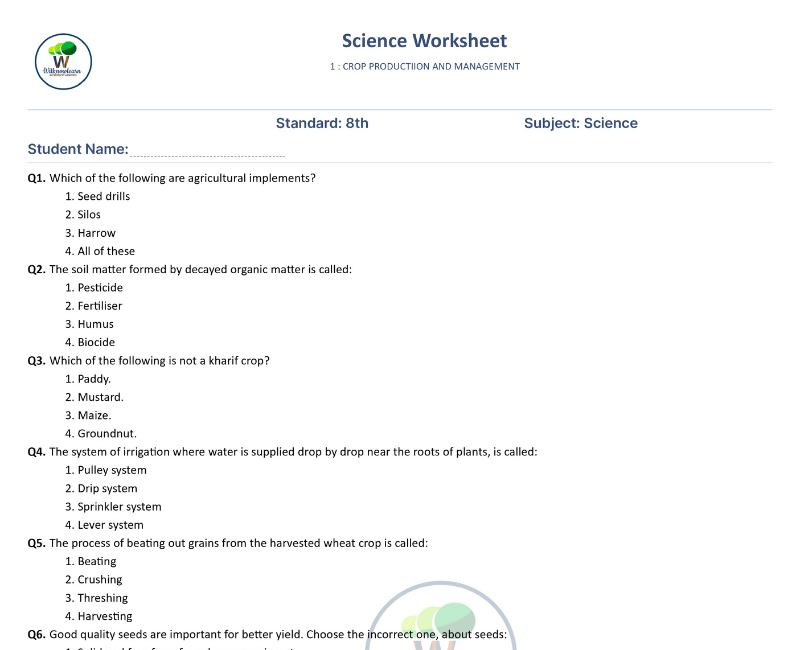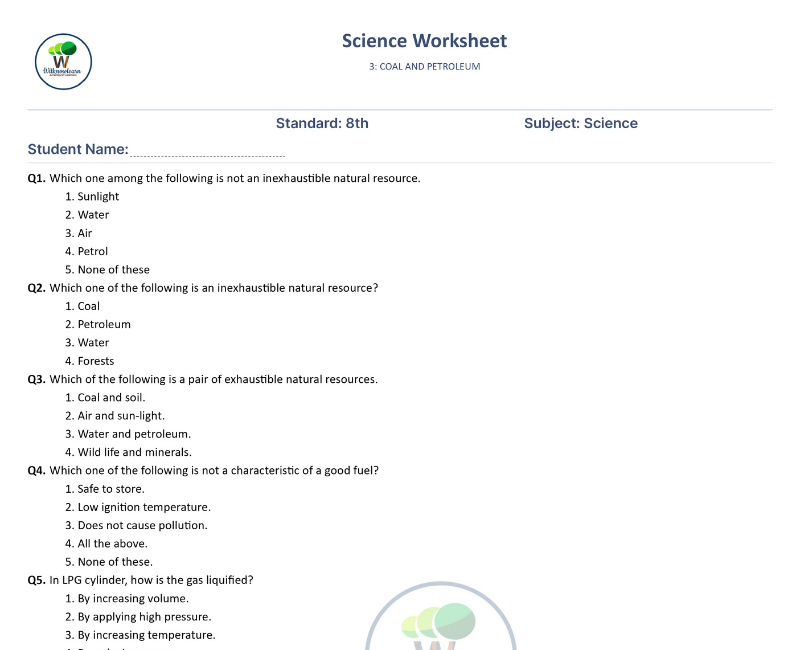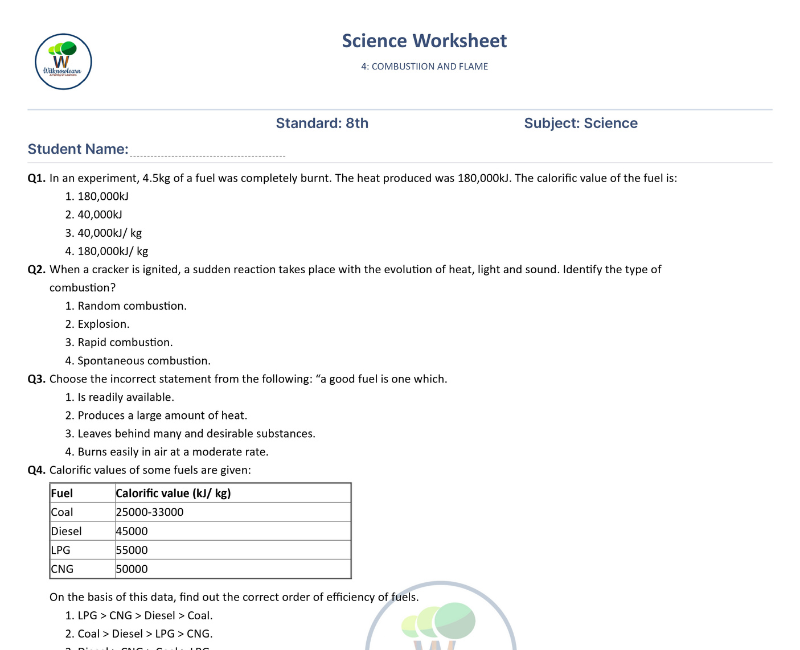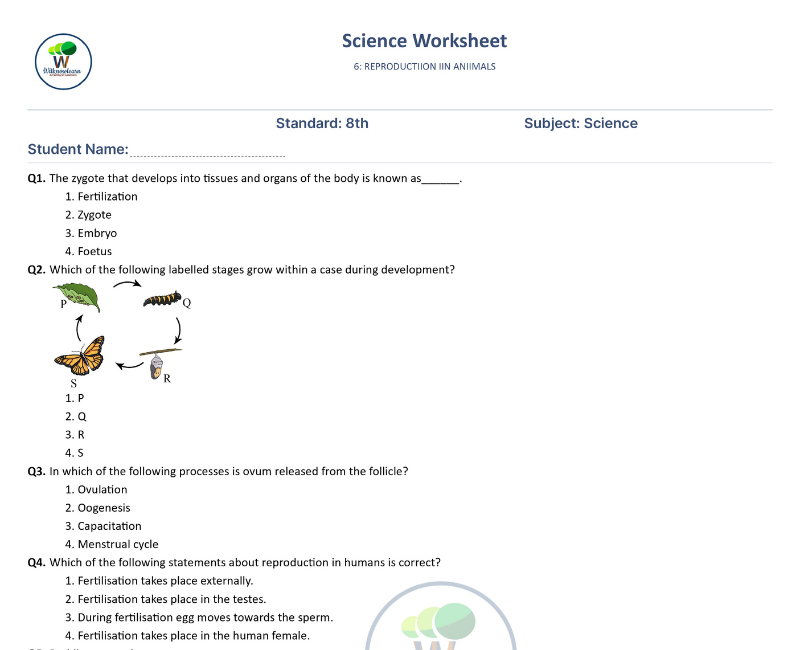
Nature of Matter: Elements, Compounds and Mixtures Class 8 Science Worksheet with Quiz and Activities
Sort mixtures, elements and compounds with games, labs and a quiz. On WitKnowLearn you get the Nature of Matter: Elements, Compounds and Mixtures Class 8 online quiz, online activities and interactive games, a matter lab, a virtual lab and a worksheet-style practice sheet for Class 8 Science.
Nature of Matter: Elements, Compounds and Mixtures Class 8 Online Quiz
Includes assertion and reason, case study and higher order thinking questions. Tap an answer and the next question comes up.
Nature of Matter: Elements, Compounds and Mixtures Class 8 Activities
👆 Tap a tab to switch: Learn, Games, Labs, Challenges, Virtual Lab and Practice sheet
Nature of Matter: Elements, Compounds and Mixtures: Sorting Matter
A short read for Class 8 before you play. These notes cover mixtures, pure substances, elements and compounds.
🥣 Mixtures
Most things around us are mixtures. Their components keep their properties and can be uniform like air or non-uniform like sand and water. Alloys are mixtures of metals.
⚛️ Elements
Elements are pure substances made of identical atoms. Water splits into hydrogen and oxygen. There are 118 known elements, grouped into metals, non-metals and metalloids.
💧 Compounds
Compounds form when elements combine chemically in a fixed ratio. Iron sulfide differs from iron and sulfur and cannot be separated by a magnet.
Nature of Matter: Elements, Compounds and Mixtures Class 8 Science Activities
Follow every step on the Number Train. Earn up to 3 stars in every activity.
This page covers mixtures, pure substances, elements and compounds for Class 8 science. It covers mixtures, uniform and non-uniform types, air, pure substances, elements, compounds and the difference between a mixture and a compound.
The activities are pitched at Class 8 level. Sort elements and compounds, compute composition and count hydrogen atoms in the studio. Explore more Class 8 science worksheets on WitKnowLearn after this chapter.
Key ideas and facts to know
| Type | Example | Key feature |
|---|---|---|
| Mixture | air, bronze | components keep properties |
| Element | iron, oxygen | cannot be broken down |
| Compound | water, salt | fixed ratio, new properties |
How to use this page
- Flip the six cards and try the Matter Lab in the Learn tab.
- Play the five games and the five labs to practise each idea.
- Finish the five challenges to collect up to 15 points.
- Do two virtual experiments and count atoms in water in the studio.
- Take the online quiz, with assertion and reason and case study questions, and fill in the practice sheet.
Worked examples
50 ÷ 5 = 10 kg.
12 × 2 = 24.
This Nature of Matter: Elements, Compounds and Mixtures worksheet for Class 8 science gives you online activities and interactive games that make the chapter clear. Every activity has a goal, a hint and a short fact, so students learn while they enjoy.
Complete Guide: Class 8 Science Nature of Matter: Elements, Compounds and Mixtures
This guide is for Class 8 students, parents and teachers. It covers mixtures, pure substances, elements and compounds for Class 8 science and shows how to use the quiz, labs and games on this page.
Introduction to Nature of Matter: Elements, Compounds and Mixtures
This chapter classifies matter into mixtures and pure substances and distinguishes elements from compounds.
What is there in this chapter
- Mixtures and their types
- Air as a mixture
- Pure substances
- Elements
- Compounds
- Using elements, compounds and mixtures
Learning objectives
- Classify mixtures as uniform or non-uniform.
- Differentiate elements and compounds.
- Compare a mixture with a compound.
- Reason with assertions and case studies.
Learning outcomes
- I can classify matter.
- I can describe the iron and sulfur activity.
- I can calculate parts of a mixture.
Nature of Matter: Elements, Compounds and Mixtures Class 8 resources on this page
| Resource | What it gives |
|---|---|
| Online quiz | Assertion and reason, case study and higher order thinking questions with a full review |
| Flip cards | 6 picture cards with one-line rules |
| Matter Lab | A hands-on lab with 3 rounds |
| Games | 5 interactive games |
| Labs | 5 activity labs |
| Virtual Lab | 2 experiments plus a studio that counts hydrogen in water |
| Challenges | 5 challenges, 15 points in all |
| Practice sheet | A worksheet-style sheet with 16 questions, name and date lines and a live score |
Key facts
| Idea | Rule |
|---|---|
| Mixture | keeps properties |
| Element | one kind of atom |
| Compound | fixed ratio |
| Water | H and O in 2 : 1 |
Types of questions you may see
- Element or compound sorting
- Ratio and percentage calculations
- Assertion and reason on mixtures and compounds
- A short case study on heating sugar
Solved examples
60 × 4 ÷ 5 = 48 kg.
Hydrogen and oxygen are chemically combined in a fixed ratio.
Common mistakes
| Mistake | Correct idea |
|---|---|
| Saying air is a compound | Air is a uniform mixture |
| Saying alloys are compounds | Alloys are mixtures of metals |
| Saying compounds keep properties of elements | They have different properties |
Nature of Matter: Elements, Compounds and Mixtures in daily life
Air, steel, bronze, salt, sugar and water show mixtures, elements and compounds in daily life.
Tips for parents and teachers
- Make a table with mixture, element and compound examples.
- Remember the iron and sulfur test results.
- Practise one assertion and one case study each week.
Related Class 8 Science Worksheets
Nature of Matter: Elements, Compounds and Mixtures Class 8 FAQs
What is a mixture?
A mixture is formed when two or more substances are mixed without a chemical reaction, so each component keeps its own properties.
What are uniform and non-uniform mixtures?
In a uniform mixture the components are evenly distributed and cannot be seen separately, like sugar in water. In a non-uniform mixture they can be seen, like sand and water.
What is an alloy?
An alloy is a mixture of two or more metals, such as stainless steel, brass and bronze.
Is air a mixture or a compound?
Air is a uniform mixture of mainly nitrogen, oxygen, argon, carbon dioxide and water vapour.
How much nitrogen is in air?
Nitrogen forms about 78% of air and does not take part in combustion.
Why does lime water turn milky?
Carbon dioxide reacts with calcium hydroxide in lime water to form insoluble white calcium carbonate.
Is dust a part of air?
No. Dust particles are suspended in air and are considered pollutants, not an integral part of air.
What is a pure substance?
A pure substance is matter that cannot be separated into other kinds of matter by any physical process. In science it has only one kind of particle.
What does pure mean in daily life and in science?
In daily life pure means not adulterated. In science a substance is pure only if it has no other substance in it.
What is an element?
An element is a pure substance made of identical atoms that cannot be broken down into simpler substances.
How many elements are known?
There are 118 known elements. Most exist as solids, eleven are gases and two are liquids at room temperature, mercury and bromine.
What are metals, non-metals and metalloids?
Gold and iron are metals, carbon and sulfur are non-metals and silicon and boron are metalloids with intermediate properties.
What is a compound?
A compound is a pure substance of two or more elements chemically combined in a fixed ratio, with properties different from its elements.
What is the ratio of hydrogen to oxygen in water?
The ratio of the number of hydrogen atoms to oxygen atoms in water is 2 to 1.
What is the difference between a mixture and a compound?
A mixture can be separated by physical methods and its parts keep their properties. A compound cannot be separated by physical methods and has new properties.
What happens when sugar is heated?
It melts, turns black and gives water droplets and carbon, so sugar is a compound of carbon, hydrogen and oxygen.
What is the difference between iron and sulfur mixed and heated?
A mixed sample is attracted by a magnet and shows both colours. Heated, it forms black iron sulfide that is not attracted by a magnet.
What can students do on this page?
Students can take an online quiz with assertion and reason and case study questions, play five games, try five online activities, finish five challenges, run the Matter Lab, do two virtual experiments, count hydrogen atoms in water and compare the dots and bars views,, and fill in a 16-question practice sheet with a Show answers button.
 Download