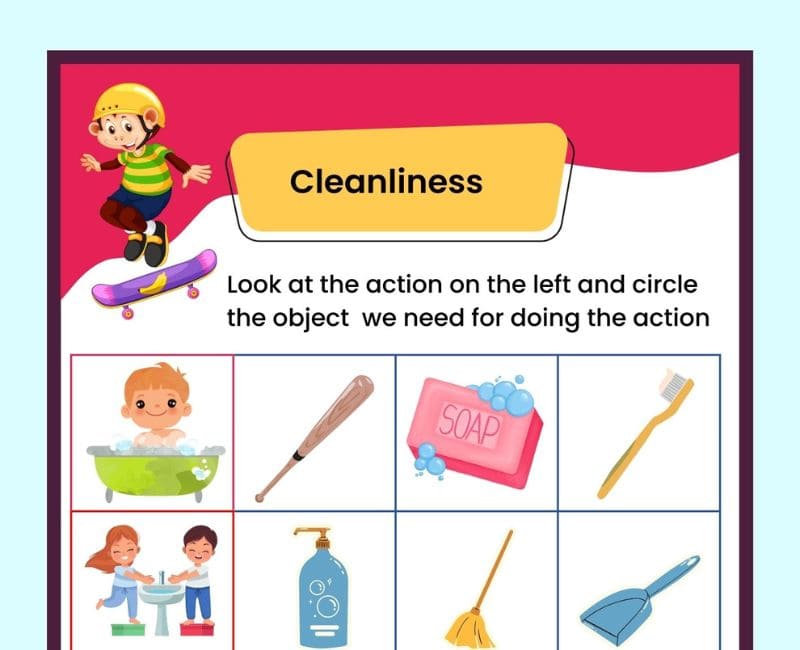
Little Hands, Big Clean Habits!
Wash, brush, tidy and learn! Try 20 quiz questions and 10 online games and activities below.
⬇ Scroll down for colourful quizzes, matching, tracing and games!
📝 Cleanliness and Hygiene Quiz for Nursery
20 questions: 5 easy, 7 average and 8 thinking questions. An adult can read aloud. The 20-minute timer starts with your first answer or question change.
Question 1 of 20 • Easy • Answered 0/20
What do we use with water to wash our hands?
Question navigation — green means answered.
🎮 Cleanliness and Hygiene Online Games for Nursery
Explore a hygiene kit, match objects, sort habits and arrange handwashing steps. Choose one game at a time.
1. Explore the Hygiene Kit
Tap a picture or its name to learn how we use it.
Ready to play!
2. Match Object and Use
Choose an object, then tap what we use it for.
Ready to play!
3. Helpful Habit Sort
Choose an action. Sort it into a helpful habit or an action to change.
Ready to play!
4. Hygiene Memory
Find two cards showing the same hygiene object.
Find the matching pictures.
5. Handwashing Steps
Arrange the steps: wet, soap, scrub, rinse and dry. Scrub real hands for at least 20 seconds.
Start by wetting your hands.
🎨 Cleanliness and Hygiene Online Activities for Preschool
Trace words, draw a smile, tidy a room, count bubbles and make a practice checklist. Activity buttons stack on phones.
6. Trace Hygiene Words
Pick a word and trace its pale letters with your finger or mouse. One red pen keeps it simple.
Trace SOAP with the red pen.
7. Draw a Happy Smile
Trace the face outline and draw a smile. Use the blank board to create your own picture.
Ready to play!
8. Build a Tidy Room
Add a toy box, book shelf, clothes basket and bin to organise the picture.
Ready to play!
9. Count the Soap Bubbles
This is a counting game. Select exactly the requested number of bubbles. It does not replace washing real hands.
Select 2 bubbles. You have 0.
10. My Practice Checklist
Pretend you are planning a clean and tidy day. Tap a habit to add a tick. Then practise the real habit with an adult.
0 of 6 habits added to your practice plan.
📄 Cleanliness and Hygiene Worksheet for Nursery
Use the existing worksheet download near the top of this page for printable practice. The online quiz and activities below support the same everyday habits.
Read about cleanliness and hygiene for nursery ▾
A cleanliness and hygiene worksheet for nursery helps children recognise simple ways to care for themselves and their surroundings. Familiar pictures of soap, a toothbrush, a towel, a comb and a bin make the topic easy to discuss. Begin with a habit the child already practises, such as washing hands before a snack or putting toys away after play.
Personal hygiene activities for preschool work best with short instructions and adult modelling. Show a child how to use soap and clean, running water, rub all parts of the hands, rinse and dry. Scrubbing should last at least 20 seconds. Practise the routine together before expecting a young child to remember each step independently.
The nursery cleanliness quiz contains 20 questions. Five easy questions introduce useful objects, seven average questions connect habits with daily situations, and eight thinking questions ask children to choose a sensible action. Read each question aloud and allow pointing or spoken answers. The difficulty belongs to nursery learning: children are choosing between familiar actions, rather than explaining scientific terms.
The cleanliness online games add a different kind of practice. Children explore a hygiene kit, match objects with their uses, sort helpful habits, remember picture pairs and arrange handwashing steps. The hygiene online activities then offer word tracing, a smile drawing board, a tidy-room builder, bubble counting and a pretend practice checklist. Bubble counting is a number game; tapping bubbles does not replace washing real hands.
Use the printable hygiene worksheet for colouring, picture recognition and conversation, followed by one or two games. Invite the child to explain an answer: “Why does the wrapper belong in a bin?” or “What should we do after using the toilet?” A comfortable learning session can end with practising one real habit together.
Keep personal cleanliness and tidiness connected without treating them as identical. Handwashing, toothbrushing and drying with a clean towel are personal care routines. Returning books to a shelf and keeping toys off the floor help organise shared spaces. Young children can help with simple tasks while an adult handles cleaning products and anything sharp or unsafe.
For the next step, try the kindergarten cleanliness worksheet or Class 1 good habits worksheets. The links below include related learning across grades. Choose the level that suits the child; higher-grade resources are for later extension.
Frequently Asked Questions
What is cleanliness for nursery children?
It means practising simple care routines, such as washing hands, brushing teeth, wearing clean clothes and putting litter in a bin.
How can I teach personal hygiene without long explanations?
Use pictures, show one action and let the child practise with you. Talk about the habit at the time it is needed, such as before eating.
How long should children scrub their hands?
Scrub with soap for at least 20 seconds, including the backs of the hands and between the fingers. Then rinse with clean, running water and dry.
Can children use these hygiene games before they can read?
Yes. An adult can read the instructions and options aloud while the child recognises pictures and taps choices.
Do the online games replace real hygiene practice?
No. They help children recognise routines. Practise real handwashing and other personal care habits with adult support.
Where is the printable cleanliness worksheet?
Use the worksheet download already provided near the top of this page. The interactive code adds online practice.
Are the higher-grade links meant for nursery children?
They are optional next steps for teachers, parents and older learners. Start with nursery or kindergarten resources and move on when appropriate.
 Download