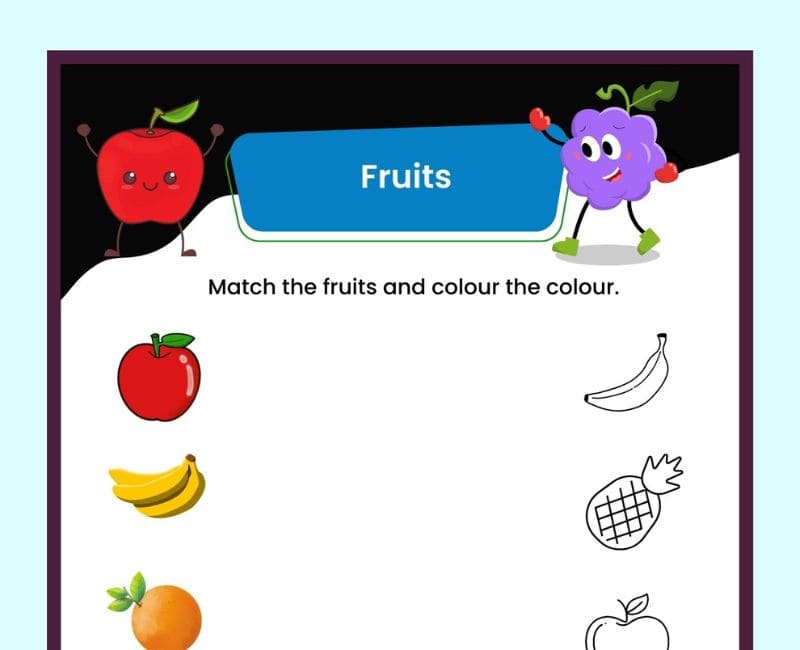
A Basket Full of Learning!
Meet familiar fruits and vegetables through pictures and play. 20 quiz questions and 10 online games and activities are waiting below.
⬇ Scroll down to match, sort, count, trace and draw!
📝 Fruits and Vegetables Quiz for Nursery
20 questions: 5 easy, 7 average and 8 thinking questions. Name pictures, notice shapes and colours, and solve simple sorting stories. An adult can read aloud. The 20-minute timer starts with your first answer or question change.
Question 1 of 20 • Easy • Answered 0/20
What is this fruit called?
Question navigation — green means answered.
🎮 Fruits and Vegetables Online Games for Nursery
Explore picture cards, match names, sort two baskets, find memory pairs and arrange a carrot-growing story.
1. Explore the Produce Basket
Tap a picture or its name to explore a fruit or vegetable.
Ready to play!
2. Match Picture and Name
Choose a picture, then tap its name.
Ready to play!
3. Two Sorting Baskets
Sort these familiar foods into a fruit basket or a vegetable basket.
Ready to play!
4. Fruit and Veg Memory
Find matching pairs of fruit and vegetable pictures.
Find the matching pictures.
5. Grow a Carrot Story
Arrange this simple growing story. Real plants need time, water and suitable growing conditions.
Begin by sowing the seed.
🎨 Fruits and Vegetables Online Activities for Preschool
Trace words, draw a carrot, make a fruit bowl, count vegetable pictures and shop from a little picture list.
6. Trace Fruit and Veg Words
Pick a word and trace its pale letters with your finger or mouse. One red pen keeps it simple.
Trace APPLE with the red pen.
7. Draw a Carrot
Trace the pale carrot guide with the red pen, or draw your favourite vegetable on a blank board.
Ready to play!
8. Make a Fruit Bowl
Add four fruit pictures to a pretend bowl. This is a picture activity, not a serving-size guide.
Ready to play!
9. Count the Carrots
Tap exactly the requested number of carrot pictures. Tap again to remove a choice.
Choose 3 carrots. You have 0.
10. Picture Shopping List
Read the little picture list with an adult. Collect one of each listed food. Foods not on the list stay in the shop.
Shopping list: 🍎 Apple • 🥕 Carrot • 🍌 Banana • 🫛 Peas
🛒
0 of 4 listed foods in your basket.
📄 Fruits and Vegetables Worksheet for Nursery
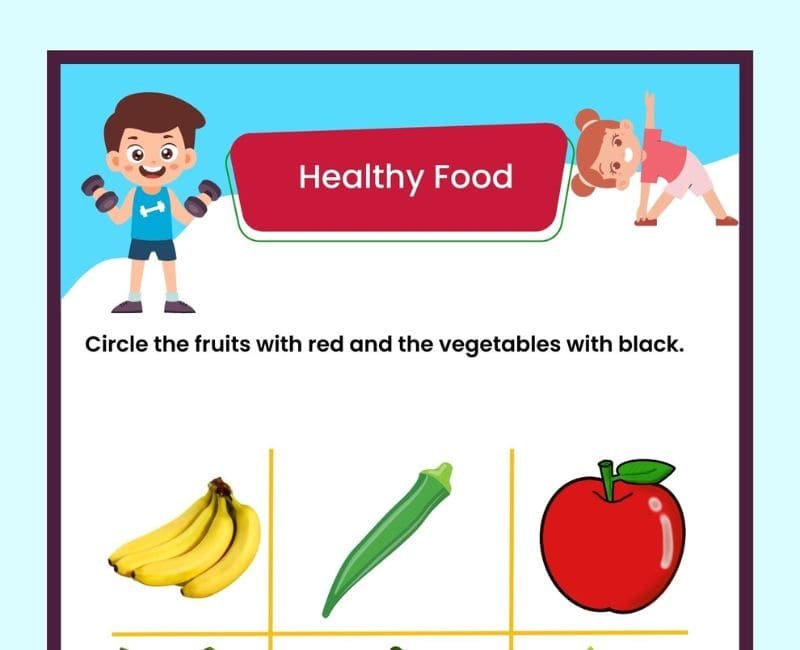
Use the existing worksheet download near the top of this page for printable practice. Then try the online quiz, games and tracing activities.
Read about this fruits and vegetables worksheet ▾
A fruits and vegetables worksheet for nursery helps young children connect familiar foods with pictures and names. Begin with a small selection: apple, banana, orange, carrot, peas and broccoli. Children can point to a picture, say its name and describe what they notice. Naming a few familiar foods confidently is more useful than rushing through a long list.
Picture recognition, sorting and matching are natural starting points for preschool EVS. Ask children to find two fruits, place a carrot in a vegetable basket or match an apple picture with its name. Use everyday food groups for this nursery lesson. More detailed plant science, including the difference between botanical and cooking categories, can come later.
Colours and shapes add another way to explore. The apple picture may be red, while real apples can have other colours. A banana is curved, peas are small and round, and a carrot tapers towards its tip. Encourage children to describe the actual picture or object in front of them. They can use their own colour choices during drawing and colouring.
The fruits and vegetables online quiz contains 20 questions. The first five practise naming pictures, the next seven use colour, shape and grouping clues, and the final eight ask children to solve a short everyday problem. These thinking questions stay at nursery level, such as finding the food that belongs in a basket or choosing a carrot from a shopping list.
Ten online games and activities give children several ways to practise. They can explore a food basket, match picture names, sort fruits and vegetables, find memory pairs and arrange a simple growing story. The creative activities include five tracing words, a carrot drawing board, a fruit-bowl builder, vegetable counting and a picture shopping game. Activities open one at a time to keep the page manageable on phones.
Use the printable worksheet for identifying, matching and colouring fruits and vegetables, then choose a short online task. An adult can read the questions aloud or model one match before the child takes a turn. During tracing, the red pen, Undo and Clear buttons allow repeated practice while the pale word guide stays visible.
Connect the lesson with ordinary experiences. Let a child name foods in a family shopping basket, describe the vegetables in a cooked meal or compare two pictures. Adults should handle food preparation and any cutting. The online bowl and shopping activities use pictures; they do not set real serving sizes or a meal plan.
Continue with the nursery fruits colouring worksheet and the Hindi and English fruit and vegetable names chart. The related links below include the same topic for Kindergarten and Class 1, plus food and plant topics for older learners.
Frequently Asked Questions
Which fruits and vegetables should nursery children learn first?
Start with familiar examples such as apple, banana, orange, carrot and peas. Add local foods the child sees at home or in the market.
How do I teach sorting before a child can read?
Show two example pictures, say “fruit” and “vegetable,” then invite the child to place or tap another picture in its matching group.
Are fruit and vegetable colours always the same?
No. Apples and grapes, for example, can have different colours. Discuss the colour of the picture or real object you are showing.
Can children use these games on a phone?
Yes. Activity buttons stack on small screens. Children can tap pictures and use a finger on the tracing and drawing boards.
Where can I download the printable worksheet?
Use the worksheet download already provided near the top of this page. The quiz and games add online revision.
Should nursery children learn botanical fruit categories?
Begin with familiar everyday food groups. Detailed botanical categories are a later science topic.
How can I extend this topic for older children?
Use the grade-labelled links to explore food groups, uses of plants and plant parts. Choose the resource that matches the learner’s grade.
 Download