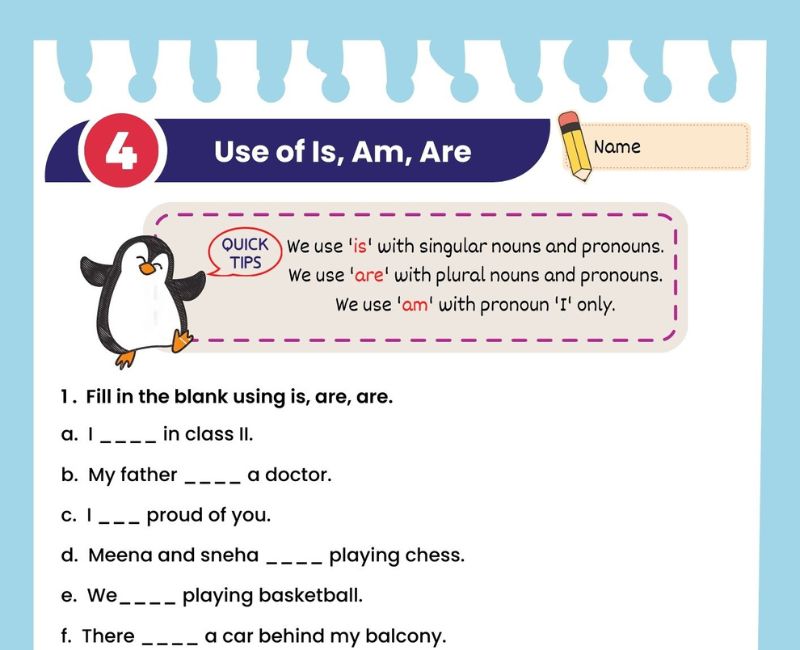
Is Am Are Worksheet with Online Activities and Quiz
Discover the right word for every subject. Explore picture clues, build sentences, change a growing garden and practise speaking through meaningful grammar games.
Explore an is am are worksheet for Class 2 with online quiz and online activities. Practise subject matching, picture sentences, questions and negatives through sentence building, listening, memory games and practical grammar tasks. Use the worksheet download already provided on this page for paper practice.
1. Asha is speaking about herself. Complete her speech bubble.
Listen to this question and its answer choices.
You can return to any question and change your answer.
Subject sorting station
Learning goal: Choose a verb from the complete subject.
- Read the subject card.
- Tap the matching station: am is or are. Sort all eight cards.
I → ___
Your turn!
You means one or many
Learning goal: Use are with both meanings of you.
- Read each speaker label. One scene addresses one person and the other addresses a group.
- Tap the blank in each speech bubble to choose its verb.
Your turn!
Read the grammar guide
Is am and are are present forms of the verb be. They help us describe people, animals, objects, feelings and places. They can also help an ing verb: I am drawing.
| Subject | Use | Example |
|---|---|---|
| I | am | I am a reader. |
| He She It | is | She is helpful. |
| One named person animal or thing | is | The rabbit is small. |
| You | are | You are welcome. |
| We They | are | We are together. |
| Plural nouns | are | The rabbits are small. |
| Two people joined by and | are | Asha and I are friends. |
Important: You takes are even when you speak to one person. I takes am when I is the whole subject. In Asha and I are friends the subject means two people.
Questions
Move the form of be before the subject: She is ready. → Is she ready? They are outside. → Are they outside?
Negatives
Put not after the verb: I am not tired. The dog is not wet. We are not late.
Short forms
I am can become I’m. Is not can become isn’t. Are not can become aren’t. In a positive short answer write Yes, I am. rather than Yes, I’m.
Look at the whole subject
The children are here uses are because children is plural. The box of toys is heavy uses is because the subject is one box. Do not choose the verb only by looking for a nearby word ending in s.
Revisit the singular and plural nouns worksheet for Class 2 for more practice identifying one and many.
Teaching Tips for Parents and Teachers
Find the subject before choosing the verb
Ask who or what the sentence is about. Say the whole subject aloud before choosing am is or are.
Teach you are as its own pattern
Point to one listener and say You are ready. Address a group and repeat You are ready. The number changes but the verb stays are.
Move objects to make the rule visible
Place one pencil on the table and add another. Compare The pencil is here with The pencils are here.
Practise complete sentences aloud
Encourage children to say I am happy rather than only am. Ask Are you happy? and practise Yes, I am.
Review creative work together
Check the subject and verb first. Then check meaning, capitals and sentence endings. Creative tasks can have several correct answers.
Related English Grammar Worksheets
- Noun worksheet for Class 2
- Common and proper nouns worksheet for Class 2
- Capital letters and punctuation worksheet for Class 2
- Was and were worksheet for Class 2
- Adjectives worksheet for Class 2
- Has and have worksheet for Class 2
- Articles a an the worksheet for Class 2
- Singular and plural nouns worksheet for Class 2
- Noun worksheet for Class 1
- Doing words worksheet for Class 1
- Common collective and proper nouns worksheet for Class 3
- English grammar question paper for Class 2
Frequently Asked Questions
What is the rule for is am and are?
Use am with I. Use is with he she it and a singular noun. Use are with you we they and plural nouns.
Why do we use am with I?
Am is the present form of be that matches I when I is the whole subject: I am ready. Learn I am as a word partnership.
Do we say you is or you are?
Say you are. This remains correct when you address one person or several people.
Do names take is or are?
One person’s name takes is: Meera is here. Two separate people joined by and take are: Meera and Ravi are here.
Is it my friend and I am or my friend and I are?
Use my friend and I are because the whole subject refers to two people. Use I am when I is the subject on its own.
Does children take is or are?
Children takes are because it is plural: The children are happy. One child takes is.
How do we make questions with is am and are?
Put the verb before the subject: Is she ready? Are they outside? Am I next? Finish a direct question with a question mark.
How do we make negative sentences?
Put not after am is or are: I am not late. He is not angry. They are not tired.
Are is am and are always helping verbs?
They can be main verbs as in I am happy. They can also be helping verbs before an ing form as in I am reading.
What are the short forms of is am and are?
Examples include I’m for I am, she’s for she is, we’re for we are and they’re for they are. Isn’t means is not and aren’t means are not.
What is the difference between is am are and was were?
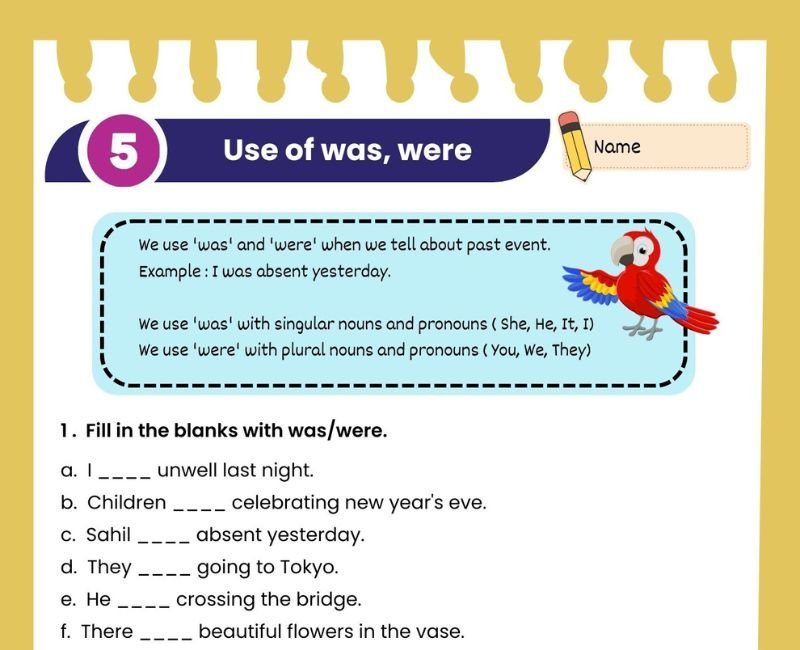
Is am and are are present forms of be. Was and were are past forms. Compare I am at home now with I was at home yesterday.
How can children practise is am and are at home?
Describe one object and then a group, introduce a toy character, ask simple questions and write short captions. Encourage children to explain their verb choices.
Photo credit and grammar references
Cat photograph by Alvesgaspar via Wikimedia Commons, licensed under CC BY SA 3.0. Displayed at a reduced size without cropping or other editing. Diagrams are original illustrations.
References: British Council verb be practice for children and British Council present simple be guidance.
 Download