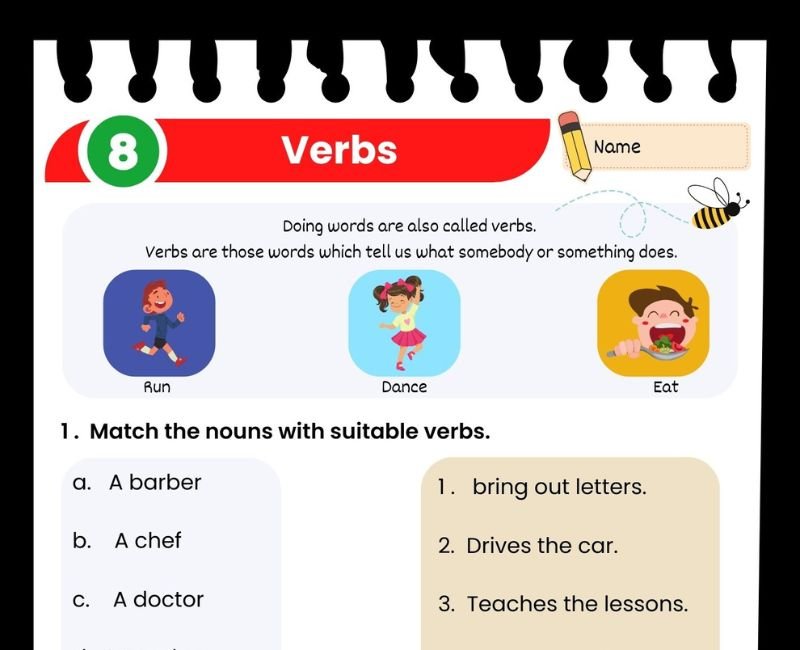
Verbs Worksheet for Class 2
Find the action. Build the sentence. Explore doing words through pictures, command games and practical language workshops.
Explore a verbs worksheet for Class 2 with online quiz and online activities. Practise action words, doing words, sentence formation and simple verb forms through pictures, memory games and useful instructions. Use the worksheet download already provided on this page for paper practice.
1. Find the action word: The squirrel climbs a tree.
0 of 20 answered
You can return to any question and change your answer.
Sentence sorting station
Learning goal: Use sentence context to separate verbs nouns and adjectives.
- Read the sentence and the highlighted word.
- Tap Verb Noun or Adjective. Complete six cards.
The duck paddles.
Your turn!
Four verb discoveries
Learning goal: Learn that verbs have several useful jobs.
- Open the four discovery cards.
- Read the examples and explain one new fact to a partner.
Quiet verbs still count
Think listen and sleep are verbs. An action need not be a big visible movement.
Being and having
She is ready. She has a ticket. Is and has are verbs too.
Helping and main verbs
We are painting. Are is the helping verb and painting is the main verb. Notice the whole verb phrase.
The sentence decides
I plant a seed. Plant is a verb. The plant is tall. Plant is a noun.
Your turn!
Verbs Learning Guide
📖 Read the verbs guide
A verb can tell an action or a state. In The artist paints, paints tells what the artist does. Action verbs are often called doing words.
Some verbs do not name visible movement. I am ready uses am to show being. Tara has a pencil uses has to show possession.
For everyday routines compare I fold, we fold and she folds. Many action verbs take s or es with he, she, it or one named person in affirmative simple present sentences.
In They are painting, are helps the main verb painting. The complete verb phrase is are painting.
💡 Teaching Tips for Parents and Teachers
Build understanding through examples
Find the subject and ask what the verb tells you. Begin with familiar actions and introduce being, having and helping verbs using complete sentences.
Connect screen practice with real learning
Say your sentence aloud. Act, observe or draw where useful. Ask the child to explain the word choice instead of only naming an answer.
Review creative work together
Check meaning, grammar, capitals and sentence endings. Original writing is recorded on screen for review, not automatically marked as correct.
💬 Frequently Asked Questions
What is a verb for Class 2?
A verb can tell an action or a state. In The child waves, waves tells an action. In The child is happy, is links the child to a description.
What are action words or doing words?
They are verbs that tell what someone or something does. Examples include carry, draw, clap and listen. Some actions are quiet or happen in the mind.
What are 10 examples of verbs?
Walk, clap, carry, draw, read, write, listen, think, help and sleep are ten useful examples.
How do children identify a verb in a sentence?
Read the whole sentence. Ask what the subject does or what the sentence says about its state. The gardener digs uses digs. The soil is wet uses is.
What is the difference between a noun and a verb?
A noun names a person, place, animal or thing. A verb can tell an action or state. In The artist paints, artist is a noun and paints is a verb.
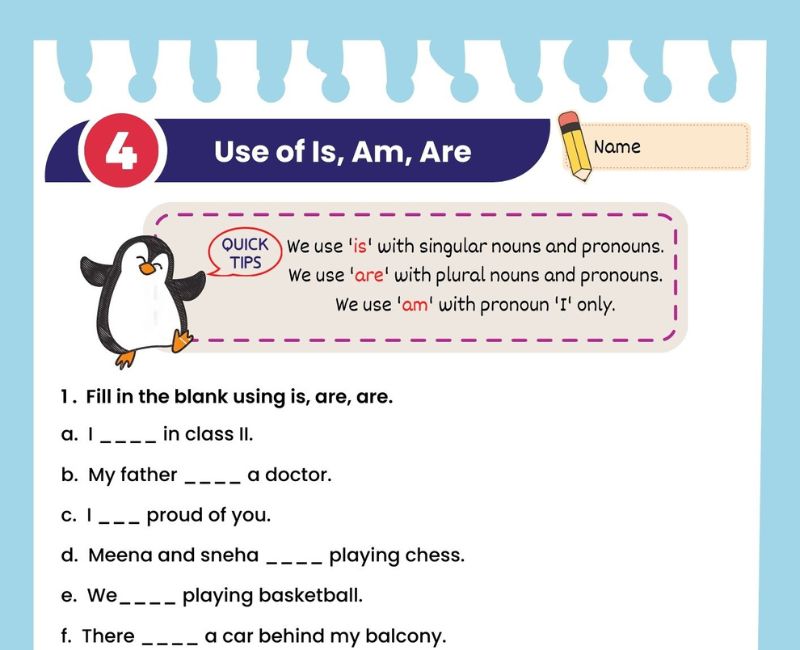
Are is am and are verbs?
Yes. They are forms of be. They can show being, as in I am ready, or help a main verb, as in I am drawing.
Are has and have verbs?
Yes. They can show possession. Compare She has a notebook with We have notebooks.
When do we add s or es to a verb?
In affirmative simple present sentences most action verbs take s or es with he, she, it or one named person. I help but she helps. We wash but he washes. Some verbs have special forms such as have and has.
What is a helping verb?
A helping verb works with a main verb. In They are painting, are is the helping verb and painting is the main verb. The whole verb phrase is are painting.
Can a word be both a noun and a verb?
Yes. Its job depends on the sentence. I paint a picture uses paint as a verb. The paint is blue uses paint as a noun.
What is the difference between a verb and an adjective?
An adjective describes a noun or pronoun. A verb can tell an action or state. In The cheerful child sings, cheerful is an adjective and sings is a verb.
How can I teach verbs through games?
Use action guessing, picture matching, command games and sentence building. Ask children to say a complete sentence and explain which word is the verb.
Photo credits and grammar references
Milada Vigerova duck photograph via Wikimedia Commons · CC0.
 Download