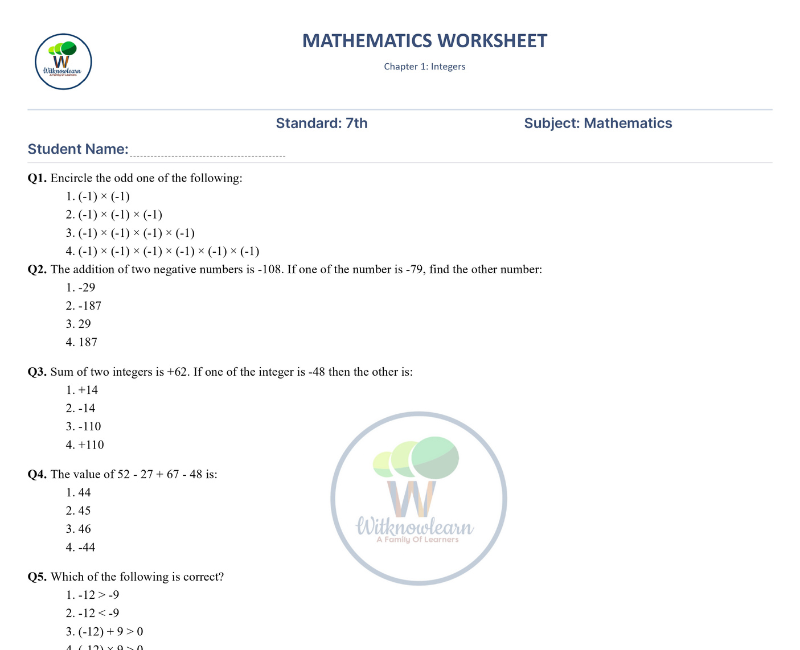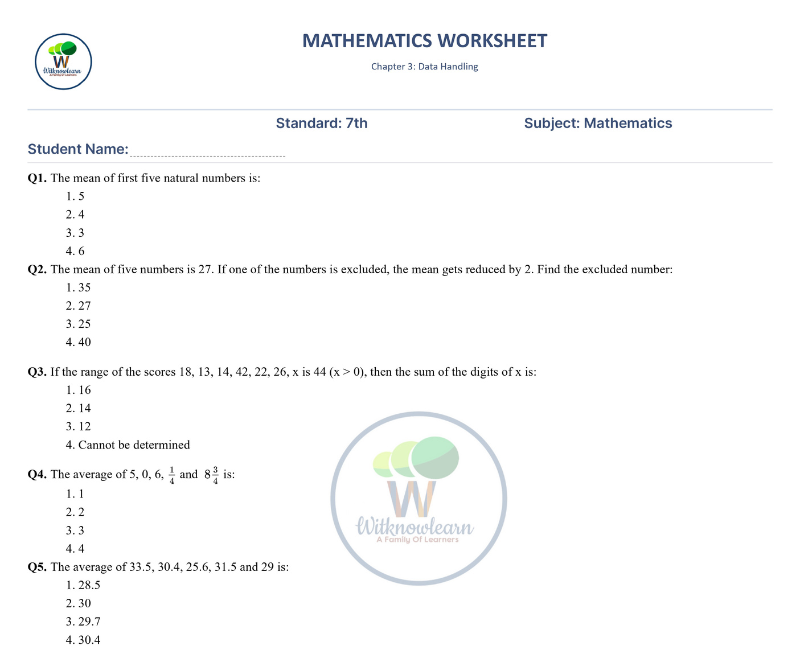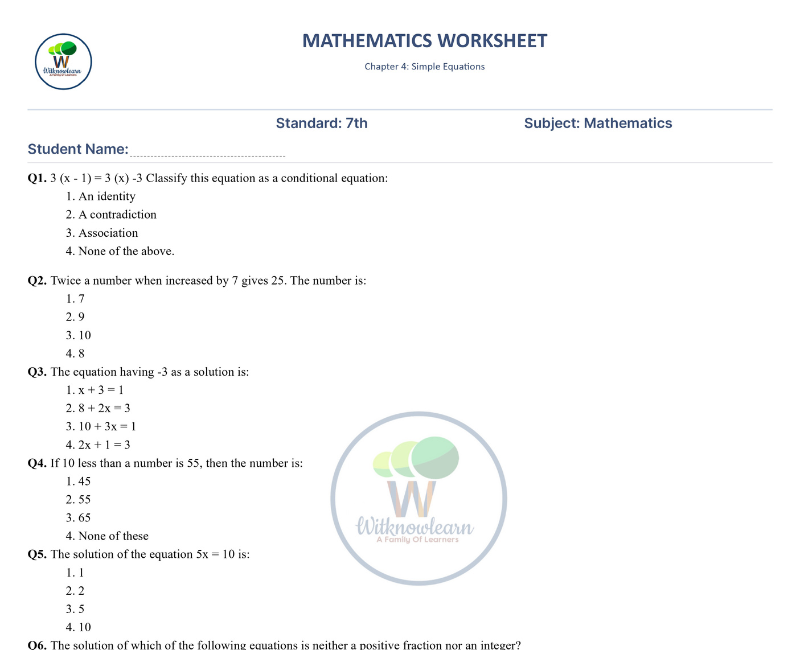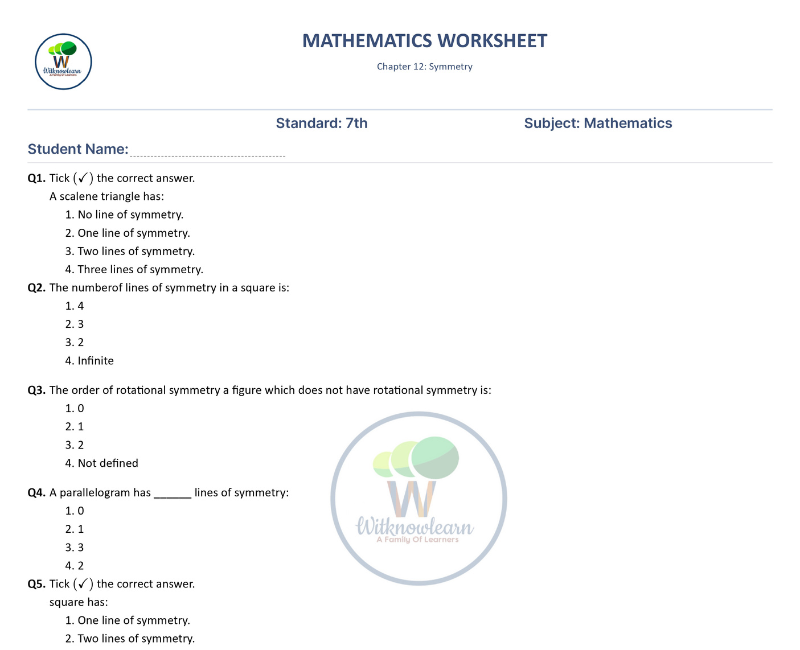
Class 7 Maths · Symmetry Worksheet
Symmetry Class 7 Worksheet with Online Quiz, Games and Activities
Why does a butterfly look the same on both sides, and how many times does a square fit onto itself in one turn? Find out with this Symmetry worksheet for Class 7 Maths: take the Symmetry Class 7 online quiz, paint mirror images in hands-on activities, try three maths experiments in the Virtual Lab and play interactive games online.
Flip the cards and try the Mirror Fold Lab, then tap the Games, Labs, Challenges or Virtual Lab button.
Symmetry Class 7 Online Quiz
20 questions · tap an answer to move on · full review at the end
A line that divides a shape into two matching mirror halves is called a:
Flip the cards, try the Mirror Fold Lab, then play the games, do the labs and take the challenges. Earn up to 3 stars in every activity.
Fact cards: tap a card to flip it
Mirror Fold Lab
Three mirror puzzles to solve with your hands. Drag across the right half of the grid to paint the mirror image of each picture, then press Check. A wrong choice shows what goes wrong, so you can try again.
🔷 Case 1 of 3 · 🦋 Reflect the first picture: The grey and blue squares on the left are fixed. The red dashed line is the mirror. Paint the mirror image on the right, then press Check.
Drag across the right half to paint. Tap a painted square to rub it out.
- 🔷Case 1: 🦋 Reflect the first picture
Paint the reflection, then check. - ⬜Case 2: 🏠 Reflect the second picture
Waiting… - ⬜Case 3: 🎈 Reflect the third picture
Waiting… - ⬜What did we find?
Solve all 3 cases to unlock.
Challenge marks: 0 / 15 (0 of 5 challenges done)
Finish all 5 challenges to see your comment.
Virtual Lab: do real experiments step by step
Folding Paper Shapes
🎯 Aim
To find the lines of symmetry of shapes by folding paper cut-outs.
📘 Learning objectives
- Cut out a rectangle, a square and a triangle.
- Fold each so that the two halves match.
- Count the fold lines.
🧰 Materials needed
⚠️ Safety first
Use blunt safety scissors and cut away from your body.
🔬 Procedure: do each step yourself
- Fold the rectangle so that the halves match.
- Fold the square in every way that matches.
- Fold the equilateral triangle.
Step 1: Fold the rectangle so that the halves match.
📋 Observation table: fill in what you saw
| Shape | Lines of symmetry |
|---|---|
| Rectangle | |
| Square | |
| Equilateral triangle |
✍️ Conclusion
What does a line of symmetry do?
🏁 Learning outcomes
After this experiment I can:
- ✅ find lines of symmetry by folding
- ✅ count lines in common shapes
- ✅ link folding to mirror lines
🎉 Lab report complete!
Mirror on Letters
🎯 Aim
To see which letters look the same in a mirror line.
📘 Learning objectives
- Place a small mirror on the letters.
- Check if the letter and its image match.
- Note the direction of the mirror line.
🧰 Materials needed
⚠️ Safety first
Use a plastic mirror and keep it flat on the table.
🔬 Procedure: do each step yourself
- Stand the mirror down the middle of A.
- Lay the mirror across the middle of B.
- Try the mirror on F in every direction.
Step 1: Stand the mirror down the middle of A.
📋 Observation table: fill in what you saw
| Letter | Mirror line |
|---|---|
| A | |
| B | |
| F |
✍️ Conclusion
When does a letter have line symmetry?
🏁 Learning outcomes
After this experiment I can:
- ✅ test letters with a mirror
- ✅ name vertical and horizontal lines
- ✅ spot shapes with no line
🎉 Lab report complete!
Turning Cut-outs
🎯 Aim
To find the angle of rotation of shapes by pinning and turning them.
📘 Learning objectives
- Pin a cut-out at its centre.
- Turn it until it fits its outline.
- Note the smallest turning angle.
🧰 Materials needed
⚠️ Safety first
Handle the pin with care and stick it back in the board after use.
🔬 Procedure: do each step yourself
- Turn the square until it fits its outline.
- Turn the rectangle until it fits.
- Turn the triangle until it fits.
Step 1: Turn the square until it fits its outline.
📋 Observation table: fill in what you saw
| Shape | Smallest turn |
|---|---|
| Square | |
| Rectangle | |
| Equilateral triangle |
✍️ Conclusion
How do you find the angle of rotation?
🏁 Learning outcomes
After this experiment I can:
- ✅ find the angle of rotation
- ✅ link order and angle
- ✅ compare shapes by turns
🎉 Lab report complete!
Practice sheet
Type your answers in the boxes. For word answers write in small letters. Press Check when you finish.
AName it
BWrite yes or no
CComplete the sentence
DWrite the number
Symmetry Class 7 Activities
Paint the mirror image in the Mirror Fold Lab, sort letters and shapes by their symmetry, place a mirror line, tap the true lines of symmetry, turn shapes until they fit and colour pattern wheels, then fold paper and use a mirror in the Virtual Lab. Earn up to 3 stars in every activity.
What is symmetry?
A shape has symmetry when it looks the same after it is folded, flipped or turned. Butterflies, leaves, snowflakes, clocks and many letters of the alphabet are symmetrical. Symmetry is used in art, buildings, rangoli and logos because balanced designs are pleasing to look at.
Line symmetry
A shape has line symmetry if a straight line can divide it into two halves that are exact mirror images. That line is called the line of symmetry or axis of symmetry. If you fold the shape along the line, both halves fit exactly on each other. The letter A has one vertical line of symmetry. The letter H has two, one vertical and one horizontal. The letter F has none.
An isosceles triangle has 1 line of symmetry and an equilateral triangle has 3. A rectangle has 2 lines, a rhombus has 2 lines (its diagonals), a square has 4 and a circle has countless lines through its centre. A scalene triangle and a parallelogram have no line of symmetry. A regular polygon with n sides has n lines of symmetry, so a regular hexagon has 6.
Reflection and mirror image
When a shape is reflected in a mirror line, every point and its image are the same distance from the line, on opposite sides. The left becomes the right but the size and shape stay the same. This is why a mirror image of a letter looks flipped. In the Mirror Fold Lab you paint the right half of a picture as the mirror image of the left half.
Rotational symmetry
A shape has rotational symmetry if it looks the same after it is turned less than a full turn about a fixed point called the centre of rotation. The number of times it fits onto itself during one full turn of 360° is its order of rotation. A square fits 4 times, so its order is 4. An equilateral triangle has order 3 and a rectangle has order 2. Every shape fits once after 360°, so a shape with order 1 has no rotational symmetry.
Angle of rotation
The smallest turn that makes a shape fit onto itself is the angle of rotation. Angle of rotation = 360° ÷ order. For a square, 360° ÷ 4 = 90°. For an equilateral triangle it is 360° ÷ 3 = 120°. For a regular hexagon it is 360° ÷ 6 = 60°.
Both kinds of symmetry
Some shapes have both. The letter H has two lines of symmetry and order 2. The letter O has many of both. Some shapes have only one kind. The letters N, S and Z have rotational symmetry of order 2 but no line of symmetry. The letters A and E have line symmetry but no rotational symmetry. The letters F and P have neither.
This Symmetry worksheet for Class 7 Maths brings the topic to life on WitKnowLearn with an online quiz, online activities and interactive games. Students paint reflections, drag mirror lines, slide shapes round and colour wheels with their own hands, then try three maths experiments in the Virtual Lab.
Symmetry Class 7 Maths Guide
Symmetry is a key topic of Class 7 Maths. It covers line symmetry, lines of symmetry in common shapes, reflection in a mirror line, rotational symmetry, the order and angle of rotation, and shapes with both kinds of symmetry. This guide explains each idea clearly for Class 7 students, parents and teachers. It goes with the Symmetry Class 7 worksheet on WitKnowLearn, which also has an online quiz, online activities, interactive games and a Virtual Lab on the same page.
What is there in this topic
- Line symmetry and the line of symmetry
- Lines of symmetry in triangles, quadrilaterals and polygons
- Mirror reflection
- Rotational symmetry and the centre of rotation
- Order and angle of rotation
- Symmetry in letters and patterns
Learning objectives
- Find lines of symmetry of a shape.
- Draw the mirror image of a figure.
- Find the order of rotational symmetry.
- Find the angle of rotation.
- Classify letters and shapes by their symmetry.
Learning outcomes
After this page a student can name the kind of symmetry a shape has, count its lines of symmetry and find its order and angle of rotation.
Key terms
| Term | Meaning |
|---|---|
| Line of symmetry | A line that divides a shape into two matching halves |
| Reflection | The mirror image of a shape |
| Centre of rotation | The fixed point a shape turns around |
| Order of rotation | How many times a shape fits onto itself in a full turn |
| Angle of rotation | The smallest turn that makes the shape fit |
Common mistakes
| Mistake | Correct |
|---|---|
| A parallelogram has 2 lines of symmetry | It has none, though it has rotational symmetry of order 2. |
| A rectangle has 4 lines | A rectangle has only 2. Its diagonals are not lines of symmetry. |
| Order 1 means rotational symmetry | Order 1 means the shape only fits after a full turn, so it has none. |
Daily life
Wings, flowers, rangoli, logos, bridges, windows, fans and wheels all use line or rotational symmetry.
Tips for parents and teachers
- Fold paper cut-outs to find lines.
- Use a small mirror on letters.
- Pin a cut-out and turn it to find the order.
- Look for symmetry in leaves and rangoli.
- Let students retry the challenges to earn 3 stars.
Related Class 7 Maths Worksheets
- Integers Class 7 Worksheet
- Fractions and Decimals Class 7 Worksheet
- Data Handling Class 7 Worksheet
- Simple Equations Class 7 Worksheet
- Lines and Angles Class 7 Worksheet
- Triangle and Its Properties Class 7 Worksheet
- Comparing Quantities Class 7 Worksheet
- Rational Numbers Class 7 Worksheet
- Perimeter and Area Class 7 Worksheet
- Algebraic Expressions Class 7 Worksheet
- Exponents and Powers Class 7 Worksheet
- Visualising Solid Shapes Class 7 Worksheet
Frequently Asked Questions
1What is symmetry in Class 7 Maths?
A shape has symmetry when it looks the same after it is folded, flipped or turned. Line symmetry and rotational symmetry are the two kinds studied in Class 7.
2What is a line of symmetry?
A line of symmetry divides a shape into two halves that are exact mirror images. If you fold along it, both halves match.
3How many lines of symmetry do common shapes have?
An isosceles triangle has 1, a rectangle 2, a rhombus 2, an equilateral triangle 3, a square 4 and a regular hexagon 6. A scalene triangle and a parallelogram have none.
4What is rotational symmetry?
A shape has rotational symmetry if it fits onto itself after a turn of less than 360° about its centre. The number of fits in a full turn is its order.
5How do you find the angle of rotation?
Divide 360° by the order of rotation. A square has order 4, so its angle is 360° ÷ 4 = 90°.
6Which letters have line symmetry?
A, H, M, O, T, U, V, W, X and Y have a vertical line, and B, C, D, E, H, K, O and X have a horizontal line. F, G, J, L, P, R, S and Z have none.
7What is in the Virtual Lab?
Three maths experiments: folding paper shapes, using a mirror on letters and turning cut-outs. Each has an aim, objectives, materials, safety notes, steps, an observation table, a conclusion and outcomes.
8Does this page have Symmetry Class 7 questions and answers?
Yes. The 20-question Symmetry Class 7 online quiz shows the correct answer and a reason for every question at the end, and the practice sheet has a Show answers button for all 16 questions.
9Which class is this Symmetry worksheet for?
It is made for Class 7 Maths students and covers the symmetry topics taught in Class 7 by most school boards.
10What can students do on this page?
On WitKnowLearn they get an online quiz, online activities and interactive games where they paint mirror images, sort letters and shapes, slide shapes round to find the angle of rotation and colour pattern wheels, plus a Virtual Lab and marked challenges.
11Can students use these activities on a phone?
Yes. All drag and tap activities work with a finger on phones and tablets and with a mouse on computers, and the practice sheet takes typed answers.
12What is included on this page?
A 20-question online quiz, 6 flip cards, the Mirror Fold Lab, 5 games, 5 labs, 5 challenges, a Virtual Lab with 3 experiments, a 16-question practice sheet, a topic guide and links to more Class 7 Maths worksheets.
 Download