Class 1 • Science and EVS • Choose Clothes for the Day
👕 Why Do We Wear Clothes Class 1 Worksheet
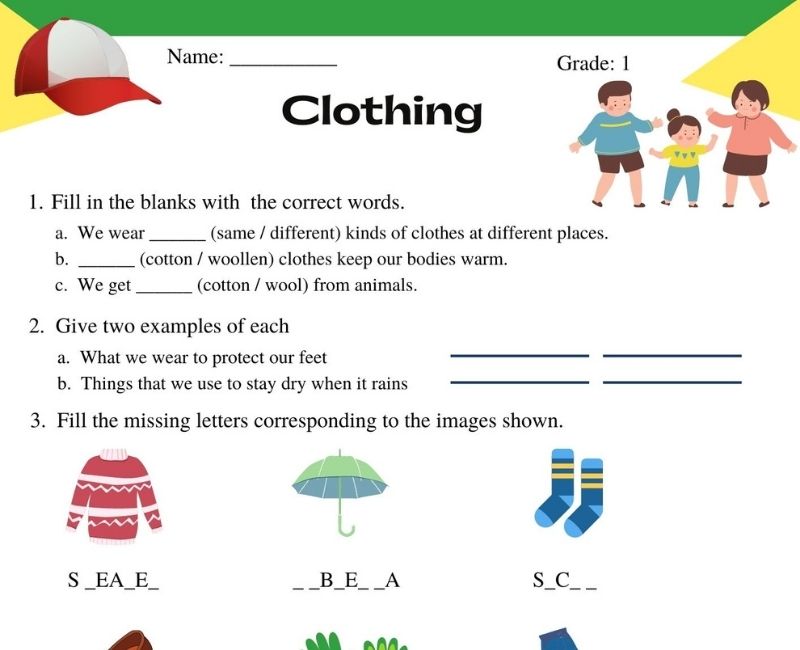
Pack for sunshine, dress for a cold day and investigate rainwear. This Why Do We Wear Clothes Class 1 worksheet includes an online quiz, 10 games and activities and five practice tasks about weather, clothing materials, uniforms and caring for clothes.
📝 Why Do We Wear Clothes Online Quiz for Class 1
Question 1/20 • Answered 0/20
Which is an important reason for wearing clothes?
🎮 Clothes We Wear Online Games for Class 1
Pack a warm-day outfit, dress a winter model, investigate virtual fabrics, build a cotton journey and organise a weather wardrobe.
1. 🧳 Pack a Warm-Day Outfit
Pack exactly three items: one light top, one light bottom and a sun hat. Choose shorts or lightweight trousers.
Ready to play!
2. ❄️ Dress the Winter Model
The model already wears a base outfit. Add a warm cap, winter coat, gloves and winter boots for this pretend cold snowy day.
Ready to play!
3. 💧 Investigate Three Fabric Samples
Test all three pretend samples. Read each result, then record whether water passes through or stays outside. These are invented sample results.
Not tested yet.
Not tested yet.
Not tested yet.
Ready to play!
4. 🌿 Build a Cotton-to-Shirt Journey
Arrange the cards for this simplified journey: cotton fibre, yarn, fabric, shirt. Tap two cards to swap.
Ready to play!
5. 🗄️ Organise a Weather Wardrobe
For these examples, sort light warm-day items, cold-day items and rain-protection items into their intended groups.
Ready to play!
🧩 Clothing and Weather Online Activities
Arrange clothing-care steps, match clothing clues, change layers with the weather, design a rain cape and pair patterned socks.
6. 🧺 Arrange the Clothing-Care Story
In this story, an adult washes a used shirt according to its care label. Then it dries, is folded and is stored. Arrange those four cards.
Ready to play!
7. 🃏 Match Clothing Clue Pairs
Reveal two cards. Match each item or fibre with its related clue.
Ready to play!
8. 🌤️ Change Layers as the Day Changes
The model wears a base outfit. First add a sweater for a cool morning. Then move to the warm afternoon and remove that extra layer.
🌤️ Cool morning
Ready to play!
9. 🎨 Design a Rain Cape
Choose a colour, material and purpose. Make a rain cape using the waterproof outer material. Any listed colour is acceptable.
Ready to play!
10. 🧦 Pair the Patterned Socks
Tap two socks with the same pattern. Pair all six socks.
Ready to play!
✏️ Five Clothes We Wear Practice Tasks
1. ☀️ Explain a Warm-Day Choice
Choose the useful description of a lightweight breathable shirt.
Ready to play!
2. 🧵 Match Fibre Sources
Match cotton with its plant source and sheep wool with its animal source.
Ready to play!
3. 🌧️ Pack Two Rain-Protection Items
Choose the waterproof outer garment and waterproof footwear.
Ready to play!
4. 🧤 Match Clothing Locations
Match gloves and socks with where they are worn.
Ready to play!
5. 👕 Check the Storage Plan
Choose the clothing-care plan that is ready for cupboard storage.
Ready to play!
📖 Why Do We Wear Clothes Class 1 Worksheet Guide
Read about clothing weather materials uniforms and clothing care
We wear clothes to cover our bodies, provide comfort and help protect us from conditions such as cold, wind, sun and rain. Clothes can also express personal choices and cultural traditions. This Why Do We Wear Clothes Class 1 worksheet connects these ideas with familiar situations. Use the existing worksheet download option on this page for paper practice alongside the online quiz and games.
Begin with the weather a child actually experiences. A lightweight, breathable outfit may suit a warm day, while a colder day may call for warmer layers. Rainwear needs suitable water-resistant or waterproof material. Seasons and temperatures differ between places, so avoid teaching a fixed outfit for every month.
Cotton is a plant fibre used to make many fabrics and garments. A lightweight cotton shirt is a familiar warm-weather example. Wool can come from sheep and is used in warm clothing. The warmth or comfort of a garment also depends on its thickness, construction, fit and other materials, not only its fibre name.
Raincoats and waterproof footwear help keep rain out when their materials and construction are suitable. An ordinary cotton shirt may absorb water, while a waterproof outer material resists water passing through it. Colour alone does not tell us whether a fabric is waterproof. The fabric investigation here uses invented sample results for a virtual activity.
Uniforms are clothing used by some schools, workplaces or groups. Uniform designs differ, and not every person in a job wears the same outfit. Special protective clothing is designed for particular tasks. An ordinary coat is not a substitute for specialised protective equipment.
Clothing care helps garments last. Follow care labels and let adults handle washing equipment, heat and cleaning products. Clothes should be appropriately cleaned and dried before storage. Usable outgrown clothes can sometimes be passed on, repaired or reused rather than thrown away.
These Class 1 clothes we wear activities encourage children to explain a choice using the weather, purpose and properties of an item. Clothing is not restricted to one gender, and families may make different suitable choices. Accept more than one sensible outfit when it meets the stated conditions.
💡 Tips for Learning About Clothes
For Parents and Teachers
- Discuss actual weather rather than a fixed calendar rule.
- Compare fabric properties without assuming colour tells the answer.
- Accept different outfits that meet the same practical need.
- Use clothing-care labels and let adults manage washing equipment and heat.
For Students
- Notice whether the day is warm, cold or rainy.
- Think about the job your clothing needs to do.
- Remember that warm clothing is not always waterproof.
- Keep clean and used clothes organised.
- Check with an adult before using washing or ironing equipment.
- Explain your outfit choice with a useful reason.
❓ Why Do We Wear Clothes Worksheet FAQs
Why do we wear clothes for Class 1?
Clothes cover our bodies, provide comfort and help protect us from weather. They can also express personal choices and cultural traditions.
What clothes are suitable for warm weather?
Lightweight, breathable clothing can be comfortable in warm weather. A light cotton outfit is a familiar example, but fit, thickness and conditions also matter.
Why do we wear warm clothes in cold weather?
Suitable warm layers help reduce the loss of body heat and keep us comfortable.
What do we wear when it rains?
A suitable raincoat and waterproof footwear can help keep rain out. Choose items appropriate for the conditions.
Where do cotton and wool come from?
Cotton fibre comes from cotton plants. Sheep are one source of wool.
Are all coats waterproof?
No. A coat may be warm without being waterproof. Check its material, construction and intended use.
What is a uniform?
A uniform is clothing used by some schools, workplaces or groups. Its design can differ between organisations.
Does clothing colour tell us whether it is waterproof?
No. Waterproof performance depends on the material and construction, not simply its colour.
How should children care for clothes?
Keep clothes organised, follow care instructions with an adult and make sure garments are appropriately cleaned and dried before storage.
Can more than one outfit be suitable for the same day?
Yes. Different outfits can meet the same needs. Explain the choice using the weather, comfort and activity.
👕 Online Clothes We Wear Quiz for Class 1
Check the weather, think about the purpose and choose a suitable outfit.
📝 Try the Online Quiz Download