🥗 Food and Nutrition Worksheet for Class 1
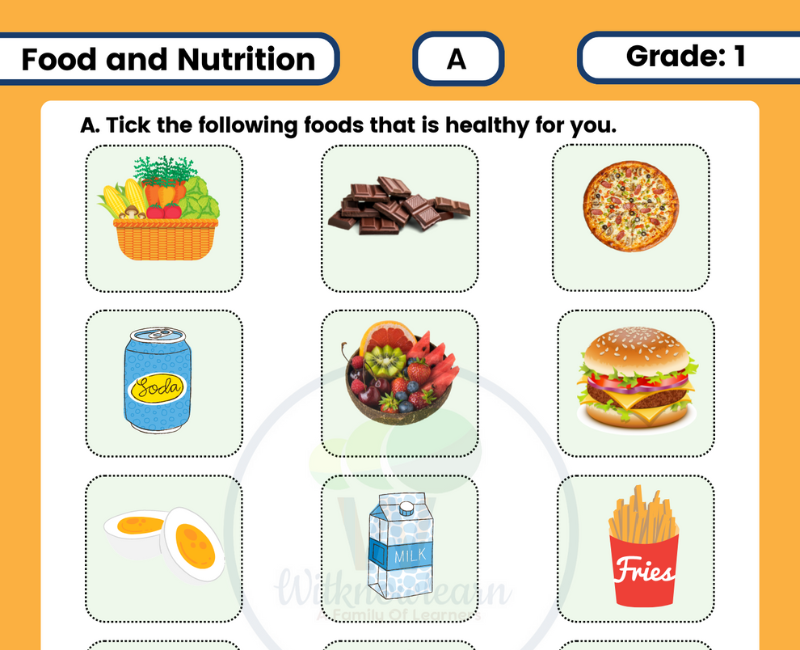
Discover how foods help our bodies. Explore energy-giving foods, foods that support growth, vitamins, minerals and food variety through colourful pictures and simple challenges.
This food and nutrition Class 1 worksheet includes a 20-question online quiz, 10 online games and activities, and five practice tasks. Deliver food-role cards, solve a menu puzzle and build a nutrient teamwork poster.
📝 Food and Nutrition Online Quiz for Class 1
The selector changes the quiz language. Games, activities and the learning guide are in English.
Question 1/20 • Easy • 0/20 answered
What do we call useful substances in food that support the body?
🎮 Food and Nutrition Online Games for Class 1
Explore food roles and nutrients through sorting, building and picture puzzles.
1. 📮 Deliver the Food-Role Messages
Tap a message card, then its matching role. The messages describe functions; real foods can support more than one role.
Choose a message.
Ready to explore!
2. 🧩 Build the Nutrient Team
Choose four useful team cards for a nutrition poster. Leave out the two pretend powers.
Ready to explore!
3. 🍱 Solve the Menu Swap Puzzle
The pretend menu has three rice cards. Keep one rice card. Replace the other two with a pulse dish and a vegetable dish.
Ready to explore!
4. 👣 Find the Fibre Picture Trail
Move through neighbouring squares from Start to Finish. Use wholegrain, fruit, pulse or vegetable cards. This puzzle shows examples, not a complete food list.
Ready to explore!
5. 🃏 Nutrient and Role Memory
Match each nutrient with its illustrated lesson role. These short roles do not list every function of each nutrient.
Find three pairs.
🧩 Food and Nutrition Online Activities for Class 1
Compare menus, repair food myths and discover how nutrients work together.
6. 🔧 Repair the Nutrition Myths
Give each mistaken claim a more accurate ending.
Ready to explore!
7. 📊 Compare Two Picture Menus
Count food groups, not portions. Rice and roti both belong to the grain group in this activity.
Ready to explore!
8. 🌈 Make a Three-Day Fruit Display
Choose a different fruit picture for each imaginary day. This explores variety within a group; it is not a required daily menu.
Ready to explore!
9. 🏷️ Give Lentils Their Nutrient Badges
Use this lesson fact: cooked lentils provide protein, carbohydrate and fibre. Attach those three badges to the lentil card.
Ready to explore!
10. 🖼️ Create a Kind Nutrition Poster
Complete three lines for a classroom poster about food variety and respect.
Ready to explore!
✏️ Food and Nutrition Practice Tasks for Class 1
1. 🫘 Find Two Pulse Foods
Select two pulse foods that can contribute protein.
Ready to explore!
2. 🔗 Connect Nutrients with Lesson Roles
Match each nutrient with one useful role.
Ready to explore!
3. 🔤 Build the Word ENERGY
Tap the English letters in order. The two E tiles are separate pieces.
_ _ _ _ _ _
Ready to explore!
4. 🥦 Add Variety within Vegetables
Select three different vegetables for a pretend picture display.
Ready to explore!
5. 💬 Complete a Careful Food Explanation
Finish three sentence starters using accurate endings.
Ready to explore!
📖 Food and Nutrition Class 1 Learning Guide
Read about nutrients energy growth and food variety
A food and nutrition worksheet for Class 1 helps children connect familiar foods with the work their bodies do. Keep the explanation simple: foods contain useful substances called nutrients. These support energy, growth, repair and many everyday body functions.
Early lessons often use the labels energy-giving foods, body-building foods and protective foods. These are useful starting points, but they do not mean that every food has only one job. A bowl of lentils, for example, can provide protein, carbohydrate, fibre and other nutrients.
Carbohydrates are an important source of energy. Familiar examples include foods made from grains, such as roti, rice and oats. Fats also provide energy and have other important roles. Avoid teaching that all fats are harmful or that children should try to remove an entire nutrient from their food.
Protein supports growth and the repair of body tissues. Pulses, beans, eggs and dairy foods are examples of foods that can provide protein. Families can use different foods according to their traditions, preferences, access and dietary requirements.
Vitamins and minerals help many body processes. Fruits and vegetables provide different combinations of these nutrients and fibre. Calcium is one mineral involved in healthy bones and teeth. Dairy foods are familiar calcium sources, but they are not the only possible sources.
“Protective foods” is a classroom phrase for foods that help support normal health, especially fruits and vegetables. It does not mean that eating a fruit guarantees a child will never become ill. Food is one part of health, alongside suitable care, sleep, activity and other needs.
A balanced diet involves suitable variety and amounts across the day. A single meal picture cannot prove that someone’s whole diet is balanced. In these games, meal puzzles illustrate food-group variety without prescribing serving sizes. Different families can build nutritious meals using different combinations of foods.
Use the existing download option on this page for the printable worksheet. Invite children to explain a food-role connection, compare a pair of menus and correct an exaggerated claim. Use pictures rather than tasting tasks, and follow individual allergy guidance whenever real food is involved.
👨👩👧 Tips for Parent and Teacher
- Explain that food-role groups overlap.
- Use affordable and familiar local food examples.
- Discuss variety without commenting on children’s body size.
- Respect dietary choices and individual allergy guidance.
- Accept different meal combinations instead of teaching one compulsory menu.
🌟 Tips for Students
- Look at the picture before reading the choices.
- Remember that one food can provide several nutrients.
- Use food clues to explain your answer.
- Try another plan when a puzzle needs a change.
- Respect the different foods families eat.
- Ask an adult before trying unfamiliar food.
- Learn about variety across the day.
❓ Food and Nutrition Worksheet FAQs
What are nutrients in simple words?
Nutrients are useful substances in foods that help the body get energy, grow, repair and work properly.
What are energy-giving foods for Class 1?
Foods such as rice, roti and oats are common classroom examples because they provide carbohydrate for energy. Fats and proteins can also supply energy.
What are body-building foods?
This classroom term commonly refers to protein-containing foods such as pulses, eggs and dairy foods. Protein supports growth and repair.
What are protective foods?
Fruits and vegetables are often called protective foods in early lessons because they provide nutrients that support health. They do not prevent every illness.
Can one food belong to more than one food-role group?
Yes. Foods contain combinations of nutrients. Lentils, for example, provide protein as well as carbohydrate and fibre.
Are all fats bad for the body?
No. The body needs some fat. Different fats and foods have different qualities, so the lesson should focus on suitable food choices and variety.
Why is calcium important?
Calcium helps build and maintain bones and teeth and supports other body functions.
What is a balanced diet for Class 1?
It means eating suitable amounts and a variety of foods to meet the body’s needs across the day. There is no single compulsory meal for every child.
Does eating vegetables mean a child will never fall ill?
No. Vegetables support health as part of a varied diet, but no food guarantees protection from every illness.
How can I teach food and nutrition through activities?
Use food-role sorting, nutrient matching, menu comparisons and pretend food cards. Encourage children to explain connections rather than memorise rigid labels.
🥗 Online Food and Nutrition Quiz for Class 1
Try again and explain how different foods can work together.
Return to the Nutrition Quiz ↑ Download