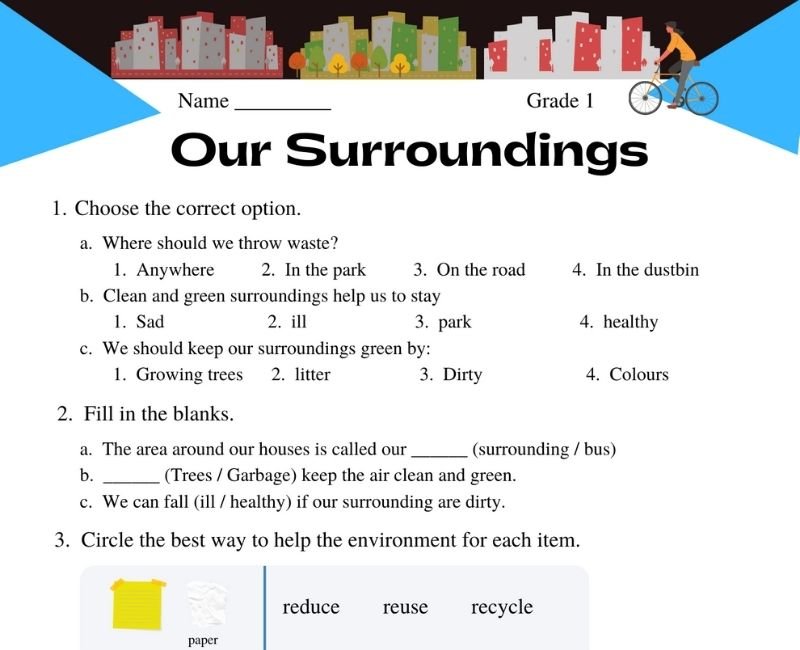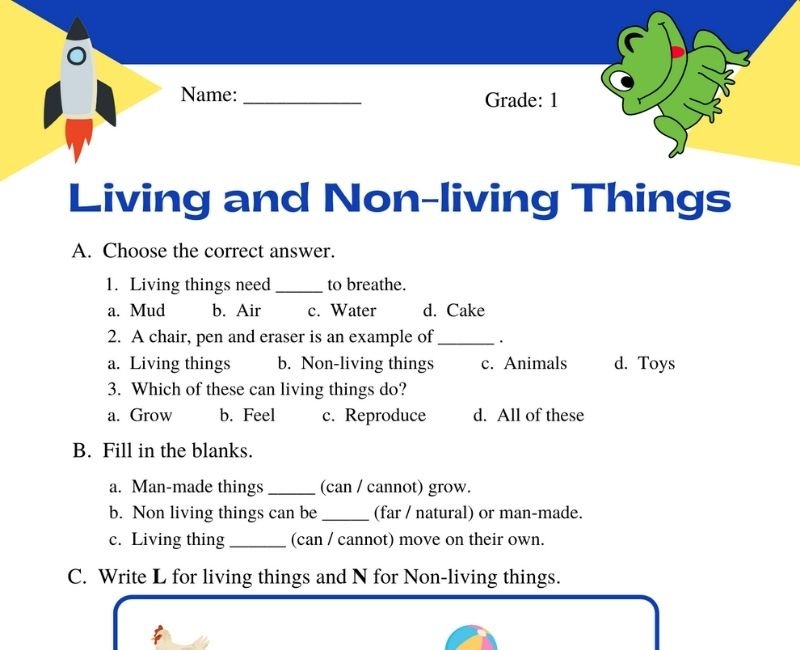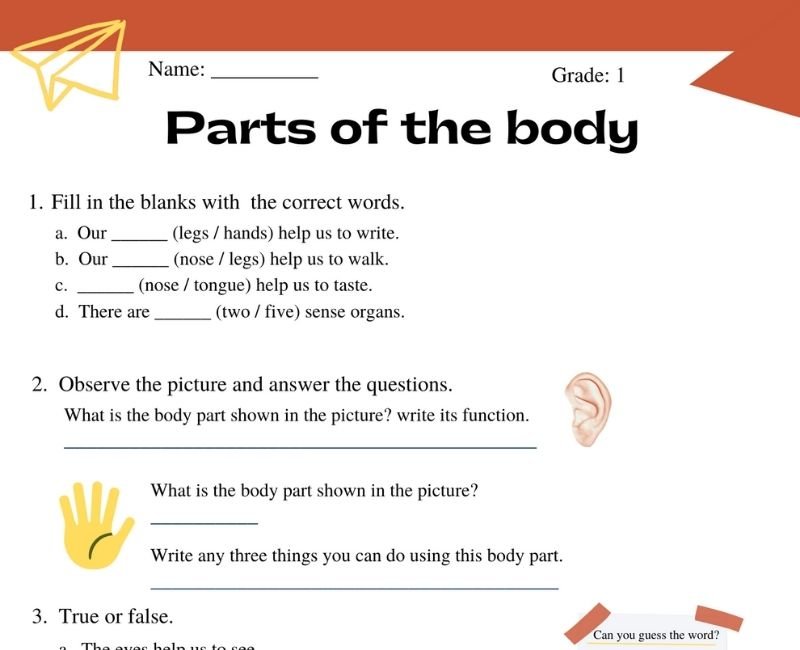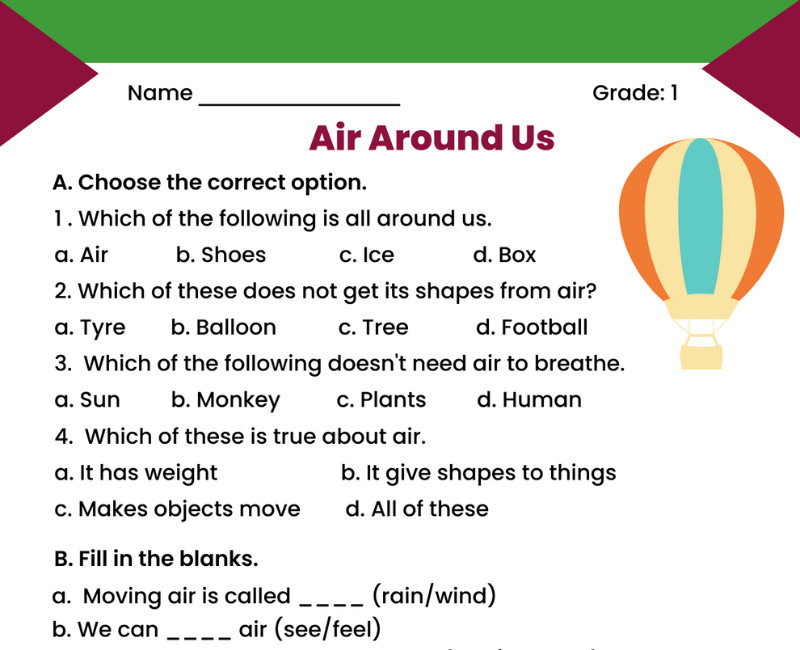
💨 Air Around Us Worksheet for Class 1
We usually cannot see air, but we can notice what it does! Explore air taking up space, breathing, moving air and clean-air habits through colourful picture challenges.
This Air Around Us Class 1 worksheet includes a 20-question online quiz, 10 online games and activities, and five practice tasks. Guide a model sailboat, fill a pretend ball and explore air trapped inside a cup.
📝 Air Around Us Online Quiz for Class 1
The selector changes the quiz language. Games, activities and the learning guide are in English.
Question 1/20 • Easy • 0/20 answered
We usually notice air by…
🎮 Air Around Us Online Games for Class 1
Explore air through controllable models and picture puzzles. No real flames, balloons or electrical equipment are needed.
1. ⛵ Guide the Model Sailboat
Use moving air to guide the toy boat into the dock on the right. Each press is one model push. This is a simplified screen puzzle, not a real sailing lesson.
Ready to explore!
2. 🏀 Pump Air into the Model Ball
Add air using the model pump. Then release some air and compare the shape. The model simplifies how an inflatable ball behaves.
Ready to explore!
3. 🥛 Explore Air Trapped in a Cup
Compare an upside-down cup held upright in water with the same cup tilted. This screen model shows trapped air and escaping bubbles.
Ready to explore!
4. 🧰 Connect Air Tools with Their Jobs
Match each tool with the effect it is designed to produce.
Ready to explore!
5. 🃏 Match Air Effects
Find each picture’s matching description. Reveal two cards at a time.
Find three pairs.
🧩 Air Around Us Online Activities for Class 1
Compare a fair test, investigate moving-air clues and make a clean-air poster.
6. 📏 Run a Fair Paper-Strip Comparison
Both trials use the same paper strip and distance. Change only the hand-fan setting. The screen results are a teaching model, not measured real data.
Ready to explore!
7. 🏘️ Build a Cleaner-Air Community Plan
Choose three useful adult-supported actions. These actions help; no single action removes every pollutant.
Ready to explore!
8. 🎏 Point the Airflow Indicator
This simple indicator points towards where air is pushing. Match the shown arrow, then try the next round. It does not use wind-from compass names.
Ready to explore!
9. 📓 Make an Air-Clue Observation Card
Create an imaginary example or record a safe observation with an adult. This card stays only in the current activity and does not measure air quality.
Ready to explore!
10. 🖼️ Create an Air Discovery Poster
Complete three accurate lines for a classroom display.
Ready to explore!
✏️ Air Around Us Practice Tasks for Class 1
1. 🏷️ Match the Air Clue
Connect each clue with the idea it supports.
Ready to explore!
2. 🔎 Choose Actual Observations
Select two statements describing something directly noticed, rather than a broad claim.
Ready to explore!
3. 🌱 Include All the Living Things
Select three living things that use gases from air.
Ready to explore!
4. 🛠️ Choose Safe Investigation Materials
Select three suitable items for an adult-supervised moving-air demonstration.
Ready to explore!
5. 🔤 Build the Word AIR
Tap the English letters in order.
_ _ _
Ready to explore!
📖 Air Around Us Class 1 Learning Guide
Read about air its uses and moving air
An Air Around Us worksheet for Class 1 begins with a useful question: how do we know air is present when we usually cannot see it? Children can notice moving leaves, feel a breeze or watch a paper strip move when an adult uses a hand fan. These are effects of air rather than pictures of air itself.
Air is a mixture of gases. It contains oxygen, which people and many other living things use in respiration. Young children do not need to memorise gas percentages to understand that air is around us and supports life. Plants also need gases from the air; avoid teaching that only animals need air.
Air takes up space. A ball becomes firmer when a pump adds air, and a bag can hold air even when it contains no visible object. An upside-down cup lowered carefully into water can trap air. The screen model introduces the idea without requiring a child to perform an experiment independently.
Moving air is called wind. A hand fan moves air that is already present; it does not create new air. Moving air can push a lightweight object or act on a sail. The outcome also depends on the object, its shape, its surroundings and the way the air moves. The boat game is a simplified model, not a full sailing simulation.
Air can help with familiar activities such as inflating a ball, turning a pinwheel and drying damp clothes. Wind, warmth and humidity all affect drying. Air also has mass and exerts pressure, though these ideas are best introduced gently through demonstrations rather than technical definitions in Class 1.
Air quality matters. Smoke, dust and other pollutants can affect the air we breathe. Air that looks clear is not automatically free of pollution, and children should never approach smoke or sniff an unknown substance to investigate it. A responsible adult should check local conditions and guide outdoor activities.
Simple clean-air actions include not burning rubbish and reducing unnecessary vehicle idling through adult decisions. Caring for plants is useful, but a few plants do not make smoke safe or remove every pollutant. Children should understand that protecting air involves people and communities working together.
Use the existing worksheet download option on this page for printable practice. Encourage children to separate an observation from an explanation: “the ribbon moved” is an observation, while “moving air pushed it” is an explanation to investigate. Use safe, supervised activities without breath-holding, flames or access to moving fan blades.
👨👩👧 Tips for Parent and Teacher
- Begin with visible effects rather than gas percentages.
- Use a hand fan and paper strip for supervised demonstrations.
- Explain that fans move existing air.
- Keep children away from smoke, flames and moving fan blades.
- Label screen models clearly and discuss their limits.
🌟 Tips for Students
- Look for clues such as moving leaves or ribbons.
- Describe what you actually notice.
- Remember that air can be present even when it is still.
- Try one change at a time in a model.
- Ask an adult before doing an experiment.
- Move away from smoke and tell an adult.
- Never hold your breath to test whether air is needed.
❓ Air Around Us Worksheet FAQs
What is air for Class 1?
Air is a mixture of gases around us. We usually cannot see it, but we can notice its effects.
How do we know air is present?
We can feel a breeze, see a flag move or notice a ball filling when a pump adds air.
Does air take up space?
Yes. Air can fill a bag, ball or other container even though it is usually invisible.
What is moving air called?
Moving air is called wind.
Does a fan make new air?
No. A fan moves air that is already present.
Why do we need air?
We breathe air. It contains oxygen that our bodies use to support life.
Do plants need air too?
Yes. Plants use gases from the air in important life processes.
Is air only oxygen?
No. Air is a mixture containing nitrogen, oxygen and smaller amounts of other gases.
Can air be polluted even when it looks clear?
Yes. Not every pollutant can be seen. Adults should use appropriate local air-quality information when making decisions.
How can Class 1 children learn about air safely?
Use picture models and adult-supervised hand-fan activities. Avoid flames, breath-holding, smoke and access to moving fan blades.
💨 Online Air Around Us Quiz for Class 1
Try again and explain one clue that shows air is present.
Return to the Air Quiz ↑ Download