🧼 Health and Hygiene Worksheet for Class 1
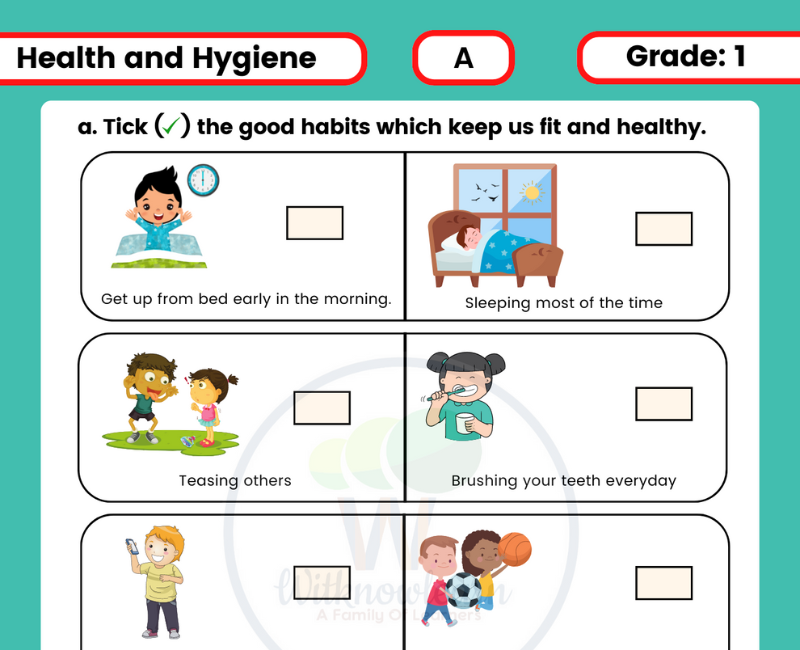
Explore personal hygiene, handwashing, dental care and healthy daily habits with colourful picture challenges. Learn when to wash, how to cover a sneeze and when to ask an adult for help.
This health and hygiene Class 1 worksheet includes a 20-question online quiz, 10 online games and activities, and five practice tasks. Build a handwashing sequence, complete a toothbrushing planner and create a kind hygiene reminder.
📝 Health and Hygiene Online Quiz for Class 1
The selector changes the quiz language. Games, activities and the learning guide are in English.
Question 1/20 • Easy • 0/20 answered
What helps remove dirt and germs during handwashing?
🎮 Health and Hygiene Online Games for Class 1
Arrange routines, explore handwashing coverage and build a pretend dental-care plan.
1. 🧼 Build the Handwashing Sequence
Arrange the five handwashing cards from beginning to end.
Build your sequence.
Ready to try!
2. 🖐️ Explore the Handwashing Coverage Map
Start the 20-second practice clock. While it runs, tap all six reminders for areas to scrub. This screen model does not clean real hands.
20 seconds
Ready to try!
3. 🪥 Build a Three-Day Brushing Plan
This is a pretend plan, not a record of completed brushing. Add a morning and bedtime reminder for each day.
Ready to try!
4. 🤧 Follow the Tissue Trail
Arrange the three actions for a sneeze when a tissue is available.
Build your sequence.
Ready to try!
5. 🧺 Sort the Personal-Care Tray
Deliver each picture label to the correct tray. Shared classroom items still need the usual school care and cleaning.
Choose an item.
Ready to try!
🧩 Health and Hygiene Online Activities for Class 1
Explore hygiene models, repair advice and practise asking for help.
6. 🔎 Explore a Germ-Transfer Picture Model
Tap the cards in order to reveal a possible transfer pathway. Coloured dots are pretend symbols, not visible real germs. Transfer does not mean illness is certain.
Ready to try!
7. 🎒 Pack the School Hygiene Pocket
Choose three suitable items for this pretend hygiene pocket. Follow your school’s actual rules.
Ready to try!
8. 🔧 Repair the Personal-Care Advice
Replace each unhelpful statement with a practical routine.
Ready to try!
9. 🌤️ Plan a Healthy Afternoon
Arrange a sensible pretend afternoon after school: care after outdoor play, quiet wind-down and bedtime preparation.
Build your sequence.
Ready to try!
10. 💬 Help the Story Character Speak Up
In this fictional story, a child feels dizzy near the classroom reading corner. Build a clear message to the teacher.
Ready to try!
✏️ Health and Hygiene Practice Tasks for Class 1
1. 🏷️ Match the Care Item
Match the care task with an appropriate item.
Ready to try!
2. 🖐️ Find the Missed Hand Areas
A pretend washer cleaned only their palms. Select three other areas that also need attention.
Ready to try!
3. 🪥 Complete the Brushing Reminder
Arrange the three parts of this English reminder.
Build your sequence.
Ready to try!
4. 🤝 Choose Kind Classroom Habits
Select three respectful actions.
Ready to try!
5. 🛠️ Connect Problems with Help
Match each situation with a sensible response.
Ready to try!
📖 Health and Hygiene Class 1 Learning Guide
Read about personal hygiene and healthy routines
A health and hygiene worksheet for Class 1 helps children turn simple ideas into everyday routines. Hygiene means practices that help keep us clean and reduce the spread of harmful germs. Health is broader: it also involves suitable food, sleep, movement, emotional support and care when we are unwell.
Handwashing works best as a complete routine. Wet hands with clean running water, apply soap, lather and scrub all surfaces for at least 20 seconds, rinse and dry. Include the backs of the hands, between the fingers and around the fingertips. The online coverage game is only a learning model; tapping a screen does not clean real hands.
Children should wash after using the toilet, after handling animals, after coughing or sneezing into their hands and whenever their hands are dirty. Washing before eating or preparing food is also important. Hands can carry germs even when there is no visible dirt.
Dental care includes brushing twice a day for about two minutes with fluoride toothpaste. One brushing should be last thing at night. An adult should help or supervise according to the child’s age and ability and follow the dentist’s advice about toothpaste. Children should spit out the toothpaste rather than swallow it.
Cover the mouth and nose with a tissue when coughing or sneezing, put the used tissue in a bin and clean the hands. If a tissue is unavailable, use the inside of the elbow instead of the hands. These habits help reduce spread; they do not guarantee that nobody will become ill.
Personal items such as toothbrushes should not be shared. Use your own drinking bottle and follow school rules for towels and other personal-care items. Bathing, hair care and clothing changes depend on activity, weather and individual needs. Ask an adult for help with nail trimming and avoid using sharp tools independently.
Feeling unwell is a reason to seek support, not something to hide. Children can tell a teacher or another trusted adult how they feel and where they are uncomfortable. Never describe a sick classmate as dirty. Anyone can become ill, and everyone deserves care and kindness.
Use the existing worksheet download option on this page for paper practice. Combine picture discussion with the online quiz and games. Practise real routines calmly with adult support, and adapt activities for children who need help with movement, communication or personal care.
👨👩👧 Tips for Parent and Teacher
- Demonstrate routines calmly and provide practical help when needed.
- Keep soap, safe water and suitable drying facilities accessible.
- Supervise toothbrushing and follow the child’s dental advice.
- Use pictures instead of real germs or cleaning chemicals in activities.
- Discuss hygiene without teasing or blaming a child who becomes unwell.
🌟 Tips for Students
- Use soap and wash all parts of your hands.
- Give hand scrubbing at least 20 seconds.
- Brush teeth gently with adult help.
- Use a tissue or your elbow for a sneeze.
- Keep your toothbrush for your own use.
- Tell an adult when you feel unwell.
- Be kind when someone needs help with a routine.
❓ Health and Hygiene Worksheet FAQs
What is hygiene for Class 1?
Hygiene means habits that help keep us clean and reduce the spread of harmful germs, such as washing hands and caring for teeth.
How long should children wash their hands?
Scrub with soap for at least 20 seconds, then rinse and dry. The full washing routine takes longer than the scrubbing step alone.
When should children wash their hands?
Important times include before eating, after using the toilet, after handling animals, after coughing into the hands and whenever the hands are dirty.
How often should a Class 1 child brush their teeth?
Brush twice a day for about two minutes with fluoride toothpaste, including last thing at night. An adult should help or supervise as needed.
What should children do when they cough or sneeze?
Use a tissue to cover the mouth and nose, bin it and clean the hands. If there is no tissue, use the inside of the elbow rather than the hands.
Can children share a toothbrush?
No. Each person should use their own toothbrush.
Can hands carry germs even when they look clean?
Yes. Germs can be too small to see, so appearance alone does not show whether hands need washing.
What should a child do when feeling unwell at school?
Tell the teacher or another designated adult and explain how they feel. The adult can arrange appropriate help.
Does good hygiene prevent every illness?
No. It helps reduce some risks, but anyone can become ill. Children who are unwell need care rather than blame.
How can I teach personal hygiene through games?
Use routine sequencing, personal-item sorting, pretend brushing planners and picture scenarios. Follow the games with supported real-life practice.
🧼 Online Health and Hygiene Quiz for Class 1
Try again and explain one routine you can practise with an adult.
Return to the Hygiene Quiz ↑ Download