🛡️ Safety Rules Worksheet for Class 1
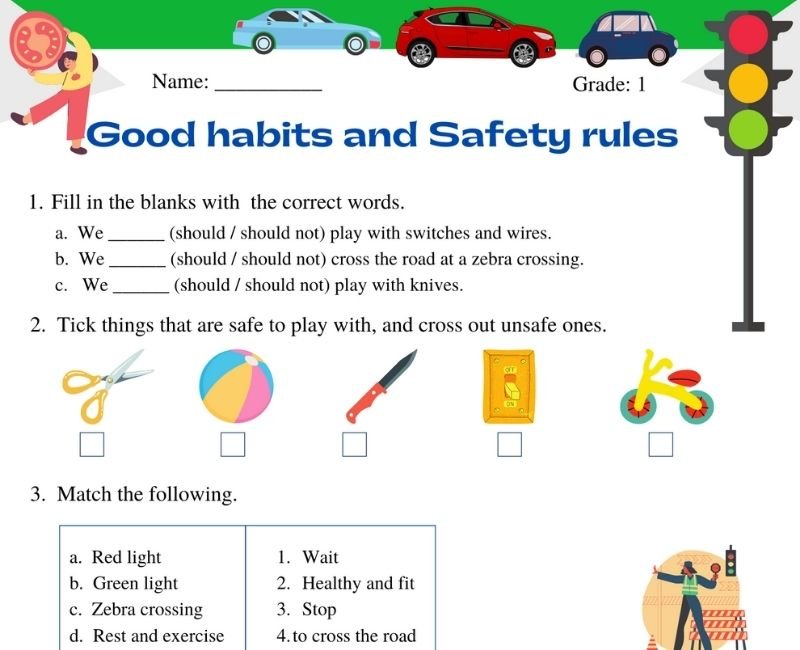
Practise safety rules at home, at school, on the road and in the playground with colourful picture scenarios. Learn to notice hazards, pause before acting and ask a trusted adult for help.
This Class 1 safety rules worksheet includes a 20-question online quiz, 10 interactive games and activities, and five short practice tasks. Build a safe walking route, pack a play bag and repair unsafe advice.
📝 Safety Rules Online Quiz for Class 1
The language selector changes the quiz. Games, activities and the learning guide are in English.
Question 1/20 • Easy • 0/20 answered
Who should a Class 1 child cross a road with?
🎮 Safety Rules Online Games for Class 1
Plan, build and sort using illustrated situations. Practise road-crossing routines with an adult in real life.
1. 🚶 Build a Road-Crossing Routine
Arrange the four planning cards. This is a picture routine; real crossing needs an adult and continuing checks for traffic.
Build your sequence.
Ready to try!
2. 🗺️ Find the Footpath Route
This toy map has no road crossing. Guide the child and adult along neighbouring footpath squares from home to school. Avoid the road and driveway.
Ready to try!
3. 🧺 Sort the Classroom Objects
Sort ordinary classroom items and items needing adult attention. The hazardous items are pictures only.
Choose an object.
Ready to try!
4. 🎒 Pack for a Supervised Cycle Outing
Choose exactly four useful items for a short supervised ride in a suitable play area. An adult checks the cycle, helmet fit and route.
Ready to try!
5. 🛝 Organise the Slide Queue
Arrange the three queue cards from first to last using their arrival numbers. Then complete the shared play rule.
Build your sequence.
Ready to try!
🧩 Safety Rules Online Activities for Class 1
Repair advice, organise a virtual classroom and practise asking for help.
6. 🔧 Repair the Safety Advice
Replace each unsafe suggestion with an appropriate action.
Ready to try!
7. 🚪 Clear the Virtual Walking Path
Move the three ordinary items from the illustrated walkway into their storage place. Leave the fixed classroom features alone.
Stored items: none
Ready to try!
8. 💬 Build a Clear Help Message
In this picture story, a tap is leaking near the classroom wash area. Build a message that tells the teacher what happened and where.
Ready to try!
9. 🤝 Make a Help Map
Connect each setting with the appropriate designated adult or help point.
Ready to try!
10. 📋 Plan a Safety Chat
Choose three topics to discuss with an adult. This makes a discussion plan; it does not certify that a real place is safe.
Ready to try!
✏️ Safety Rules Practice Tasks for Class 1
1. 🏷️ Match the Place and Routine
Connect each place with the routine that belongs there.
Ready to try!
2. 👀 Spot the Reporting Details
You need to tell a teacher about a puddle outside the art room. Select the two details that make the report useful.
Ready to try!
3. 🚶 Arrange the Calm Queue
Build the three-part queue reminder.
Build your sequence.
Ready to try!
4. 🧰 Match Problems with Adult Help
Choose suitable adult help without trying the task yourself.
Ready to try!
5. 🛡️ Complete the Safety Reminder
Build a simple reminder for an unfamiliar hazard.
Build your sequence.
Ready to try!
📖 Safety Rules at Home School and on the Road
Read the Class 1 safety rules learning guide
A safety rules worksheet for Class 1 introduces everyday decisions through familiar places. Children can learn to pause near a hazard, move to a safer position and tell a trusted adult. Use short explanations and calm practice. Adults remain responsible for supervision and for making environments safer.
Road safety for Class 1 begins with walking beside an adult and using a footpath where one is available. Cross at an appropriate crossing point with the adult. Stop back from the road edge, look in all directions for approaching and turning vehicles, listen and wait until the adult confirms that it is safe. Keep checking while walking across. A marked crossing or signal does not remove the need to check traffic.
Safety rules at home include staying away from hot surfaces, matches, medicines, cleaning products and electrical sockets. Children should not handle these items to demonstrate a rule. If something has fallen, spilled or broken, they can move away and report it. For an object on a high shelf, ask an adult to get it rather than climbing on furniture.
School safety includes walking in corridors, keeping passages clear and following the teacher’s instructions. School bags belong in the place provided, not across a doorway or walkway. On stairs, use the handrail when available, watch the steps and avoid pushing or jumping.
Safe play means choosing an appropriate place and equipment. Children should take turns, leave space around moving swings and tell an adult about damaged equipment. A properly fitted cycle helmet helps protect the head, but does not make cycling on a busy road safe. Young children need adult supervision and a suitable place to ride.
Practise the school’s emergency routine in a calm drill. Children should follow the designated adult and route, leave belongings behind and stay with the group at the meeting place. Real emergency arrangements depend on the building and its plan. Once outside after a fire evacuation, do not go back for toys or bags. Tell an adult if someone is missing.
Teach children who they can approach for help in each setting. At school, this might be their teacher or another designated staff member. On a family outing, identify a staffed help point beforehand. If separated, a child should stay in a safe nearby place and seek help from appropriate staff rather than wandering around or leaving with someone.
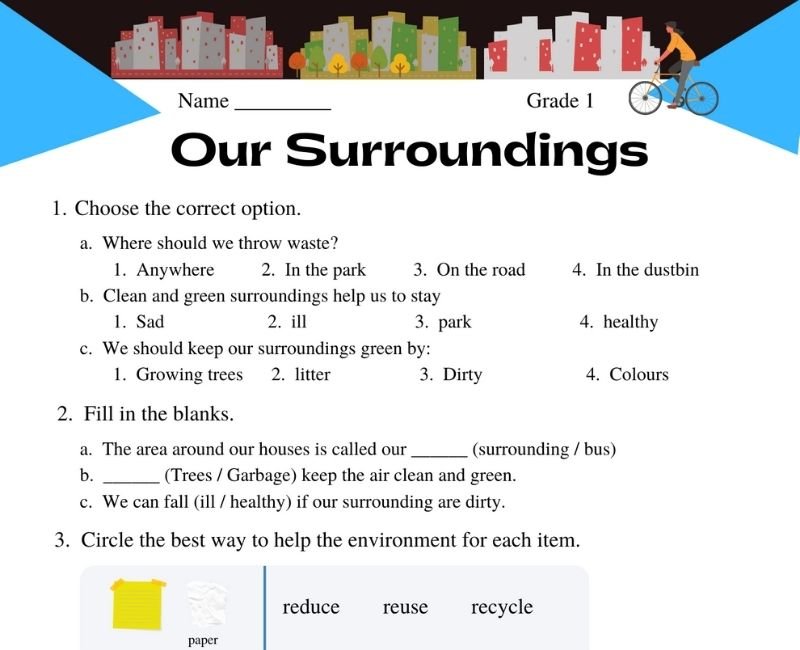
Use the existing worksheet download option on this page for paper practice. Combine picture discussion with the safety rules online quiz and practical classroom routines. Ask children to explain the reason behind a rule. These activities support awareness; they do not replace adult supervision or a school’s safety procedures.
👨👩👧 Tips for Parent and Teacher
- Demonstrate safe routines using pictures and role-play, without real hazards.
- Practise road crossing with direct adult supervision.
- Identify trusted adults and help points for each setting.
- Use the school or building’s actual emergency plan during drills.
- Praise children for reporting a concern, even when they are unsure.
🌟 Tips for Students
- Pause when something seems unsafe.
- Move away from hot, sharp or broken objects.
- Tell a trusted adult what happened.
- Walk instead of running in corridors.
- Keep doors and walking paths clear.
- Cross roads with an adult.
- Follow your teacher during a school drill.
❓ Safety Rules Worksheet for Class 1 FAQs
What are safety rules for Class 1?
They are simple routines that help children avoid harm, such as crossing with an adult, walking in corridors and reporting hot, sharp or broken objects.
What road safety rules should Class 1 children learn?
Walk with an adult, use a footpath where available, stop back from the road edge and check traffic in all directions before crossing with the adult.
Is a zebra crossing always safe to cross immediately?
No. Children still need an adult to check that approaching and turning vehicles have stopped or that there is a safe gap.
What safety rules should children follow at home?
Stay away from hot surfaces, sockets, matches, medicines and cleaning products. Ask an adult for help and report spills or broken objects.
What should a child do after seeing broken glass?
Keep away, avoid touching the pieces and tell an adult. Children should not try to pick up or clean broken glass.
Why should children walk in school corridors?
Walking gives children more time to notice other people, corners and obstacles, helping reduce collisions and falls.
What are important playground safety rules?
Take turns, keep clear of moving equipment, avoid pushing and report damaged equipment to an adult.
What should children do during a school fire drill?
Follow the teacher and the school’s emergency plan, leave belongings behind and remain with the group at the designated meeting place.
How can I teach safety rules without frightening children?
Use calm picture discussions, role-play and short practice routines. Explain who can help and praise children for reporting concerns.
How can this safety worksheet be used at home?
Discuss one picture at a time, try an online activity and practise a suitable routine together. Adult supervision is still necessary.
🛡️ Online Safety Rules Quiz for Class 1
Practise noticing hazards and choosing when to ask for help.
Return to the Safety Rules Quiz ↑ Download