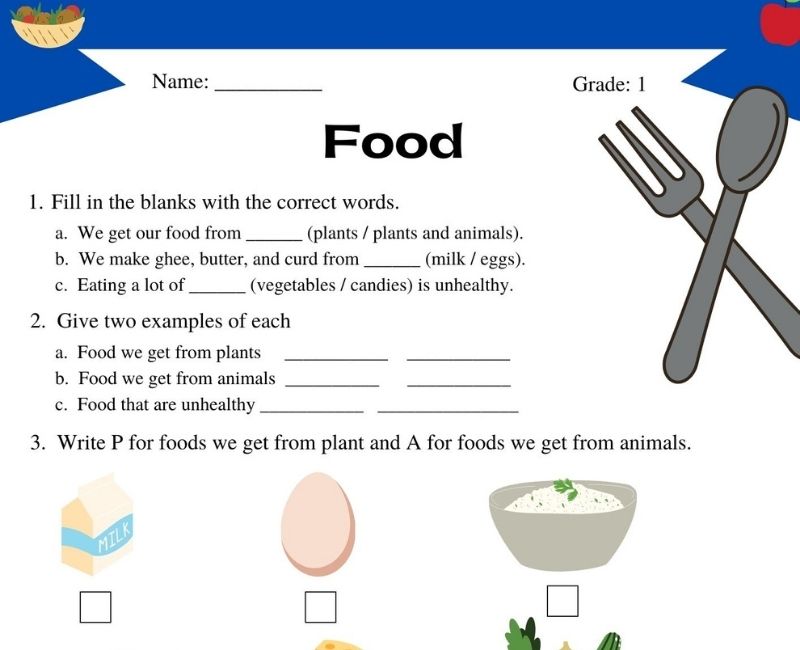
🍲 Our Food Worksheet for Class 1
Where does our food come from? Explore food from plants and animals, familiar food groups, varied meals and clean eating habits with colourful picture activities.
This Our Food Class 1 science worksheet includes a 20-question online quiz, 10 online games and activities, and five practice tasks. Open an ingredient detective case, build a meal tray and plan ways to waste less food.
📝 Our Food Online Quiz for Class 1
The selector changes the quiz language. Games, activities and the learning guide are in English.
Question 1/20 • Easy • 0/20 answered
Why do our bodies need food?
🎮 Our Food Online Games for Class 1
Sort market cards, trace ingredients and build a varied meal. The games use different tasks from the quiz.
1. 🧺 Open the Food Market Stalls
Tap a food card, then deliver it to its matching stall. All examples here are single foods.
Choose a food card.
Ready to explore!
2. 🕵️ Solve the Ingredient Detective Case
Our pretend sandwich contains wheat bread, cucumber and dairy paneer. Trace each named ingredient to its source.
Ready to explore!
3. 🍽️ Build a Varied Meal Tray
For this picture challenge, choose one grain, one pulse and one vegetable dish. Several combinations work. This is a variety game, not a portion guide.
Ready to explore!
4. 🌾 Follow Wheat to a Roti
Arrange the picture labels to show a simple ingredient journey. Cooking is an adult task.
Build your sequence.
Ready to explore!
5. 🧼 Get the Lunch Table Ready
Build this pretend school lunch routine. Follow the teacher’s actual routine in class.
Build your sequence.
Ready to explore!
🧩 Our Food Online Activities for Class 1
Repair food labels, organise picture records and make a food discovery card.
6. 🔧 Repair the Food Source Labels
The labels have become mixed up. Give each food the correct ingredient or source.
Ready to explore!
7. 📦 Fill the Pretend Food Order
The picture order requests two bananas, one pear and three tomatoes. Use the plus and minus buttons to pack the virtual basket.
Ready to explore!
8. 🃏 Food Picture and Name Memory
Reveal two cards at a time. Match each picture with its English food name.
Find three pairs.
9. 🌍 Make a Less-Waste Lunch Plan
Select exactly three helpful actions. Food safety and hunger still matter.
Ready to explore!
10. 📓 Make a Food Discovery Card
Choose a food, its source and a useful description. These are examples for learning, not a tasting task.
Ready to explore!
✏️ Our Food Practice Tasks for Class 1
1. 🏷️ Match Food and Ingredient
Connect each named food with its main ingredient in this example.
Ready to explore!
2. 🍓 Find the Fruit Pair
Select exactly two fruits from these cards.
Ready to explore!
3. 🧺 Choose Foods from Three Groups
Select one grain, one vegetable and one fruit. Leave the empty container out.
Ready to explore!
4. 🕵️ Read a Mixed Recipe
A pretend bowl contains oats, dairy milk and chopped pear. Match each named ingredient to its source.
Ready to explore!
5. 💬 Plan a Polite Food Question
Arrange a simple question for an unfamiliar food. Ask before tasting.
Build your sequence.
Ready to explore!
📖 Our Food Class 1 Learning Guide
Read about food sources meals and eating habits
An Our Food worksheet for Class 1 introduces the foods children see at home, at school and in local markets. Begin with familiar dishes and ingredients. Ask children to name a food, describe where it comes from and notice how different ingredients can be combined in a meal.
We need food for energy, growth and the everyday work of our bodies. Different foods provide different combinations of nutrients. Avoid teaching that a food has only one job or that one special food can provide everything a child needs. Variety across meals and through the day is useful.
Food from plants includes grains such as rice and wheat, pulses such as lentils and chickpeas, fruits and vegetables. Food from animals includes eggs and milk from animals such as cows and buffaloes. Ordinary dairy curd is made from milk. Some dishes contain ingredients from both sources, so look at the recipe before deciding.
Simple food groups help children organise examples. Grains, pulses, fruits, vegetables and dairy foods are useful classroom categories. These groups are learning tools rather than rigid boxes for every dish. A mixed vegetable-and-lentil dish contains ingredients from more than one group.
Breakfast is commonly a morning meal, lunch a midday meal and dinner an evening meal. Families have different schedules, names and food traditions. There is no single dish that every family must eat for breakfast or lunch. Use examples that reflect children’s homes without judging one family’s food against another’s.
A varied meal can combine a grain or another staple, a pulse or another suitable protein source, and vegetables or fruit. The meal-building game explores this variety; it does not prescribe portions or a complete diet. Families should follow their own dietary requirements and any allergy guidance. Children should ask an adult before tasting an unfamiliar food or sharing food.
Food hygiene begins with washing hands with soap and safe water before eating. Use clean utensils and keep food protected from contamination. An adult should manage cooking, refrigeration and decisions about food that may be spoiled. A child should never taste doubtful food to test whether it is safe.
To reduce food waste, begin with an amount you expect to eat and ask for more if still hungry. Tell an adult about leftovers so they can decide whether safe storage is possible. Avoid pressuring children to ignore fullness or eat food that may be unsafe. Use the existing worksheet download option on this page for paper practice alongside the online quiz and games.
👨👩👧 Tips for Parent and Teacher
- Use familiar local foods and welcome different family food traditions.
- Discuss ingredients instead of judging foods only by their appearance.
- Use pictures for these activities; tasting is not required.
- Respect allergies and school rules before sharing or offering food.
- Let adults manage cooking, storage and food-safety decisions.
🌟 Tips for Students
- Look carefully at each food picture and label.
- Think about ingredients when finding a food’s source.
- Explore different foods with your family’s guidance.
- Wash your hands before eating.
- Use clean utensils and your own drinking bottle.
- Ask an adult before tasting unfamiliar food.
- Take a suitable amount and ask for more if needed.
❓ Our Food Worksheet for Class 1 FAQs
Why do we need food?
Food provides energy and nutrients that help us grow and support the everyday work of our bodies.
What are the main sources of our food?
Many familiar foods come from plants and animals. Rice, lentils and apples come from plants. Eggs and dairy milk come from animals.
Which foods do we get from plants?
Examples include wheat, rice, lentils, chickpeas, fruits and vegetables.
Which foods do we get from animals?
Examples include eggs, fish and milk from animals such as cows and buffaloes. Dairy curd is made from milk.
What is a balanced diet in simple words?
It means getting a suitable variety and amount of foods to meet the body’s needs over the day. One food alone does not provide everything we need.
What are breakfast lunch and dinner?
Breakfast is commonly a morning meal, lunch a midday meal and dinner an evening meal. Family routines and meal names can vary.
Why should we wash our hands before eating?
Washing with soap and safe water helps remove dirt and germs that could otherwise reach our food.
Can one dish contain food from plants and animals?
Yes. For example, a dish made with rice, vegetables and egg contains plant ingredients and an animal ingredient. Check the recipe.
How can children help reduce food waste?
Begin with an amount they expect to eat and ask for more if needed. An adult should decide how to handle leftovers safely.
How can I teach Our Food to Class 1?
Use familiar food pictures, discuss ingredients, sort food sources and build pretend meal trays. No tasting or cooking is needed for these online activities.
🍲 Online Our Food Quiz for Class 1
Try again and explain one new thing you learned about food.
Return to the Our Food Quiz ↑ Download