Body Parts: Look, Label and Discover! 🌈
Explore body-part names with a colourful quiz, 10 hands-on tasks and five short online practice activities.
📝 Body Parts Online Quiz for SR KG
Question 1 of 20 • Answered: 0/20
👁️
Which body part is shown?
🎮 Body Parts Online Games
Label cartoon diagrams, build a face and match body-part words. Choose one game at a time.
1. 🏷️ Label the Cartoon
Match Head, Arm, Hand and Leg to spots A–D. Tap a word, then a spot button.
Ready to play!
2. 😊 Build a Cartoon Face
Add two eyes, one nose and one mouth to this cartoon face. These are picture-building instructions.
Ready to play!
3. 🃏 One and More Memory
Find each one-and-more word pair: hand/hands, eye/eyes, ear/ears and foot/feet.
Find four pairs.
4. 🧺 Face or Elsewhere?
Sort the cards into Part of the Face or Elsewhere on the Body.
Ready to play!
5. 🧤 Pack the Dress-Up Kit
Match each item to the part where it is worn. Tap an item, then a body-part basket.
Ready to play!
🎨 Body Parts Online Activities for UKG
Repair picture labels, solve a route and trace a simple body outline.
6. 🔧 Repair the Face Labels
Markers 1–3 point to an eyebrow, cheek and chin. Repair the mixed-up labels.
Ready to play!
7. 🎭 Puppet Instruction Strip
Build the puppet’s instruction strip: raise a hand → bend the elbow → lower the arm. You can describe the actions instead of doing them.
Choose the first instruction.
Ready to play!
8. 🤖 Body-Word Robot Route
Follow Head → Neck → Shoulder → Elbow → Hand. Tap the next neighbouring square. This is a word route on the board.
Ready to play!
9. 📖 Body-Part Picture Book
Choose a word, then add its matching picture to your book. Save three different words.
Ready to play!
10. ✏️ Trace a Body Outline
Trace any part of the pale cartoon outline with red or black. Tell an adult which part you traced. Drawing is not automatically graded.
Ready to play!
✏️ Body Parts Online Practice for SR KG
Try five short tasks. An adult can read the clues aloud.
1. 🔎 Explore Body Words
Choose a word and read its meaning with an adult.
The lower part of the face, below the mouth.
Ready to explore.
2. 🔤 Build a Body Word
Use the letter tiles to spell the picture word. Use Undo if you change your mind.
Chin: below the mouth
Choose letters.
Ready to explore.
3. 🖼️ Count the Picture Eyes
This picture has two cartoon faces. Count the eyes drawn, then choose the total.
Ready to explore.
4. 📍 Above and Below
Use the cartoon diagram. Complete both position statements.
Ready to explore.
5. 🌟 My Body-Word Learning Card
Choose a word to practise and how you would like to practise it. Different choices are welcome.
Your learning card will appear here.
Ready to explore.
💡 Tips for Teaching Body Parts
👩🏫 Open Parent and Teacher Tips
- Start with a few familiar words and point to a labelled picture.
- Let children name parts in a familiar language before adding English words.
- Distinguish a whole part from a smaller part: arm, hand and fingers.
- Use picture-based alternatives to movement. Children can participate in different ways.
- Teach touch as a sense associated with skin across the body.
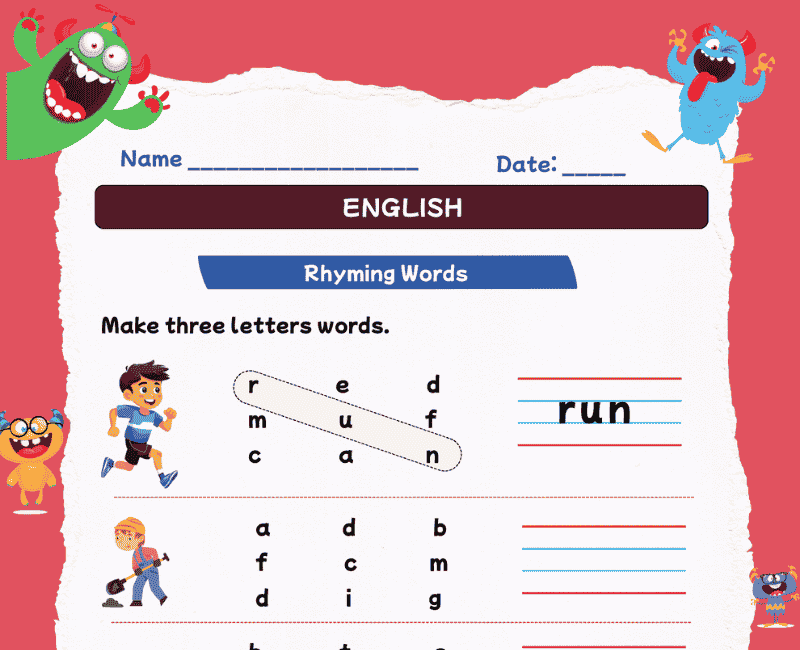
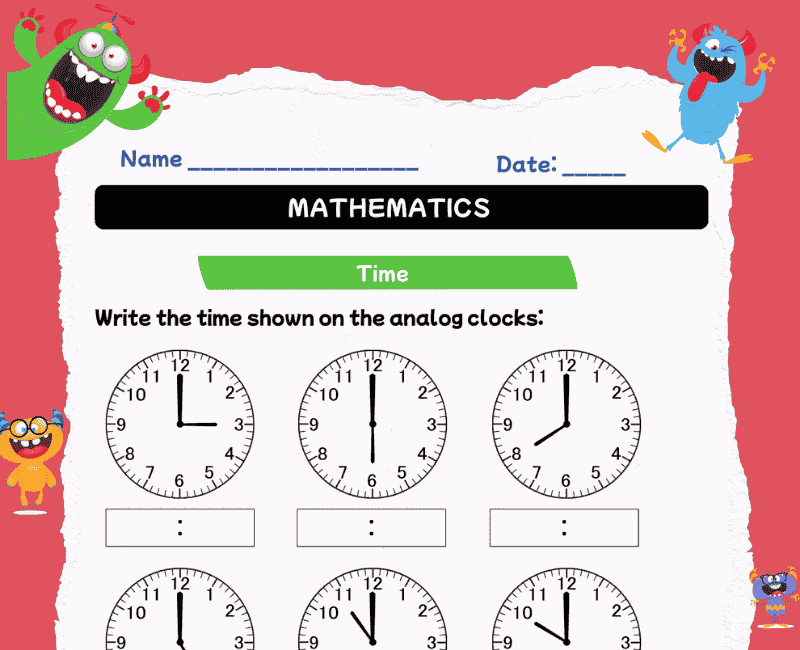
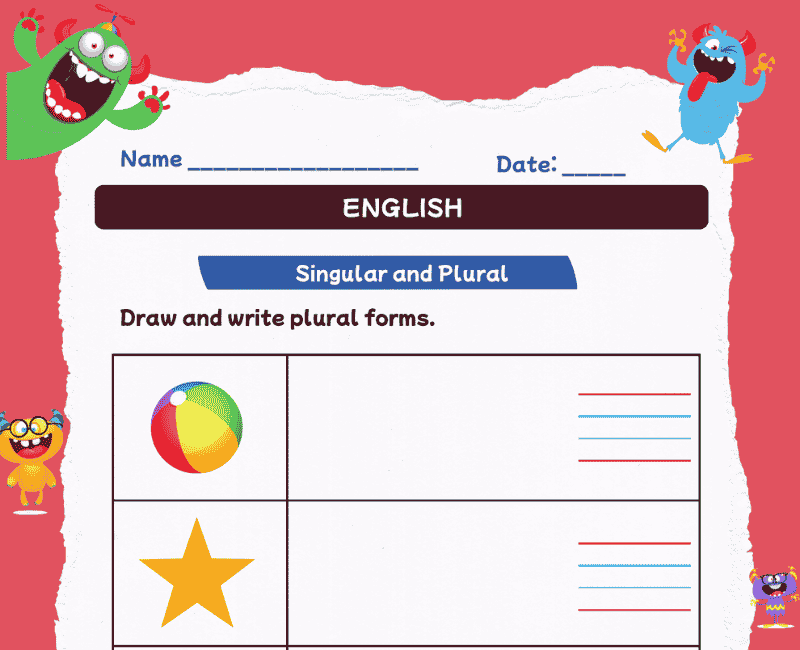
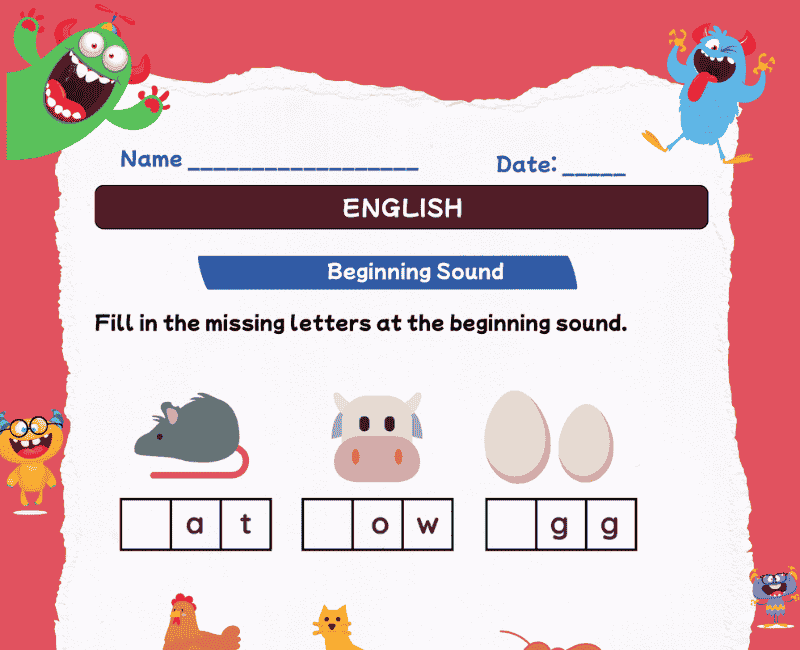
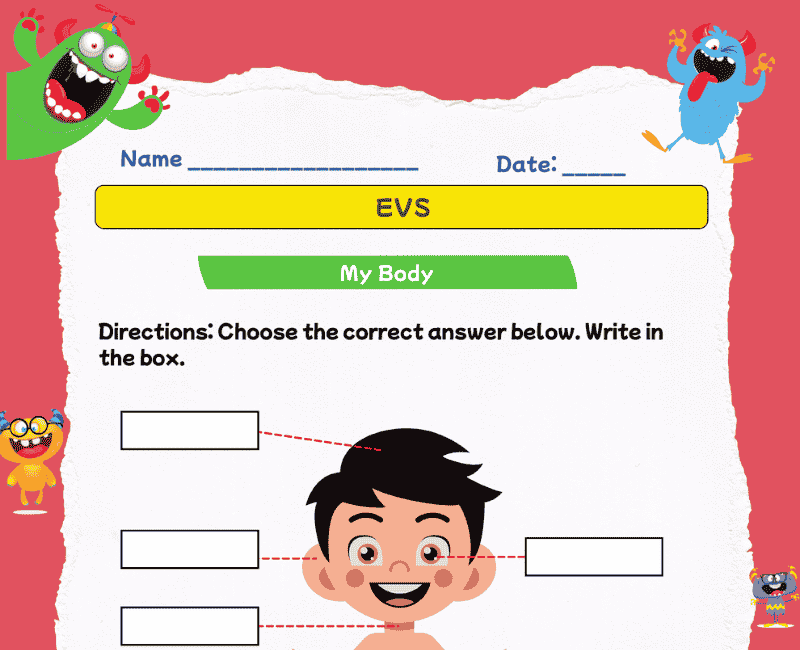
📄 Label and Match Body Parts Worksheet for SR KG
📖 Read the Body Parts Worksheet Learning Guide
🧒 Begin with names and clear pictures
A body parts worksheet for UKG helps children connect familiar spoken words with pictures and written labels. Begin with head, eyes, ears, nose, mouth, arms, hands, legs and feet. Use a small word bank and ask the child to point, name or match. Introduce more detailed words such as elbow, wrist, knee and ankle when the main parts are familiar.
🏷️ Make labelling a thinking activity
For a label the body parts worksheet, first identify the exact point that a label refers to. An arm is not the same as a hand, and a leg is not the same as a foot. Compare the two words with a cartoon diagram. Invite the child to explain a choice before writing. An adult can read the word bank or write a dictated label.
👀 Connect body parts and senses
Early body parts and senses activities connect eyes with sight, ears with hearing, the nose with smell, the tongue with taste and skin with touch. Touch is not limited to the hands. These examples describe common body functions; children may experience sensations and use their bodies in different ways. Use pictures and respectful language so everyone can take part.
🎮 Explore different online tasks
The body parts online quiz for SR KG offers twenty questions with a review after submission. Separate body parts online games involve diagram labels, face construction, word memory, sorting and matching wearable items to body parts. The online activities add label repair, a puppet sequence, a body-word route, a picture book and outline tracing. Five short practice sets extend vocabulary and observation.
✏️ Combine printable and online practice
Use the existing download option on this page for the printable label and match body parts worksheet PDF. Pair paper practice with a few online tasks rather than completing every activity at once. Continue with About Myself online activities, action words online games and singular and plural practice. Revisit hand/hands and foot/feet in context.
❓ Body Parts Worksheet FAQs
💬 How do I teach body parts to UKG children?
Begin with clear pictures and a few familiar words. Let the child point, match or name the parts, then add written labels with adult support.
💬 Which body parts should SR KG children learn first?
Start with familiar parts such as head, eyes, ears, nose, mouth, hands and feet. Add arms, legs, elbows, knees, wrists and ankles as the child is ready.
💬 How can children label a body parts diagram?
Read the word bank together, follow the label marker to its exact point and choose the matching word. An adult can help with reading or writing.
💬 What is the difference between an arm and a hand?
The arm connects the shoulder region to the wrist. The hand is beyond the wrist and includes the palm, fingers and thumb.
💬 What is the difference between a leg and a foot?
The foot is beyond the ankle. In early body-part activities, leg commonly means the limb from the hip towards the ankle.
💬 Which body parts are linked to the five senses?
Eyes are linked to sight, ears to hearing, the nose to smell, the tongue to taste and skin to touch.
💬 Do we feel touch only with our hands?
No. Skin across the body helps us sense touch. Hands are often used to explore textures, but they are not the only place we feel touch.
💬 How can I explain foot and feet?
Foot names one; feet names more than one. Compare one foot with two feet in a picture. Hand changes regularly to hands.
💬 Can a child complete matching without reading independently?
Yes. An adult can read the labels while the child observes and matches. Speaking, pointing and drawing are useful alternatives to independent writing.
💬 How can I include children with different bodies or abilities?
Use varied, respectful examples and offer picture-based tasks. Avoid insisting that every child move, sense or look the same.
💬 Are the body parts games different from the online quiz?
Yes. The quiz has multiple-choice questions. Games use construction, matching, memory, sorting, sequences, routes and drawing.
💬 Where can I download the body parts worksheet PDF?
Use the existing download option on this page. The online quiz, games and activities provide additional practice alongside the printable worksheet.
 Download