Cleanliness: Little Steps, Helpful Habits! 🌈
Explore handwashing, personal-care tools and tidy spaces with a quiz, 10 interactive tasks and five practice sets.
📝 Cleanliness Online Quiz for SR KG
Question 1 of 20 • Answered: 0/20
🧼 Handwashing
What do we use with clean running water to wash our hands?
🎮 Cleanliness Online Games
Arrange, match and sort to explore helpful routines. Choose one game at a time.
1. 🧼 Build the Handwashing Strip
Arrange the cards: wet → soap and scrub for at least 20 seconds → rinse → dry.
Your handwashing strip will appear here.
Ready to play!
2. 🖐️ Soap-Coverage Explorer
Explore all four areas: palms, backs, between fingers and under nails. These taps review words; they do not wash real hands.
Choose an area.
Ready to play!
3. 🧺 Return or Bin?
Put storybooks on the bookshelf, blocks in the toy box and used wrappers in the waste bin.
Ready to play!
4. 🃏 Personal-Care Pair Memory
Match soap/lather hands, comb/arrange hair, toothbrush/brush teeth and clean towel/dry hands.
Find four pairs.
5. 🚰 Washing Station Checklist
Choose the three supplies on this pretend checklist: clean running water, soap and a clean drying towel.
Ready to play!
🎨 Cleanliness Online Activities for UKG
Repair routine cards, organise a pretend classroom and practise drawing. Picture tasks do not replace real hygiene routines.
6. 🔧 Repair the Routine Captions
Match each picture clue to the correct routine caption.
🪥 Toothbrush and teeth
🧼 Soap and hands
🧸 Toys and a box
Ready to play!
7. 🗓️ Plan the Classroom Reset
The teacher’s plan is: put blocks away first, return books next, check the clear path last. Arrange the three cards.
Your reset plan will appear here.
Ready to play!
8. 🧽 Clear the Picture Spots
Select the pretend cloth, then tap the six drawn spots. This is picture practice, not proof of real cleaning or germ removal.
Ready to play!
9. 💛 Make a Helpful Reminder
Choose a habit and a way an adult can support practice. Different children may need different support.
Your reminder will appear here.
Ready to play!
10. ✏️ Trace Personal-Care Tools
Choose a soap bar, towel or toothbrush outline. Trace in red or black. An adult can review your drawing.
Trace the soap bar. Drawing is not automatically graded.
✏️ Personal Hygiene Online Practice for SR KG
Try five short tasks. An adult can read the clues aloud.
1. 🔎 Explore Hygiene Words
Choose a word and read its meaning with an adult.
Make soapy bubbles by rubbing soap and water together.
Ready to explore.
2. 🔤 Build the Word Soap
Use the four letter tiles to spell soap.
Choose letters.
Ready to explore.
3. 👂 Follow the Tidy-Up Clue
In this pretend classroom, hang the clean towel on its hook and put the comb in its labelled container. Match both destinations.
Ready to explore.
4. 🧱 Build a Tidy-Space Sentence
Arrange the three pieces to describe caring for a shared classroom.
Build your sentence.
Ready to explore.
5. 💬 Make a Helpful Request
Choose a request that could help someone practise a routine. Make a card and share it if you want.
Your request card will appear here.
Ready to explore.
💡 Tips for Teaching Cleanliness
👩🏫 Open Parent and Teacher Tips
- Model a routine, then let the child practise with the support they need.
- Keep reminders calm and helpful; avoid judging children by appearance.
- Explain that hands can carry germs even when they look clean.
- Use safe pretend supplies for games; adults handle cleaning chemicals.
- Revisit a few small habits rather than completing every activity at once.
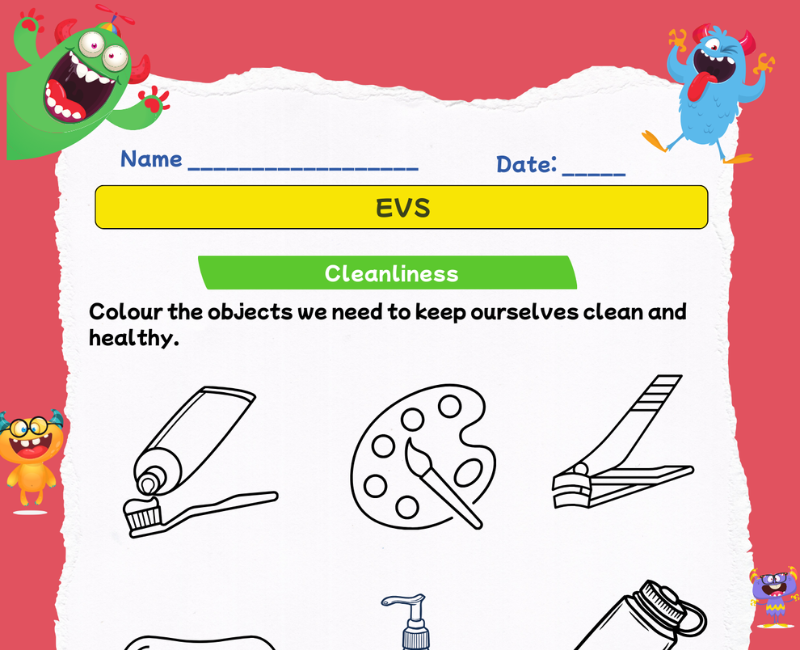
📄 Cleanliness Worksheet for SR KG
📖 Read the Cleanliness Worksheet Learning Guide
🧼 Connect words with everyday routines
A cleanliness worksheet for UKG helps children talk about caring for their bodies and shared spaces. Begin with familiar actions such as washing hands, brushing teeth, drying hands and putting materials away. Use pictures, short instructions and calm modelling. A personal hygiene worksheet for SR KG can support conversation without making children feel ashamed about needing help.
🖐️ Practise the handwashing sequence
Teach children to wet hands with clean running water, apply soap, scrub all areas for at least twenty seconds, rinse and dry with a clean towel or dryer. Include palms, backs, between fingers and under nails. Before eating and after using the toilet are important times for handwashing. The twenty-minute online quiz timer is separate from the twenty-second hand-scrubbing guidance.
🪥 Support personal-care habits
Young children need adult help or supervision to brush thoroughly. General guidance is to brush twice daily for about two minutes with fluoride toothpaste, including before bed. Teach coughing or sneezing into a tissue, binning it afterwards and cleaning hands. If no tissue is available, use the bent elbow instead of the hands. Personal-care tools and supplies should be introduced through clear examples.
🧸 Separate hygiene from tidying
Cleanliness online activities can explore both washing and organisation, but these are different tasks. A shelf may look tidy without being cleaned, and hands may look clean while still carrying germs. Sorting reusable books and toys into their places helps care for shared spaces. Tapping away dirt spots in a picture completes a game, not a real cleaning task.
🎮 Combine printable and online practice
The cleanliness online quiz for SR KG offers twenty questions with review after submission. Ten separate tasks and five practice sets add sequencing, matching, sorting, picture exploration and drawing. Use the existing download option for the printable cleanliness worksheet PDF. Continue with body parts online activities, My School online games and action words practice.
Adult references: CDC handwashing guidance and NHS children’s toothbrushing guidance.
❓ Cleanliness Worksheet FAQs
💬 What is cleanliness in simple words for UKG children?
It means caring for our bodies and surroundings through routines such as washing hands, brushing teeth and managing waste. Tidying helps organise belongings too.
💬 How do I teach personal hygiene to SR KG children?
Model a short routine with pictures and simple words. Practise one step at a time and offer the help each child needs.
💬 What can a cleanliness worksheet for UKG include?
Handwashing sequences, personal-care tool matching, sorting, routine picture cards, simple word tasks and drawing are useful options.
💬 When should children wash their hands?
Important times include before eating, after using the toilet, after playing outside, after handling rubbish and after blowing the nose, coughing or sneezing.
💬 How long should children scrub their hands with soap?
For at least twenty seconds. Scrub all areas, then rinse well and dry with a clean towel or hand dryer.
💬 Which parts of the hands need washing?
Include the palms, backs, between fingers and under fingernails. Use soap and clean running water.
💬 Are hands germ-free if they look clean?
Not necessarily. Germs can be too small to see, so appearance alone is not proof that hands are clean.
💬 How often should young children brush their teeth?
Generally twice daily for about two minutes with fluoride toothpaste, including before bed. Young children need adult help or supervision.
💬 What should children do when coughing or sneezing?
Cover the mouth and nose with a tissue, put it in the bin and clean hands. Use the bent elbow if no tissue is available.
💬 What is the difference between cleaning and tidying?
Tidying puts things in their places. Cleaning removes dirt and other material. A tidy space is not automatically a cleaned space.
💬 Can children use the activities without reading independently?
Yes. An adult can read the prompts while children point, arrange, match or draw. The online tasks practise ideas rather than verify real-life hygiene.
💬 Where can I download the cleanliness worksheet PDF?
Use the existing download option on this page. The online quiz, games and practice sets provide additional learning alongside the printable worksheet.
 Download