Listen Match and Make Rhymes! 🎵🌈
20 quiz questions and 10 interactive activities. Deliver rhyme pairs, follow a sound trail, build word families and complete a tiny rhyme book.
📝 Rhyming Words Quiz for UKG
⏱ Time Left: 20:00
Question 1 of 20 • Answered: 0/20
Which word rhymes with zip?
Question navigation — green means answered.
🎮 Rhyming Words Games for UKG
1. 🔊 Rhyme Echo Studio
Choose a pair. Say both words and listen to the shared ending. Audio is optional; an adult can read aloud.
seed ↔ weed
Ready to play!
2. 🤝 Join Rhyme Partners
Tap two words with matching spoken endings. An adult can read the words.
Ready to play!
3. 🃏 Hidden Rhyme Memory
Reveal two cards. Match rain/train, drum/plum, crown/clown and feet/street. An adult reads each revealed word.
Find four rhyme pairs.
4. 📮 Deliver Rhyme Parcels
Select a word, then deliver it to a mailbox with the same ending sound.
Ready to play!
5. 🤖 Follow the Day Rhyme Trail
Start at day. Follow day → say → play → grey → stay on neighbouring squares. An adult reads the words.
Ready to play!
🧠 Rhyming Words Activities for SR KG
6. 🔧 Repair Rhyme Labels
Every label starts with a non-rhyming partner. Repair all three pairs. An adult reads the words.
Ready to play!
7. 🧱 Build an ACK Word Family
Tap p, s, b or r to join ack. Build pack, sack, back and rack. An adult models the blended words.
__ + ack
Ready to play!
8. 🔍 Collect the ASH Rhymes
Collect every word that rhymes with ash. Tap again to change a choice. An adult reads each word.
Ready to play!
9. 🧩 Build a Rhyme Sentence
Build: The mouse is in the house. Then say mouse and house together.
Ready to play!
10. 📖 Make a Tiny Rhyme Book
Choose the endings for both lines so they rhyme. An adult reads each completed page. Save all three pages.
I hold a __. / I see a __.
Ready to play!
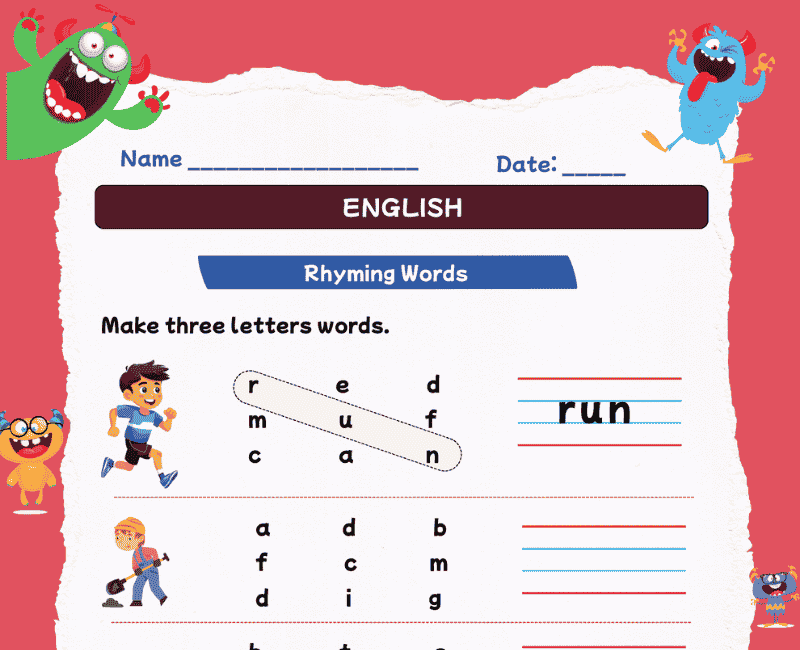
📄 Rhyming Words Worksheet PDF for UKG and SR KG
Use the existing download option on this page for the printable worksheet.
📖 Read the rhyming words learning guide
This rhyming words worksheet for UKG combines printable practice with listening, matching and word play. Senior KG, also called SR KG, children can explore spoken word endings before attempting to read every word independently. An adult names each picture or reads each word so the child knows which sounds to compare. Begin with familiar vocabulary and a small set of clear examples.
Rhyming words share the same final stressed vowel sound and the sounds that follow it. For early practice, use one-syllable words such as seed and weed or tail and mail. Say both words naturally, then repeat the ending gently. Children listen for what stays the same when the beginning changes. Matching just the first sound is a different task.
A match the rhyming words worksheet can help children connect listening with a visible response. Name the available pictures first, agree on their intended words and let the child make a pair. A picture can have several possible labels, so avoid assuming that every learner will name it in the same way. The printed word or an adult model keeps the target clear.
Build confidence through rhyme recognition before asking children to invent many rhyming words. Offer a pair to compare, then a small group with one word that sounds different. Later, invite the child to suggest another word for a rhyme family. A playful made-up word can show awareness of the sound pattern, but explain whether the activity asks for real English vocabulary.
Spelling can support word-family practice, but rhyme depends on pronunciation. Some rhyming words have different written endings, while a shared last letter alone does not make a rhyme. Use examples that rhyme naturally in the child’s spoken variety of English. If a pair sounds different in the family’s pronunciation, discuss it and choose a clearer example.
The twenty-question online rhyming words quiz includes familiar pairs, group comparisons and short reasoning tasks. The ten interactive games use separate examples and actions: pairing cards, sorting word parcels, finding hidden matches, arranging tiles, repairing labels and completing a rhyme book. Correct quiz answers and explanations appear after submission, while the games provide feedback during play.
For paper practice, use the existing download option on this page to access the rhyming words worksheet PDF. Combine it with oral games: take turns saying a word, find its partner or complete a simple spoken line. Children can point, speak or move cards; independent spelling is not required to demonstrate that they can hear a rhyme.
Keep UKG rhyming activities brief and encouraging. Repeat unfamiliar words, explain their meanings and give the child time to listen. If a child chooses words with matching beginnings, model how the endings differ. Use these SR KG rhyming words activities alongside songs, picture books and classroom phonics, while continuing broader sound and blending practice as the child is ready.
💬 Rhyming Words Worksheet FAQs
😊 What are rhyming words?
Rhyming words share the same ending sounds from the final stressed vowel onward. For simple early examples, seed and weed rhyme, as do tail and mail.
😊 How do I teach rhyming words to a UKG child?
Say two familiar words, model listening to their endings and invite the child to find a matching partner. Use a small set of pictures or cards.
😊 Does my child need to read before learning rhymes?
No. Rhyming can be explored through listening and speaking. An adult can name pictures and read the printed words.
😊 Do rhyming words have to end with the same letters?
No. Rhyme depends on spoken sounds. Different spellings can rhyme, and matching only the last written letter is not enough.
😊 What is the difference between rhyme and alliteration?
Rhyme matches ending sounds. Alliteration repeats beginning sounds. Help children notice which part of the words the activity asks them to compare.
😊 Why does my child choose words with the same first sound?
The child may be focusing on the beginning rather than the ending. Model both words and draw attention to their vowel and final sounds.
😊 Should children recognise rhymes before making their own?
Recognising a rhyme is often an easier starting point. Offer choices first, then gradually invite children to suggest additional rhyming words.
😊 Can made-up words count in a rhyming game?
They can show that a child hears a sound pattern during oral play. Label them as made-up words; use real words when a task specifically requires English vocabulary.
😊 What if two words do not rhyme in our accent?
Use the pronunciation familiar to the child and choose a clearer pair when needed. Discuss spoken sounds instead of forcing a spelling-based answer.
😊 Where can I download the rhyming words worksheet PDF?
Use the existing download option on this page. The online quiz and ten interactive games add practice alongside the printable resource.
 Download