CLASS 2 EVS AND SCIENCE • THE HOMES DISCOVERY LAB
Types of Houses Class 2 Worksheet
with Online Activities and Quiz
Discover how homes provide shelter and how their parts work. Build a function mind map, sort house pictures, play a memory game, draw a home and try five practical investigations with adult help.
Types of Houses Class 2 Picture Quiz
Question 1 of 20 • Easy • Answered 0/20
Which labelled part covers the house from above?
Look at the picture. Tap an answer to continue.
Quiz instructions
Answer 10 easy, five average and five thinking questions in 20 minutes. The timer begins with your first answer or move to another question. Answers advance automatically except on Question 20. Use the numbered buttons to revisit and change choices. End Quiz or timeout reveals the score and explanations. Restart clears answers and pauses the timer. Read-aloud uses available browser speech; the written question is always provided.
Types of Houses Learning Games
Begin with the small mind map, sorting and memory games. Then apply the ideas through drawing and a listening story. Each game gives its own steps and learning goal.
1. 🧠 Connect House Parts and Their Jobs
Complete a small function mind map.
You will learn: why roofs, windows, doors and walls are useful.
- Tap one house-part picture below the map.
- Tap its matching job on a branch.
- Finish four links, then explain one in your own words.
Tap the picture to begin.
2. 🧺 Sort Movable and Fixed Examples
Sort the illustrated structures by how they are designed to be used.
You will learn: to distinguish a portable or movable structure from a building designed to stay in one place.
- Drag a picture card into a basket. On a phone, tap the card and then its basket.
- Look for packing, wheels or a fixed building.
- Sort all four. This describes the structure, not how long a family may live in it.
Tap the picture to begin.
3. 🃏 House Feature Memory Game
Match each house picture with its identifying feature.
You will learn: to recognise different homes by visible features.
- Reveal two cards.
- Pair the house picture with its feature sentence.
- Remember the positions and find all four pairs.
Tap the picture to begin.
4. ✏️ Draw and Explain a Home
Draw a home and label what its parts do.
You will learn: to connect a house part with its purpose.
- Draw a home with a roof, walls, a door and a window. Stamps can help.
- Use black or red lines to point to the parts. Add a label to each.
- Explain what two parts do to an adult. A person reviews this creative task.
Tap the picture to begin.
5. 🎧 Rebuild the Rainy-Day Home Story
Listen or read, then order the picture panels.
You will learn: to connect events with the functions of house parts.
- Listen to the story or open its transcript.
- Tap the four panels in the order given in this story.
- Explain which part provided cover and which opening provided access.
Read the story
Rain starts outside. The roof sheds water away from the covered room. A family enters through the door. Later, when conditions are suitable, an adult opens the window for light and air.
Tap the picture to begin.
Word corner: kutcha and pucca houses
Many early lessons describe pucca houses using permanent wall and roof materials such as burnt brick, concrete or suitable stone construction. Kutcha examples often use materials such as mud, unburnt bricks and thatch that may need frequent replacement. Actual houses may combine materials. These words describe construction examples, not the worth or habits of the people who live in them.
Houses Online Activities and Practical Labs
Try these investigations after exploring house parts. Read the materials and steps with an adult, predict what may happen and record what you actually observe.
6. 🌧️ Roof-Slope Water Lab
Compare how a few drops move on a flat and sloping model surface.
You will learn: that slope can change the direction water travels.
- An adult prepares smooth pieces with no sharp edges. Place both in a tray.
- Keep one flat and raise one end of the other slightly.
- Add the same small amount of water to each and watch where it goes.
- Describe the route. This compares model surfaces, not the safety of a real roof.
Practical setup and observation
You need: two identical clean pieces of waterproof packaging, a tray, one small support and a teaspoon.
Record: Which surface made water travel toward a lower edge? Note any differences in the setup.
Tap the picture to begin.
7. 🔦 Window-and-Light Box Lab
Explore light passing through an opening.
You will learn: the function of a window as an opening that can admit light.
- An adult makes a window opening and covers it with a paper flap.
- Place the torch outside the opening without shining it into anyone’s eyes.
- Open and close the flap. Look inside without placing your head in the box.
- Compare the visible light patch. This test concerns light, not measured ventilation.
Practical setup and observation
You need: a small cardboard box, a torch and a paper flap; an adult prepares an opening.
Record: What changed when the flap was open?
Tap the picture to begin.
8. 🏗️ Build a Raised Model Platform
Place four supports before adding a lightweight model floor.
You will learn: how supports can hold a model platform above the ground.
- Place four equal supports on a stable table, with adult help.
- Lay the light card across them and inspect the gap below.
- Gently compare with the card resting directly on the table.
- Use only light craft materials. This is not a test for a real structure.
Practical setup and observation
You need: four equal small blocks or folded-card supports and one lightweight card.
Record: Draw where the supports are and which part is raised.
Tap the picture to begin.
9. 🔍 Compare Model Covering Materials
Inspect three material observations and write what you notice.
You will learn: to compare absorption or water passing through samples.
- An adult places equal-sized samples over a tray.
- Add the same small number of water drops to each.
- Observe whether drops sit on top, soak in or pass through.
- Do not use the results to choose materials for a real building.
Practical setup and observation
You need: small clean samples of paper, cloth and waterproof packaging, a tray and water drops.
Record: Record the sample and what happened. Materials differ; the model examples are not guaranteed results.
Choose a sample to inspect.
Tap the picture to begin.
10. 🚪 Plan a Clear Route to the Door
Move through a model room without crossing the furniture square.
You will learn: that room arrangements affect access to an entrance.
- Make a room outline on a table and leave one gap as a doorway.
- Place a furniture block inside.
- Trace a finger route from one side to the doorway without crossing the furniture.
- Ask an adult to discuss clear paths in real rooms. Do not move heavy furniture.
Practical setup and observation
You need: blocks to outline a pretend room and one small block for furniture.
Record: Sketch your model route and show the doorway.
Tap the picture to begin.
0 of 10 missions completed.
About the practical models
Use small quantities of water and lightweight craft materials. Adults prepare openings, manage cutting and help with setup and cleanup. These models demonstrate ideas; they do not certify real roofs, materials or buildings. Games and labs share one active main workspace. Copy any notes you want to keep before closing the page.
Homes GK and Simple Reasoning Practice
Explore housing facts, recall functions, build a graph and explain your ideas. These tasks extend the lesson beyond naming pictures.
1. 🌍 Explore a Homes GK Passport
Discover four facts without assuming everyone in a place has the same home.
You will learn: examples of homes and shelter designs in the wider world.
- Open each picture window.
- Read or listen to the fact.
- Tell an adult one fact and one careful statement about variety.
Open a picture window.
Tap the picture to begin.
2. 🕵️ Solve House-Part Function Riddles
Type the part that performs each job.
You will learn: to recall a part from its function.
- Read the clue or listen to it.
- Type roof, window, door or wall.
- Solve all four and give another example in your own home.
I cover the room from above.
Word bank: roof • window • door • wall
Tap the picture to begin.
3. 📊 Build the Neighbourhood Picture Graph
Represent a model neighbourhood using three bars.
You will learn: to represent counts without making assumptions about how many people live in a building.
- The picture records show two fixed houses, one caravan and three apartment buildings.
- Tap each bar to cycle its height from zero to three.
- Match the counts, then tap the category with the most buildings.
Tap the picture to begin.
4. 🛠️ Choose a Useful House Feature
Read three needs and connect a suitable feature with each.
You will learn: to explain a design choice rather than judge a home only by appearance.
- Read the need in each case.
- Choose the feature that directly addresses that need.
- Explain why it helps; real buildings require more than one feature.
Tap the picture to begin.
5. 📝 Explain a Home in Your Own Words
Write or dictate a short explanation and share it aloud.
You will learn: to communicate functions, observations and a careful GK fact.
- Name one type of home and describe a visible feature.
- Explain what a roof, door or window does.
- Add one practical observation or GK fact. Read it to an adult.
Adult review prompts
Are house features identified accurately? Is a function explained? Does the child distinguish a model observation from a claim about all real houses? Praise clear reasoning and discuss any correction.
Tap the picture to begin.
0 of 5 practice tasks explored.
Five Parent and Teacher Tips
Ask what a feature does
After naming a roof, window or door, ask the child to explain its function. Encourage a reason such as “the opening lets light enter” rather than accepting only a label.
Offer several ways to participate
Use pictures, read-aloud instructions, writing, drawing and practical work together. Children can listen and read the same story, dictate an explanation or use picture stamps when free drawing is difficult.
Keep comparisons respectful
Discuss materials, needs and features without making assumptions about a family from its home. Different communities and households use a wide variety of homes.
Distinguish models from buildings
A paper roof or card platform is a learning model. Its result cannot prove a real structure is safe. Ask what the model showed and what it did not test.
Connect the worksheet with a practical observation
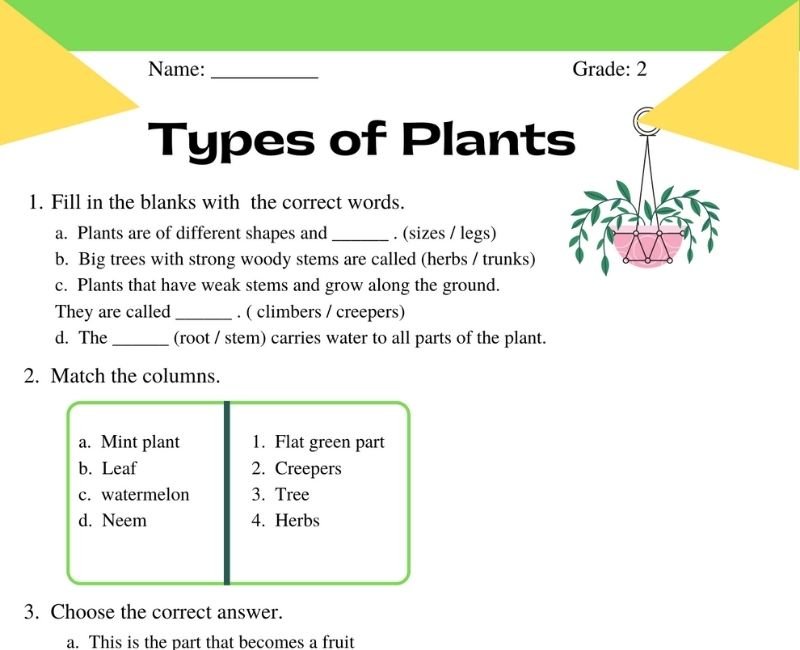
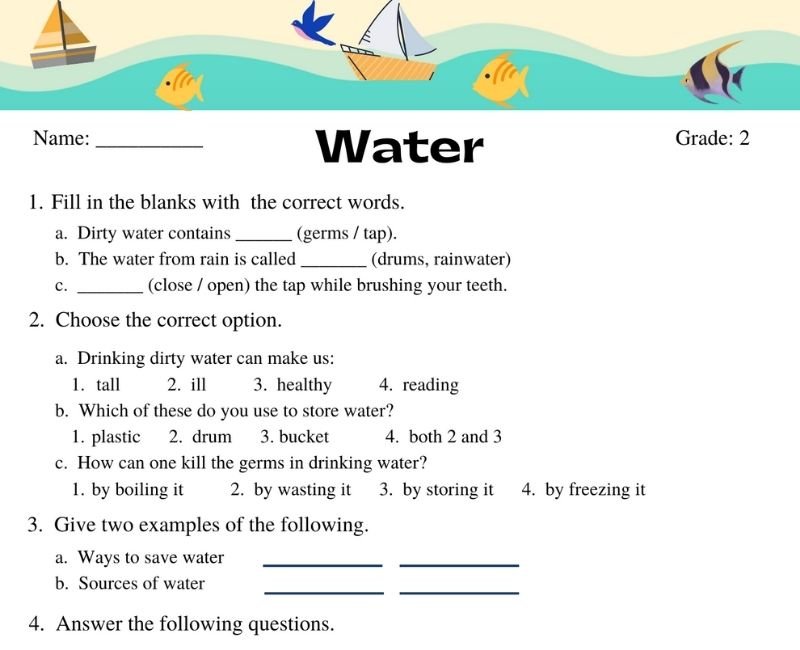
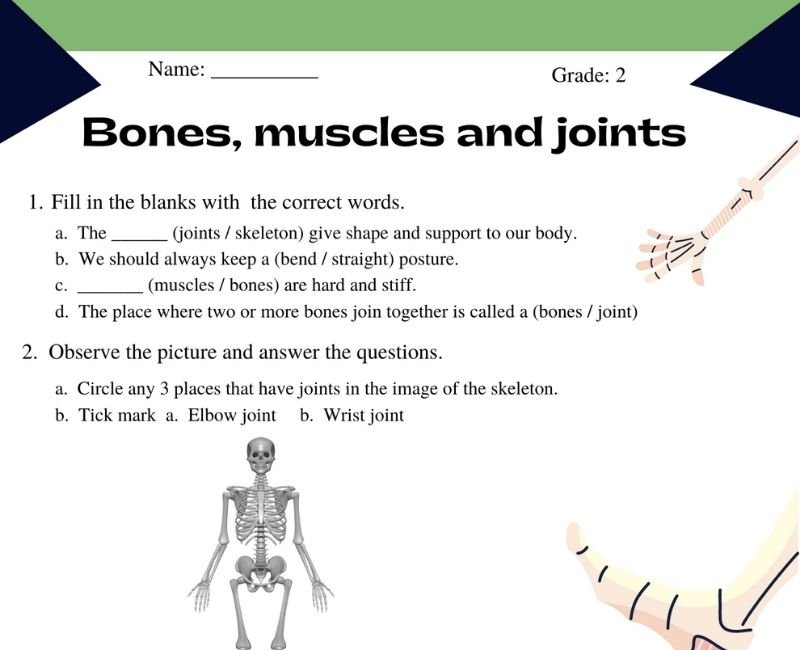
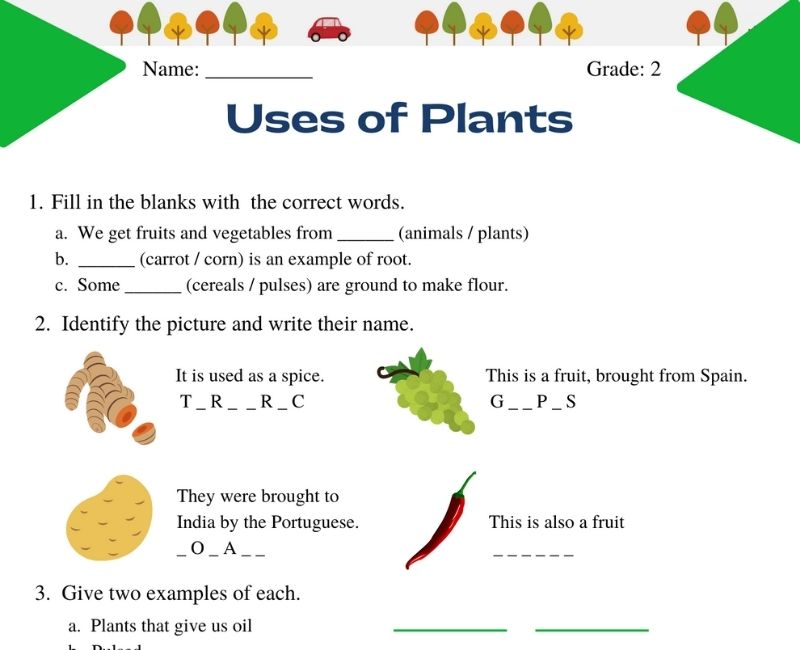
Use the worksheet download already provided on this page for written practice. Follow a lab with a sketch, a label and a sentence describing what changed.
Types of Houses Class 2 Notes and Learning Guide
Why do we need a house?
A house provides shelter and a place for everyday living. It helps protect people from weather and supports needs such as rest, privacy and shared family life. Homes vary with local conditions, available materials, culture, resources and household needs.
House parts and their functions
A roof covers a space from above. Walls enclose or divide spaces, and some have structural roles. Doors provide entry and exit. Windows can admit daylight and, when suitable to open, allow air movement. Naming these parts is the beginning; explaining how they help is the main learning goal.
Different types of houses for Class 2
Familiar examples include fixed houses, apartments, tents, caravans, houseboats and stilt houses. An apartment is a separate home within a larger building. A caravan has wheels, while a houseboat is a floating dwelling. A stilt house has its living floor raised on supports. A camping tent can be packed and moved. A movable structure can still be someone’s long-term home.
Building materials and useful features
Homes may use brick, concrete, stone, timber, earth, thatch and combinations of materials. Early lessons often introduce kutcha and pucca construction examples. Real durability depends on design, workmanship, conditions and maintenance. A sloping surface can help rainwater drain, but slope alone does not guarantee a watertight roof.
Homes around the world and GK
Houseboats are associated with lakes around Srinagar in Jammu and Kashmir. Stilt-house traditions occur in places including parts of Assam. Some Inuit communities have used shelters built from suitable snow. These examples do not mean every person in a place lives in the same kind of home. Housing traditions are diverse and change over time.
Using the worksheet with online activities and quiz
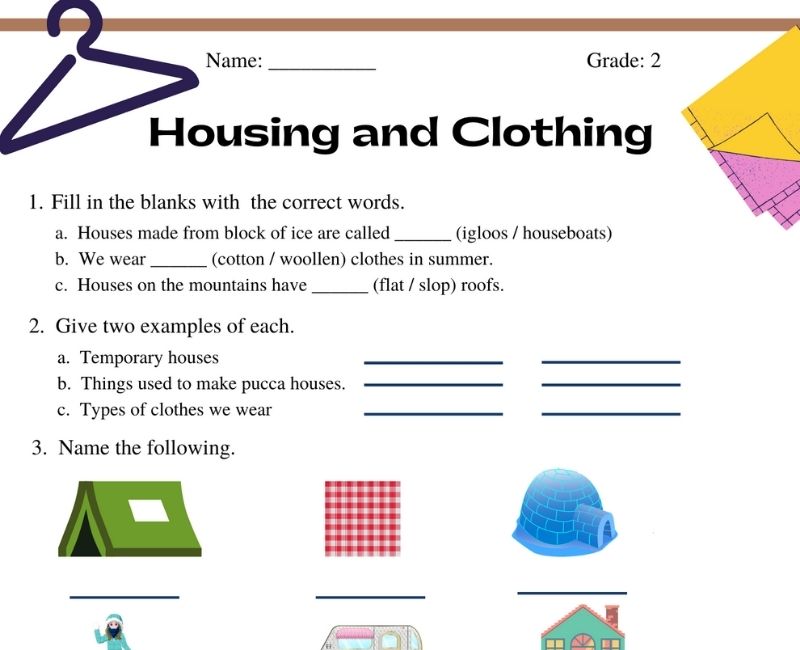
Combine this types of houses worksheet for Class 2 with the function mind map, sorting game, memory pairs, drawing and practical labs. Read-aloud and transcripts support listening, while notes and explanations provide reading and writing practice. Revisit the My Home Worksheet for Class 1 for foundations. Extend the topic with the Housing and Clothing Worksheet for Class 3.
Related House Worksheets and Class 2 Science Practice
Types of Houses Class 2 Questions and Answers
Why do we need a house for Class 2?
A house provides shelter and a place to live, rest and carry out everyday activities. It helps protect people from weather.
What are different types of houses?
Examples include fixed houses, apartments, tents, caravans, houseboats, stilt houses and snow shelters. People use many designs and combinations.
What are kutcha and pucca houses?
Introductory lessons often use kutcha for examples made with materials such as mud, unburnt bricks and thatch, and pucca for examples with permanent wall and roof materials such as burnt brick and concrete. Actual houses may mix materials.
What is the function of a roof?
A roof covers a space from above. Appropriate roof design and materials help protect the inside from weather.
Why do houses have windows?
Windows can admit daylight. Openable windows can also allow air movement when conditions and safety arrangements permit.
What is a caravan?
A caravan is a wheeled living space that can be moved. Some people use movable structures as long-term homes.
What is a houseboat?
A houseboat is a floating dwelling. Houseboats are associated with places such as lakes around Srinagar and waterways in Kerala.
What is a stilt house?
A stilt house has its living floor raised on supports. A raised floor can be useful in some wet or flood-prone settings, but it does not guarantee safety in every flood.
What is an igloo made of?
The snow shelter commonly called an igloo is built from suitable blocks of snow. It is one shelter tradition, not the only kind of home used by Inuit communities.
Why do some houses have sloping roofs?
A slope can help water drain away. Real roofs also need suitable materials, joints, drainage arrangements and maintenance.
How can children learn house-part functions through games?
They can connect parts with jobs in a mind map, sort structures, match feature memory cards, label a drawing and explain a picture story.
Which practical house activities can Class 2 students try?
With adult help, children can compare model roof slopes, observe light through a box opening, build a light raised platform, test small covering samples and plan a route through a pretend room. These are learning models, not real construction tests.
 Download