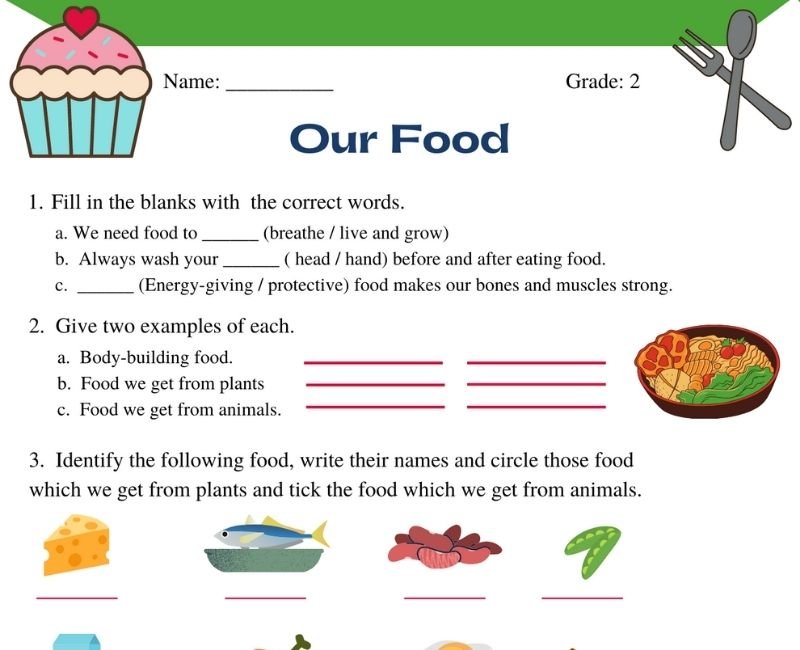
CLASS 2 SCIENCE • OUR FOOD
Become a Food Detective!
Where does roti begin? Which plant part is a carrot? What can dal add to a meal? Explore these questions with our Our Food Class 2 worksheet, picture quiz and clickable online activities.
20 picture quiz questions • 10 learning missions • 5 practice tasks
Our Food Class 2 Picture Quiz
Study the diagrams and choose an answer. There are 10 easy questions, 5 average questions and 5 thinking questions.
Your 20-minute timer begins with your first answer or move to another question. Answers move you forward automatically. Return using the numbered buttons to change a choice. Explanations appear after submission.
Question 1 of 20 • Easy • Answered 0/20
Why do we need the foods in this meal?
Look at the picture. Tap an answer to continue.
Five Our Food Learning Games
Build a meal map, trace food sources, investigate ingredients, connect edible plant parts and follow wheat to roti. Choose a mission below.
1. 🍽️ Build the Meal Variety Map
Choose a food card and connect it to its place in the learning plate. This is a variety model, not a portion prescription.
Choose a food card first.
2. 🌱 Trace the Food Source
Look at the changing food card. Tap the plant or animal source. Dairy milk is used in this game.
Tap the picture to begin.
3. 🕵️ Open the Ingredient Detective Files
Each pictured dish has a named recipe clue. Select the two ingredients in that clue, then check the case. Recipes can vary.
Tap the picture to begin.
4. 🥕 Complete the Edible Plant Map
Choose a food and tap the plant-part branch we eat in this example.
Tap the picture to begin.
5. 🌾 Follow Wheat to Roti
Tap the four pictures in the order that takes wheat to cooked roti. Cooking is an adult task.
Tap the picture to begin.
Five Our Food Online Activities
Tap directly on meal pictures and activity cards. Explore variety, handwashing, food care and a shopping basket with different food groups.
6. 🔎 Investigate the Meal Diagram
Find each food directly on the labelled meal picture. Use the clue rather than a separate answer box.
Find the cereal food made from wheat.
Tap the picture to begin.
7. 🥣 Add Variety to the Lunch
Solve three lunch cases. Choose the addition that meets the stated goal. These are learning examples, not meal prescriptions.
Tap the picture to begin.
8. 🧼 Put Handwashing in Order
Arrange the simplified handwashing sequence before eating. Scrub with soap for at least 20 seconds, including fingers and backs of hands.
Tap the picture to begin.
9. 🛡️ Solve the Food Care Cases
Choose a helpful action for each food-handling scene. Children should ask an adult about cooking and storage.
Tap the picture to begin.
10. 🧺 Fill the Variety Shopping Basket
Select exactly four cards: one cereal, one pulse, one vegetable and one fruit. Then check your basket.
Tap the picture to begin.
0 of 10 missions completed.
Food and Nutrition Extra Practice
Match sources, complete a food-needs mind map, reduce food waste and create a learning poster.
1. 🧠 Match Food and Source Memory Cards
Reveal two cards to pair each food with its source. Find all four pairs.
Tap the picture to begin.
2. 💧 Complete the Food Needs Mind Map
Choose each example and connect it with the lesson idea. Food groups are learning aids; foods can do several jobs.
Tap the picture to begin.
3. 🌍 Make a Less-Waste Plan
Select three helpful actions. The plan is about respecting food rather than forcing someone to finish a large serving.
Tap the picture to begin.
4. 🔧 Repair the Food Facts
Repair three oversimplified notes using the pictures and lesson clues.
Tap the picture to begin.
5. 🎨 Design a Food Variety Poster
Stamp foods onto the poster. Tell an adult one source fact and one food-care fact. This is creative practice.
Tap the picture to begin.
0 of 5 practice tasks explored.
Parent and Teacher Tips
Ask children to explain the picture clue
Ask “How do you know?” Let the child point to a food, source, ingredient or plant part and explain the connection.
Use familiar family foods
Discuss foods your family eats, such as rice, roti, dal, vegetables, idli or other local dishes. Recipes and meal patterns vary. Help children identify ingredients without ranking families or cuisines.
Explain that foods can have several jobs
Energy-giving, body-building and protective foods are simple lesson groups. A food can provide several nutrients. Pulses contribute protein, and cereals provide more than energy alone.
Use the worksheet after an online mission
Use the worksheet download already provided on this page for paper practice. Ask your child to draw a food-source connection or describe how a familiar dish is made.
Keep practical food tasks supervised
Adults should handle heat, sharp tools and storage decisions. Choose suitable foods for the child and account for known allergies. The activity plate illustrates variety rather than prescribed portions.
Read the Our Food Class 2 Learning Guide
Why do we need food?
Food gives us energy and nutrients. We use energy when we move, play and carry out everyday body functions. Nutrients help our bodies grow, repair and work properly. Our Food Class 2 questions and answers help children connect these ideas with familiar meals.
Sources of food for Class 2
Many familiar foods come from plants and animals. Plants provide cereals, pulses, fruits and vegetables. Dairy milk, eggs and fish are animal-source foods. A prepared dish can combine ingredients from several sources. Tracing a dish back to its ingredients helps children understand the food we eat.
Energy-giving body-building and protective foods
Cereals such as rice and wheat are familiar energy-giving examples. Protein contributes to growth and repair; pulses, eggs and dairy foods are examples of protein-containing foods. Fruits and vegetables supply different vitamins, minerals and other useful components. They are often called protective foods in early lessons. These groups describe important roles, but a food can have several nutrients and no food guarantees that we will never become ill.
Learning about a balanced diet
A balanced diet provides suitable amounts and variety of foods to meet a person's needs. One special food cannot supply everything. Our illustrated meal combines a cereal, a pulse dish, vegetables and fruit as a learning example. It does not show required portions or a complete daily eating plan.
Food hygiene and everyday food care
Wash hands with soap and water before eating or handling food. Use safe drinking water and keep food protected from contamination. Adults should manage appropriate cooking and storage. Planning what is needed and beginning with a manageable serving can also reduce waste.
Using the worksheet with online activities and quiz
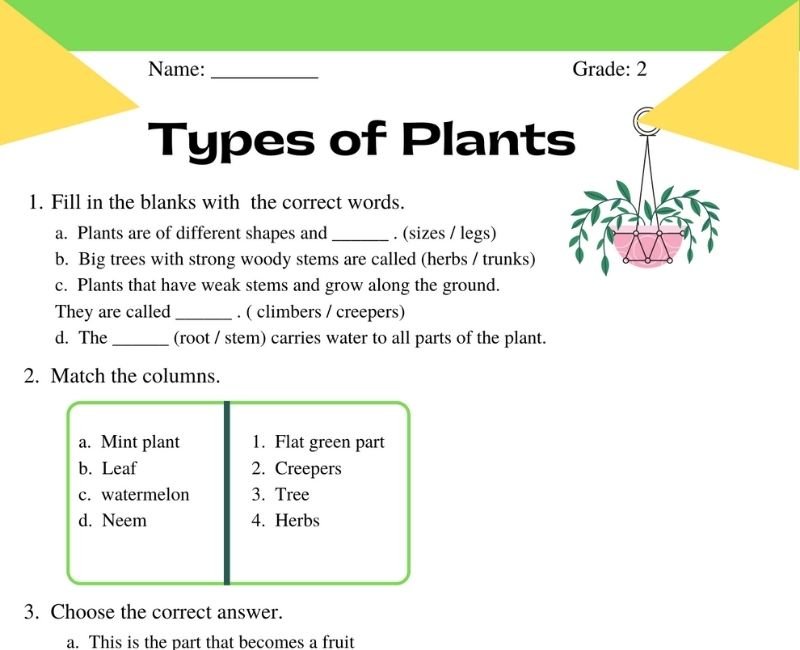
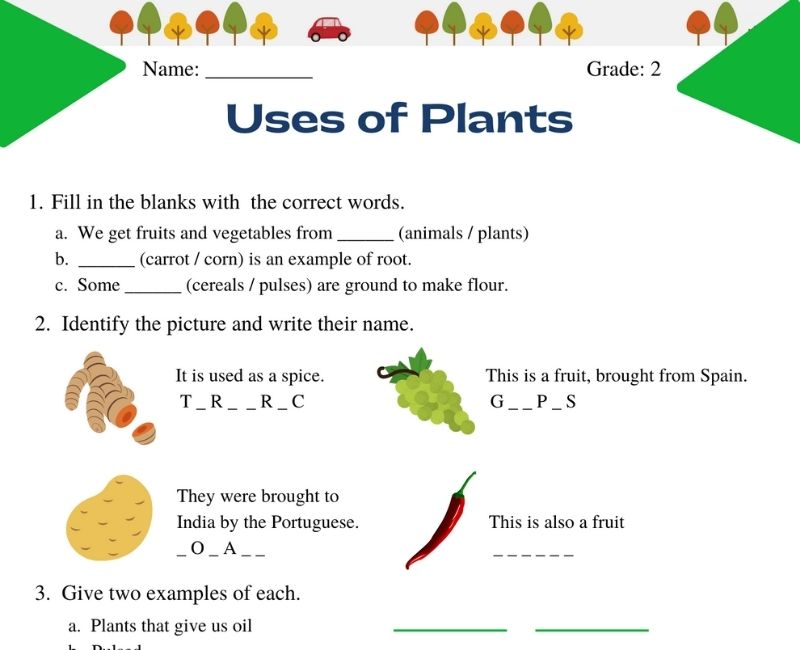
Combine the Our Food worksheet for Class 2 with the food-source game, ingredient cases and meal-diagram questions. Revisit a task when a child needs another example. Use the Our Food Worksheet for Class 1 with Online Quiz and Games for foundational practice. Extend the plant-food connection with the Uses of Plants Worksheet for Class 2.
Related Food Worksheets and Class 2 Science Worksheets
Our Food Class 2 Questions and Answers
Why do we need food for Class 2?
We need food for energy and nutrients. Food helps our bodies grow, repair and carry out everyday functions.
What are the main sources of food?
Plants and animals are the main living sources of many familiar foods. Plants give us cereals, pulses, fruits and vegetables. Animals provide foods such as dairy milk, eggs and fish.
What are energy-giving foods?
Foods containing carbohydrates or fats provide energy. Rice, roti and other cereal foods are familiar examples used in Class 2 lessons.
What are body-building foods?
Protein-containing foods are often called body-building foods because protein supports growth and repair. Examples include pulses, eggs and dairy foods.
What are protective foods?
Fruits and vegetables are often called protective foods in early lessons because they supply nutrients that support health. They do not guarantee protection from every illness.
Can one food belong to more than one food-role group?
Yes. Foods often contain several nutrients and have several roles. For example, dal contributes protein, carbohydrate and other nutrients.
What is a balanced diet for Class 2?
A balanced diet includes suitable amounts and variety of foods to provide the nutrients a person needs. Appropriate foods and amounts can differ between people.
Which parts of plants do we eat?
We eat different plant parts. Examples include carrot roots, spinach leaves, pea seeds and cauliflower flower structures.
Why should we wash our hands before eating?
Washing with soap and water helps remove germs and dirt that could spread to food. Scrub for at least 20 seconds, rinse and dry with a clean towel.
Why should we keep food covered?
A suitable cover helps keep dust and flies away. Food also needs clean handling and appropriate cooking and storage.
Why is water important in our daily diet?
Our bodies need water to function properly. Safe drinking water helps us meet our water needs.
How can I teach Our Food through activities?
Ask children to trace ingredients, sort food sources, complete a meal map and explain food-care choices. Use the worksheet download on this page for offline practice after the online quiz.
 Download