Write Numbers in Figures Worksheet for Class 1
When a question says “write twelve in figures,” the answer is 12. The number is already given in words; the child needs to read its name and record the matching numeral. This connects number-word recognition with understanding and writing digits.
Use this Class 1 worksheet to practise writing numbers from words. The worked examples and additional questions below focus on converting number names to numerals, recognising teen numbers and checking the order of tens and ones. Choose a small set of familiar number names before introducing more challenging examples.
What Does “Write in Figures” Mean?
Figures are the written digits used to represent a number. Writing a number in figures means converting its word form into its numeral. For example, seven becomes 7 and eighteen becomes 18.
Words to figures: fourteen = 14.
Figures to words: 14 = fourteen.
Both tasks describe the same value, but the writing direction differs. Read the instruction carefully so the child knows whether the answer should contain digits or words.
Read the Number Name Before Writing
Ask the child to read the whole number name aloud. If the word is unfamiliar, read it together and connect it with a known quantity or numeral card. Then write the numeral and read it back to check.
For eight, write 8. For eleven, write 11. For nineteen, write 19. Avoid guessing from the first letter: six, seven and sixteen begin with the same letter but represent different values.
Worked Example: Fifteen or Fifty?
Fifteen and fifty can be confused because their names sound similar. Use place value to show the difference. Fifteen contains one ten and five ones, so its numeral is 15. Fifty contains five tens and zero ones, so its numeral is 50.
Fifteen: 1 ten and 5 ones = 15.
Fifty: 5 tens and 0 ones = 50.
Use the same approach for thirteen and thirty or eighteen and eighty. Introduce these comparisons when the child is ready to work with the larger values.
Use Tens and Ones to Write Two-Digit Numbers
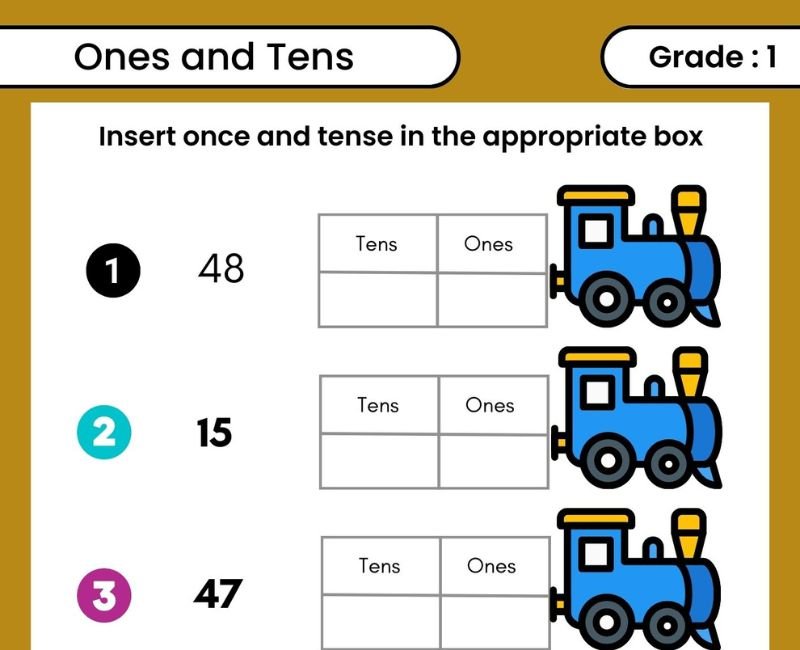
For twenty-six, the word twenty represents two tens and six represents six ones. Write 2 in the tens position and 6 in the ones position to make 26.
For sixty-two, write 6 in the tens position and 2 in the ones position to make 62. Although 26 and 62 use the same digits, the positions give them different values.
A whole-ten word needs a zero in the ones position. Forty is written as 40, not 4. The zero shows that there are no additional ones beyond the four tens.
Extra Words-to-Numbers Questions with Answers
Write each number name in figures. Questions 1 to 8 provide early practice; the remaining questions extend the task to two-digit numbers. These are additional online questions alongside the worksheet resource.
- Four = ___.
- Eight = ___.
- Ten = ___.
- Eleven = ___.
- Twelve = ___.
- Fifteen = ___.
- Eighteen = ___.
- Twenty = ___.
- Twenty-three = ___.
- Thirty-two = ___.
- Forty = ___.
- Fifty = ___.
- Sixty-four = ___.
- Seventy-nine = ___.
- Eighty-six = ___.
- Ninety-one = ___.
View answers to the extra practice questions
1. 4; 2. 8; 3. 10; 4. 11; 5. 12; 6. 15; 7. 18; 8. 20; 9. 23; 10. 32; 11. 40; 12. 50; 13. 64; 14. 79; 15. 86; 16. 91.
Check the Numeral Against the Words
After writing an answer, read the numeral back aloud. If the instruction says thirty-six and the child writes 63, reading the answer as sixty-three reveals the mismatch.
Check whether a difficulty comes from reading the word, understanding the value or writing the digit. If the child says the correct number but forms a digit backwards, practise that digit separately while acknowledging the correct number understanding.
A Short Read-and-Write Activity
Prepare a few cards with number names. Let your child pick a card, read it and write the matching numeral. Use numeral cards for checking at first, then remove that support as confidence grows.
Choose familiar names and add only a few new ones at a time. Keep written-word practice separate from spoken dictation occasionally: a child who can write a number after hearing it may still need help recognising its written name.
Related Number Names and Place-Value Worksheets
Number Names Matching Worksheet: Practise recognising the correct pair before writing independently. Number Names 1 to 100 Worksheet: Extend practice and explore writing numerals in words. Tens and Ones Worksheet: Check the digit positions in two-digit numbers. Numbers 1 to 20 Worksheet: Strengthen early counting and numeral recognition. Browse Class 1 Maths Worksheets: Find more topics for regular practice.Frequently Asked Questions
What does writing numbers in figures mean?
It means using digits instead of words. For example, sixteen written in figures is 16.
How is this different from writing number names?
Writing number names converts digits into words, such as 16 to sixteen. Writing in figures converts words into digits, such as sixteen to 16.
How do children avoid reversing the digit order?
Identify the tens and ones before writing. For forty-seven, write four tens followed by seven ones: 47. Read the numeral back to check it.
Why does sixty need a zero?
Sixty means six tens and zero ones. Writing 60 records those place values; writing only 6 means six ones.
Can I help read the number words aloud?
Yes. Read unfamiliar names together, then let the child write the numeral. Gradually encourage independent reading of familiar words.
Where are the answers to the extra questions?
Open the answer section beneath the additional practice questions in this description to check the corresponding numerals.
 Download