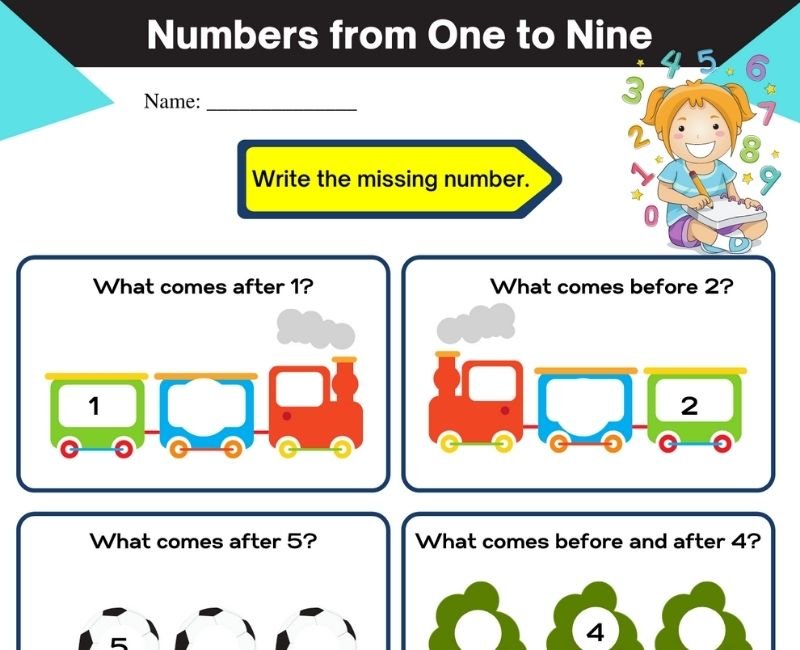
Numbers 1 to 9 Worksheet for Class 1
Help children connect numbers with the quantities they represent using this numbers 1 to 9 worksheet for Class 1. Counting pictures, matching a numeral with a collection and completing a number sequence give children different ways to practise early number skills.
Use the activities for classroom work, homework or revision. Begin with objects children can touch and move, then connect those collections with pictures and written numerals. The additional examples, questions and clickable answers below support careful counting and number recognition.
Recognising Numbers from One to Nine
Say the number names while pointing to the corresponding numerals. Then show the numerals in a mixed order. Recognising 6 on its own checks a different skill from saying “six” while reciting the whole counting sequence.
1 – one; 2 – two; 3 – three; 4 – four; 5 – five; 6 – six; 7 – seven; 8 – eight; 9 – nine.
Ask your child to choose a number card and build a matching collection. For example, the card 4 should be matched with four counters. This connects the written symbol, the spoken name and the quantity.
Count and Match the Correct Number
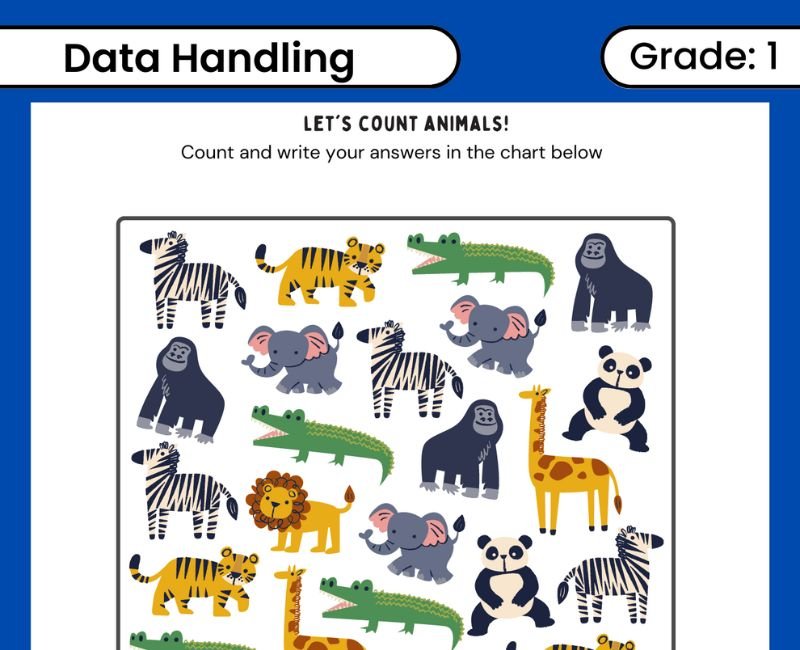
In a count-and-match activity, children count the objects in a picture and connect that collection with its numeral. Encourage them to point to each object once and say one number for each object.
Example: A picture contains seven flowers.
Count the flowers carefully: 1, 2, 3, 4, 5, 6, 7.
Match the collection with 7.
The last number said tells how many objects there are altogether. After counting, ask “How many flowers?” so your child practises stating the total rather than automatically counting again.
Make a Collection Equal to the Number
This activity reverses the counting task. Instead of finding a number for a collection, children start with a number and create a collection of that size. They can draw simple marks or use counters to represent the required quantity.
Example: The number shown is 5.
Draw five circles or place five counters on the table. Count them again to check that the collection matches the number.
Keep drawings simple so the activity tests number understanding rather than drawing skill. If there are too many or too few objects, ask your child to adjust the collection and explain the change.
Missing Numbers and Number Order
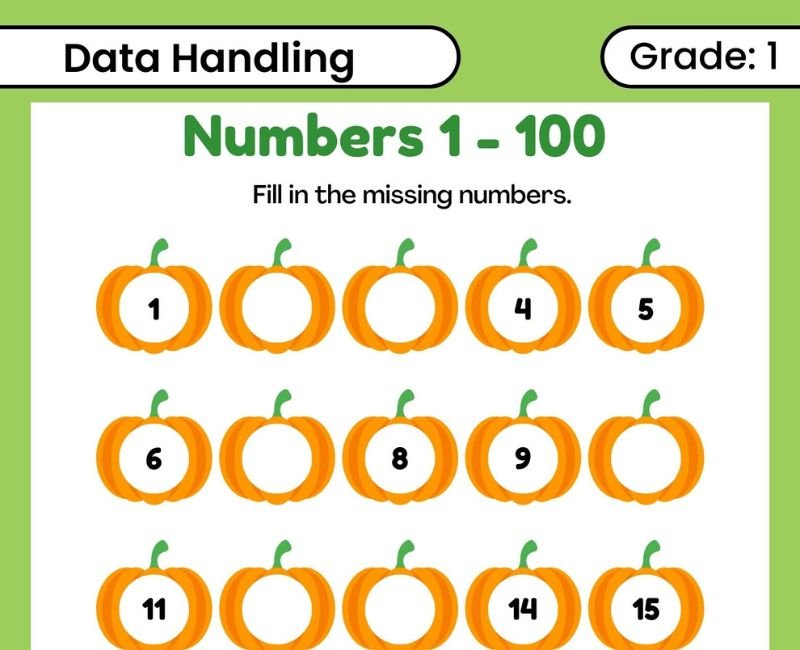
The counting sequence from 1 to 9 is 1, 2, 3, 4, 5, 6, 7, 8, 9. Use number cards to build this sequence, then remove one card and ask your child to identify the missing number.
Worked example: 3, 4, __, 6
Count forward from three: three, four, five, six. The missing number is 5.
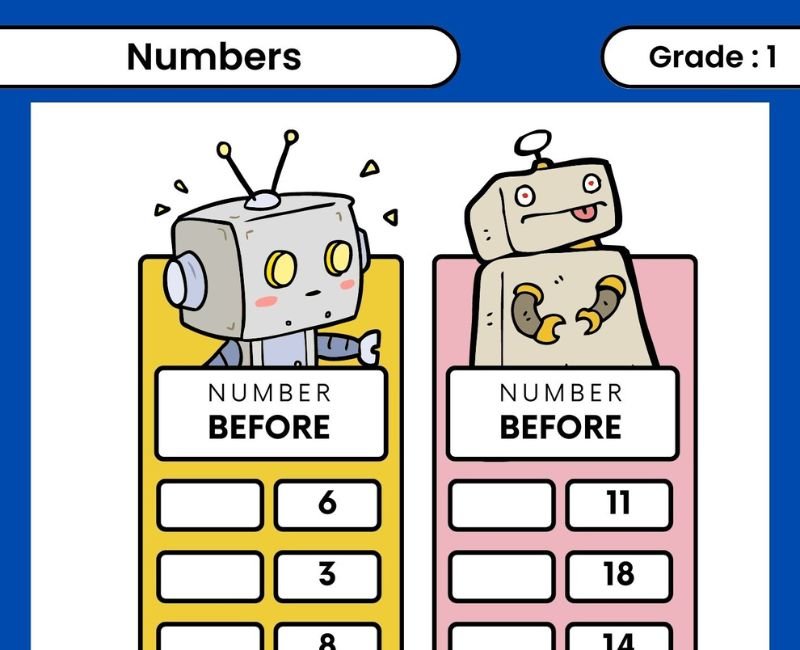
Practise starting from different numbers instead of always beginning at 1. Ask what comes before 8, after 5 or between 6 and 8. A short number line can provide support while your child learns.
Extra Numbers 1 to 9 Practice
Try these original questions alongside the worksheet. Use objects or drawings where needed, then click the answer box to check.
- Write the numeral for three.
- Write the numeral for eight.
- Complete: 1, 2, __, 4.
- Complete: 5, __, 7.
- Complete: 7, 8, __.
- What number comes before 6?
- What number comes after 4?
- What number lies between 7 and 9?
- Draw a collection matching the number 4.
- Arrange these numbers in increasing order: 8, 2, 5.
- Which collection has more objects: 3 counters or 6 counters?
- If you spread out seven counters without adding or removing any, how many counters are there?
Click to View Practice Answers
Answers: 1. 3; 2. 8; 3. 3; 4. 6; 5. 9; 6. 5; 7. 5; 8. 8; 9. Any drawing containing exactly four objects; 10. 2, 5, 8; 11. 6 counters; 12. 7 counters.
A Simple Number-Card Activity
Prepare nine cards labelled 1 to 9. Let your child choose a card, read the number and build a matching collection with blocks. Then ask them to find the card that comes immediately before or after it, keeping the activity within the 1 to 9 range.
Rearrange the objects without changing the quantity. Ask whether the total has changed and let your child recount to check. This helps them see that spreading objects apart does not create more objects. Use short sessions and allow time for explanations.
Continue Learning with Related Worksheets
Numbers 1 to 20 WorksheetExtend counting and number recognition beyond nine. Before and After Numbers Worksheet
Practise neighbouring numbers and number sequences. Comparing Numbers Worksheets
Explore greater, smaller and equal quantities. Addition Worksheet for Class 1
Use counting skills to combine two collections and find a total. Browse All Class 1 Maths Worksheets
Explore general maths activities and separately labelled textbook resources.
Frequently Asked Questions
How do I teach numbers 1 to 9?
Connect spoken number names with written numerals and real objects. Ask children to read a numeral, build its quantity and count the collection to check.
What does count and match mean?
Children count the objects in a collection and connect it with the numeral representing that total.
Why does my child miss objects while counting?
They may need help coordinating pointing with saying the numbers. Encourage them to move each object once or count pictures in a clear order.
How do children find a missing number?
Read the sequence and count from the number just before the gap. Number cards or a number line can help them check.
Does changing the arrangement change the number of objects?
No. The quantity stays the same if no objects are added or removed. Children can recount to confirm this.
Where are the extra practice answers?
Open “Click to View Practice Answers” below the twelve additional questions. The answers apply to the on-page practice.
 Download