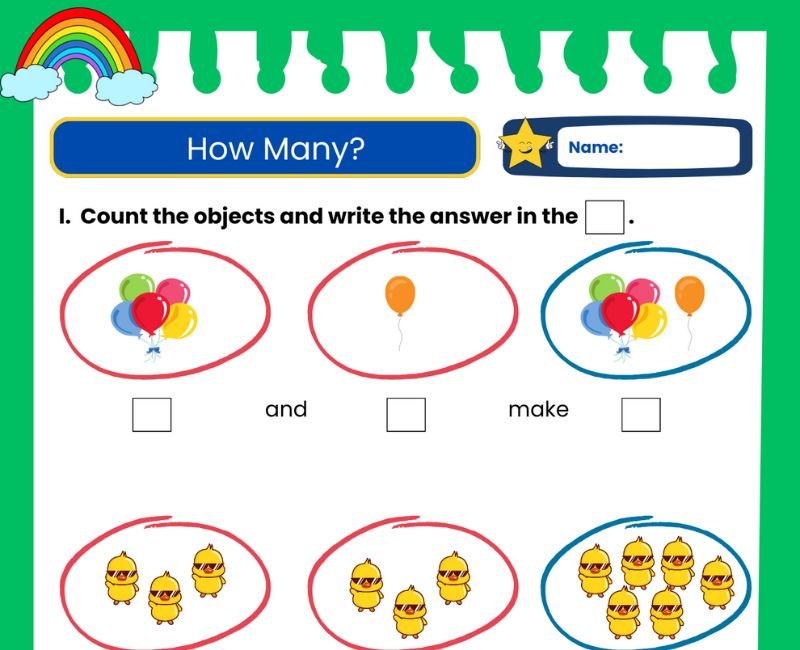
How Many Class 1 Worksheet
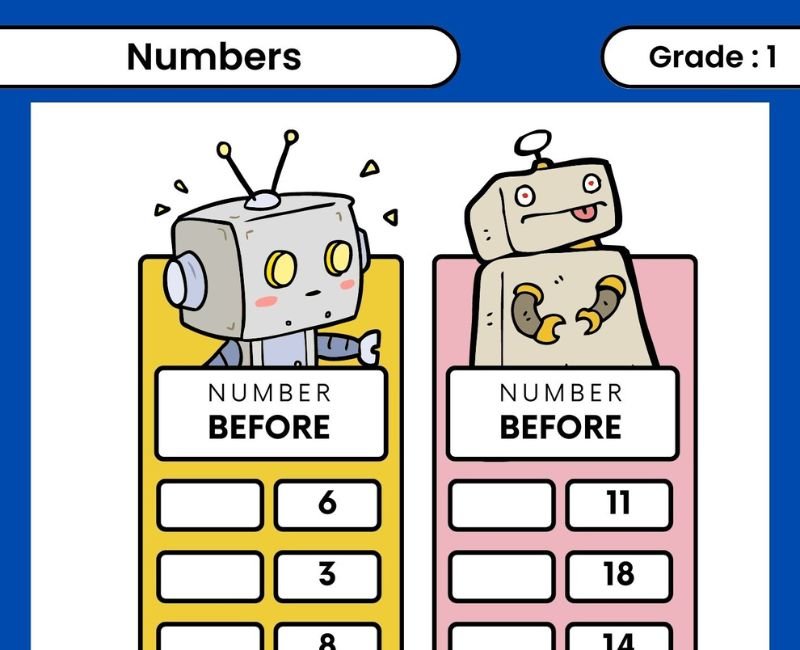
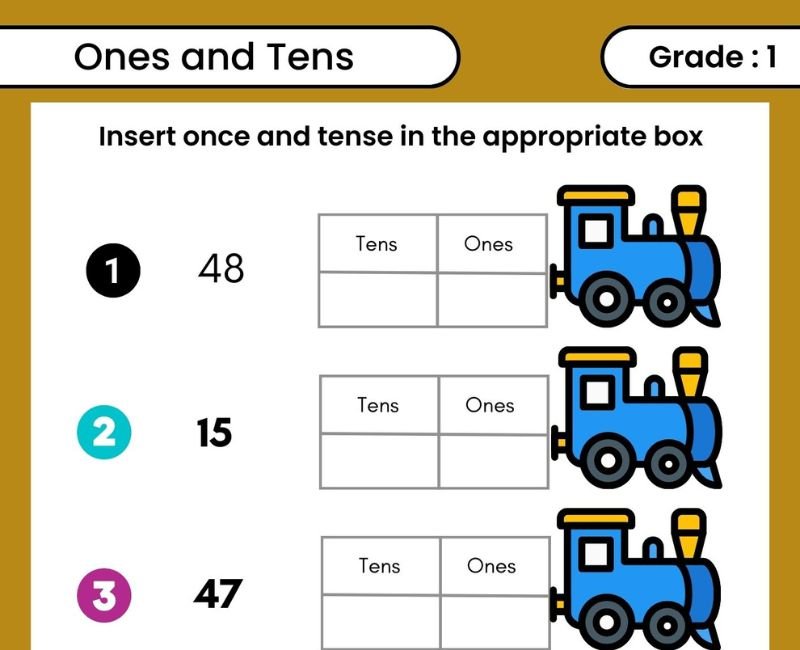
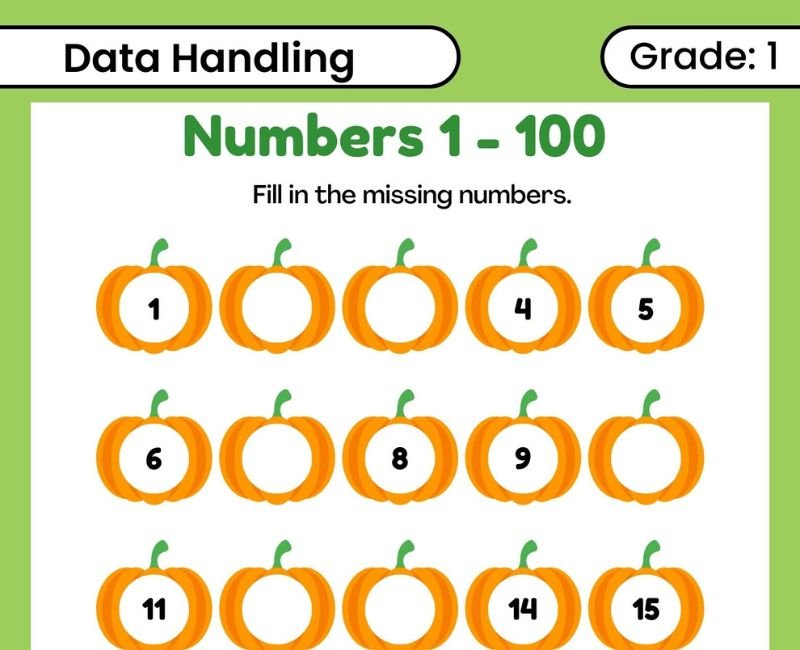
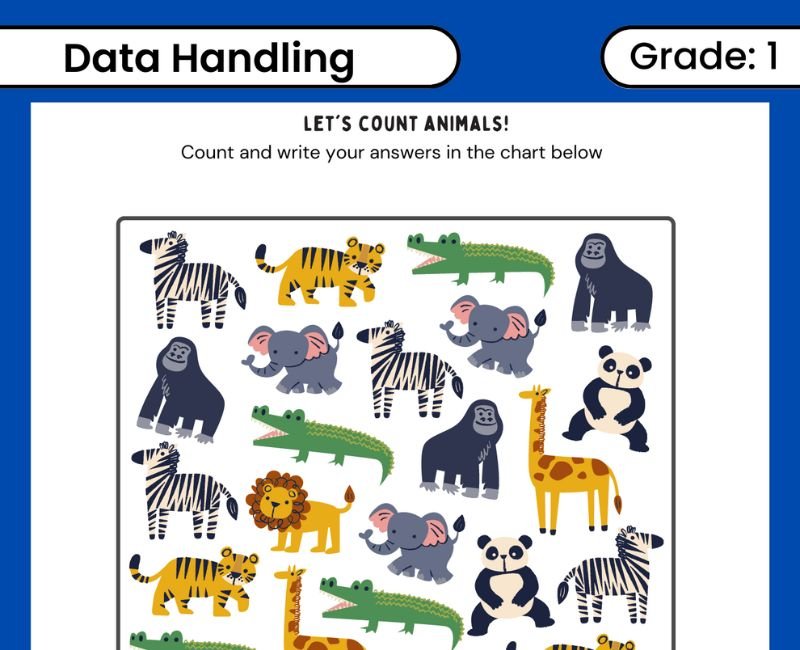
Explore joining groups and taking objects away with this How Many Class 1 worksheet. Use it alongside NCERT Class 1 Maths Chapter 5 - How Many? (Addition and Subtraction of Single Digit Numbers) in the Joyful Mathematics textbook.
Children begin to connect familiar counting situations with addition and subtraction. Blocks, crayons and simple drawings help them show what happens before writing a number sentence. The original practice questions with answers below provide extra examples for home revision and classroom discussion alongside the worksheet available on this page.
Addition: Find How Many Altogether
Place three blocks in one group and two in another. Bring the groups together and count all the blocks. There are five altogether, so 3 + 2 = 5.
Explain that the plus sign shows addition and the equals sign tells us that both sides have the same value. Let children build another example with objects, describe the action aloud and then write its number sentence.
Once counting all the objects becomes comfortable, introduce counting on. To find 4 + 2, start at four and count two more: five, six. The answer is six. Children should understand what the extra counts represent before using this method independently.
Subtraction: Find How Many Are Left
Start with seven counters and move three away. Count the four counters that remain. This represents 7 - 3 = 4.
For picture-based subtraction, children can cross out the objects being removed and count those left. Ask them to explain the starting quantity, how many were taken away and how many remain. This connects the drawing with the subtraction sentence.
Put six crayons on a table. Move two into a pencil case. Four remain on the table: 6 - 2 = 4.
Tell a Maths Story Before Writing the Answer
A short story gives a calculation meaning. For addition, try: "There are four children playing. Three more join them. How many children are playing now?" Children can draw two groups or use counters to show 4 + 3 = 7.
For subtraction, try: "There are eight paper flowers. Two are used to decorate a card. How many paper flowers remain?" Show eight, remove two and count six.
Discuss what happens in the story rather than choosing an operation from one word alone. Encourage children to retell the situation in their own words and explain why they joined or removed objects.
Practise with a Number Path
Draw a number path from 0 to 9. To show 3 + 2, begin at 3 and move forward two spaces, landing on 5. To show 7 - 2, begin at 7 and move back two spaces, landing on 5.
Count the moves, not the starting position. A common mistake is counting the starting number as the first move. Ask the child to move a counter one space at a time and say one number for each move.
Keep the examples small while children learn how the path works. Objects and drawings remain useful even after a child starts using written calculations.
Zero and Related Number Facts
If all five counters are taken away, none remain: 5 - 5 = 0. If no counters are removed, five remain: 5 - 0 = 5. Adding no extra objects also leaves a collection unchanged: 5 + 0 = 5.
Use a group of seven objects to explore related facts. Split it into groups of four and three. Children can see that 4 + 3 = 7 and 3 + 4 = 7. Removing three from seven leaves four, so 7 - 3 = 4.
Changing the order in addition keeps the total the same. Do not apply that rule to subtraction: 7 - 3 and 3 - 7 are different calculations.
Original How Many Practice Questions with Answers
Try these additional questions orally or in a notebook. Use counters or drawings to explain each answer.
- 3 + 4 = ______
- 5 + 2 = ______
- 8 - 3 = ______
- 6 - 2 = ______
- 4 + 0 = ______
- 7 - 7 = ______
- Complete: 2 + ______ = 6.
- Complete: 9 - ______ = 5.
- A bowl contains three oranges. Four more are added. How many oranges are in the bowl?
- Neha has eight crayons. She gives two to a friend. How many does she have left?
- Start at 4 on a number path and move forward three spaces. Where do you land?
- Start at 6 and move back one space. Where do you land?
Show Practice Answers
1. 7
2. 7
3. 5
4. 4
5. 4
6. 0
7. 4
8. 4
9. 7 oranges
10. 6 crayons
11. 7
12. 5
How to Use the Class 1 Chapter 5 Worksheet
Use the worksheet download option on this page alongside the NCERT textbook. Read the instructions aloud if needed and invite the child to describe each picture before calculating.
Begin with a few questions and check the method as well as the answer. If the child makes a mistake, rebuild the example with objects instead of simply giving the correct number. Ask, "What did you start with? What changed? How many are there now?"
Teachers can use a small-group counting station, while parents can use blocks or crayons at home. The answers above apply to the original examples displayed here; picture-based worksheet answers depend on the actual pictures provided.
More NCERT Joyful Mathematics Worksheets
Revisit earlier number skills or continue with the next chapter.
Chapter 3: Mango TreatRevisit counting and numbers from 1 to 9. Chapter 4: Making 10
Explore number pairs and numbers from 10 to 20. Chapter 6: Vegetable Farm
Continue with addition and subtraction up to 20. Chapter 13: So Many Toys
Count and compare collections in data-handling activities.
Related General Grade 1 Maths Practice
Numbers 1 to 9 Worksheet for Class 1Build counting confidence before calculating. Browse All Class 1 Maths Worksheets
Explore general topic worksheets and NCERT chapter resources.
How Many Class 1 FAQs
Which chapter is How Many in Class 1 Maths?
How Many? is Chapter 5 of the NCERT Joyful Mathematics Class 1 textbook. Its focus is addition and subtraction of single digit numbers.
How can I explain addition to a Class 1 child?
Show two groups of objects, join them and count the total. Then write a matching addition sentence.
How can I explain subtraction using pictures?
Draw the starting quantity, cross out the objects being taken away and count those remaining.
What is counting on?
Counting on means starting at a known number and counting the additional quantity. For 5 + 2, start at five and say six, seven.
What happens when a number is added to zero?
The number stays the same. Adding no extra objects to four objects still gives four.
Why does my child get the wrong answer on a number path?
Check whether the starting position was counted as a move. Count only the spaces travelled after the starting position.
Should children use objects or mental maths first?
Begin with objects and drawings to build understanding. Introduce mental strategies gradually as children become comfortable with the quantities.
Are answers available for the practice questions?
Yes. Open Show Practice Answers to check the twelve original questions on this page.
 Download