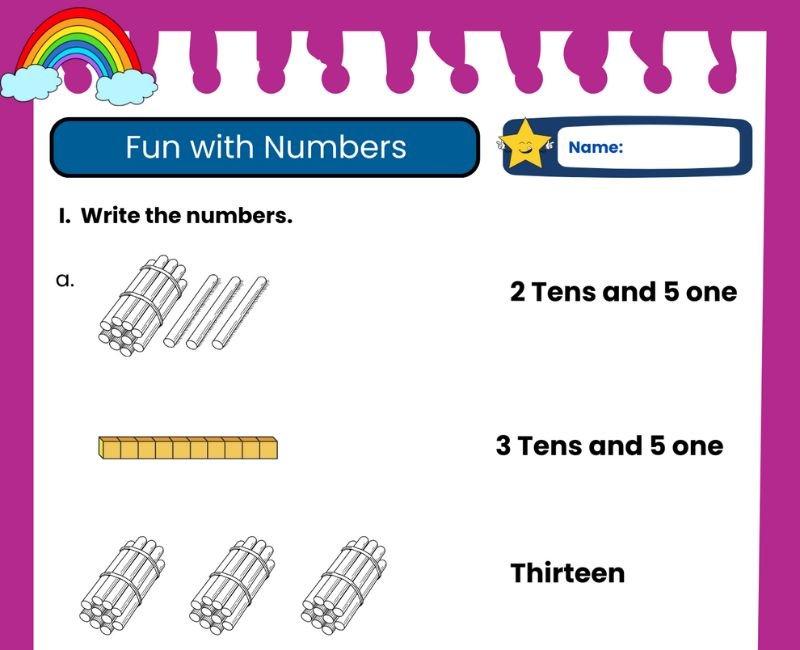
Fun with Numbers Class 1 Worksheet
Explore two-digit numbers with this Fun with Numbers Class 1 worksheet. Use it alongside NCERT Class 1 Maths Chapter 8 - Fun with Numbers (Numbers 21 to 99) in the Joyful Mathematics textbook.
Help children connect counting, written numerals and actual quantities. Practise grouping objects into tens, reading number names, completing sequences and comparing numbers. The original practice questions with answers below provide extra examples for home revision and classroom discussion alongside the worksheet available on this page.
Count Larger Collections in Groups of Ten
Counting every object separately can become difficult as collections grow. Arrange counters into groups of ten and keep the remaining counters separate. Three groups of ten and four extra counters make thirty-four.
Count the complete groups first: ten, twenty, thirty. Then count the extras: thirty-one, thirty-two, thirty-three, thirty-four. Match the collection with the numeral 34.
Let children make their own groups and recount to check. Each complete group must contain exactly ten objects. Moving a counter between groups does not change the total quantity.
Understand Tens and Ones
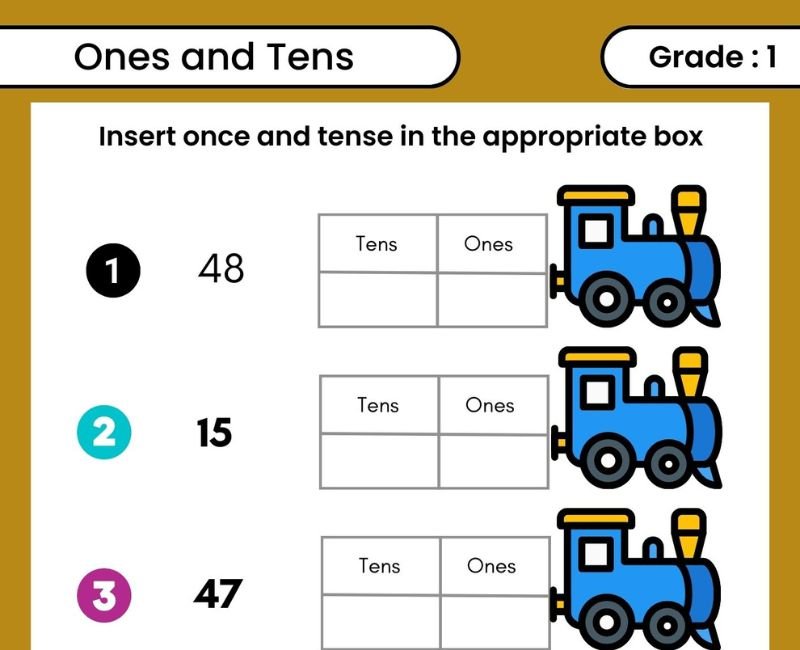
In a two-digit number, the left digit tells us the number of tens and the right digit tells us the number of ones. In 47, there are four tens and seven ones.
26 = 2 tens and 6 ones = 20 + 6
53 = 5 tens and 3 ones = 50 + 3
80 = 8 tens and 0 ones = 80 + 0
Explain the zero in eighty using eight complete groups of ten with no extra ones. Compare 26 and 62 with objects: the same digits make different numbers when their positions change.
Read and Write Number Names
Connect each numeral with its spoken and written name. For example, 28 is twenty-eight, 45 is forty-five and 76 is seventy-six. Read the number aloud while pointing to its tens and ones.
Practise the tens names: twenty, thirty, forty, fifty, sixty, seventy, eighty and ninety. Notice that forty is the correct spelling.
Use a matching activity with numeral cards and number-name cards. Begin with a few familiar examples before adding more. Ask the child to build a matching quantity as well, so the activity involves understanding rather than recognising a card alone.
Complete Number Sequences and Cross a New Ten
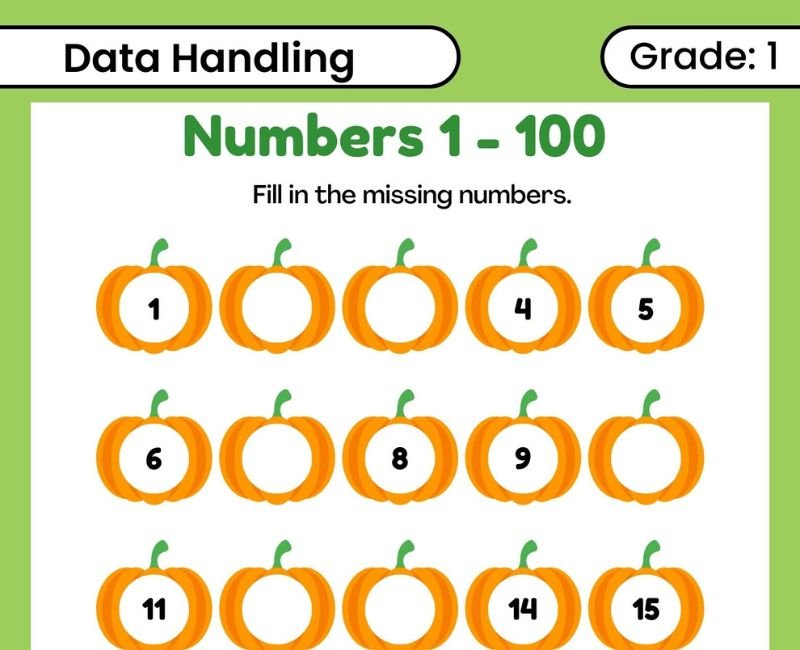
Write a short sequence such as 32, 33, blank, 35. Ask which number is missing and read the completed sequence aloud. Then practise transitions such as 28, 29, 30, 31.
To show why 29 is followed by 30, build two groups of ten and nine ones. Add one more counter. The ten loose counters can now form another group of ten, giving three tens and no extra ones.
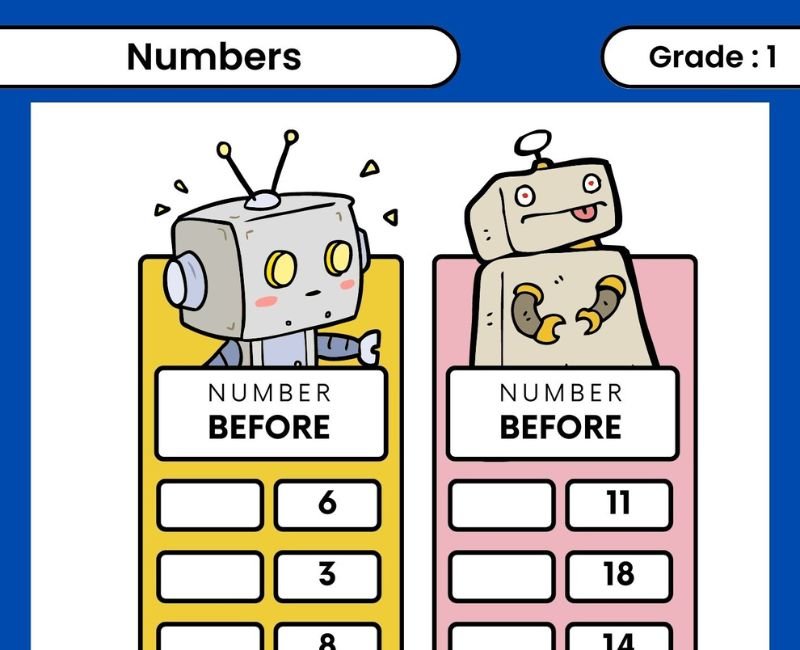
Practise before, after and between using a number strip. The number before 60 is 59, the number after 60 is 61, and the number between 72 and 74 is 73.
Compare and Order Two-Digit Numbers
Compare the tens first. Sixty-two is greater than thirty-eight because six tens are more than three tens. If both numbers have the same number of tens, compare the ones: 46 is greater than 43 because six ones are more than three ones.
Use words such as greater, smaller, greatest and smallest before introducing symbols. Ask children to arrange 41, 24 and 36 from smallest to greatest: 24, 36, 41.
Encourage an explanation: "I compared the tens first." Objects, number strips and drawings can help children check the order.
Original Fun with Numbers Practice with Answers
Try these additional questions orally or in a notebook. Use bundles, counters or drawings when needed.
- Three tens and five ones make ______.
- Write the tens and ones in 68.
- Write the number name of 42.
- Write the numeral for seventy-nine.
- Complete: 37, 38, ______, 40.
- What number comes just before 50?
- What number comes just after 89?
- What number lies between 64 and 66?
- Which is greater: 72 or 27?
- Which is smaller: 56 or 59?
- Arrange 83, 38 and 63 from smallest to greatest.
- How many ones are there in the ones place of 90?
Show Practice Answers
1. 35
2. 6 tens and 8 ones
3. Forty-two
4. 79
5. 39
6. 49
7. 90
8. 65
9. 72
10. 56
11. 38, 63, 83
12. 0 ones
How to Use the Class 1 Chapter 8 Worksheet
Use the worksheet download option on this page alongside the Joyful Mathematics textbook. Read instructions aloud if needed and ask children to show what a number means before writing a response.
Keep practice varied: build a number, read its name, find its neighbours and compare it with another number. Work with a manageable range before extending to larger numbers. Children who reverse digits can rebuild the quantity in tens and ones to check which digit belongs in each position.
Parents can use groups of blocks, while teachers can organise number-card stations. The answers above apply to the original examples on this page; picture-based worksheet answers depend on the actual pictures provided.
More NCERT Class 1 Maths Worksheets
Choose another chapter-based Joyful Mathematics worksheet.
Chapter 3: Mango TreatRevisit counting and numbers from 1 to 9. Chapter 4: Making 10
Build groups of ten and explore numbers from 10 to 20. Chapter 7: Lina's Family
Explore everyday measurement and comparisons. Chapter 9: Utsav
Continue with patterns in familiar surroundings.
Related General Grade 1 Maths Practice
Comparing Numbers Worksheets for Class 1Additional topic-based practice for ordering and comparing numbers. Browse All Class 1 Maths Worksheets
Find general topic resources and NCERT chapter worksheets.
Fun with Numbers Class 1 FAQs
Which chapter is Fun with Numbers in Class 1 Maths?
Fun with Numbers is Chapter 8 of NCERT Joyful Mathematics. Its stated number range is 21 to 99.
How do I explain tens and ones?
Make groups of ten and leave the extra objects loose. Four groups of ten and seven extra objects represent forty-seven.
Why are 24 and 42 different?
Their digits occupy different places. Twenty-four has two tens and four ones; forty-two has four tens and two ones.
What does zero mean in a number such as 70?
In its tens-and-ones representation, seventy has seven tens and no extra ones.
How can children compare two-digit numbers?
Compare the tens first. If the tens are equal, compare the ones.
How can I teach counting across 29 to 30?
Add one object to two tens and nine ones. Regroup the ten ones into a new ten to show thirty.
Is forty or fourty the correct spelling?
Forty is correct. For example, 46 is written forty-six.
How can children practise before, after and between?
Use a number strip or short sequence. Ask children to locate a number and identify its immediate neighbours.
Are answers available for the practice questions?
Yes. Expand Show Practice Answers to check the twelve original examples on this page.
 Download